what floor is best for my project
How Flooring Texture Changes Light, Sound and Room Mood
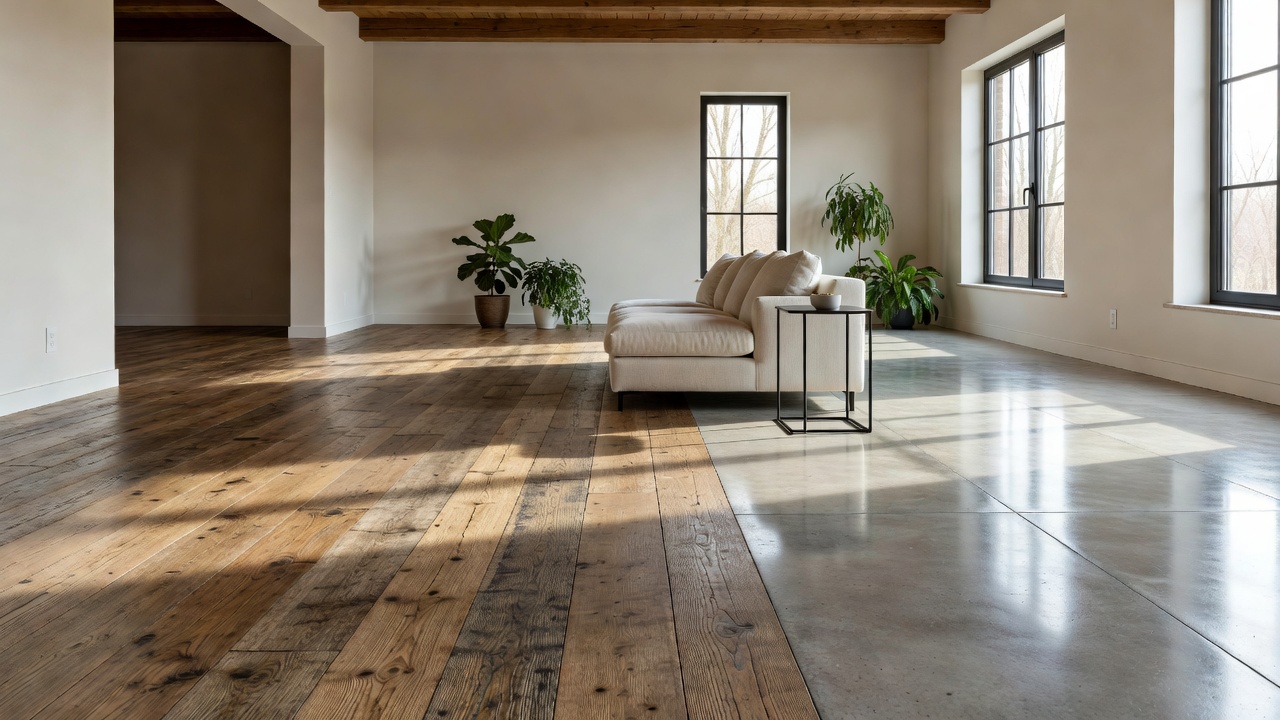
Flooring texture changes how a room is perceived because surface relief, sheen and pattern interact with light and touch. It can also affect cleaning, repair visibility, rolling movement and how a floor-ceiling assembly handles impact sound. None of that produces one universal mood. A brushed oak surface may feel relaxed in one home and visually busy in another.
The useful design move is to compare texture in the actual room while holding color as constant as possible. That separates the effect of surface from the effect of a warmer or darker sample. Treat words such as rustic, calm and luxurious as editorial interpretations, then test whether the people using the room share them.
Run a four-sample texture study in the room
Build a small comparison set from the material family under consideration:
- a smooth, lower-sheen sample;
- a smooth sample with more sheen;
- a lightly embossed or wire-brushed sample;
- a more pronounced scraped, sawn or registered-embossed sample.
Use full planks when possible, because a small chip conceals repeat, bevel and the scale of relief. Place the samples together at the entry, beside the largest window and under the primary evening fixture. View them from standing height in morning, midday and evening light. Photograph every set from the same position, but make the final decision in person; a phone can change exposure, white balance and contrast.
Then handle the surfaces. Walk them in socks and shoes if the retailer’s sample format permits. Pass a dry microfiber cloth across the grain, inspect the bevels, and ask how the exact finish is cleaned and repaired. The showroom-to-home lighting guide explains why this room test matters more than a display-board impression.
Separate visual mood from performance claims
Smooth, higher-sheen floors tend to produce clearer reflections and more obvious highlights. Lower-sheen and relieved surfaces break those reflections into smaller changes. That may make a room read as softer or less formal, but the interpretation depends on daylight, color, furniture, wall finish and the viewer.
Texture can visually interrupt a fine scratch or small scuff, yet it can also hold soil in low areas or make a local repair harder to blend. A hand-scraped surface may introduce strong rhythm across a quiet room. A subtle wire brush may give natural wood grain more definition without becoming the dominant pattern. Embossed resilient or laminate flooring adds another question: does the surface relief align convincingly with the printed design across several planks?
Do not infer durability from appearance. Matte does not automatically mean scratch-proof, and deep texture does not automatically mean safer. Ask for the exact maintenance guide, surface-performance information and repair pathway. For finish-specific decisions, compare this article with the matte warm-wood selection guide.
Include accessibility and sound in the texture decision
A floor is a walking surface before it is a mood board. The ADA Standards require covered floor and ground surfaces in applicable accessible routes to be stable, firm and slip resistant. Residential projects are not all governed by the same accessibility provisions, but the principle is a useful design check: avoid loose edges, abrupt transitions and a surface that becomes difficult to traverse under expected conditions.
Slip resistance is a system question involving material, finish, contamination, footwear and maintenance. A rough-looking surface is not proof of safe traction. Request applicable test information for the exact product and intended condition, particularly at entries and other areas likely to become wet.
Sound claims also need context. ASTM E492 measures impact sound transmission through a complete floor-ceiling assembly in a laboratory. Its own scope cautions that the tapping machine and laboratory result do not simulate every human footfall or field condition. An underlayment headline cannot be transferred automatically from one slab, ceiling and floor covering to another. In multifamily housing, obtain the building’s requirements and evidence for the proposed assembly.
Match texture to the room and maintenance routine
Use this checklist before approving the surface:
- Light: Does relief become attractive depth or distracting striping under side light?
- Scale: Does the texture repeat naturally across several planks?
- Touch: Is the surface comfortable for bare feet, play and mobility devices used in the home?
- Cleaning: Can ordinary household soil be removed with the approved method?
- Water: What happens to traction, seams and cleanup when the surface is wet?
- Repair: Can a scratched board, worn finish or damaged plank be repaired without making the texture mismatch more obvious?
- Sound: Is there assembly-specific acoustic evidence where a downstairs neighbor or building rule makes it relevant?
- Continuity: Does the floor cooperate with stairs, adjacent rooms and existing wood rather than creating a near-match?
Stop when the sample is being sold only through adjectives, when maintenance instructions do not address the surface, or when the acoustic or slip claim lacks an identifiable test and configuration. The room-by-room color and mood guide can then help coordinate texture with value, undertone and daylight.
FAQ
Does textured flooring make a room feel warmer?
It can, especially when lower sheen and visible grain reduce sharp reflections, but color and lighting may be doing part of the work. Compare similar colors with different surfaces in the room before attributing the effect to texture.
Do wire-brushed floors hide scratches?
Relief and lower sheen may make some fine marks less visually isolated. They do not prevent damage, and deep grain can collect soil. Evaluate the exact finish, care method and representative sample.
Is glossy flooring a bad choice?
No. Gloss can support a deliberate formal or reflective interior. It also makes highlights, dust and surface changes more visible, so the room’s light and maintenance tolerance should drive the choice.
Does an IIC number describe how a floor will sound in my room?
Not by itself. Impact ratings depend on the tested floor-ceiling assembly and method. Field construction, flanking paths and low-frequency footfall effects can differ from a laboratory result.
Sources & standards
- 2010 ADA Standards for Accessible Design, Section 302 — requirements and definitions for stable, firm and slip-resistant surfaces where the standards apply.
- ASTM E492: laboratory impact-sound measurement — method, assembly scope and limitations of tapping-machine testing.
- NWFA Wood Flooring Installation Guidelines — wood-floor installation, sound-control underlayment, protection and maintenance context.
Mood descriptions in this article are editorial interpretations, not measured psychological outcomes. Technical acceptance should rely on the exact product, assembly and applicable project requirements.