Matte Warm-Wood Flooring: Undertones and Finish Selection
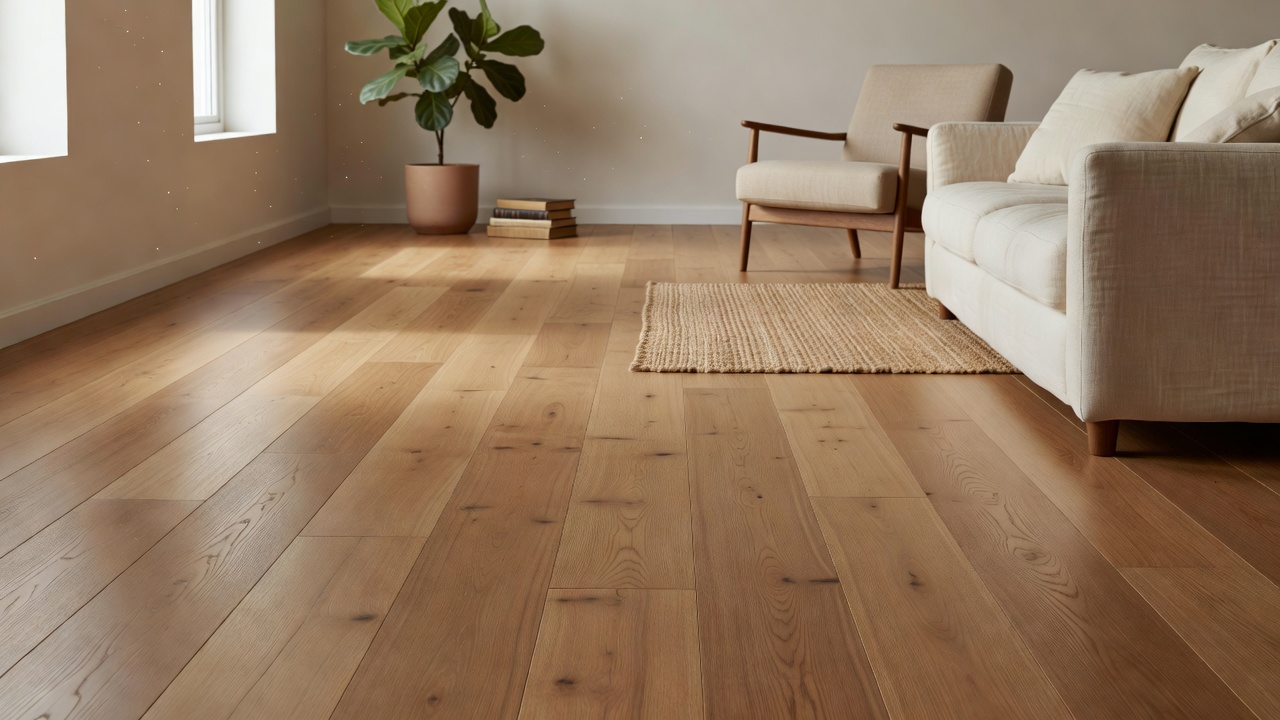 Late-afternoon light pools across a living room that finally exhales. Underneath it all, a honeyed matte floor does not throw a hard reflection; softer highlights let grain and undertone lead. That is the design case for matte warm wood flooring. It is an editorial direction, not proof that one finish is right for every room.
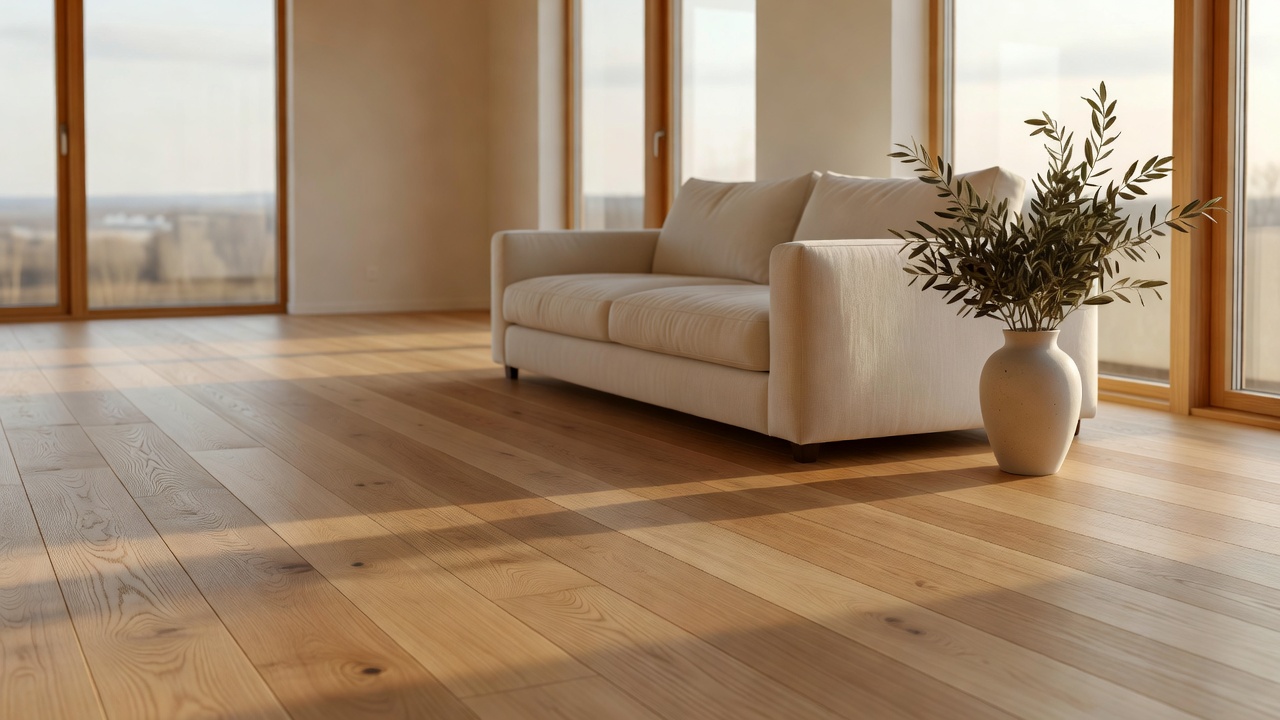
What wood flooring colors are trending in 2026?
Our 2026 editorial trend watch favors warm midtones such as honey oak, soft caramel chestnut and toasted almond over cool driftwood. That is a design observation, not a national sales ranking. Compare the direction with the home’s fixed finishes and local context.
The mood board in my head right now reads:
- velvet shadow in the grain of caramel chestnut
- the quiet gold of honey oak under north light
- soft-focus edges where matte meets white oak furniture
- the faintest amber pool around a reading chair at 4 p.m.
- linen, plaster, unlacquered brass, nothing that competes
Pair any of those tones with a true matte or ultra-matte UV lacquer and the room stops performing and starts belonging. For deeper dives into undertone matching see choosing wood undertones for north-facing rooms.
What is better for hardwood floors: matte or satin finish?
Matte. Full stop for anyone who wants the wood to remain the quiet protagonist rather than a mirrored stage. Satin still has its place in formal dining rooms that need a little candlelight bounce, but matte warm wood flooring is what turns a kitchen into a place you actually want to stand barefoot at midnight.
Satin reflects. Matte absorbs and redistributes. That single optical difference changes the entire emotional temperature. In a compact city apartment the matte finish on honey oak keeps the space from feeling like a jewelry box; the light softens at the edges and the room feels larger, calmer. In a sprawling great room the same finish on caramel chestnut pulls the volume inward into cozy intimacy—you suddenly want throw blankets and low music.
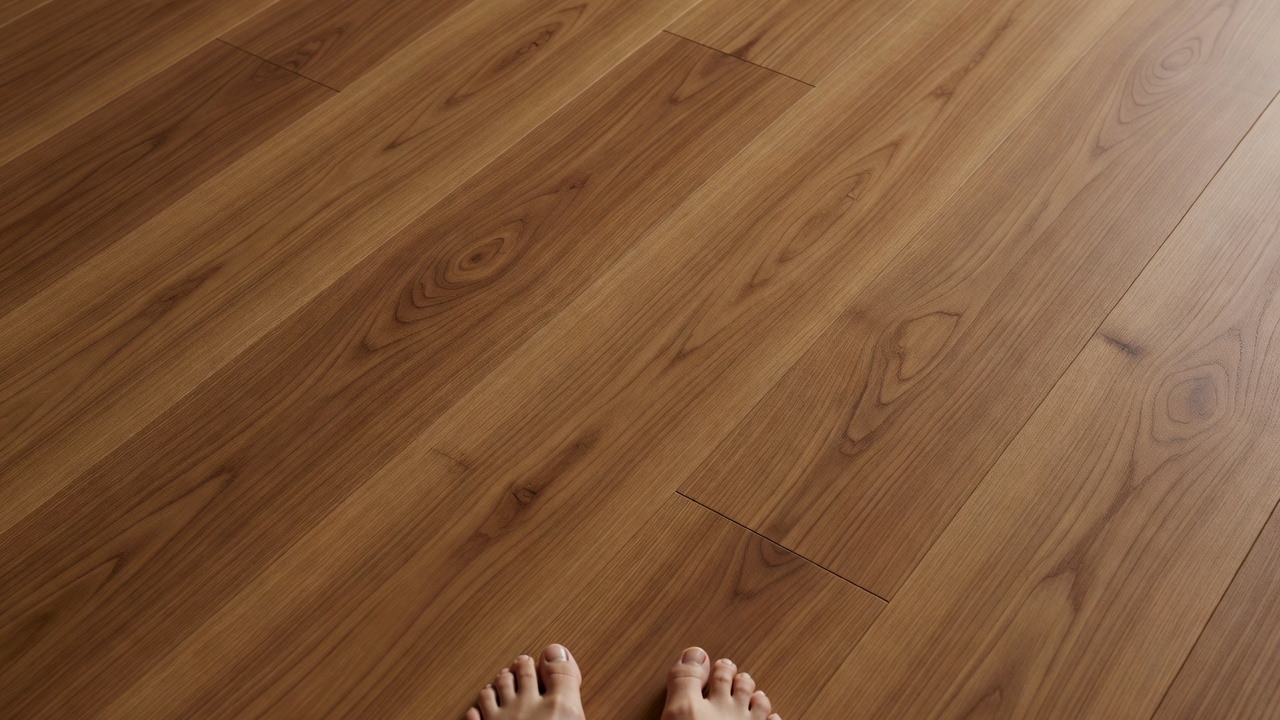
Matte finishes can make fine surface marks less conspicuous because highlights are less concentrated, but color, texture, coating chemistry and cleaning matter too. Sheen is a visual property, not a durability rating. For high-traffic rooms, compare the finish maker’s care guidance and performance data rather than assuming matte is tougher.
Is a matte finish worth it for high-traffic homes?
Color-finish pairings that actually stage well:
- Honey oak matte + warm white walls + blackened steel = serene openness that still feels held
- Caramel chestnut matte + deep olive or terracotta accents = the kind of intimacy that makes people lower their voices
- Soft toasted almond matte + pale limestone and unbleached linen = coastal without the cliché
Choose undertone and sheen as separate decisions
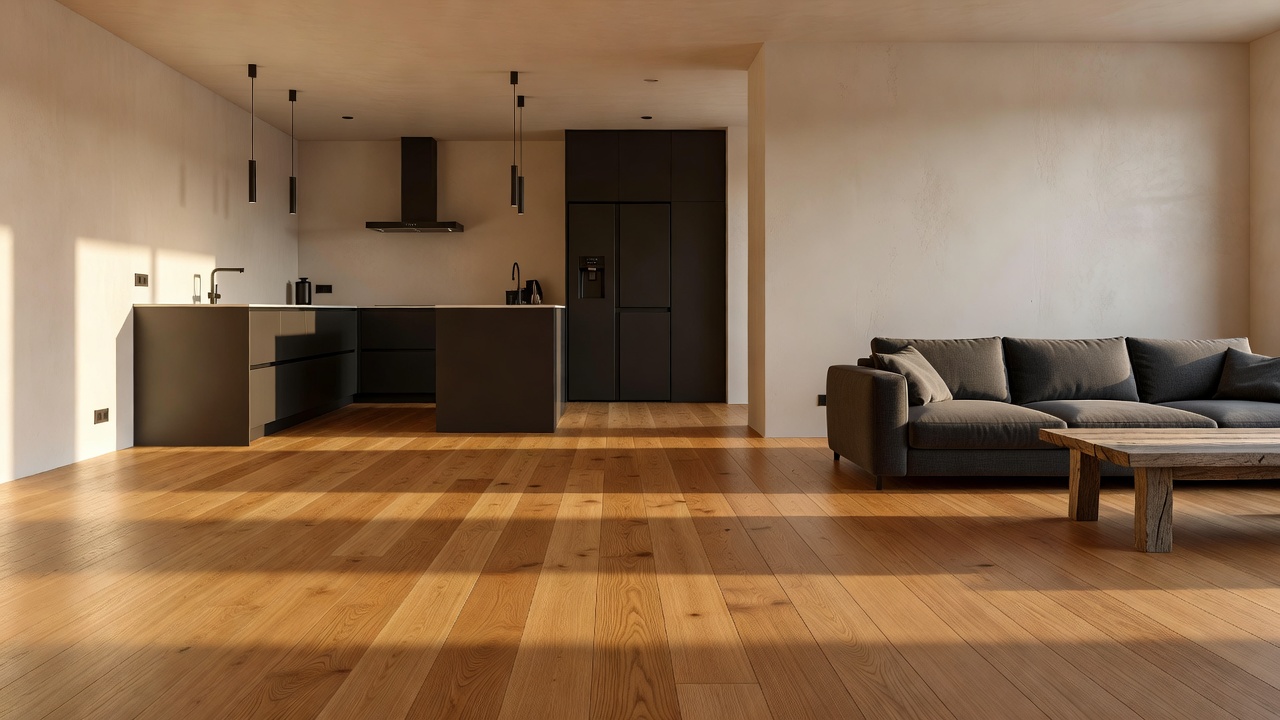
First compare warm candidates beside cabinets, stone, trim and adjacent flooring. Reject undertones that work only under one lamp or create an accidental clash with permanent finishes. Then compare the approved colors in each available sheen. A manufacturer’s matte and satin samples may use different coating systems, so confirm that the comparison is not merely visual.
The room-light and mood comparison offers a separate method for testing undertone without treating design preference as psychology.
Record finish name, sheen description, coating or maintenance information, repair guidance, direct-sun limits and approved cleaners. Tilt the sample in side light to reveal surface texture and highlight shape. Place dust, a felt-protected chair leg and the normal room lighting into the evaluation without damaging a borrowed sample.
For a high-traffic room, ask which stated performance data and warranty apply to that exact finish. Stop when a seller treats low sheen as proof of scratch resistance, promises an unsupported trend outcome or cannot identify the care system. Keep the approved sample, product label and maintenance guide together; warm color and matte sheen remain design choices inside a technical product, not substitutes for one.
FAQ
What is better for hardwood floors: matte or satin finish?
Matte is a useful candidate when restrained reflections are desired; satin offers more visible sheen. View exact finish samples in the room because wood color, texture and lighting can reverse the preference.
Do matte finishes hide scratches and dust better than satin?
Sometimes. Lower sheen can make fine marks less conspicuous, but a dark smooth matte floor may still show dust clearly. Finish system and maintenance matter more than sheen alone.
What wood flooring colors are trending in 2026?
Our editorial watch favors warm midtones such as honey oak, caramel chestnut and soft golden brown. Verify any trend choice against permanent materials rather than assuming cool gray has disappeared everywhere.
Is a matte finish worth it for high-traffic homes?
It can be, provided the exact coating is approved for the traffic and maintenance plan. Matte may soften the appearance of fine marks, but it does not convert a weak coating into a durable one.
How do I keep matte warm wood flooring looking intentional?
Use the finish maker’s cleaner and maintenance method, control tracked grit, protect furniture contact points and test any new product inconspicuously. Do not add polish unless the finish system permits it.
Sources & standards
- NWFA Installation Guidelines — wood-floor site conditions, subfloors, moisture and installation.
- USDA Forest Products Laboratory Wood Handbook — wood structure, moisture behavior and dimensional change.
Checked August 30, 2026. Product instructions and local conditions control whenever they are more specific.