what floor is best for my project
Choose Flooring Color by Room, Light and Mood
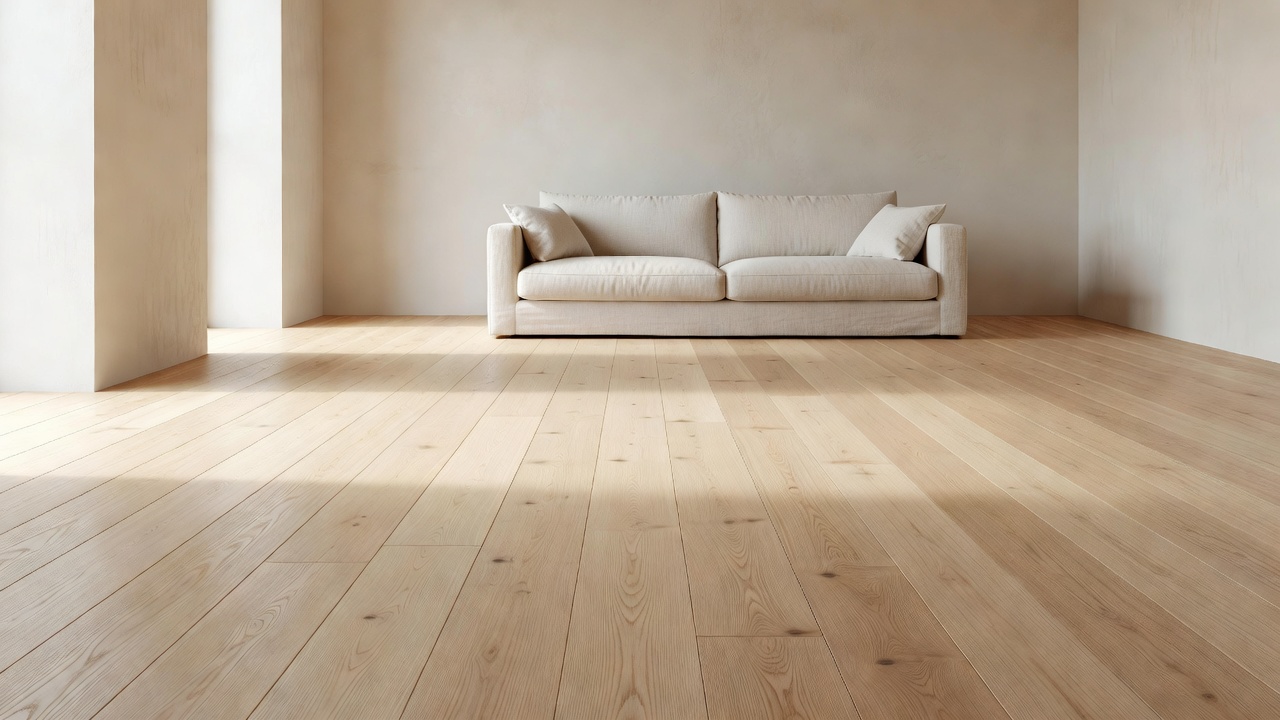
 Morning light slips across the space like champagne silk—quiet, luminous, almost apologetic for arriving so softly. The walls hold a breath of chalky plaster. A low linen sofa waits, unrumpled. Everything in the room is already listening for the floor to speak first.
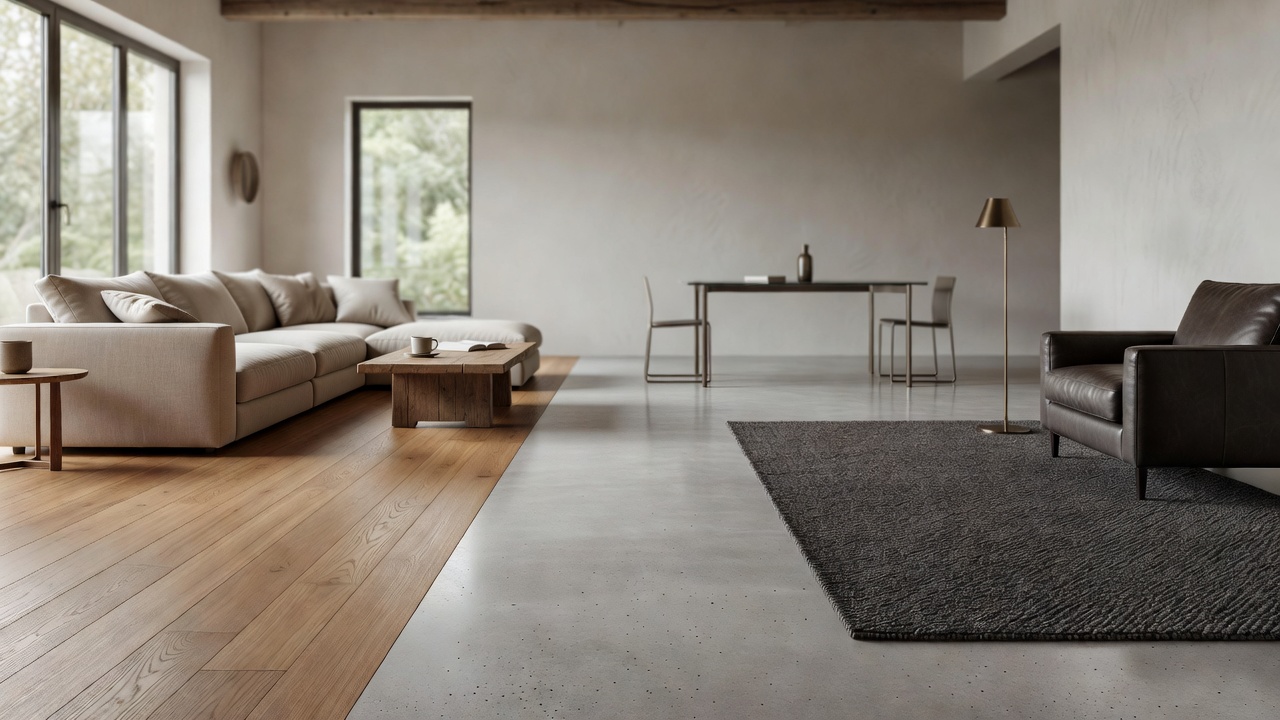
How flooring color affects room mood is a design question, not a universal psychological formula. Hue, undertone, grain, sheen and texture change how light moves across a room and how large, intimate, calm or dramatic the composition appears. Individual responses vary, so use the guidance below as an editorial framework and test the actual sample in the actual room.
How does flooring color impact mood and space perception?
Light flooring—think bleached oak, soft greige LVP or pale matte porcelain—can reflect more available light and reduce contrast with light walls. Dark flooring can create a stronger visual base and make pale furniture stand out. Neither guarantees calm or spaciousness; room size, daylight, electric lighting, wall color and sheen change the result.
Warm versus cool undertones decide whether the calm feels like a cashmere throw or a glass of cold mineral water. Warm honey oaks, terracotta-tinted cork, and caramel bamboo lean into comfort and nostalgia. Cool taupes, greige vinyls with subtle stone print, and ash-toned hardwoods deliver modern serenity—the kind that makes a room feel edited rather than decorated. Neutral flooring for peaceful spaces almost always lives in this quiet middle: neither yellow nor blue, just present.
What is the best flooring color for a calm bedroom?
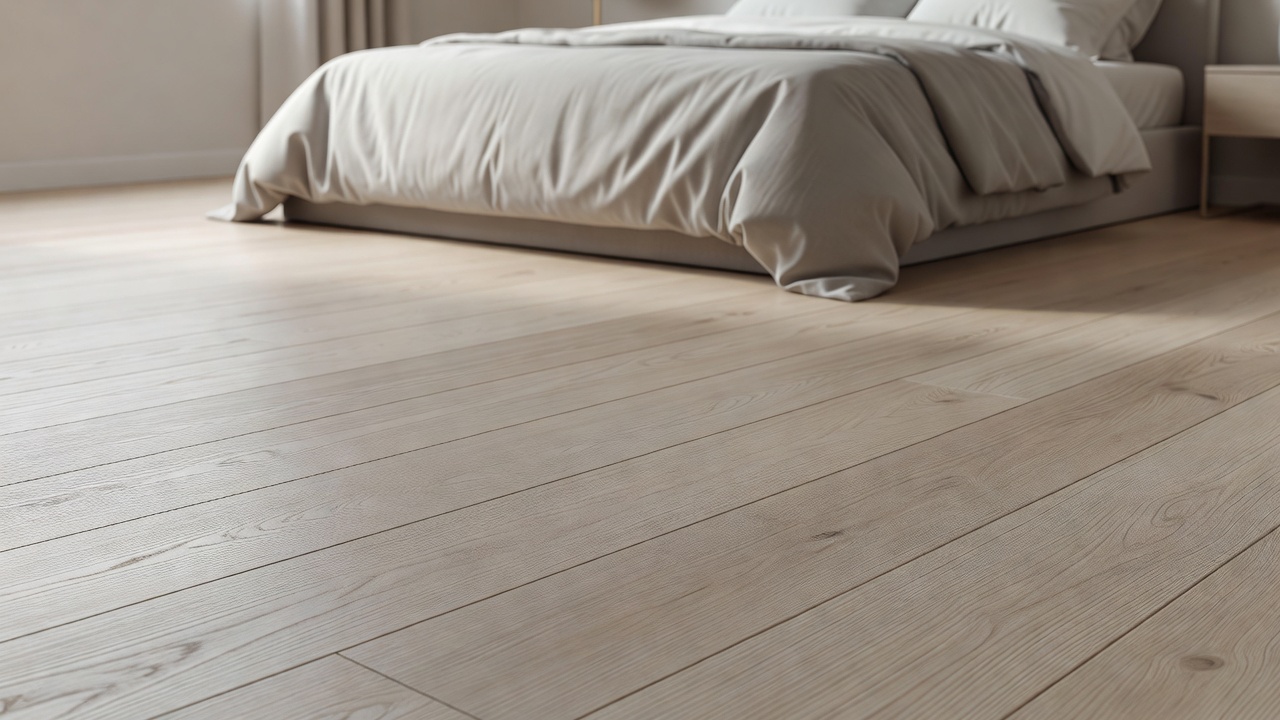
Soft, low-contrast neutrals with gentle texture. Pale greige engineered hardwood with a wire-brushed surface. Warm-white oak in a matte finish. Light cork with its natural freckle. Even a well-chosen rigid-core vinyl that mimics travertine without the cold. The goal is flooring for serene bedroom energy: nothing that shouts, nothing that reflects your face back at you at 2 a.m. Avoid high-gloss anything and pure stark white unless the room has serious architectural bones; stark can tip into clinical.
- clouded ash
- matte champagne oak
- soft limestone whisper
- warm putty cork
- fog-washed bamboo
- velvet-grain taupe
- chalk linen plank
These are the ones that let the nervous system unclench. Pair any of them with blackout linen and a single sculptural lamp and the room stops performing.
Should I choose light or dark flooring for a serene room?
The real decision is rarely pure light versus pure dark. It is light-with-warmth versus light-with-cool, or dark-with-soft-sheen versus dark-with-texture. Cool light floors (ash, certain bamboos, pale concrete-look tile) excel at modern peaceful environments. Warm light floors (honeyed oak, natural cork, soft pine-look LVP) excel at cozy calm. Both beat a medium builder-beige that has no opinion.
Are cool or warm tones better for a peaceful environment?
Texture is the second language. A textured warm-oak surface holds shadow in its valleys; a smooth cool-toned porcelain reflects light more cleanly. Cork can add softness underfoot, while embossed-in-register LVP aligns surface texture with the printed grain. The design choice is never merely “gray” or “brown.” It is how color, texture and sheen behave in the room’s real light.
If you want the practical path into material choices that actually hold a mood, start with best hardwood finishes for modern homes and then cross-check how those finishes behave under real light in light vs dark flooring for small spaces. The combination is where the autopsy becomes a prescription.
FAQ
What is the best flooring color for a calm bedroom?
Start with low-contrast candidates such as soft greige, pale oak or warm white in a matte or low-sheen finish. Then test them beside the walls, textiles and nighttime lighting; the same sample can read calm in one room and washed out in another.
Should I choose light or dark flooring for a serene room?
Light flooring often creates less contrast with pale walls; dark flooring creates a stronger visual anchor. Either can support a serene room when the sample, walls, light and furnishings work together.
Are cool or warm tones better for a peaceful environment?
Warm tones are commonly used for a cozy composition and cool tones for a crisper one, but there is no reliable orientation rule. Test each undertone in the room throughout the day before committing.
How does flooring color impact mood and space perception?
Color changes contrast and reflected light; sheen and texture change how highlights and shadows appear. Those visual effects can influence a room’s character, but personal response and the rest of the palette control the final mood.
Can material texture change how a flooring color feels?
Yes. Matte, textured and glossy surfaces distribute reflections differently, so the same color can appear softer or more dramatic. Grain, sheen and underfoot feel should be evaluated alongside hue.
The right floor does not decorate a room. It decides what the room is allowed to feel like when no one is performing for company. Stand in the space at dusk. Look down. Does the surface open its hands or close its fists? That is the only question that ever mattered.
What’s the one room that still doesn’t feel like you yet?
Sources & standards
- NWFA Installation Guidelines — wood-floor site conditions, subfloors, moisture and installation.
- USDA Forest Products Laboratory Wood Handbook — wood structure, moisture behavior and dimensional change.
The mood recommendations above are editorial design commentary, not claims of a guaranteed psychological response.
Checked August 30, 2026. Product instructions and local conditions control whenever they are more specific.