what floor is best for my project
A Five-Step Flooring Shortlist for Overwhelmed Buyers
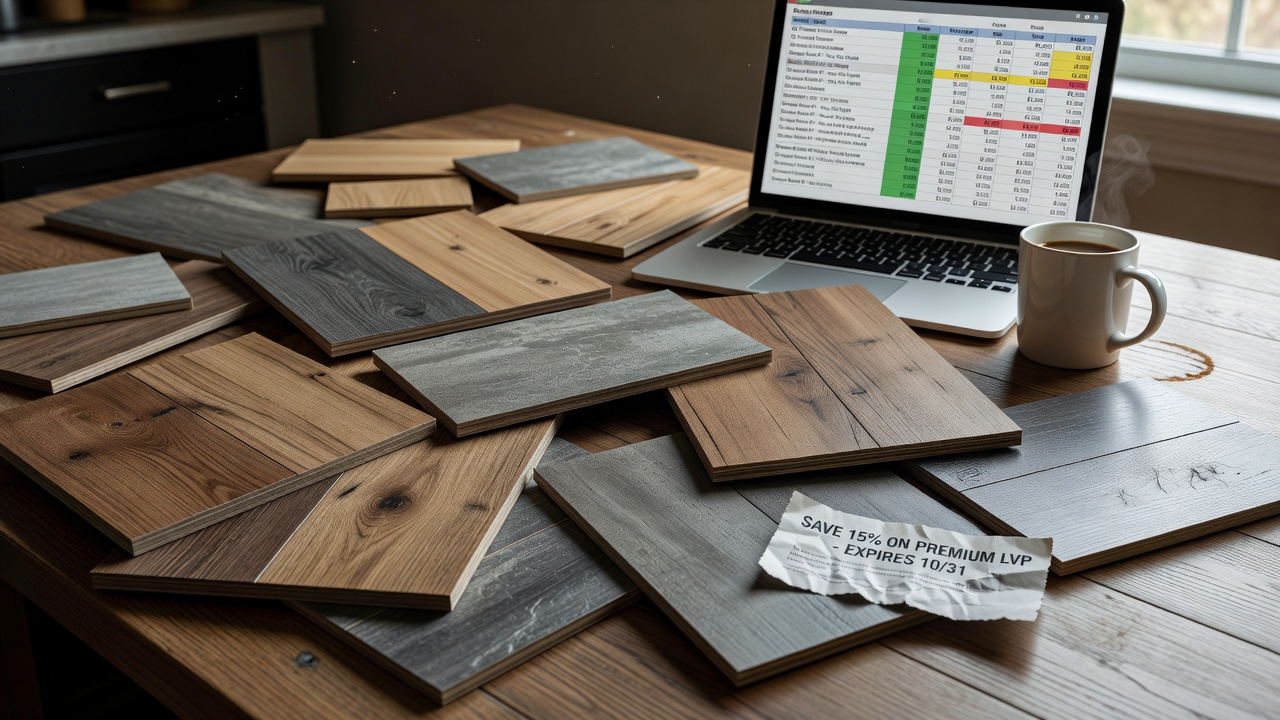
Why does choosing flooring feel so overwhelming?
Flooring bundles several decisions that retailers display as one: material, construction, finish, installation method, substrate preparation, accessories, maintenance and warranty. Hundreds of colors can appear interchangeable even when the products underneath them are not. The cure is to make those decisions in order instead of comparing every sample against every other sample.
What should I consider first when picking new floors?
Room use and the humans (and animals) who abuse them. Not the Pinterest board. Not the finish that photographed well in someone else's open-concept ranch.
A practical first-pass filter:
- Name the room risks. List standing water, tracked grit, direct sun, rolling chairs, pets, stairs, radiant heat and sound-control rules. Eliminate products whose written instructions do not permit those conditions.
- Inspect what is underneath. Identify concrete, plywood, OSB or an existing floor; measure flatness and moisture by the specified method. Substrate correction can change both the budget and the installation choice.
- Set the complete scope. Include removal, disposal, preparation, mitigation, underlayment, transitions, trim, delivery, waste and labor. A low material price is not a project price.
- Choose a construction before a color. Compare solid wood, engineered wood, laminate, LVT/LVP, cork or another permitted material on repairability, maintenance and warranty exclusions.
- Test finalists at home. Bring home full-size samples from the same product and color lot when possible. View them beside walls, cabinets and adjacent floors during daylight and after dark.
For the closest related guidance, see LVP vs laminate vs hardwood comparison and how to read flooring sample at home.
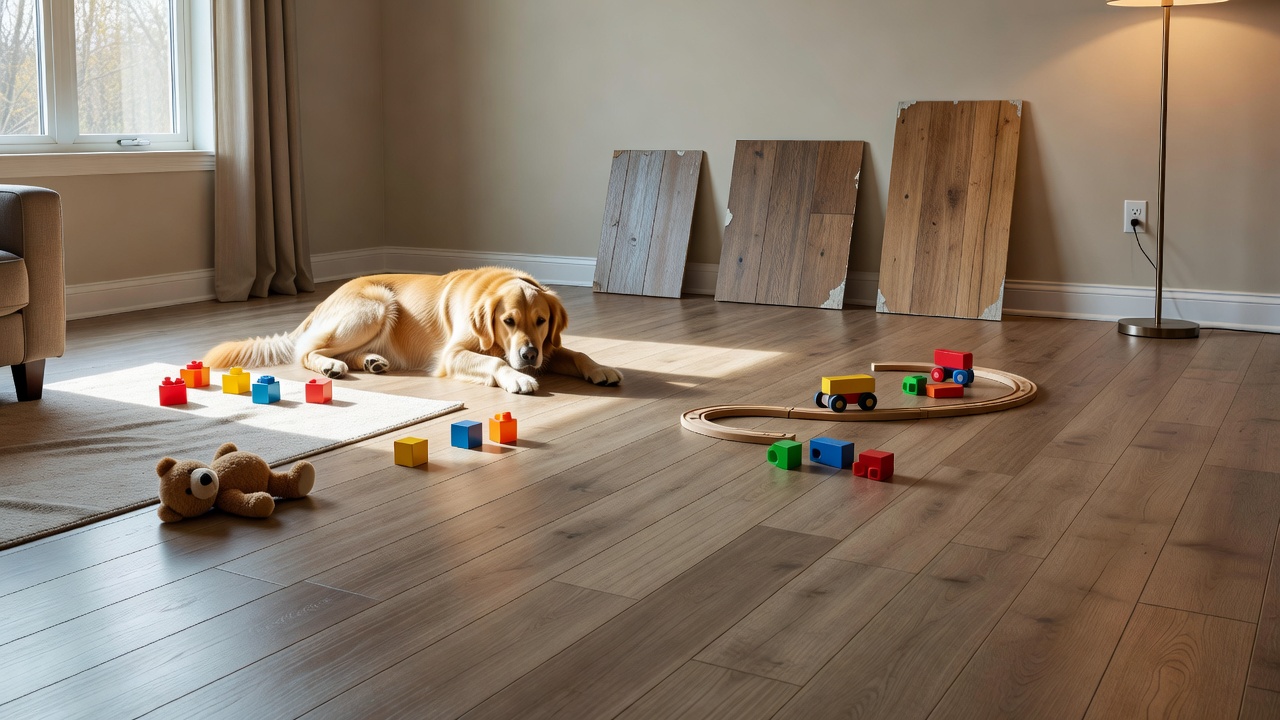
How do I narrow down flooring options without regret?
Limit the final round to products that pass the same written scorecard. Record manufacturer, collection, exact color, construction, overall thickness, wear surface, edge treatment, installation method, required accessories, warranty and installed proposal. If a salesperson cannot provide one of those fields, mark it unknown rather than filling the gap with an assumption.
Then compare no more than a few finalists in the actual room. A neutral choice that satisfies the room and installation requirements is stronger than a dramatic sample whose maintenance, transition or warranty details remain unresolved. Keep the product label and warranty PDF with the estimate so the installed floor can be traced later.
Resolve unknowns before selecting color
Create an “unknowns” column for moisture method, flatness tolerance, permitted room, attachment method, required accessories, direct-sun limits, cleaning products, repair procedure and warranty exclusions. Assign each unknown to the retailer, installer, manufacturer or homeowner and set a due date. A missing technical answer is a reason to pause, not an invitation to choose the prettiest sample.
Failure-mode check for the finalists
For each product, name the most likely household failure: edge swelling, joint breakage, surface scratching, denting, sun-related color change, bond loss or an unrepairable damaged unit. Then write the prevention and recovery plan. If the plan is merely “the warranty will cover it,” read the exclusions again. Keep spare material from the same lot and document substrate acceptance, installation conditions and approved care. The strongest choice is not the floor with no possible failure; it is the one whose risks are understood, prevented where possible and recoverable at an acceptable cost.
FAQ
Why does choosing flooring feel so overwhelming?
Too many near-identical options, conflicting advice, fear of expensive permanent regret, and retail lighting that lies. Lifestyle filters and a hard sample limit cut the noise fast.
How do I narrow down flooring options without regret?
Eliminate products by room conditions and substrate first. Compare the surviving constructions on one scorecard, then test a small set of exact samples in the room.
What should I consider first when picking new floors?
Start with moisture, traffic, sun, sound requirements, subfloor and installation constraints. Color comes after the product is suitable.
How can couples or first-time buyers avoid flooring decision paralysis?
Agree on the non-negotiable list together, limit the final sample set and reopen research only when new evidence changes compatibility, price or availability.
Is big-box flooring shopping a trap for first-timers?
Any retailer can overwhelm an unfiltered shopper. Visit after room, substrate, scope and budget filters have eliminated incompatible categories.
The stopping rule is simple: when one product satisfies the written requirements, fits the complete proposal and looks right in the room under real light, further sample collecting adds noise rather than protection.
Sources & standards
- USDA Forest Products Laboratory Wood Handbook — wood structure, moisture behavior and dimensional change.
- Federal Trade Commission warranty guidance — compare written coverage, exclusions and claims procedures before purchase.
Checked August 30, 2026. Product instructions and local conditions control whenever they are more specific.