what floor is best for my project
Repair, Refinish or Replace Flooring Before Selling?
Replacing flooring before selling is one possible response to a documented condition problem. It can also be an unnecessary expense. The right decision compares cleaning, repair, refinishing, replacement and a disclosed credit against local buyer expectations and complete written bids—without promising a particular return.

How important is flooring when selling a house?
Flooring is a large visible surface in photographs and showings, especially along the route from entry through the main living areas. Prioritize safety, active damage, odor, movement and abrupt transitions before style. Clean secondary-bedroom carpet may be acceptable when it matches local competition; a damaged main-level assembly deserves a written repair or replacement scope. Neither observation predicts an offer by itself.
If you’re still weighing materials after that list, start with the practical comparison in LVP vs hardwood for resale.
Does new flooring increase home value?
New flooring may improve presentation or remove a clear defect, but value does not rise automatically. For carpet, assess cleaning results, seam and backing condition, persistent odor, staining and local expectations—not age alone. Obtain a replacement proposal when those problems cannot be corrected, then compare the intervention with recent comparable listings.
Record the original condition and the completed scope so “new” does not stand in for evidence about workmanship, preparation or product quality.
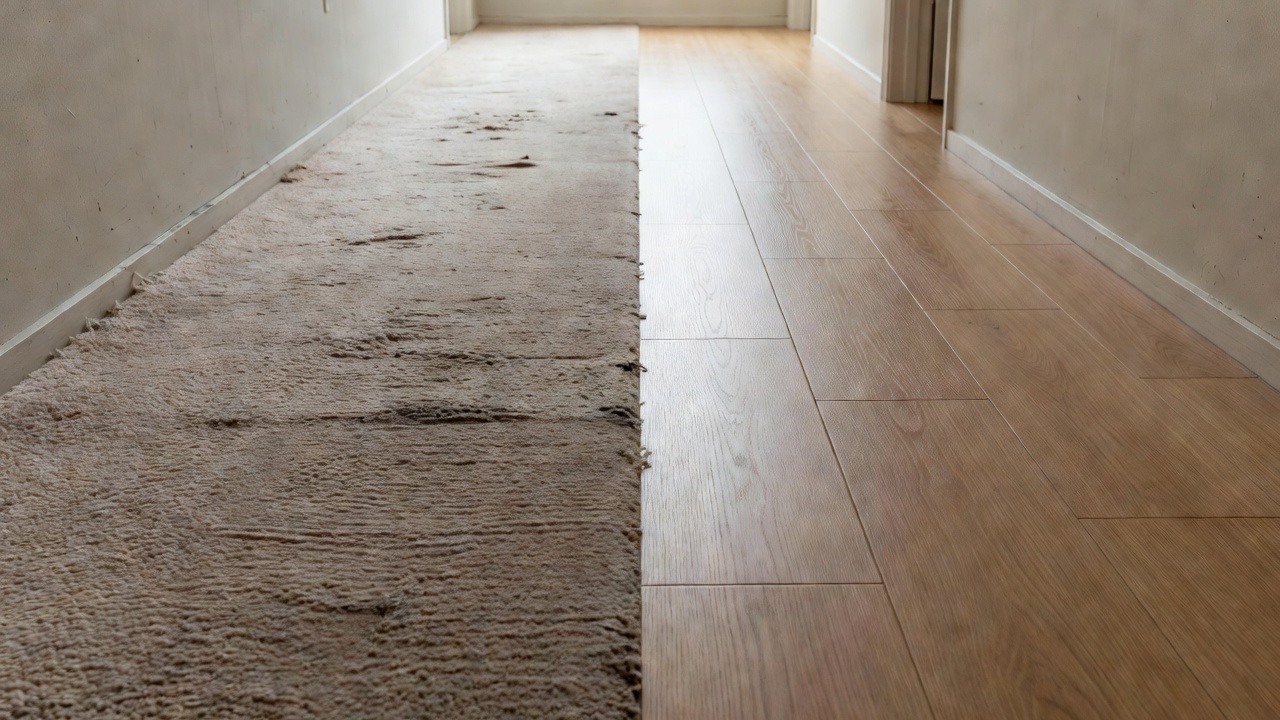
Should you replace carpet before selling or offer a credit?
Replace carpet when its condition is a material problem and a neutral, properly installed replacement is supported by the sale plan. Offer a disclosed credit when timing, buyer preference or uncertain hidden conditions make seller-selected replacement risky. The room-by-room sale-prep guide helps prioritize the scope.
Price both paths on the same net sheet, including removal, disposal, preparation, transitions and schedule. A credit preserves buyer choice; replacement gives the seller control over presentation. Neither is automatically superior.

Use a five-line sale worksheet
For each room, record the current material and condition; the lowest intervention that makes it safe and presentable; the complete written cost; evidence from comparable listings; and the time required before photography. Use the labels clean, repair, refinish, replace or credit. The main route through connected rooms should be reviewed together so one isolated fix does not create a new mismatch.
Ask the listing agent or appraiser to show the specific local evidence behind a material recommendation. National cost-recovery research is context, not a promise for one property. When replacement is justified, compare exact products on installation requirements, transition height, maintenance and warranty as well as color.
Pre-listing flooring failure checks
Do not cover active moisture, install over a weak substrate, conceal damage with a rug, or select a fast material that creates unsafe stairs and transitions. Do not advertise “new hardwood” when the product is veneer or vinyl, and do not claim a waterproof guarantee beyond the written warranty. Keep invoices, product identifiers, spare material and installation records for the buyer. If demolition could disturb an unknown hazardous material, stop for appropriate testing before work.
Review the finished plan through three lenses before authorizing it: condition—does it solve the documented damage or safety issue; market—is the scope normal for current comparable homes; and execution—can it be installed correctly before photography without rushing cure or transition details? A plan that fails any lens should return to cleaning, repair, refinishing or credit. The goal is a defensible property improvement, not a speculative promise about buyer behavior.
FAQ
Should I replace flooring before selling my home?
Replace only when cleaning, repair or refinishing cannot resolve a meaningful condition issue and local evidence supports the scope.
How important is flooring when selling a house?
It is a large visible finish that can create repair questions. Its effect depends on the condition of the entire home and local competition; there is no automatic deduction.
Does new flooring increase home value?
It can remove a negative or improve presentation, but any value change is property- and market-specific. Compare complete cost with current comparable sales.
Should you replace carpet before selling or offer a credit?
Replace when condition, odor or safety makes the carpet a clear problem and timing permits good installation. Consider a disclosed credit when the carpet is serviceable or buyer preference is likely to vary.
Is LVP or hardwood better for resale right now?
Existing repairable hardwood may favor refinishing; LVP may be a compatible replacement when budget, room conditions and local expectations support the exact product. Neither guarantees resale value.
Sources & standards
- NWFA Installation Guidelines — wood-floor site conditions, subfloors, moisture and installation.
- USDA Forest Products Laboratory Wood Handbook — wood structure, moisture behavior and dimensional change.
- National Association of REALTORS® Remodeling Impact — national remodeling cost-recovery research; local sale results still vary.
Checked August 30, 2026. Product instructions and local conditions control whenever they are more specific.