Concrete and Wood Subfloor Moisture Tests Explained
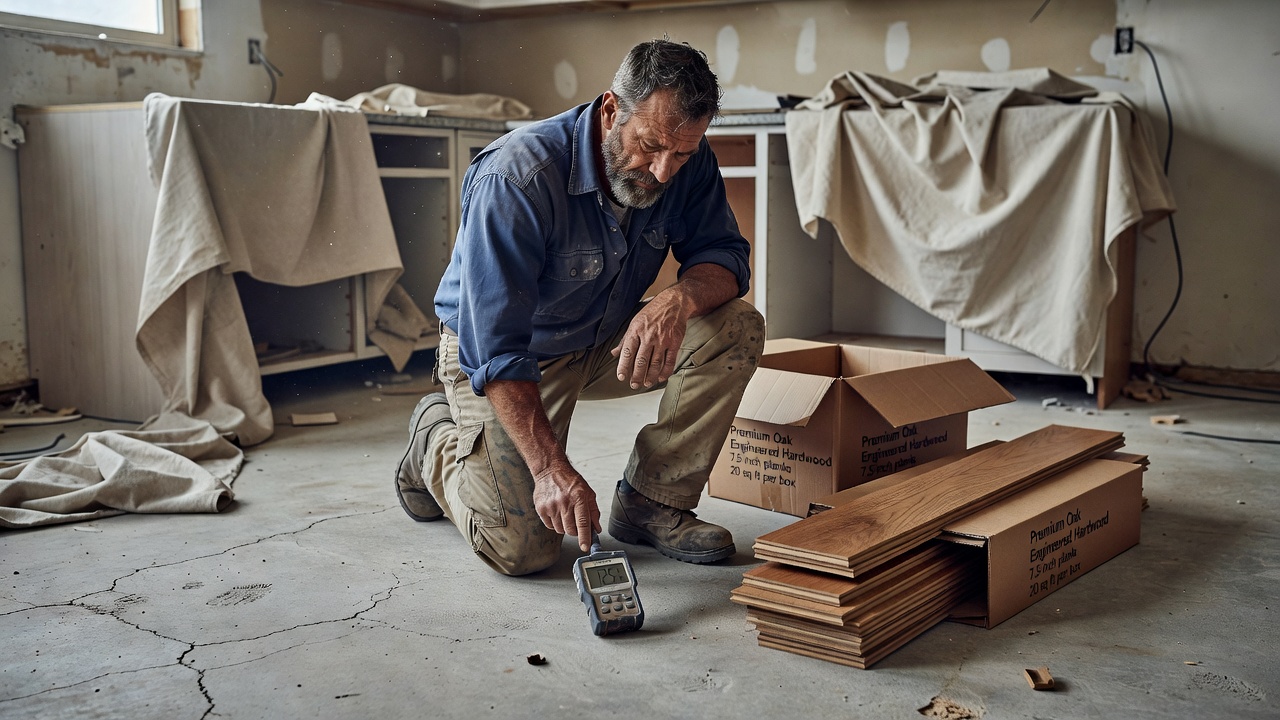
How do you test moisture in a concrete subfloor?
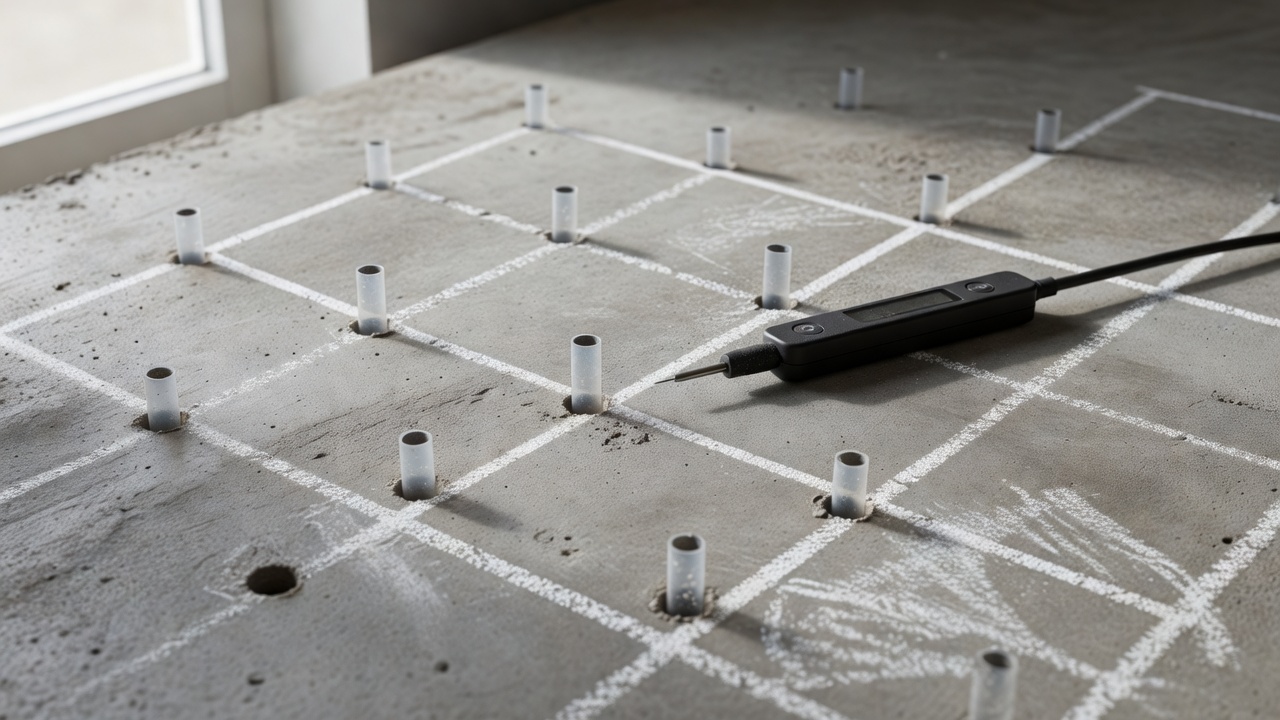
ASTM F1869 uses an anhydrous calcium-chloride kit to estimate the moisture-vapor emission rate at the slab surface. ASTM F2170 measures in-slab relative humidity with probes. They report different properties and are not interchangeable; use the test method and acceptance limit named by the flooring, adhesive or mitigation-system manufacturer.
The report should identify the test standard, slab location, room conditions, device or kit, timing and every result. A handheld surface meter may help locate areas for investigation, but it does not replace an ASTM method when the flooring system requires one. Testing without the product’s acceptance limit produces a number, not an installation decision.
For the closest related guidance, see concrete moisture mitigation.
What happens if you skip the moisture barrier?
Skipping a required vapor retarder or mitigation system can expose the flooring or adhesive to more moisture than it permits. Adding an unapproved layer can also trap moisture or compromise the bond. Determine the assembly first, test by the specified method, and follow the written flooring, adhesive and building-envelope requirements.
Do I need a moisture barrier under my floor?
Not every floor uses the same layer. Slab location, below-slab vapor protection, crawlspace conditions, flooring type, attachment method and adhesive all affect the answer. Put the selected system and its compatible components in the written installation scope.
A floating floor may require a sheet membrane with specified seam treatment; a glue-down system may depend on an adhesive with stated moisture limits or a compatible mitigation system. Nail-down wood over a crawlspace has a different assembly again. More plastic is not automatically more protection: placing an impermeable layer in the wrong location can alter drying or interfere with bonding.
What are safe moisture levels for hardwood floors?
There is no single safe percentage for every species, climate and assembly. Measure the wood flooring and subfloor in multiple locations, allow the building to reach service conditions, and compare the documented readings with the flooring manufacturer and NWFA criteria.
For pin and pinless meters, use the settings, corrections and sampling pattern appropriate to the material. Record indoor temperature and relative humidity alongside the readings. Averages can hide a wet perimeter or plumbing area, so map results by location instead of writing one room-wide number.
Turn moisture readings into a decision
Use a simple sequence:
- Identify the substrate and every layer in the planned assembly.
- Select the exact flooring, adhesive, underlayment and mitigation products.
- Pull their current technical sheets and note required test methods and limits.
- Test representative locations under the specified conditions and document the results.
- If a result is outside a limit, investigate the source and obtain a compatible correction plan.
- Retest when the system or manufacturer requires it, then attach the acceptance record to the installation file.
Do not let a retailer’s verbal assurance override a written limit. If two components specify different limits, use a system the manufacturers confirm as compatible rather than choosing the more convenient number.
Moisture-control failure checks
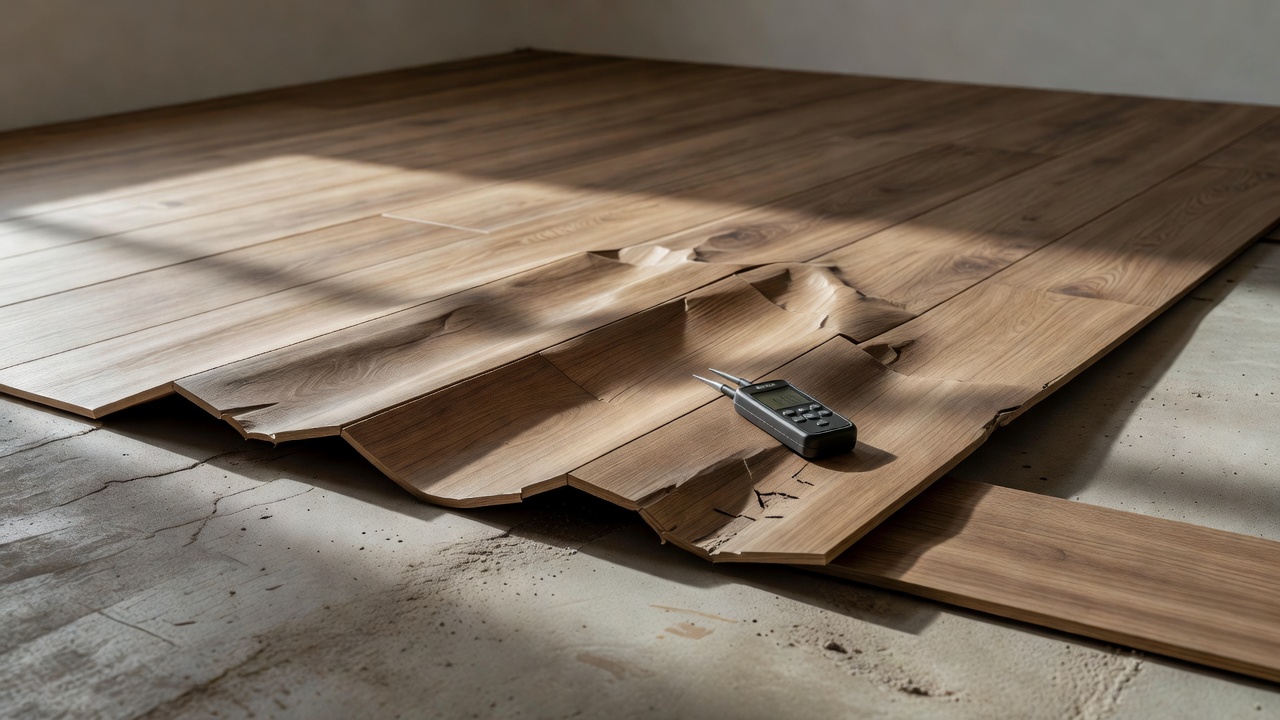
Stop before installation when a slab has visible efflorescence, standing water or an unresolved leak; when a crawlspace has active water or missing ground protection required by the assembly; when wood readings vary sharply without explanation; or when the test report omits method and location. Also stop when the proposed membrane, adhesive and patch do not appear together in a compatible written system. Moisture mitigation is not a mystery coating added at the last minute—it is a designed layer with surface-preparation, application, cure and coverage requirements.
FAQ
Do I need a moisture barrier under my floor?
Not automatically. The need for a vapor retarder or mitigation system depends on the slab or crawlspace assembly, flooring, adhesive and manufacturer instructions. Confirm what the assembly requires; an incompatible layer can create a different moisture problem.
What are safe moisture levels for hardwood floors?
Use the flooring manufacturer and NWFA criteria for the species, width, subfloor and expected indoor climate. Record both flooring and subfloor readings; one isolated meter number is not an acceptance plan.
How do you test moisture in a concrete subfloor?
Calcium chloride kits for vapor emission or drilled-in RH probes for relative humidity. Follow the flooring maker's preferred method and give the test the full time it asks for.
What happens if you skip the moisture barrier?
When a specified vapor-control layer is omitted, excess moisture can contribute to bond loss, dimensional movement or microbial conditions. The outcome depends on the assembly, which is why testing and written system selection matter.
Is engineered hardwood more forgiving of moisture?
Engineered construction can be more dimensionally stable than some solid products, but it is not exempt from site testing or written moisture limits. Core materials and adhesives can still be damaged by conditions outside the product requirements.
- Test the subfloor the way the manufacturer demands.
- Write the numbers down.
- Install the barrier they require, taped and sealed.
- Acclimate the flooring.
- Only then open the boxes and start laying.
For the adjacent installation sequence, see vapor barrier for hardwood installation. A slab that exceeds a product’s limit needs a documented mitigation decision, not an improvised extra layer.
If testing or mitigation falls outside the product instructions, use a qualified flooring or building-envelope professional and document the decision before installation.
Sources & standards
- NWFA Installation Guidelines — wood-floor site conditions, subfloors, moisture and installation.
- USDA Forest Products Laboratory Wood Handbook — wood structure, moisture behavior and dimensional change.
- ASTM F2170 and ASTM F710 — concrete relative-humidity testing and resilient-floor substrate preparation.
Checked August 30, 2026. Product instructions and local conditions control whenever they are more specific.