what floor is best for my project
First-Time Home Buyer Flooring Budget and Inspection Plan
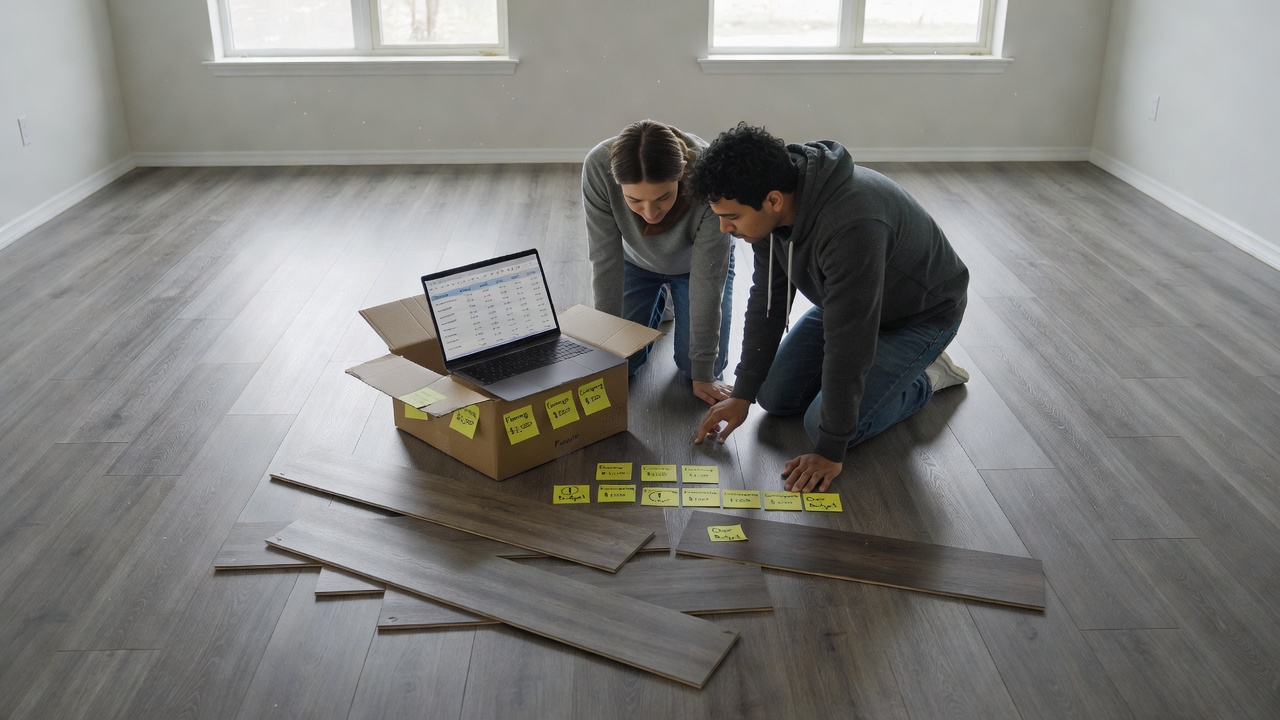
Should first-time buyers choose hardwood or LVP?
Neither category automatically wins. LVP may suit a spill-prone room and a floating installation; hardwood may suit a repairability goal and an assembly that supports it. Compare the exact products on room permission, substrate requirements, complete installed price, daily care, repair options and warranty exclusions. Keep the emergency reserve separate from the flooring ceiling.
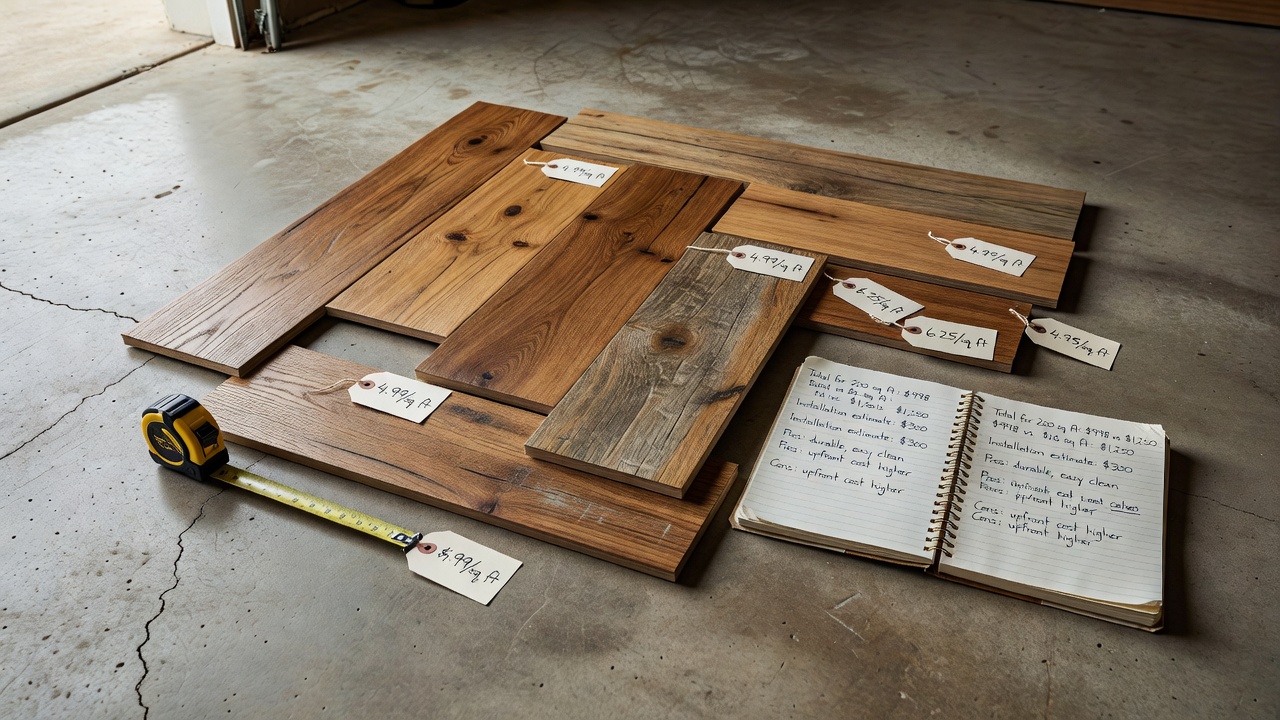
Which flooring should I put in which room as a new homeowner?
Start with room risks rather than assigning one material to the entire home.
- Entry and connected living areas: prioritize tracked grit, continuity, cleanable surfaces and safe transitions.
- Kitchen and laundry: verify water-event exclusions, appliance clearances and access to plumbing; “waterproof” does not protect the subfloor from a leak.
- Bedrooms: comfort, sound and existing clean flooring may matter more than maximum surface hardness.
- Basement or slab areas: test moisture using the method required by the flooring and adhesive system.
- Stairs: treat nosings, slip behavior and attachment as a separate skilled detail, not leftover planks.
How to choose flooring as a first-time buyer reduces to water risk, substrate condition, installer capability, maintenance tolerance and likely ownership horizon. Those factors create the shortlist; no arbitrary move date makes LVP, laminate or hardwood the automatic winner.
For the closest related guidance, see LVP installation guide and best waterproof flooring options.
What kind of floor maintenance do first-time buyers need?
Every floor needs maintenance. Remove grit with the method permitted by the manufacturer, wipe spills promptly, protect furniture contact points and use only approved cleaners. Do not assume plain water, dish soap, steam or a universal polish is safe for every finish. Wood products may also require indoor conditions within stated limits; vinyl and laminate have their own temperature, sunlight and water-event exclusions. Put recurring care requirements beside the purchase price before choosing.
Inspect before choosing a material
Identify the substrate in every room and look for movement, damaged panels, cracks, staining, efflorescence, odor and abrupt height changes. Measure flatness and moisture using the methods required by the finalist products. Check door swings, appliance removal, cabinets, baseboards, stairs and adjacent flooring. If the inspection reveals structural movement, active water or a suspected hazardous material, stop and obtain qualified help before pricing finish flooring.
The inspection protects the budget because preparation can change the installation method or eliminate a product. Ask each seller to state who owns removal, disposal, patching, mitigation, transitions and damage discovered after demolition.
Build a complete first-home budget
Use current local proposals and include measured material plus waste, delivery, demolition, disposal, substrate work, underlayment or adhesive, trim, transitions, stairs, appliance handling, labor, tools and tax. Keep an emergency reserve outside that number. A financing offer changes payment timing, not total project cost.
Compare DIY only when the exact product permits it and the substrate already meets the instructions. Price tools, time and repair risk honestly. Keep product labels, lot information, photos, test results, warranties and spare material in the home file.
Mistakes that create second projects
Avoid choosing color before construction, buying from a sample without checking pattern repetition, trusting a material-only price, mixing finished heights without a transition plan, covering active moisture, or installing through connected rooms without checking run limits. Do not discard every existing floor: a clean, safe and compatible surface may be the best budget choice.
FAQ
What is the best flooring for first-time home buyers?
There is no universal best material. Choose the exact product that passes the room, substrate, complete-cost, care, repair and warranty checks while preserving an emergency reserve.
Should first-time buyers choose hardwood or LVP?
Choose LVP when its written room and installation terms fit the project and repairability is secondary. Choose hardwood when the assembly, budget and maintenance plan support authentic, potentially renewable wood.
Which flooring should I put in which room as a new homeowner?
Assign materials only after checking each room’s water, traffic, sound, substrate and transition conditions. Continuity is useful, but it should not override compatibility.
What kind of floor maintenance do first-time buyers need?
Follow the exact care guide. Grit control, prompt spill response and furniture protection are common themes, but cleaner and equipment permissions vary by product.
What are the biggest flooring mistakes first-time home buyers make?
Common mistakes are skipping substrate inspection, spending the emergency reserve, comparing material price instead of complete scope, ignoring finished height and assuming a marketing claim replaces the warranty.
Sources & standards
- Federal Trade Commission warranty guidance — compare written coverage, exclusions and claims procedures before purchase.
- ASTM F2170 and ASTM F710 — concrete relative-humidity testing and resilient-floor substrate preparation.
- NWFA Installation Guidelines — wood-floor site conditions, subfloors, moisture and installation.
Checked August 30, 2026. Product instructions and local conditions control whenever they are more specific.