Beginner DIY Flooring: Compare Tools, Prep and Total Scope
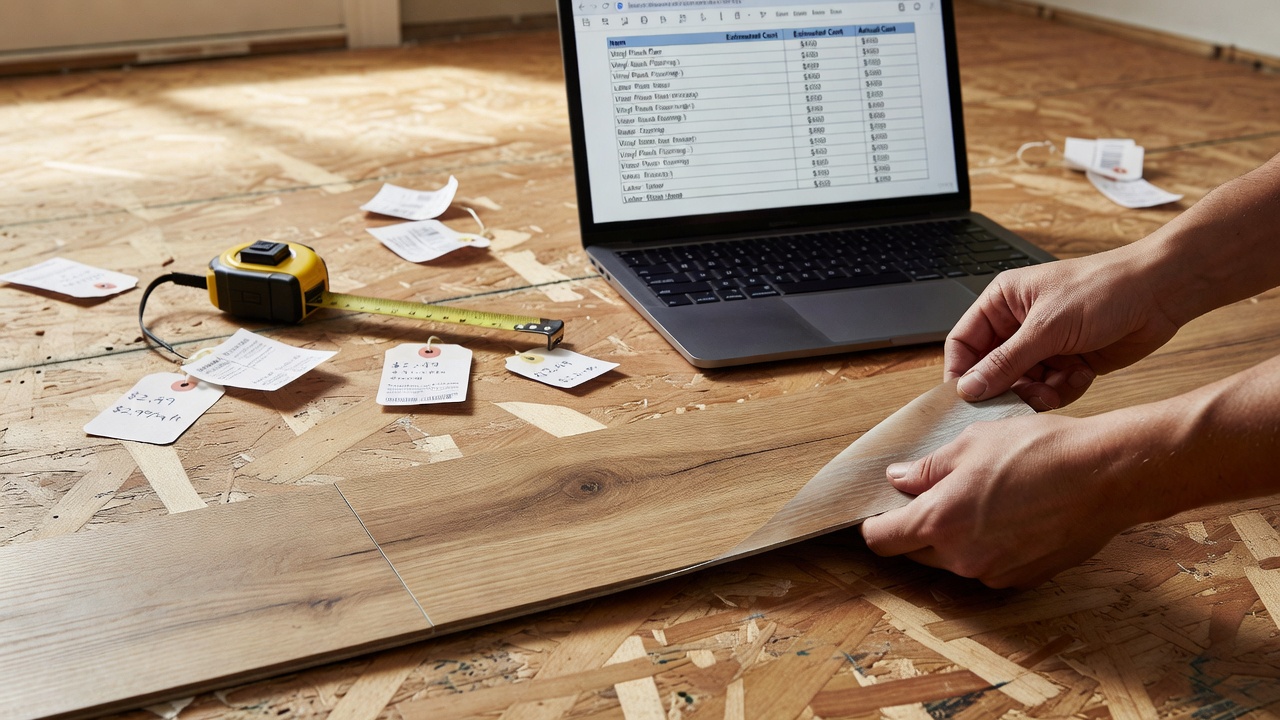
What is the cheapest flooring to install yourself?
There is no nationwide cheapest winner once the substrate and room are included. Peel-and-stick tile can have a low material price but demands a smooth, compatible surface. Sheet vinyl reduces seams but measuring, fitting and adhesive work can punish a first attempt. Floating laminate and click-lock LVP avoid full-spread adhesive, yet still require flatness, moisture, expansion space and correct transitions.
Shortlist only products whose instructions permit the room, substrate and DIY installation. Then compare the exact cart: flooring, required underlayment or vapor-control layer, primer, patch, trim, transitions, stair pieces, blades, tapping tools, spacers, rollers, personal protection, delivery, disposal and waste. The “cheapest box” can lose once proprietary accessories and preparation are added.
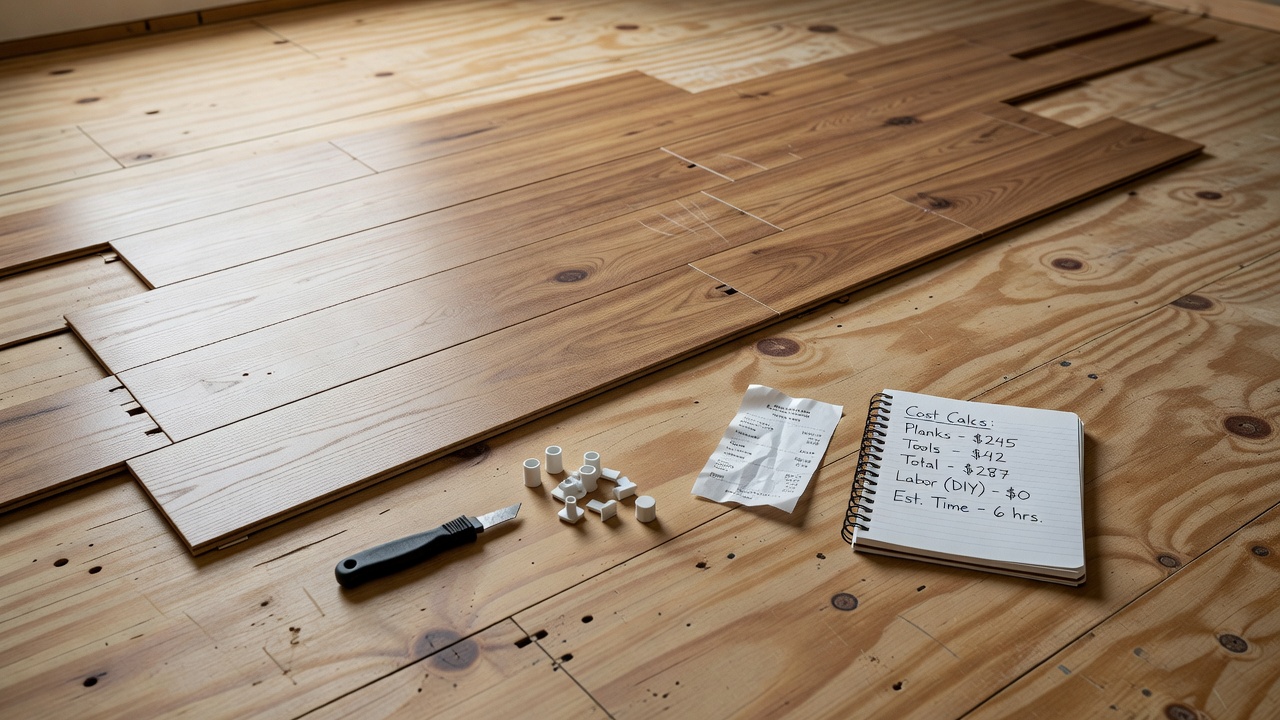
How much does DIY flooring cost per square foot?
A useful DIY budget is built from local prices, not a national per-foot promise. Separate fixed costs—tools, delivery, disposal, transitions and rentals—from area-based costs such as flooring or underlayment. Add a line for substrate correction only after inspecting and measuring it. Keep a contingency, but never use contingency as permission to skip moisture or flatness work.
For the closest related guidance, see budget LVP installation beginners.
Is DIY flooring worth it?
DIY can be worthwhile when the room is simple, the substrate already meets the written limits, the product is designed for the chosen method, and the installer has time to follow the layout and finishing details. It is a poor bargain when savings depend on ignoring a wet slab, soft panel, structural movement, asbestos risk, complicated stairs or cure times.
A defensible go/no-go checklist:
- The exact installation guide is downloaded and read before purchase.
- The substrate and moisture test method are identified.
- Door, cabinet, appliance and stair clearances are measured.
- Expansion space, run limits and transition locations are planned.
- The correct lot quantity and waste allowance are confirmed for the layout.
- A damaged plank can be replaced without dismantling an impossible area.
- The warranty permits homeowner installation and all required records will be kept.
For the closest related guidance, see sheet vinyl vs click lock DIY.
Rehearse the hardest details before purchase
Sketch the plank or sheet layout and locate every doorway, cabinet toe kick, floor vent, transition, stair edge and fixed object. Confirm the minimum and maximum piece sizes, stagger rules, expansion requirements and run limits in the exact installation guide. Practice joining and disassembling spare pieces before working beside a wall. If a doorway or last row has no workable sequence on paper, it will not become easier with adhesive open or half the floor locked together.
Plan the stopping points too. Cure times may keep traffic or furniture off preparation products; floating installations may need transitions at specified distances or doorways. Store materials within the permitted conditions and inspect cartons for lot and damage before mixing planks across the room.
DIY failure and handoff plan
Stop for professional help when the substrate moves, moisture results exceed written limits, a suspected hazardous material appears, a structural layer is unknown, or the chosen correction product is not approved for the substrate. A beginner should also stop rather than improvise at stairs, complex heat sources or unresolved plumbing leaks.
If the project is handed off, give the professional the measurements, test results, technical sheets, purchased lot and photos of exposed conditions. Keep unopened material returnable until preparation is accepted. DIY is most economical when it converts careful labor into savings—not when it transfers hidden risk into the finished floor.
FAQ
What is the cheapest flooring to install yourself?
Compare the complete local cart and preparation scope. Peel-and-stick, sheet vinyl, laminate and click-lock LVP each become expensive when the substrate or room conflicts with the method.
Is DIY flooring worth it?
Yes when the assembly is straightforward and you can meet every written requirement. No when the plan depends on skipping diagnosis, structural work, moisture control or specialized installation.
Can beginners install vinyl plank flooring?
Some click-lock products permit DIY installation. Suitability still depends on substrate measurements, layout, expansion space, transitions and the manufacturer’s exact instructions.
How much does DIY flooring cost per square foot?
Use current local material prices and add tools, accessories, delivery, disposal, waste and substrate preparation. A single national figure cannot describe those variables.
What hidden costs should first-timers watch for?
Watch for removal, patching, moisture testing or mitigation, required underlayment, proprietary transitions, stair parts, door trimming, blade wear, rentals, delivery and disposal.
Sources & standards
- ASTM F2170 and ASTM F710 — concrete relative-humidity testing and resilient-floor substrate preparation.
- ASTM D4060 — what Taber abrasion testing measures and why coatings cannot be compared on thickness alone.
- Federal Trade Commission warranty guidance — compare written coverage, exclusions and claims procedures before purchase.
Checked August 30, 2026. Product instructions and local conditions control whenever they are more specific.