what floor is best for my project
Flooring for Resale: Match Material to Condition and Market
Resale flooring decisions begin with evidence: existing condition, local comparable homes, repairability and complete project cost. Personal taste matters less for a near-term sale, but no material has a universal appraisal premium.
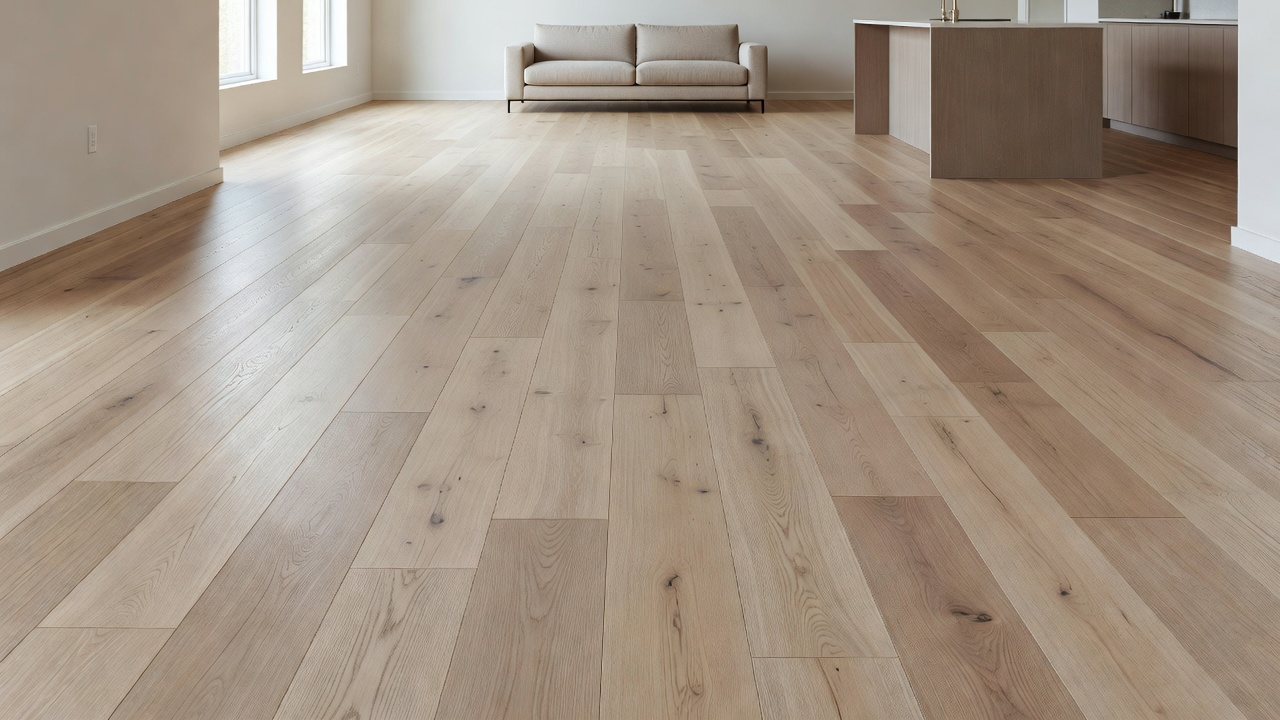
What flooring increases home value the most?
No flooring material increases value in every market. Existing hardwood in repairable condition may deserve refinishing; a compatible wood-look resilient floor may suit a damaged or budget-constrained project; clean tile, laminate or carpet may need no replacement at all. Condition and continuity through connected spaces often matter more than installing the most prestigious category.
Does new flooring increase home value?
New flooring may remove an obvious condition objection or improve presentation, but cost recovery is not automatic. Price cleaning, targeted repair and refinishing before replacement. Complete the chosen work before photography when practical so the listing reflects the finished condition; do not rush an incompatible installation simply to meet a date.
The repair, refinish or replace decision tree covers material choice against neighborhood norms.
Is LVP or hardwood better for resale?
Hardwood may support the architecture and buyer expectations in some markets, especially when sound boards already exist. LVP can deliver visual continuity and spill tolerance at a different scope, but product quality, transitions and installation must fit the home. Compare the exact proposals and recent local listings. The hardwood refinishing guide explains when preserving existing wood is feasible.
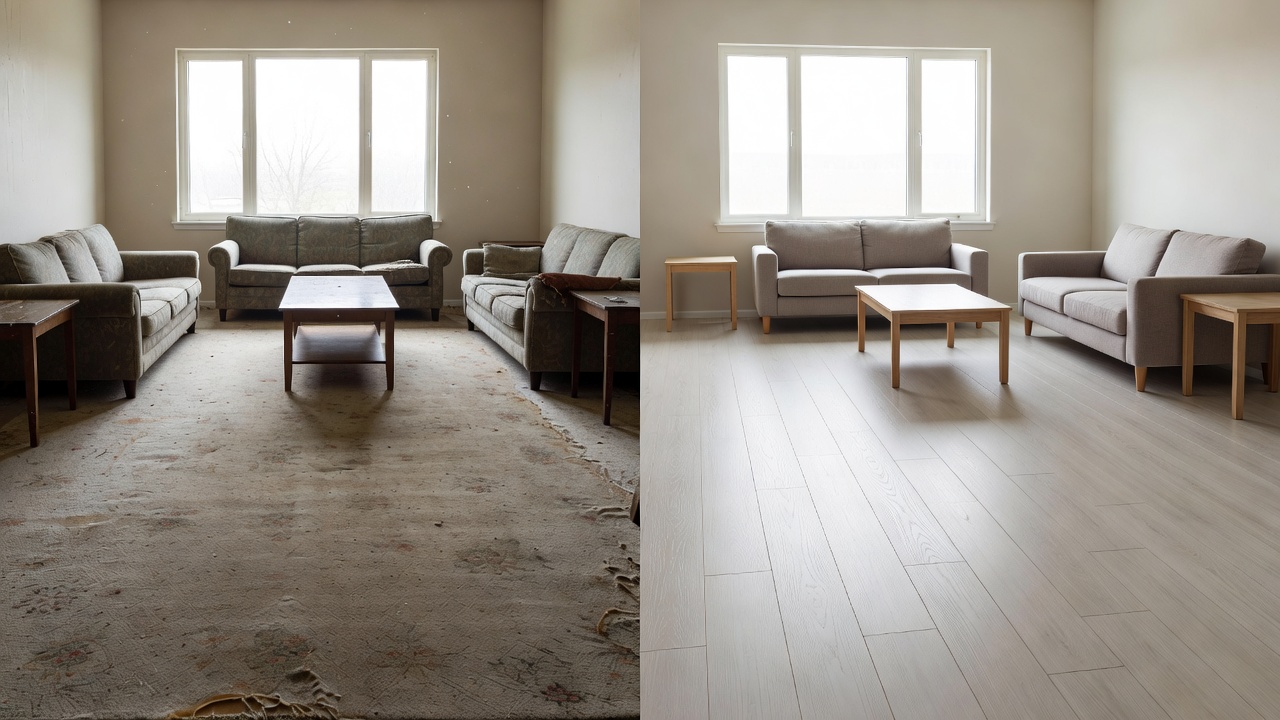
Match improvement level to the market
Create a small comparable set at the same property type, price tier and location. Record flooring material only where the listing or photos support it, plus overall condition and whether connected rooms are coherent. Do not infer a dollar premium from a few photos. Use the set to answer a narrower question: would the subject floor look like a normal maintained finish, a visible project or an unnecessary over-improvement?
Next, obtain itemized scopes for cleaning, repair, refinishing and replacement. Include demolition, disposal, preparation, moisture work, transitions, trim and schedule. Compare the least invasive scope that solves the documented problem with the sale window and local evidence.
Resale-flooring red flags
Stop when a recommendation relies on a guaranteed return, an unsupported “buyers always want” claim or a material-only price. Do not cover moisture, structural movement, odor or hazardous material. Avoid replacing one room in a way that creates a worse transition through the main sightline. Keep product identifiers, receipts, spare material, warranties and installation records for the buyer packet.
Add an exit criterion to the analysis. Once the current floor is safe, serviceable, visually coherent with the price tier and supported by documentation, more spending needs new local evidence. Do not keep upgrading because a more expensive material exists. Conversely, do not preserve a floor whose active damage, odor or movement survives cleaning and repair. This boundary separates market-matched preparation from both neglect and over-improvement.
When two scopes remain close, prefer the one with fewer installation unknowns, clearer responsibility and a realistic schedule. Certainty about a correct modest repair can be more valuable than an ambitious replacement rushed before listing.
FAQ
What flooring increases home value the most?
There is no universal winner. The best resale outcome usually begins with correcting a documented condition problem at a scope supported by the local market.
Does new flooring increase home value?
It may remove an obvious negative such as damaged material, but recovery varies. Compare the full cost and local evidence, and avoid over-improving beyond the market.
Do hardwood floors increase home value?
They can be valued when condition and local expectations support them, but no fixed premium is reliable. Existing hardwood should be assessed for repair or refinishing before replacement.
Is LVP or hardwood better for resale?
Neither wins nationally. Use actual local comparable properties, the existing assembly and complete written scopes to choose between preserving hardwood and installing an exact LVP product.
Should I replace carpet before selling?
Replace when cleaning and repair cannot resolve damage, odor or safety concerns and the scope fits local expectations. Otherwise a clean serviceable carpet may remain.
Evaluate the floors as a documented property condition, not a referendum on personal taste. A near-term sale emphasizes local competition and intervention cost; a long-term plan can give more weight to daily use and maintenance.
Sources & standards
- NWFA Installation Guidelines — wood-floor site conditions, subfloors, moisture and installation.
- USDA Forest Products Laboratory Wood Handbook — wood structure, moisture behavior and dimensional change.
- National Association of REALTORS® Remodeling Impact — national remodeling cost-recovery research; local sale results still vary.
Checked August 30, 2026. Product instructions and local conditions control whenever they are more specific.