Hardwood, LVP and Cork Underfoot: A Sensory Comparison
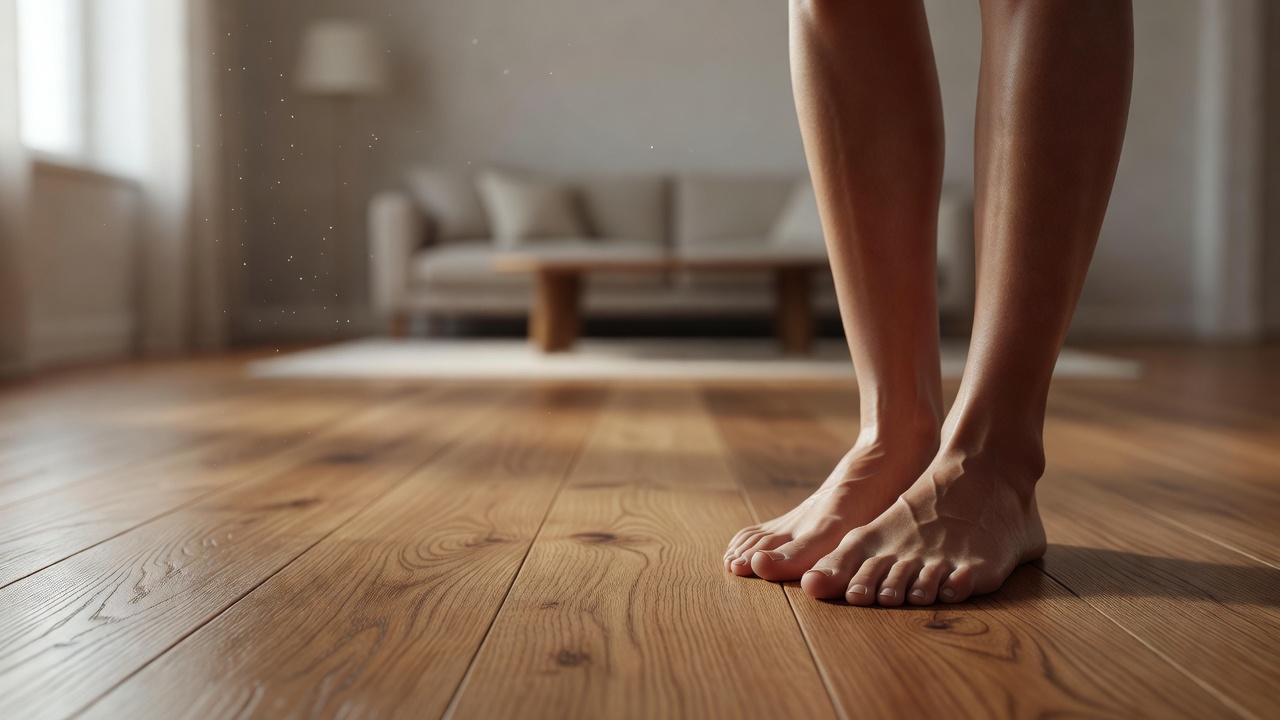
Does LVP Feel Like Real Hardwood Underfoot?
Let us address the heresy directly. No. Luxury vinyl plank does not feel like real hardwood underfoot, any more than a competent Beaujolais feels like a first-growth Bordeaux. It performs a charming impersonation of the look, occasionally even the grain photography, but the body betrays it at first contact.
Tasting Notes — Select Grade White Oak (solid, 5-inch, site-finished)
- Nose: Dry toast, faint linseed from the finish, the quiet ambition of a pre-war townhouse.
- Palate: Immediate warmth rising through the metatarsal; micro-flex that registers as living wood rather than laminate arrogance. Subtle spring without bounce.
- Finish: Long and resonant—each step leaves a soft acoustic memory, like the decay of a well-struck cello string.
- Body: Full, structured, 9.2 Insoles out of 10.
- Verdict: The reference standard. One forgives the maintenance the way one forgives a temperamental artist.
Tasting Notes — Premium Rigid-Core LVP (7mm, oak visual, foam underlayment)
- Nose: Clean polymer, a whisper of factory adhesive that fades after the third pass.
- Palate: Cooler entry temperature; denser, more uniform resistance. The embossing tries valiantly, yet the foot detects the rigid core’s refusal to yield.
- Finish: Short to medium—efficient, then gone. No lingering conversation.
- Body: Medium-plus, engineered for durability over poetry. 6.8 Insoles out of 10.
- Verdict: Respectable for the price of admission, and vastly preferable to the hollow click of cheap laminate. Still, the bare foot knows.
For the closest related guidance, see LVP vs hardwood comfort.
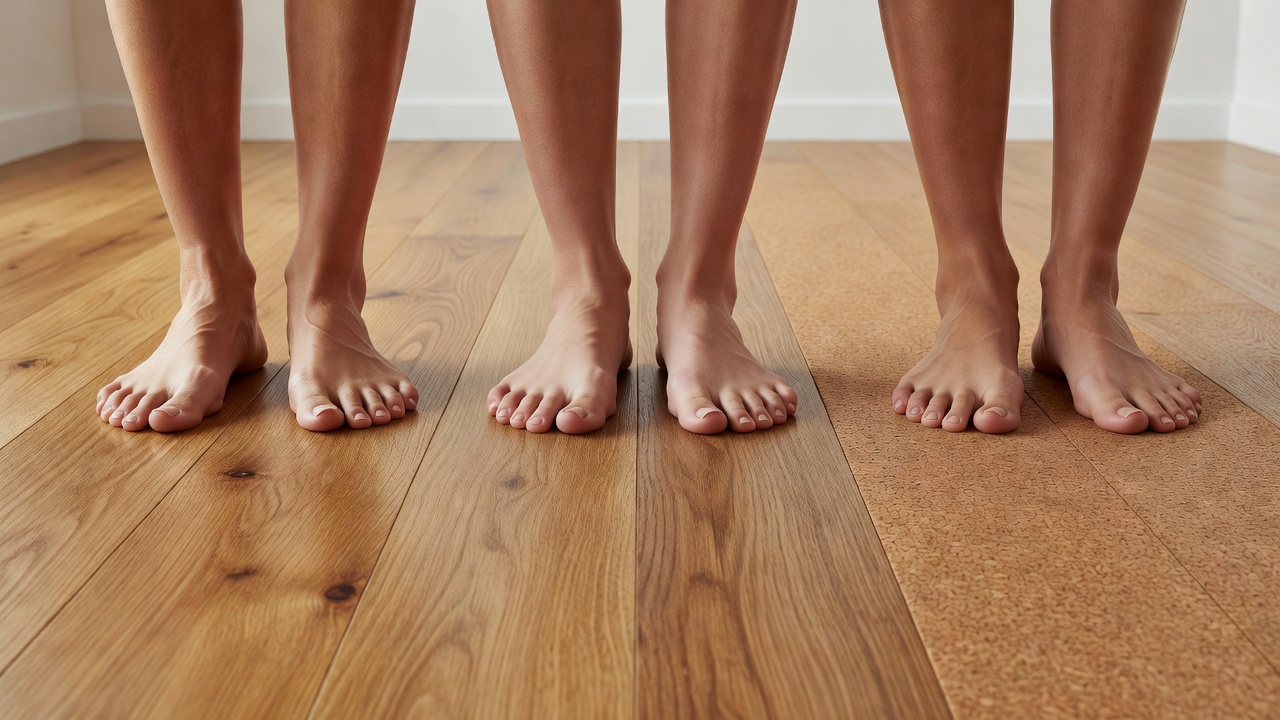
Is Hardwood Flooring Worth It for the Feel?
Unequivocally yes—if the feel is among your non-negotiables. The hardwood underfoot feel is not a luxury add-on; it is the primary text. Everything else (scratch resistance, refinishing cycles, the tedious drama of water) is commentary.
For the closest related guidance, see vinyl wear-layer thickness science.
Those who install LVP “because it looks the same in photos” have optimized for the camera, not the corpus. Photographs do not have nerve endings. The sole does. If your household lives barefoot—morning coffee processions, midnight kitchen raids, the contemplative pacing that accompanies difficult correspondence—hardwood repays the investment in daily micro-pleasures. The alternative is a lifetime of almost.
What Flooring Feels Best on Bare Feet? (And How Does Cork Compare to Vinyl?)
Here the hierarchy clarifies itself with almost rude efficiency.
- Cork — the unexpected grand cru of underfoot comfort.
- Solid or thick-sawn engineered hardwood — the classic.
- High-end LVP with quality underlayment — the reliable second label.
- Everything else, including most tile and the sad category of peel-and-stick.
Tasting Notes — Floating Cork Floor (12mm, natural finish)
- Nose: Soft earth, a distant memory of wine-stopper nobility, zero petrochemical intrusion.
- Palate: Extraordinary give—warm, cushioned, almost maternal without tipping into trampoline vulgarity. The cellular structure absorbs impact and returns gentle resistance.
- Finish: Exceptionally long; the foot remains grateful three strides later.
- Body: Supple yet durable, 9.5 Insoles out of 10 for pure barefoot hedonism.
- Verdict: How cork compares to vinyl for underfoot comfort is not a contest so much as a mercy killing. Vinyl is cooler, harder, and emotionally unavailable. Cork forgives the day.
I will concede cork’s vulnerability to heavy point loads and its occasional need for attentive sealing. I will not concede the sensory superiority. In a proper tasting flight it silences the room. Those chasing the best flooring for bare feet while still demanding waterproof performance may hybridize—cork in private chambers, rigid-core LVP in the splash zones—but pureists know where the soul resides.
The broader flooring texture review landscape remains depressingly utilitarian. Most guides obsess over wear layers and pet claws while treating the foot as an afterthought. This is rather like reviewing a restaurant solely on the tensile strength of the cutlery. Texture, temperature transfer, acoustic feedback, and the indefinable life of the material constitute the actual dining experience. Ignore them at your soles’ peril.
FAQ
Does LVP feel like real hardwood underfoot?
No. LVP is cooler, denser, and lacks the micro-flex and thermal responsiveness of real wood. It can look convincing; the bare foot is not fooled for long.
Is hardwood flooring worth it for the feel alone?
Yes, if you spend significant time barefoot or in thin socks. The daily sensory return justifies the premium for anyone who notices such things—which, once noticed, cannot be unnoticed.
What flooring feels best on bare feet?
Cork leads for cushion and warmth, followed closely by quality hardwood. High-end LVP with proper underlayment places a respectable third.
How does cork compare to vinyl for underfoot comfort?
Cork is warmer, softer, and more forgiving; vinyl is firmer, cooler, and more uniform. Comfort-focused barefoot households generally prefer cork where moisture exposure allows.
Can flooring tasting notes actually help someone choose?
Properly conducted, yes. They force attention onto the sensations that matter after the installers leave and the Instagram photos are forgotten—the part you live with every morning.
In the end, one must choose a floor the way one chooses a signature scent or a trusted tailor: not for the brochure claims, but for the private, repeated pleasure of contact. Hardwood and cork reward the discerning sole; lesser materials merely occupy space beneath it. I have rendered my judgments. The rest is between you and your feet.
Sources & standards
- NWFA Installation Guidelines — wood-floor site conditions, subfloors, moisture and installation.
- USDA Forest Products Laboratory Wood Handbook — wood structure, moisture behavior and dimensional change.
- ASTM F2170 and ASTM F710 — concrete relative-humidity testing and resilient-floor substrate preparation.
- ASTM D4060 — what Taber abrasion testing measures and why coatings cannot be compared on thickness alone.
Checked August 30, 2026. Product instructions and local conditions control whenever they are more specific.