Cork Floor in a Kitchen
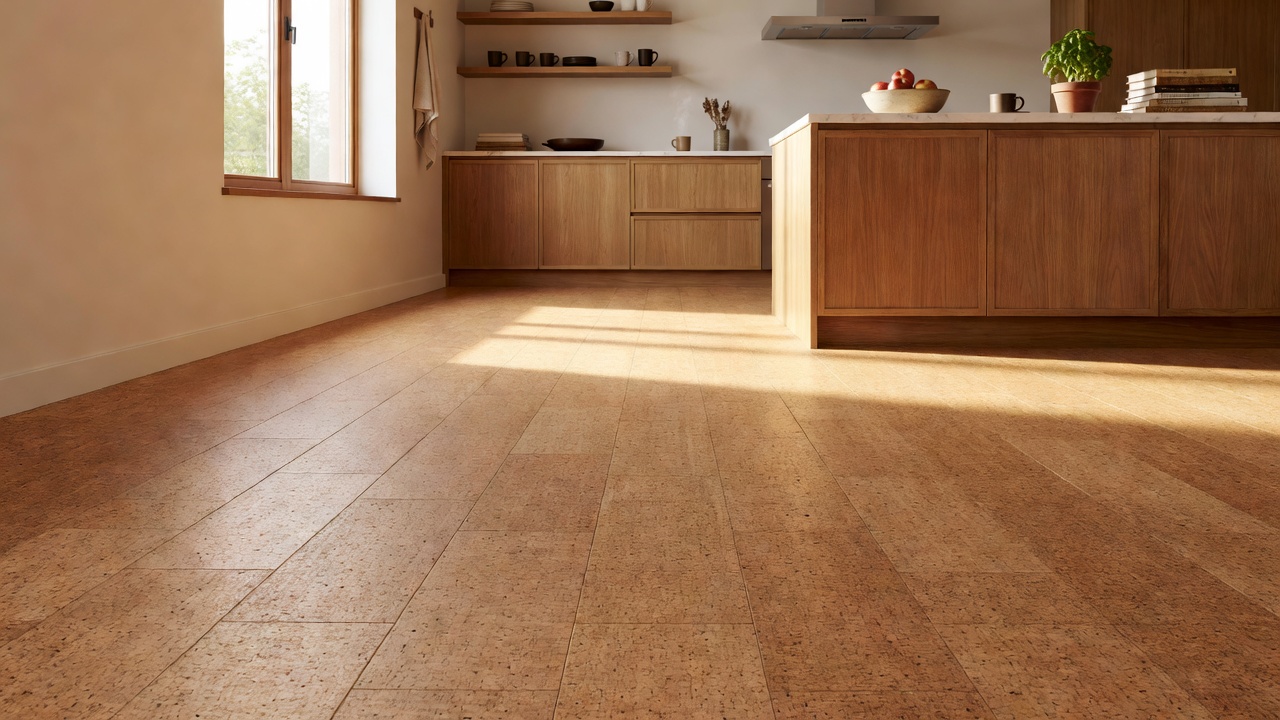
Q: I plan to install one of your floating cork floors in our living room and possibly into the kitchen, but I’ve come across a few snags. First, there are some obvious recommendations against the kitchen; no doubt, if there is ever a plumbing failure, it will ruin the floor. I understand that. Otherwise, if we immediately wipe up the occasional spill, will we have a problem in the kitchen? Like most modern houses, it is completely open to the living room, so any extra water vapor due to cooking will spread through the entire area.
Second, If I do both areas, the floor will span about 35 ft in its longest dimension (this includes going through a 4 ft opening between kitchen and LR). Will I need an expansion joint somewhere in there? If it makes any difference, the house is air conditioned in summer and we use a humidifier in winter. I can’t specify the average humidity, but it’s probably around 40%. Again if it makes a difference, I can also very easily run the flooring at 45deg, in which case the longest tile-spanwise or tile-lengthwise run will be about 30-32ft.
Thanks in advance for the help,
Dean M.
A: The easy answer to both of your questions would be “no,” but lets go into a bit more detail.
In regards to moisture, cork is naturally resistant to moisture (hence why we use it as bottle stoppers). As long as you are cleaning up spills quickly and not leaving any standing water or have any excessive humidity in the air you should have no issues. Also keep in mind, making sure your floor is properly installed is key here.
For your second question about dimensions, floating cork flooring is built similar to laminate. You will have a high-density fiberboard core between a cork back and species/top layer which will help to keep the floor stable. With how these floors are designed, just ensure you keep an expansion gap along your walls of about 3/8” and you should encounter no issues.
I have seen several cork floors in bathrooms and kitchens that worked successfully (although not recommended because wood and water do not mix). With a floating floor in a kitchen, I would look into using a 3mm cork underlayment to give a bit of extra support beyond the thing cork backing on the tiles and use a moisture barrier just as a precaution.