Warm Wood Floors: Color, Pattern and Room-Mood Guide
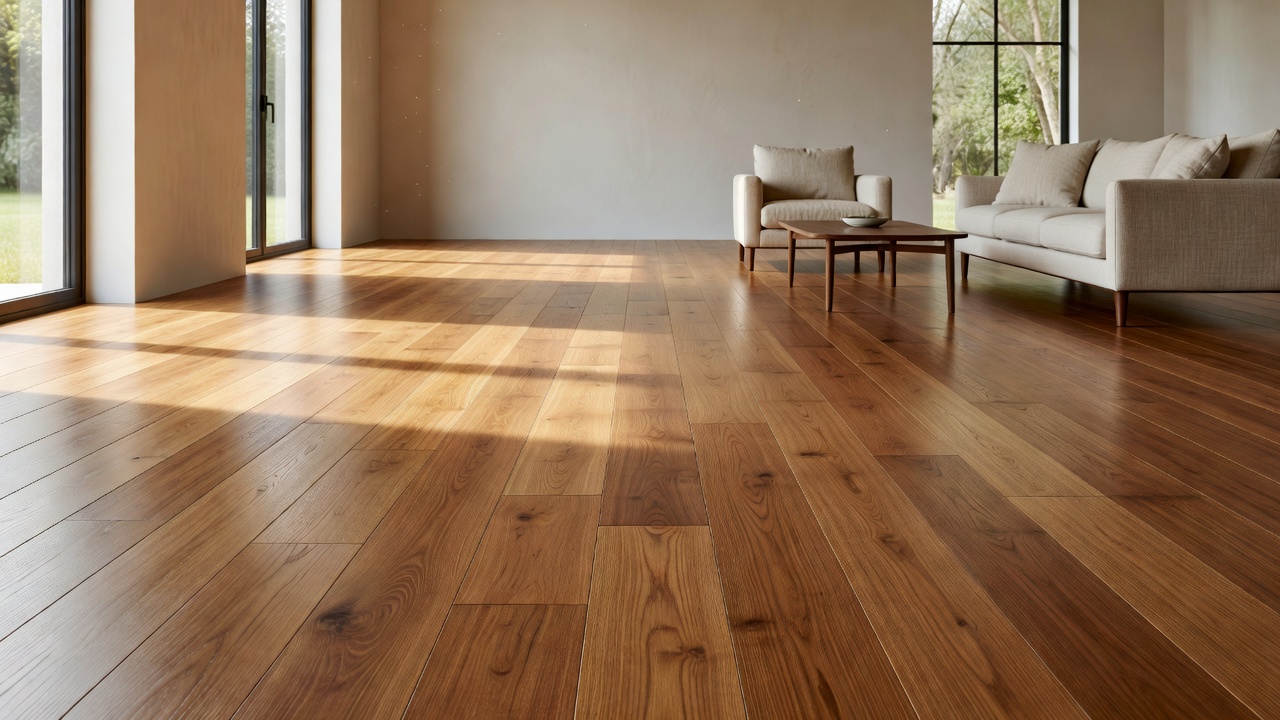 Late afternoon light pools across a living room like melted butter. Cream plaster walls hold the glow. A linen sofa slumps in that perfect lived-in way, velvet pillows in terracotta and ochre catching every shadow. Somewhere a candle is burning—something resinous, almost sacred—and the whole space feels like it finally exhaled. Then your eye drops. The floor is no longer that cool, indifferent gray that haunted every open house from 2018 onward. It is honey. It is caramel. It is alive.
Warm wood flooring trends 2026 is an editorial look at honey, caramel and natural wood tones paired with restrained sheen and pattern. It is not a national sales ranking or a guaranteed mood prescription. Use the direction as inspiration, then test the exact sample against the room’s light, fixed finishes and product requirements.
What Are the Top Flooring Trends for 2026?
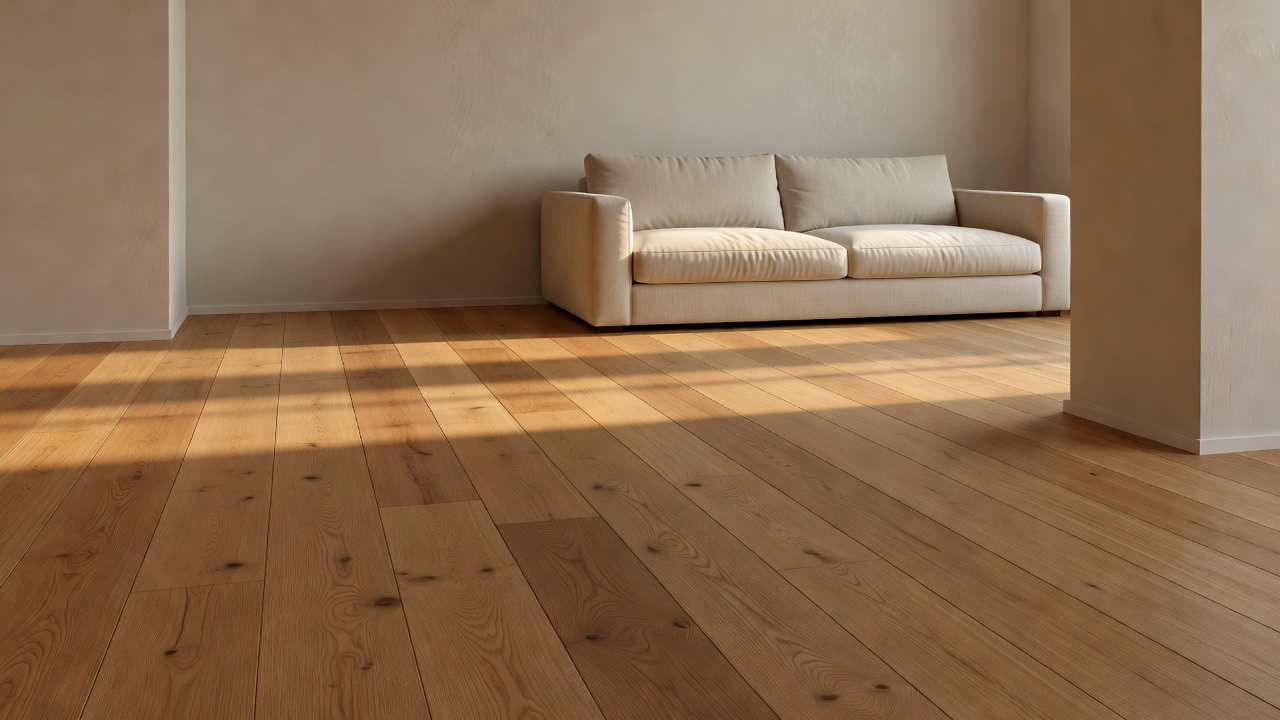
- honeyed white oak with visible ray flecks
- caramel walnut under low winter light
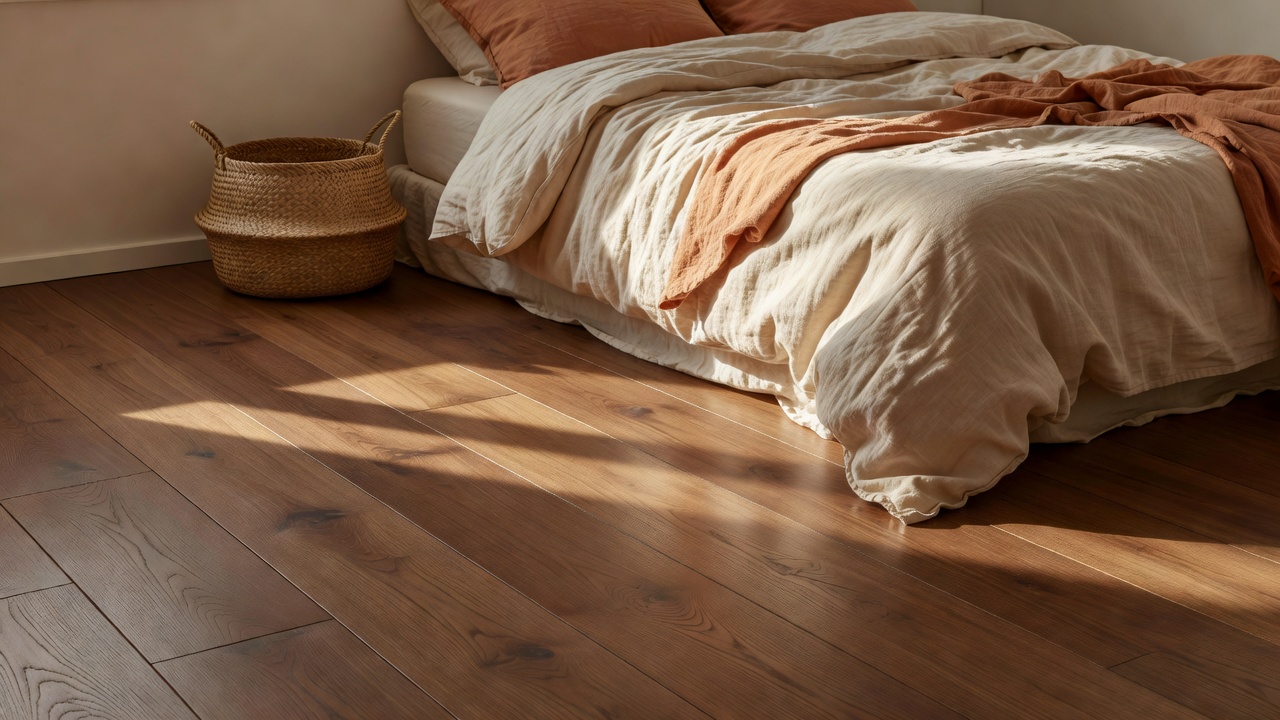
- brushed matte that feels like worn leather under bare feet
- wide planks that run the length of a room like a single held breath
- herringbone that zigzags toward a window the way desire zigzags toward a person
- the soft shock of a floor that still looks like tree
These are not accessories. They are the emotional foundation. Pair them with cozy room flooring ideas that lean into texture—sheepskin, raw linen, unlacquered brass—and the whole house starts speaking in a lower, kinder register.
Are Gray Floors Out of Style in 2026?
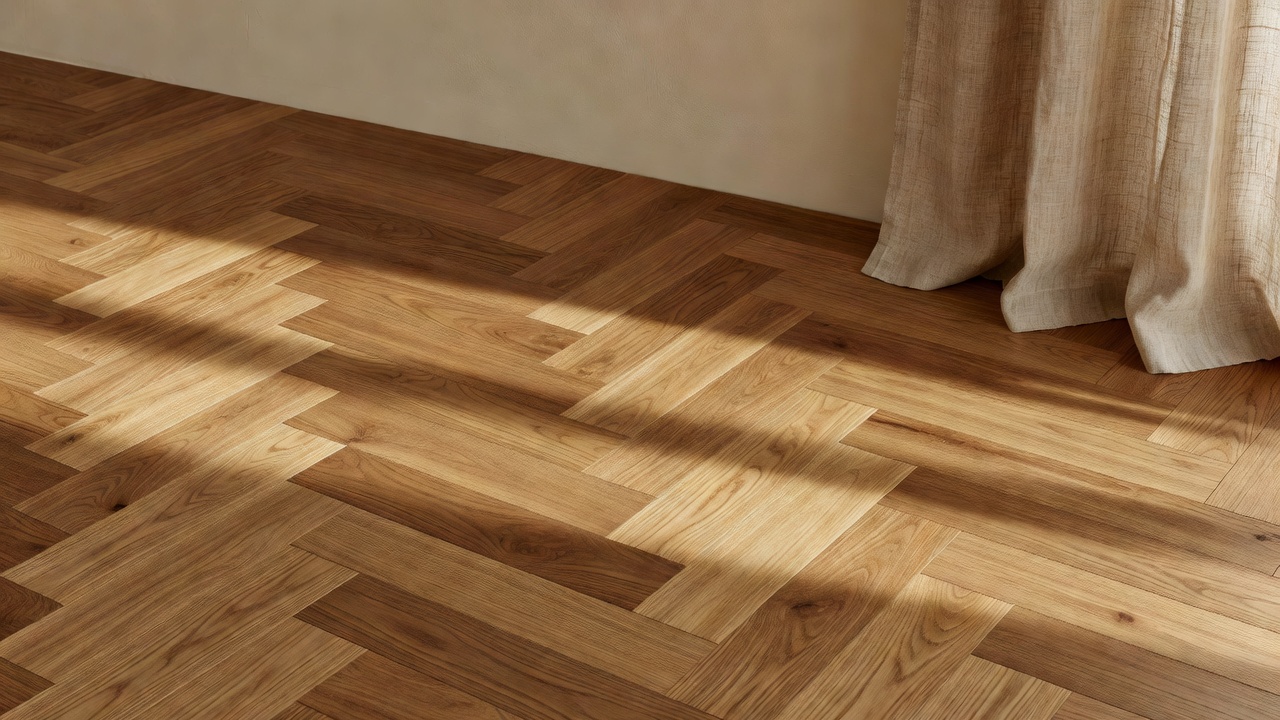
No color becomes technically obsolete on a calendar date. Cool gray can still work in a deliberate cool palette, while a warm wood visual may conflict with blue-gray stone or cabinetry. The useful question is whether the installed undertone supports the room and whether the owner wants to keep the surrounding finishes. Compare both directions with full-size samples under daylight and electric light before declaring either “in” or “out.”
How Does Flooring Color Affect Room Mood?
Color on the floor contributes to contrast and reflected light. Warm wood tones can support a visually warm composition; cool gray can support a crisp one. Neither guarantees comfort or a psychological response. Wall color, daylight, lamp temperature, sheen and personal association change the result.
For deeper guidance on how pattern and light interact, see flooring color by room and mood. Treat every trend observation as editorial and verify the exact room rather than inferring a market fact from styled images.
Is Herringbone Flooring Worth It?
It can be when the pattern supports the architecture and the complete layout, cutting waste, labor, border treatment and transitions fit the budget. Herringbone magnifies alignment errors and requires an approved installation plan; it is not merely straight planks turned at an angle. Ask for a scaled layout, centerline, perimeter detail and sample field before authorizing it. A straight plank can be the stronger choice when the room already contains many competing lines.
Compare a taped or printed full-scale pattern in the room before purchase. Check how the field meets doorways, cabinets and adjoining straight-plank areas, then include border pieces and repair stock in the order.
FAQ
What are the top flooring trends for 2026?
Our editorial watch highlights honey and caramel tones, restrained sheen and pattern. That is inspiration, not proof of national popularity; validate it against the room and exact product.
Are gray floors out of style in 2026?
No color is universally out. Cool gray can support a coherent cool palette; warm wood can support a warmer one. Sample both with the room’s fixed finishes.
Is herringbone flooring worth it?
It can be worth the complete material, layout and labor scope when the pattern suits the room. Require a scaled plan and compare it with straight plank before deciding.
How does flooring color affect room mood?
Floor color changes contrast and reflected light, which contributes to the composition. Personal response varies, so no undertone guarantees calm or warmth.
What finishes work best with natural wood tones 2026?
Matte and low-sheen finishes are editorial candidates when restrained reflections are desired. Scratch visibility and durability still depend on color, texture and coating system, so compare exact samples and data.
So tell me—when you close your eyes and picture the one room that still does not feel like you, what color is the floor beneath your bare feet? Change that, and the rest of the house will follow like a held breath finally released.
Sources & standards
- NWFA Installation Guidelines — wood-floor site conditions, subfloors, moisture and installation.
- USDA Forest Products Laboratory Wood Handbook — wood structure, moisture behavior and dimensional change.
Checked August 30, 2026. Product instructions and local conditions control whenever they are more specific.