what floor is best for my project
Use a Three-Material Rule for a Cohesive Floor Plan
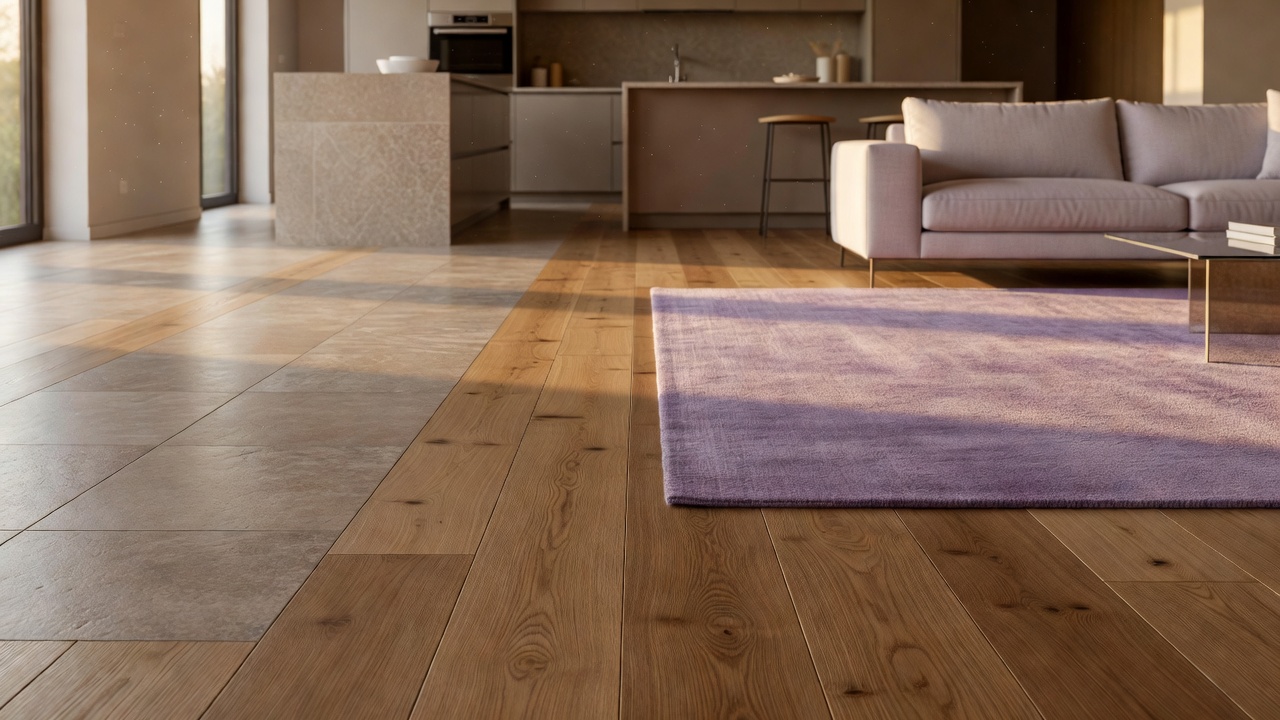
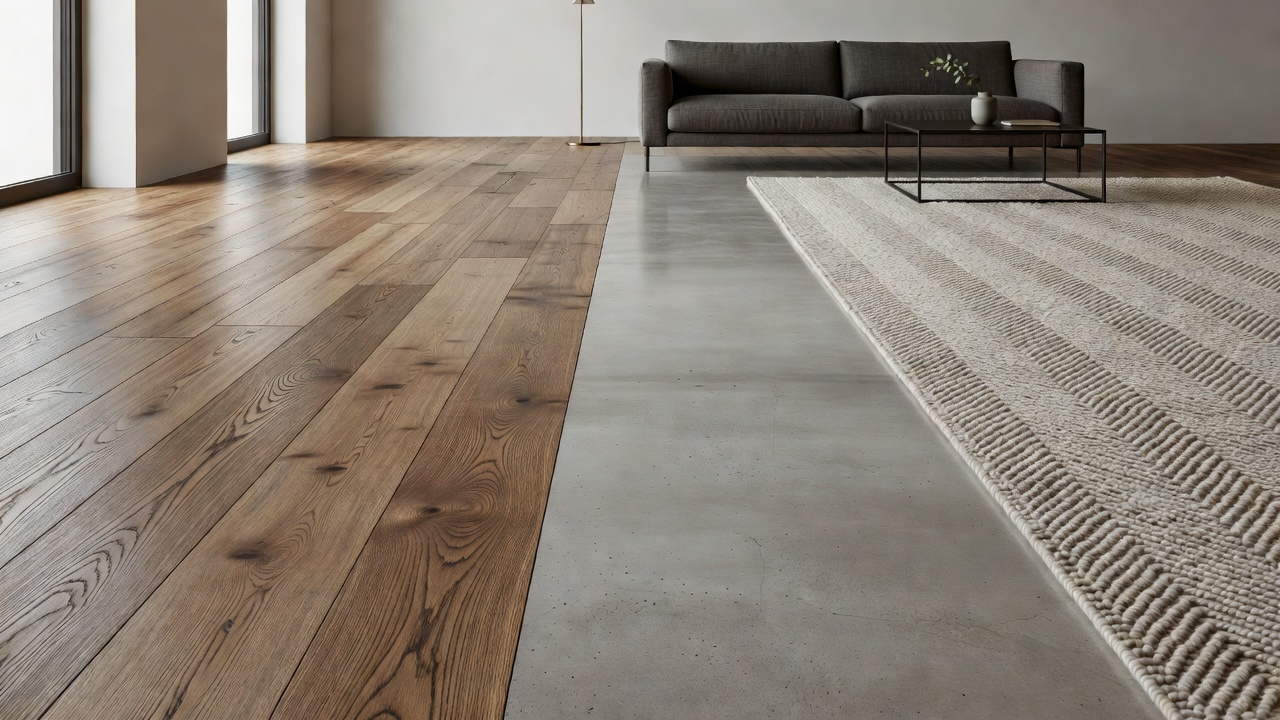 The foyer catches late-afternoon light like champagne in a coupe—honed limestone cool and pale as bone china, then a honeyed white-oak runner of planks that seems to inhale you deeper into the house, and beyond the threshold a low-pile wool that swallows sound the way velvet swallows a secret. That is the three-material rule flooring doing what it was born to do. The three-material rule for flooring is a design principle that deliberately limits a home’s floor plane to three complementary materials—classically one hard surface, one resilient surface, and one soft finish—so the eye reads continuity instead of collision and every room feels staged rather than stitched together by accident.
What is the three-material rule for flooring?
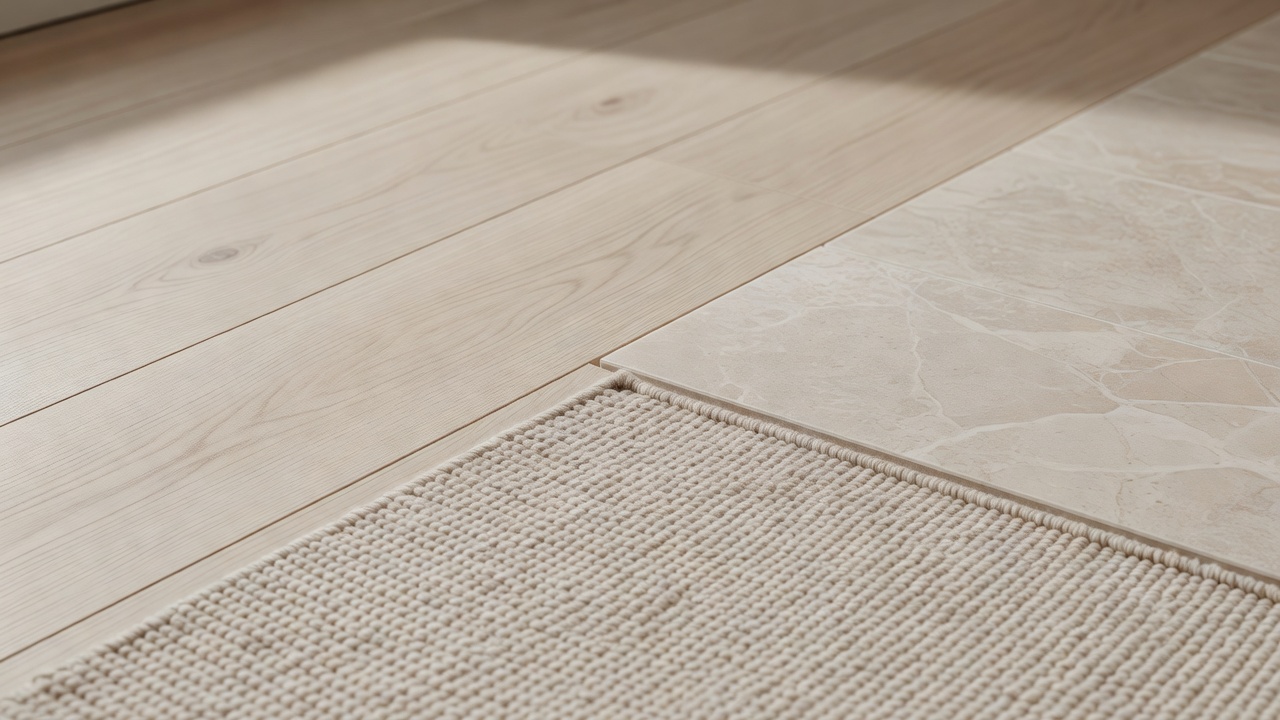
It is not a suggestion. It is a restraint that becomes luxury. You choose three materials whose undertones speak the same language—warm, cool, or quietly neutral—and you let them carry the entire home. Hard (wide-plank oak, large-format porcelain, marble). Resilient (quality LVP that actually looks like timber, cork, polished concrete). Soft (wool carpet, thick sisal, layered rugs that feel intentional rather than apologetic). Three. Not four. Not “just this one more transitional strip because the hallway felt lonely.”
For the closest related guidance, see faux-wood LVP mistakes.
How do you mix flooring materials without it looking disjointed?
Texture contrast is the second secret. Smooth stone next to open-grain oak next to a looped wool creates a tactile sentence the body understands before the brain catches up. Same-family materials in different scales also work: petite herringbone in the powder room echoing the wider planks in the great room. The rule is not monotony; it is conversation with a limited vocabulary.
- sun-bleached oak, matte, wide and slightly imperfect
- limestone the color of unbleached linen, large slab, cool but not cold
- hand-loomed wool in oat and smoke, low pile, edges left raw
- one bronze threshold that catches light like jewelry
- a single dark accent rug that feels collected, never matched
That is cohesion. That is whole-home flooring palette thinking instead of room-by-room panic.
What are the best flooring combinations for a cohesive look?
Editorial favorites for a three-material palette:
White oak (hard) + large-format porcelain in a complementary greige (resilient/hard hybrid) + ivory wool (soft).
European white oak again, but this time with cork in the kitchen zones and a thick sisal in the bedrooms for that grounded, barefoot honesty.
Blackened wide-plank ash, honed black basalt in the wet rooms, and a charcoal low-pile that disappears under furniture so the architecture can speak.
Notice what is missing: high-gloss anything, busy patterns that fight the furniture, and the temptation to “warm up” a cool palette with a random honey-toned runner that has no business being there. Cohesion is edited. Staging is ruthless affection for the edit.
FAQ
What is the three-material rule for flooring?
The three-material rule for flooring limits a home to three complementary flooring materials—typically hard, resilient, and soft—to create visual cohesion and intentional flow. It prevents the fragmented look that happens when every room chooses independently. Designers use it for both daily living and high-stakes staging.
How many different flooring materials should you use in a home?
Three is the professional sweet spot for most residences. Two can feel sparse or overly minimal; four or more usually reads as disjointed unless the home is vast and the materials share extremely tight undertones. Stick to three and let scale and texture provide the interest.
How do you mix flooring materials without it looking disjointed?
Match undertones first, keep transitions quiet and material-aware, and use texture contrast rather than color jumps. Carry at least one material across sightlines so the eye never has to restart the story. Avoid decorative metal thresholds that announce every change like a loudspeaker.
What are the best flooring combinations for a cohesive look?
White oak with greige porcelain and ivory wool, or ash with basalt and charcoal carpet, both deliver strong cohesion. The winning combinations share temperature and let one material dominate the largest footprint while the other two support wet zones and soft zones. Always sample in the actual light of the house.
Do flooring transitions have to match exactly for the three-material rule to work?
No. They need to feel intentional and share undertone or finish language, not match like a set of luggage. A well-chosen reducer or a clean butt joint often looks more elevated than a matching strip that draws unnecessary attention.
The light will move. The limestone will stay cool under bare feet at midnight, the oak will warm where the dog sleeps, the wool will hold the shape of the chair you finally love. Three materials. One house that feels decided. What’s the one room that still doesn’t feel like you yet—and which material is it waiting for?
Sources & standards
- USDA Forest Products Laboratory Wood Handbook — wood structure, moisture behavior and dimensional change.
- U.S. EPA TSCA Title VI — labeling and certification for regulated composite-wood products.
Checked August 30, 2026. Product instructions and local conditions control whenever they are more specific.