Flooring for a Weight Room
Q: We have just built a garage with a room above it. We are wondering what type of flooring would be best for an area used for weight lifting and aerobic activities and also would be easy to care for since the kids will be using part of the room and having their friends over and will be eating in there.
Thank you
Jenny
A: Weight rooms can be very tricky when it comes to flooring options. If you will have multiple machines or quite a bit of free weights, then I would highly suggest avoiding any floating floors. Floating floors aren’t built to have concentrated weight over them, especially toward the edge of the floor along walls where it is more common to store free weight racks. Now there are some exceptions to this, but they are few.
This means looking into nail-down or glue-down floors depending on your subfloor. If you will be going over concrete, this means only a glue-down floor or one of the rare floating exceptions. Engineered hardwood would be something I would avoid, simply because its not going to do well on the rare occasion that a weight is dropped without having to cover your floor with multiple padded areas.
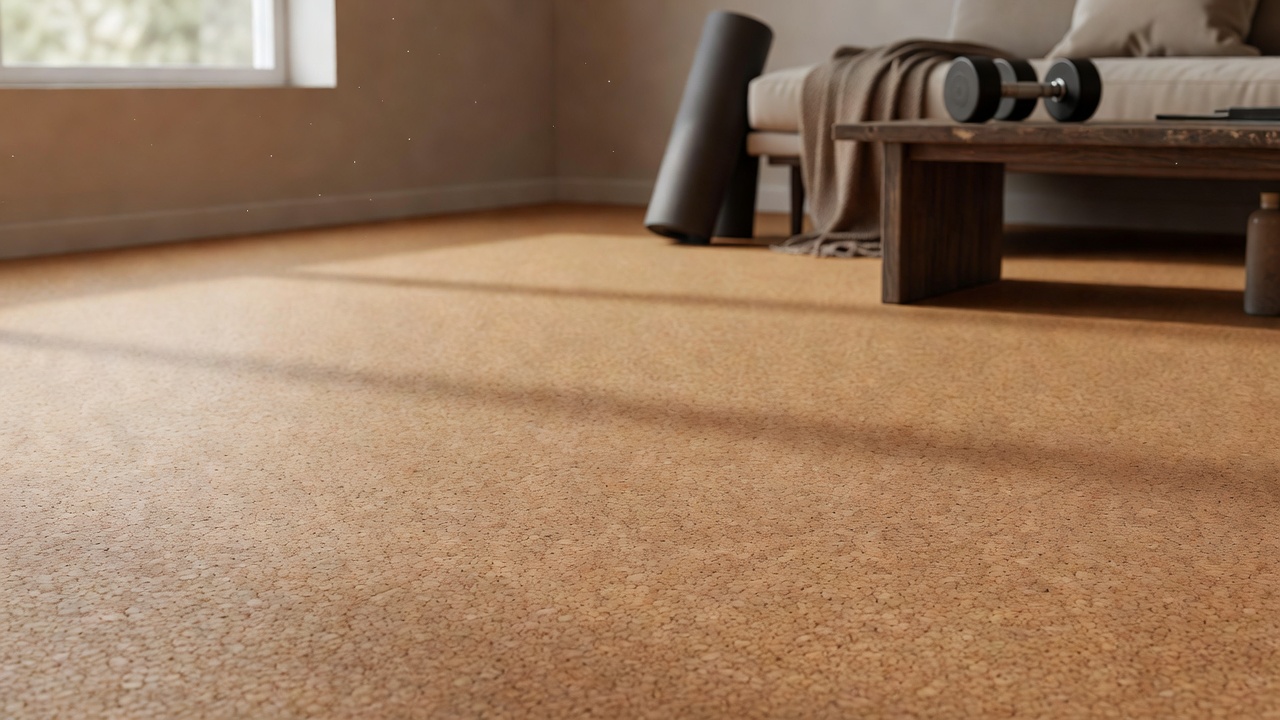
Glue-down cork could be a great choice here as it naturally pushes dents out and provides a bit of support for your feet. Cork is naturally somewhat moisture resistant, and when installed with the glue-down method it does an excellent job of resisting spills when they are cleaned up promptly.
Vinyl is also a great choice here, both the glue-down tiles and floating planks like those made by Konecto will work well from a maintenance and durability standpoint. Konecto’s vinyl planks are one of the rare floating floors which would work in a weight room, but self-adhesive or other glue-down vinyl tiles will also work very well.
A final option would be to looking into the rubber zip-tiles made by RB Rubber. These are very commonly seen in gyms and martial arts studios because they are low maintenance, water-proof and have a light cushion to them. Also, because of the way they are made, damaged tiles are very easy to replace, you just pull them up like a puzzle piece and snap a new one back down.
All of these options would work well, but I would lean toward either the RB Rubber tiles or Vinyl if you want a little less fuss when it comes to maintenance.