RV Flooring
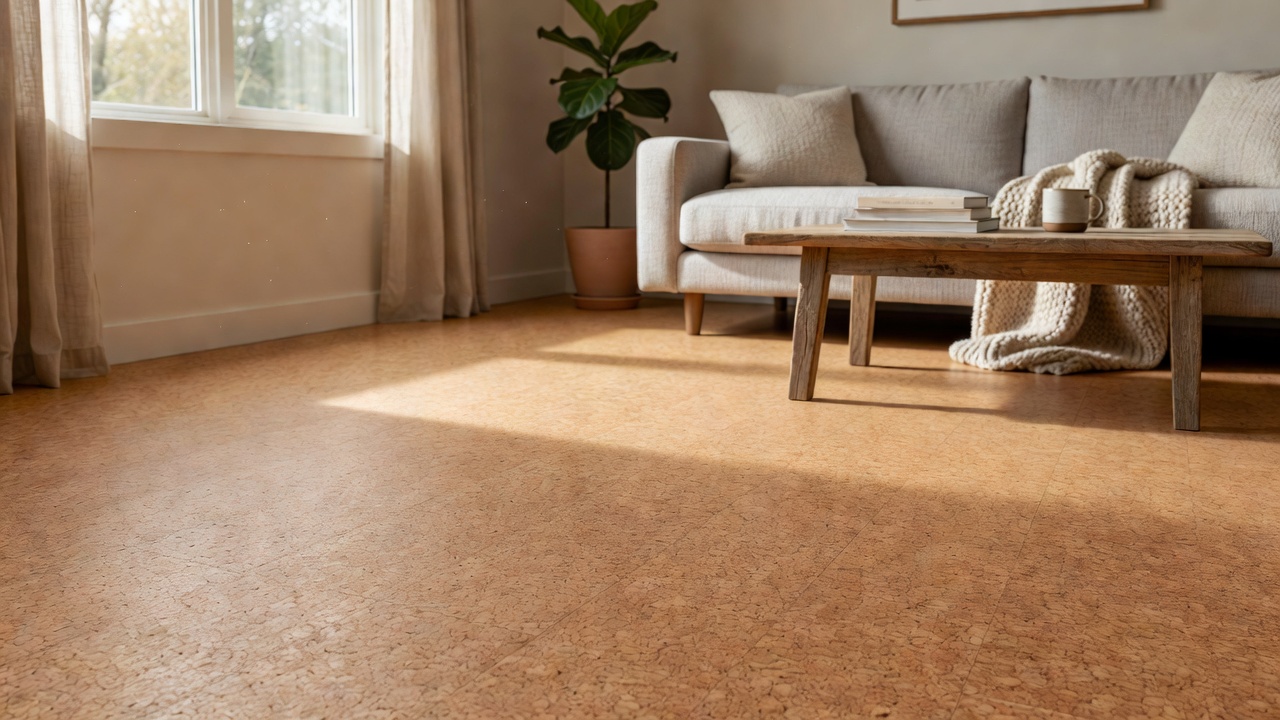
Q: I was considering cork, for it’s comfort and many green properties, as the flooring in my 78 Airstream Argosy travel trailer. We camp mostly without power or water hook ups, boondocking, and our dog loves to swim in any lakes we visit. Do you feel that cork would hold up in this type of changing environment?
Thank you.
Argy 78
A: Part of this project will revolve around the subfloor in your RV. Usually with most RVs the subfloors are limited to the installation methods you can use over them. Your best bet here would be a floating installation to be safe as its likely to have particle board or something similar as a subfloor.
As far as flooring choices are concerned, cork can work in this scenario as long as you don’t anticipate massive swings in temperature within a short period. Now considering you rarely are using a power hook up, cork can be helpful as it will insulate a little bit of heat, but much like any wood flooring if you encounter large swings in temperature or humidity deviating away from a norm of about 65-70 degrees with 40% humidity (these numbers being the ideal environment for wood flooring) it might be best to look into another floor.
In regards to your dog and any given source of water getting on your floor you will want to keep one thing in mind. Although cork is naturally water resistant, it is not impervious to water, so you will want to prevent standing water and to wipe up any spills as soon as possible. This can make for a rigorous routine when out in mother nature, but if the thought of having a cork floor in your RV is the best option it can work.
Overall the best product to handle environment changes would be natural stone or vinyl, but you loose a bit of the comfort factor when you look into these types of products. Another alternative would be a composite floor such as Mannington’s iCORE, but this then tosses aside the green factor. The benefit to these floors is that moisture concerns become virtually void as do shifts in temperature.
A few tips to success here:
- Determine your subfloor
- Based on the subfloor, choose an installation method which suits the environment you expect. (Glue down is your best bet with cork, if possible)
- Based on environment and installation select the best floor which suits your taste