Quality of Cork Flooring
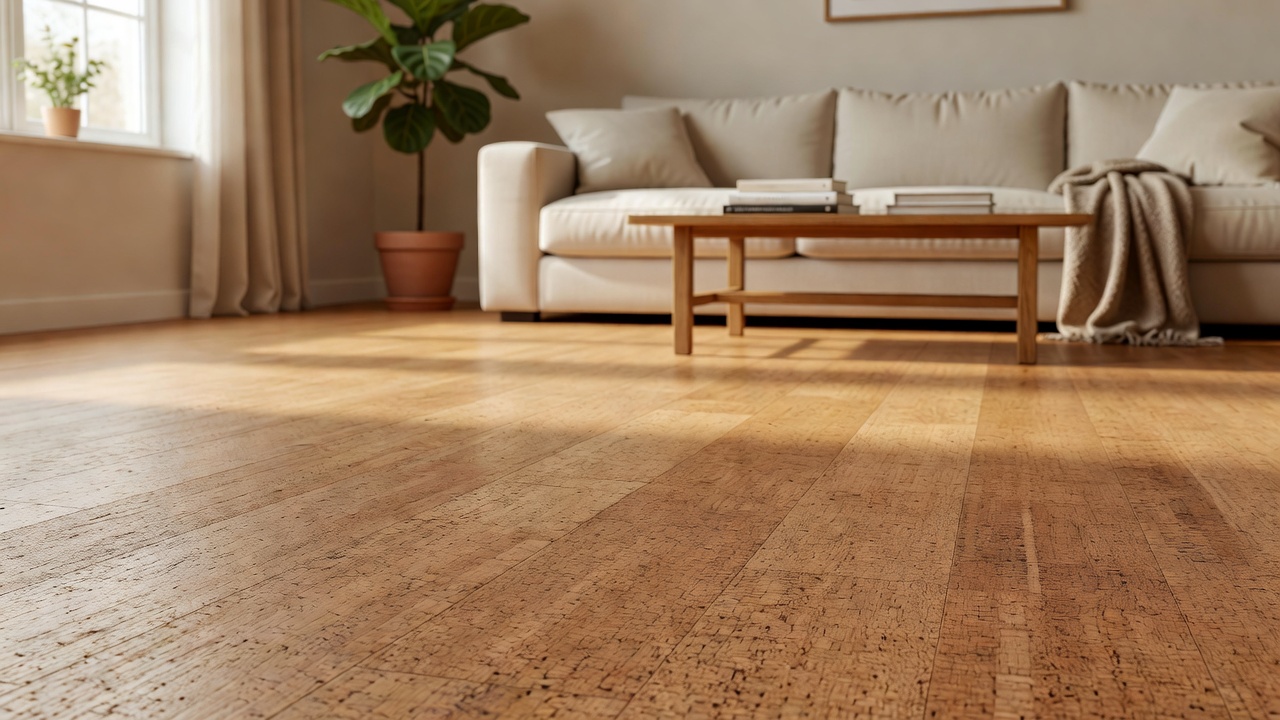
Q: The cork flooring you offer ranges from $2.79/SF to $7.69/SF. What influences the price? I purchased a bunch of cork samples based on color so they are in all different price ranges. All are soft, which I understand is the nature of cork. So is there something else in the higher price range that makes the cork more durable, especially to kids?
I picked a cork based on color: APC’s “Rusty”. It is a glue down variety. I am installing the floor in a new extension with plywood under-floors so glue is fine. But I am hesitating ordering because I know the new room will get a lot of abuse. I have tested my small sample in every way I can think of and, true to cork, even the deepest table leg dent eventually pops back out. So what does a higher price give me?
Also, I wrote to APC to find out where they manufacture their product and if formaldehyde is used but they never replied. Do you know if formaldehyde off-gassing is a problem with any of the cork you offer?
Thanks in advance for your help.
Dianne
New York
A: When it comes to flooring, cork or otherwise, the price of the flooring itself is based off many factors. One of the largest factors is the brand itself. In some cases, much like with medication or beverages, you are paying for the name. Very large companies which have been around for years, the big names in the industry, have a premium attached to them which is part of their reputation and long standing (think similar to Pepsi Cola vs generic colas found in a grocery store).
Another major portion of the cost comes with the manufacturing process of the flooring in question. For cork this usually comes down to whether the cork was manufactured in a more green fashion, such as those made in Portugal vs cork made in China. Higher quality manufacturing processes which make a better product both in quality and in the green aspect will come with a bit more cost.
APC is one of the larger names in the cork flooring industry and their product is manufactured out of Portugal, much like Westhollow’s newer lines of cork. The cork in Portugal is the most environmentally friendly cork made and it makes the E1 standard for emissions. E1 emission class can be achieved, if the free formaldehyde content of the resin is lower than 0.2% by mass.
The third major factor is the finish used on the floor. Certain specific name brand finishes are available and much like the brand of the floor, the finish can carry its own premium as well. One of the best examples here is the Klumpp brand finish which is applied to some Bamboo floors. Higher quality finishes or certain eco-friendly water based finishes are more expensive to produce and apply and thus the cost of the end product goes up.
As you can see there are several factors which influence how certain items are priced. In the end you can get a similar product in quality for lower price if you look into lesser known brands. Also, items which are extremely low in price should be researched to ensure they meet certain standards and meet what you are looking for as a product.
Overall, APC makes one of the best cork product lines on the market. I’m a big fan of their selection of patterns and colors as well as their quality of product. The same can be said for the Westhollow lines of cork, especially the newer stuff in the State and Urban Premium collections which are manufactured in Portugal. Both are great green products and are some of the best cork floors on the market.