Bathroom Flooring Options
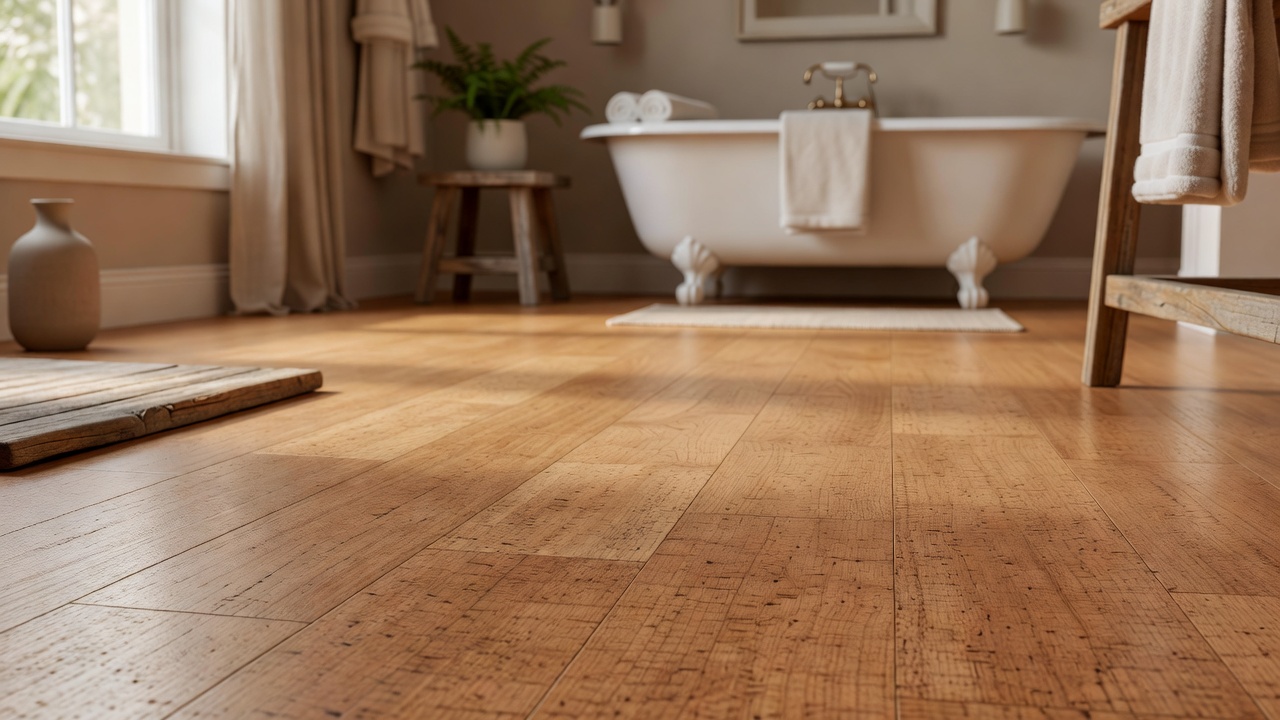
Q: Our question is concerning what type of flooring to install in our upcoming bathroom redo. Our home is a 1950’s ranch duplex with a 3′ crawl space underneath. The current vinyl bathroom tile floor gets chilly in the wiinter months. We’re looking into cork but aren’t sure what water will do to it. We’re not wanting to do wood and I can’t help but think ceramic tile will be worse than the vinyl in the Chicago winter months. Can you offer suggestions as to what we should use.
Thanks
Jeannie C.
A: Bathrooms can always be fairly complex when it comes to flooring choices. A few things to keep in mind with any area which has a potential for quite a bit of moisture, but most importantly: wood and water do NOT mix. This being said, standing water or high amounts of moisture in the air is a big problem for wood floors, cork included. If you take real hot showers where a lot of water vapor will be in the air or if you are not using mats to prevent standing water from getting onto the floor I would avoid a wood floor.
Now if you’re not leaving wet clothing or towels on the floor a cork floor can work rather well in a bathroom. As my good friend Sean H. on our sales team likes to say as long as you don’t have kids doing cannonball contests in the bath you should be ok.
There are a few tips to make these floors more successful in a bathroom as well. First off, look into a glue down application if you can, as the adhesive in in the seams of the flooring can be a great help to add a bit of moisture sealing. I will mention that if you play on doing this project DIY, avoid glue down cork and look into a floating floor. With floating cork, put a small bead of tongue and groove glue into the locking mechanism to help add a small bit of protecting in the seam. Also, use 3mm cork for an underlayment over foam based underlayments. The density of cork and the moisture resistant nature of cork (hence why we use them for bottle stoppers) will help out against moisture vapor in the air. Although cork is moisture resistant it is not impervious, so keep in mind excessive moisture will cause problems.
If you are likely to have a few cannonball contests or have someone in the house who like real hot showers, there are a few alternatives. Your best bet would be stone or tile. This will give you a very resilient floor which is essentially impervious to moisture. Considering you want a warm floor, you can look into adding a stone/tile approved electric radiant heat system installed into the thinset mortar bed. Electric radiant heat systems are great for keeping a floor warm, but don’t expect this system to heat the entire room.
Another alternative would be a composite floor like Mannington’s iCORE. iCORE looks just like any other laminate floor, but instead of having a Medium or High density fiberboard core it has a composite plastic core which is impervious to water. Similar to your current floor, this could feel a bit cold under foot, though not quite as cold, but you will have no worries about moisture with a floor like iCORE or stone/tile.
In the end here, its a matter of what you will expect this floor to handle. If you have very little moisture worries, cork will be great, but if you have moisture concerns, look into something built to take moisture.