Outgassing Concerns
Q: Dear Steve,
Thank you very much for writing that detailed article comparing different brands of laminates. It was very helpful and goes way beyond what most flooring web sites provide. I am one of the growing number of people who have become chemically sensitive. My biggest problem is with formaldehyde. Our current vinyl parquet floor tiles are way past needing replacement, but I cannot find any data on outgassing of various types of floors to replace it with. Because we do have a vinyl floor, with asbestos tile under that over our slab, I believe we will be limited to laminate or more vinyl, partly due to thickness, partly due to installation limitations, and partly due to cost. I am trying to find something with at least 20 years of durability, since we are getting too old to do this again, and would like this to be the last time we have to lay a new floor. We have friends who’ve put in new laminate flooring with no problem, but none of them have any problems with chemicals. I do not want to be driven out of my own home by outgassing from a new floor. I would love to see you write something about the outgassing problem The last article I saw said 15% of the population is now having some degree of problem with chemical sensitivity,so I think other shoppers would also be interested. If this info has already been compiled and you know where I can find it, would you please direct me?
Thank you for your time.
Sincerely,
Marilee B.
A: Steve has been real busy since his return from his trip to Europe getting everyone ready for the great new stuff we’ll have coming in along with the great information he learned over there, so I decided to tackle this question as it is a growing concern with folks looking into a new floor.
Formaldehyde outgassing is normally only a problem with bamboo floors, especially strand woven bamboo floors, because of the glues used to make these products.
For those unfamiliar with outgassing, this is what occurs to products containing glue where over time they will slowly release low amounts of vapor as the glue continually cures in the product. This is similar to why you need a moisture barrier for concrete, the concrete will continually out gas water vapor over time (since concrete is a moisture based product).
Outgassing, also called offgassing, is most commonly associated with bamboo floors because the adhesives used to make bamboo flooring contain some formaldehyde. Although this is in minimal amounts with the higher quality products, such as Westhollow and Panda Bamboo. Keep in mind, its not like these products have a continual stream of poisonous fumes coming from them, but rather very minimal amounts, which becomes far less with higher quality products. Despite these amounts, people with certain allergies or sensitivities can have issues with these types of floors. These emissions are monitored and graded, so when you see an E0 or E1 product, your looking at a product with minimal emissions, meaning these are best if you have chemical sensitivity like Marilee.
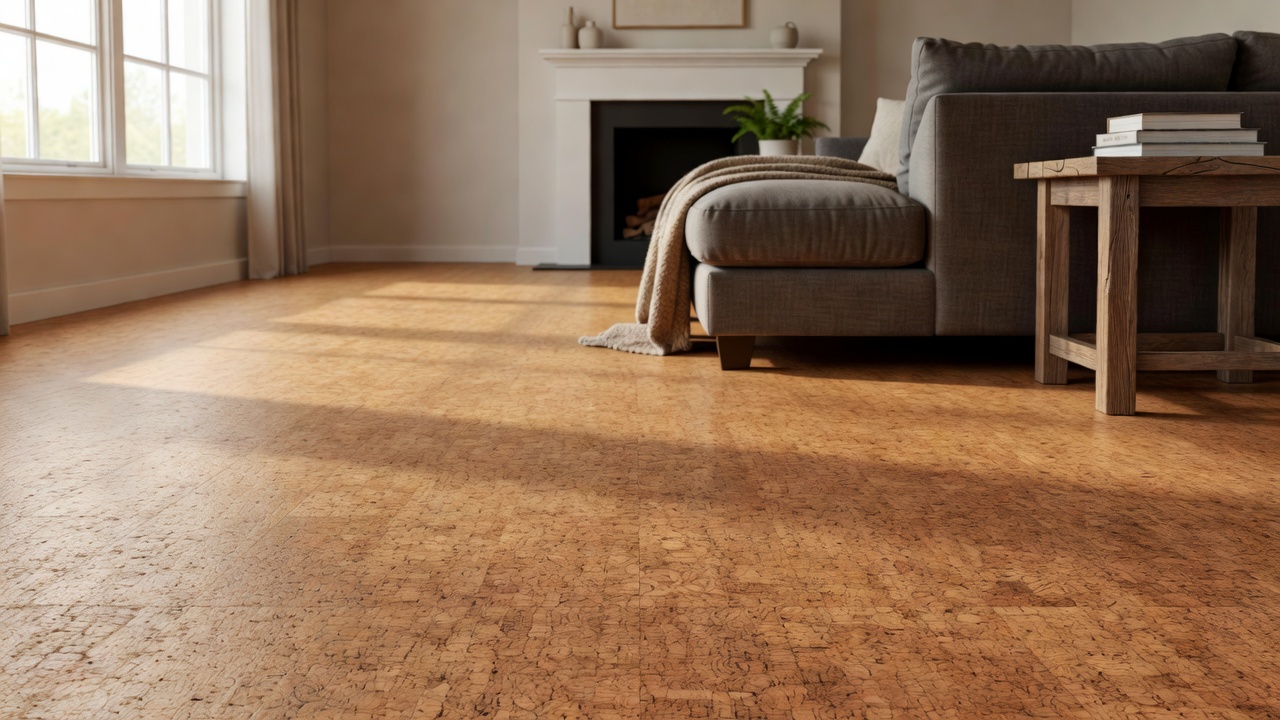
With laminate you should not encounter these problems; however, if you want a truly eco-friendly product look into a floating cork. Cork is a great hypoallergenic product and since many of the cork floors are made in a floating click-together format you will be able to install it virtually anywhere.
Now if thickness is a major concern, you will want to look into a laminate. There are glue down versions of cork, but you might not want to risk it with your chemical sensitivity (although the good mastic adhesives out there don’t use formaldehyde.) Adhesives such as Bostik’s Best which are urethane based or DriTac which is a water based adhesive made to work best with cork tile would be your best bet in this case. Many adhesives also have an anti-microbial additive and moisture sealant to prevent mold, mildew, and other allergenic nightmares from occurring between your subfloor and flooring.
Another note on glue down cork is to look into using contact cement. Gene D. has always told me whenever he lays down cork tile, he will always use a contact cement over urethane and water based flooring adhesives. A good contact cement to use would be Fastbond 30 or Fastbond 40 (the only difference is solvent vs water base). When using a contact cement, make sure your subfloor is clean, then apply (usually rolled on) 2 coats to the subfloor and 1 coat to the cork and follow instructions and everything will turn out great.
If you allow the proper cure time and were to ventilate your home well during the installation (although you would most likely need to stay in a hotel or such during the install time to be safe) this would be a very good route to go.
So to sum up, formaldehyde in flooring is usually only found in bamboo flooring. Laminate will work in this case, but a great eco-friendly and hypoallergenic option would be cork. If the thickness of the floor is a big issue, you will want to use a glue down cork with a mastic adhesive such as Bostik’s or DriTac, or look into laminate.