premature flooring failure causes
Why New Flooring Fails: Wear Layers & Moisture
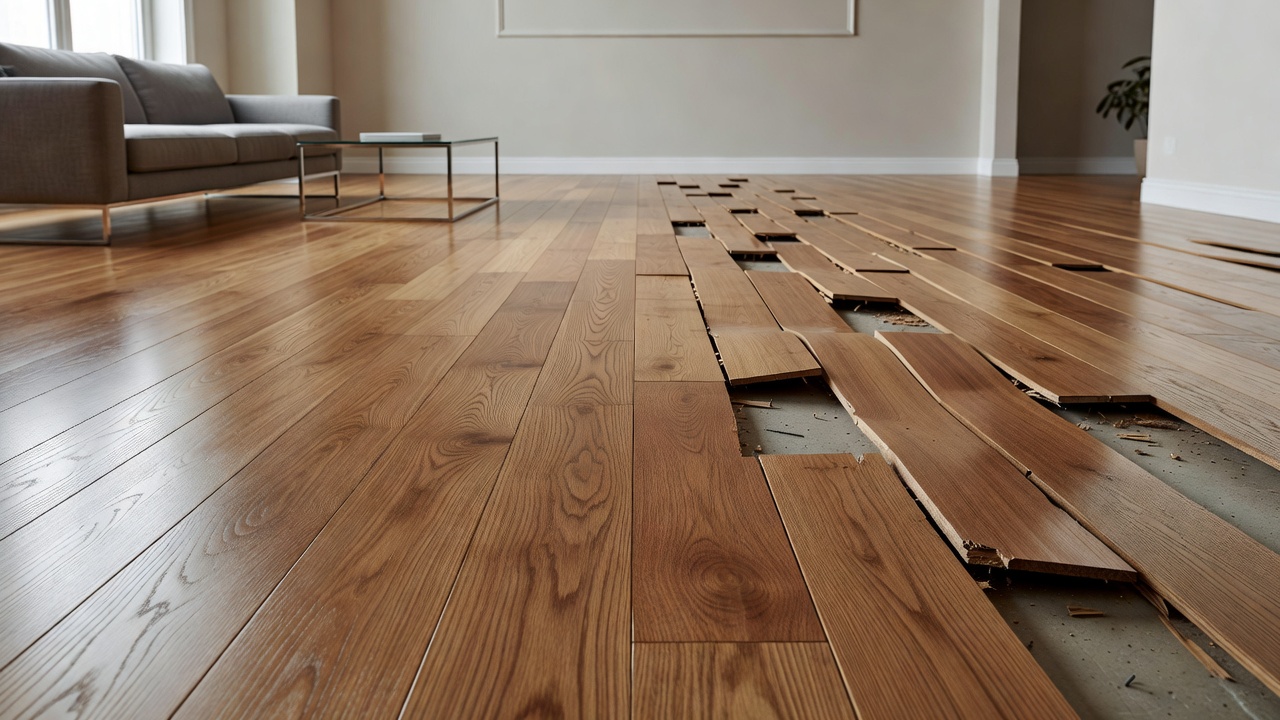 I was mopping a small water ring under a plant stand last weekend when the edge of a two-year-old LVP plank lifted like a tiny trapdoor. Not dramatic. Just… wrong. That is basically the whole story of why new flooring fails: moisture finds a core or a glue line that cannot handle it, a wear layer thinner than the traffic abrades through, layers delaminate, or the install never gave the material room to move. Premature flooring failure is when a floor marketed for 15–30 years starts cupping, buckling, peeling, or wearing through in months or a few years because the material stack or the environment broke the design assumptions. Sorry — I know that is a lot before coffee. I just think the mechanisms are genuinely cool.
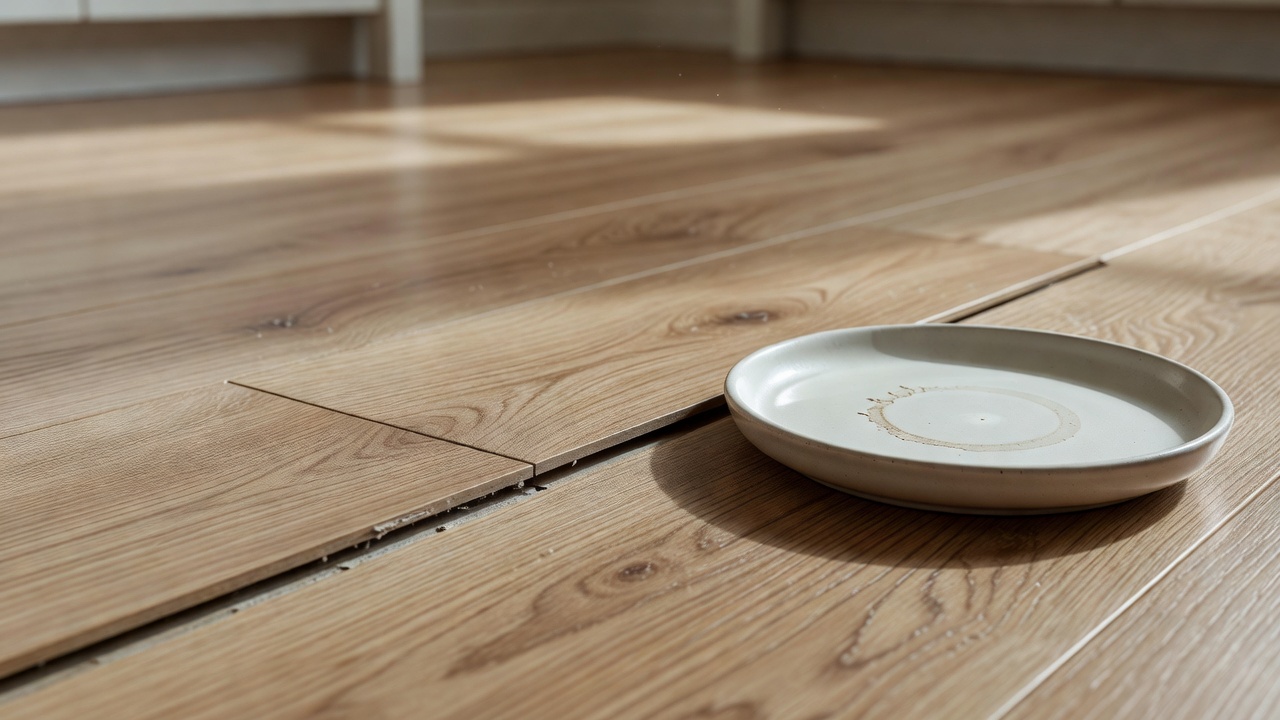
Why is my new floor failing after only a few months?
What you see first is almost never the root cause. You see a hump, a white haze at a seam, a scuff that will not buff out, a corner that clicks when you step on it. Underneath, something physical already happened.
Moisture is the usual villain, and not only from floods. Ambient humidity swings, a damp slab, a slow dishwasher leak, steam from a bathroom with no exhaust — water molecules are tiny and patient. In wood-based products they swell cellulose fibers. In many vinyl constructions they attack adhesives or foam underlayments. In laminate they turn the high-density fiberboard core into something closer to a sponge. Installation errors accelerate all of it: no acclimation, missing expansion gaps, uneven subfloors that flex the locks, or the wrong adhesive for the product and the substrate. And then there is the wear layer — the thin sacrificial skin you are actually walking on — which can simply run out of thickness.
If you want the install side decoded in more human terms, I keep pointing people to [LINK: flooring acclimation guide] and [LINK: subfloor moisture testing], because chemistry cannot save a floor that was asked to do physics it was never built for.
Okay, this is the part where I get a little too into it. Feel free to skim. Or do not. I will not judge.
How important is wear layer thickness for LVP longevity?
Extremely — and also not in the way the shelf tag implies.
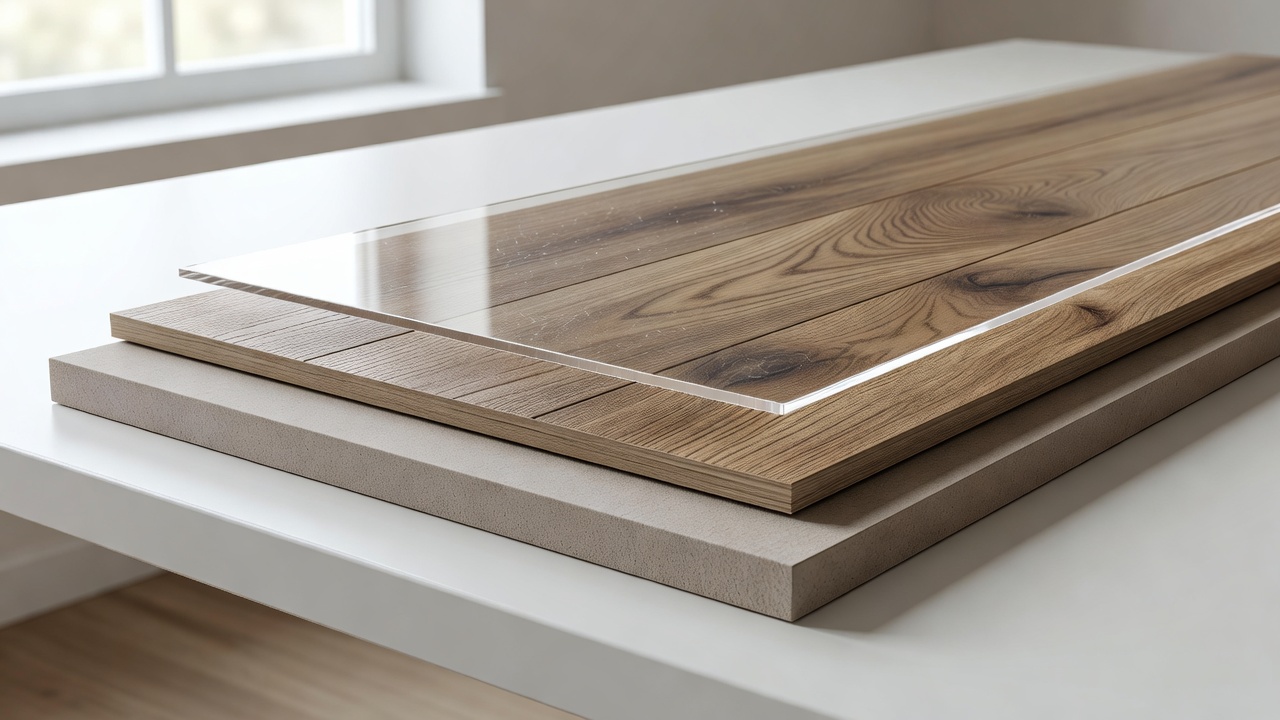
On LVP and many rigid-core products, the wear layer is a clear polymer film (often polyurethane, sometimes with aluminum oxide or ceramic beads suspended in it) laminated over the printed design film. Thickness is usually quoted in mils. One mil is 0.001 inch. A 6-mil wear layer is common on bargain planks; 12-mil and 20-mil show up in mid and higher residential; 28–40-mil is commercial-adjacent territory. That number is not a scratch-proofness spell. It is a reservoir of material that abrasion can remove before the print shows through — what installers call LVP wear layer wear-through.
Here is what is actually happening, step by step:
- Surface abrasion — grit, pet nails, chair legs act like fine sandpaper. Each pass removes a microscopic amount of the urethane matrix and any hard particles embedded in it.
- Cross-link breakdown — UV, some cleaners, and heat can slowly scission polymer chains in the coating, so the film becomes easier to abrade even if you cannot see yellowing yet.
- Local thinning — traffic is not uniform. The path from sofa to fridge loses mils faster than the guest-room corner. Once the clear layer is gone in a lane, the ink layer scuffs and the floor “looks old” overnight.
- Edge and emboss vulnerability — deep embossing thins the wear layer at the high points of the texture. Pretty under showroom lights; faster wear under real feet.
- No repair path — unlike a thick hardwood wear layer you might screen and recoat, most LVP wear layers are not refinishable in any meaningful DIY sense. Wear-through means replace.
AC ratings on laminate (AC3, AC4, AC5) are a related idea from a different test family — lab-speak for “we spun an abrasive wheel on this until the décor layer failed, and here is the bin we put it in.” Useful for comparing laminates to each other. Less useful for predicting your exact dog. A thick wear layer with terrible grit control under the door mat will still lose. A moderate wear layer in a low-traffic bedroom can look fine for a decade. Specs are necessary; they are not destiny. I say that as someone who once owned a “commercial grade” runner that lost its dignity under one enthusiastic corgi.
Why does engineered hardwood delaminate?
Delamination is the polite word for “the sandwich came apart.” Engineered hardwood is a real wood veneer (the pretty top) glued to a plywood or high-density fiber core. The glue line is a thin polymer adhesive cured under heat and pressure. When that bond fails, the veneer lifts, bubbles, or peels — sometimes in islands, sometimes at edges.
Moisture is again the lead actor. The veneer and the core expand and shrink at different rates when humidity changes (different grain orientations, different densities). The adhesive is supposed to hold that differential movement. If the adhesive was under-cured at the factory, if the plank sat in a steamy jobsite, if a wet mop routine keeps feeding the seams, or if a radiant heat system cooks the glue beyond its service temperature, the bond line fatigues. You get flooring delamination causes that look like product defects but are often product-plus-environment.
Cupping and buckling are cousins, not twins. Cupping is edges high, center low — usually moisture entering from below or a humidity imbalance through the thickness. Buckling is the floor running out of horizontal room and heaving up when expansion gaps were skipped or the subfloor is a swamp. Same water molecule, different geometry of failure. I have a soft spot for plywood cores done well; the cross-banding is elegant engineering. When it fails, it is almost always because someone asked wood to ignore hygroscopic physics. Wood does not ignore physics. Wood is physics with a finish on top.
What causes laminate flooring to buckle?
Laminate’s core is typically high-density fiberboard — wood fibers and resin pressed hard. It is strong in compression and dreadful as a boat. Water enters at seams, ends, or a compromised underlayment, the fibers swell, the locking profiles lose geometry, and neighboring planks shove each other until the floor tents. That is buckling: constrained expansion with nowhere legal to go.
Contributing factors stack. No vapor retarder over a concrete slab. Expansion gaps caulked shut because someone wanted a “seamless” look against the tub. Steam mopping (please do not steam-mop laminate; I will get quietly intense about this). A fridge line drip no one noticed for three weeks. Once the core has swollen and the locks are mashed, drying the room does not reset the geometry. You are into board replacement territory.
Wear layers on laminate matter too, but the dramatic early failures I get asked about are almost always moisture plus install, not someone walking the AC rating down to zero in four months unless the product was absurdly thin and the household was a sandpaper festival.
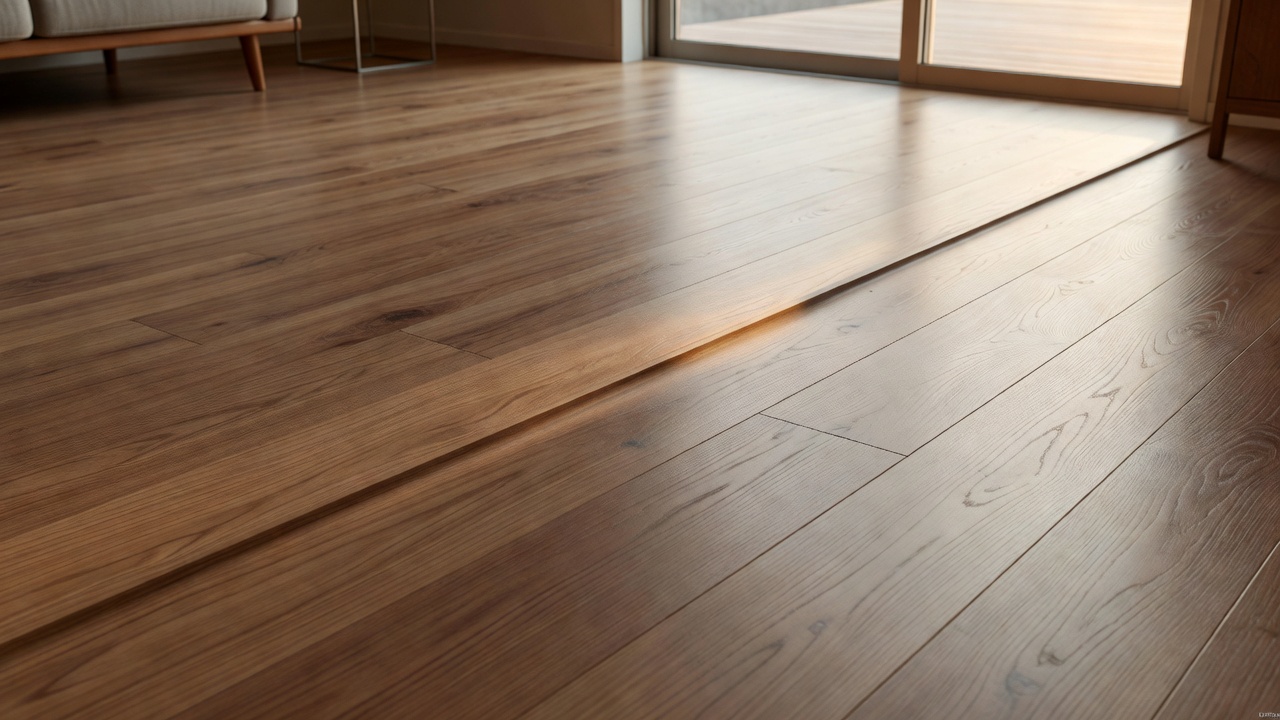
A quick materials map of failure modes
| What you notice | Likely mechanism | Usual drivers |
|---|---|---|
| Wear-through / print showing | Abrasion of clear coat | Thin mils, grit, heavy traffic lanes |
| Peeling veneer / bubbles | Glue-line failure | Moisture, heat, weak adhesive cure |
| Cupping | Thickness moisture gradient | Damp slab, humid air + dry surface or reverse |
| Buckling / tenting | In-plane expansion blocked | Water in core, missing gaps, poor acclimation |
| Hazy white seams | Edge swell or finish blush | Moisture at joints, incompatible cleaners |
None of this requires a lab coat to spot early. It does help to know which layer is complaining.
FAQ
What causes laminate flooring to buckle?
Laminate buckles when its fiberboard core absorbs moisture, swells, and has no expansion space, so planks push upward at the locks. Leaks, damp slabs, steam mopping, and sealed expansion gaps are the usual triggers. Once swollen, the core does not return to original dimensions.
Why does engineered hardwood delaminate?
Engineered hardwood delaminates when the adhesive bond between the real-wood veneer and the core fails under moisture-driven movement, heat, or a weak factory glue line. The veneer and core expand differently; the glue is the only thing keeping that argument polite. Persistent humidity swings and wet-maintenance habits make the argument louder.
How important is wear layer thickness for LVP longevity?
Wear layer thickness (in mils) largely sets how long LVP can take abrasion before the printed design shows through, so it is a primary longevity lever in traffic areas. It does not stop moisture failures or bad installs. Match mils to real use — pets, kids, grit — not only to the brochure’s best-case room.
Why is my new floor failing after only a few months?
Months-scale failure is rarely “the urethane got old”; it is usually moisture in the wrong place, missing expansion gaps, uneven subfloors, wrong adhesive, or a wear layer too thin for the traffic. Check for leaks, slab moisture, and whether the floor can actually move seasonally. Early failure is a systems problem, not a mystery curse.
Can a thick wear layer fix moisture flooring failure?
No. A thicker wear layer only delays surface abrasion; it does not waterproof cores, glue lines, or fiberboard. Moisture flooring failure is solved with vapor control, dry subfloors, correct underlayment, and products rated for the space — not with more mils alone.
I still get a small jolt of delight when a cross-section makes the failure obvious — the swollen core, the shiny glue line that let go, the mil of clear coat that simply was not there. Next time you walk across your kitchen, notice the traffic lane by the sink, the gap at the doorway, the way afternoon sun hits one run of planks harder than the rest. Those are not decorations. They are the experiment running in real time. If something already looks off, you are not imagining it; the materials are telling you which assumption broke. And if nothing is wrong yet, congratulations — you are living inside a temporarily successful composite. Isn’t that wild?