buying flooring in store vs online
What to Expect at a Flooring Showroom: Retail Reality Guide
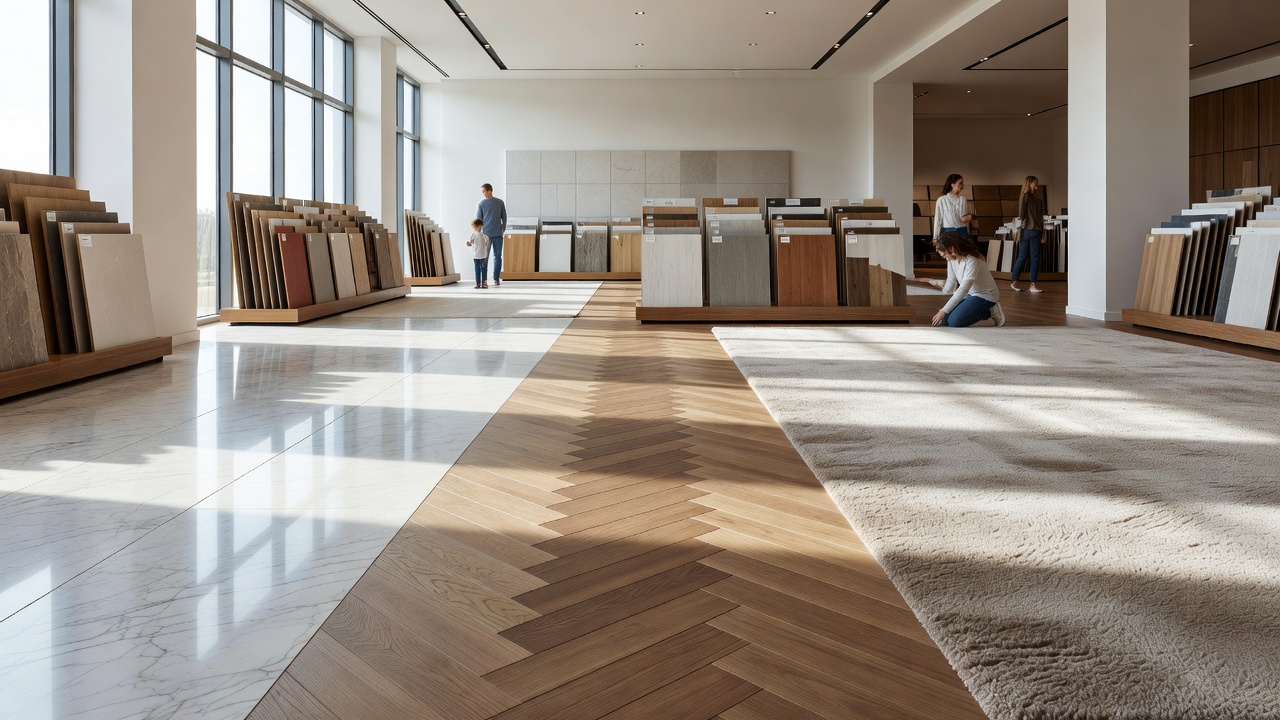 I am currently sitting in my car outside a flooring warehouse with fourteen tabs open, three dead coupons that expired yesterday, and a spreadsheet that has already lied to me twice. What to expect at a flooring showroom is fluorescent light that makes every plank look like a different color than your living room, a salesperson who materializes in under ninety seconds, sample boards stacked so high your brain short-circuits around minute twenty, soft pressure to “lock today’s promo,” and the slow, expensive discovery that the tag price is never the walk-out price once underlayment, transitions, old-floor removal, and labor get stacked on. A flooring showroom is a physical retail space—big-box warehouse or local specialty shop—where you can touch, compare, and usually take home flooring samples before you commit square footage and money to a surface that will outlast your current couch.
I cried in a Floor & Decor parking lot eight months after closing. Technically thriving.
What should I bring to a flooring showroom visit?
I thought “my phone and a vague budget” would be enough. It was not.
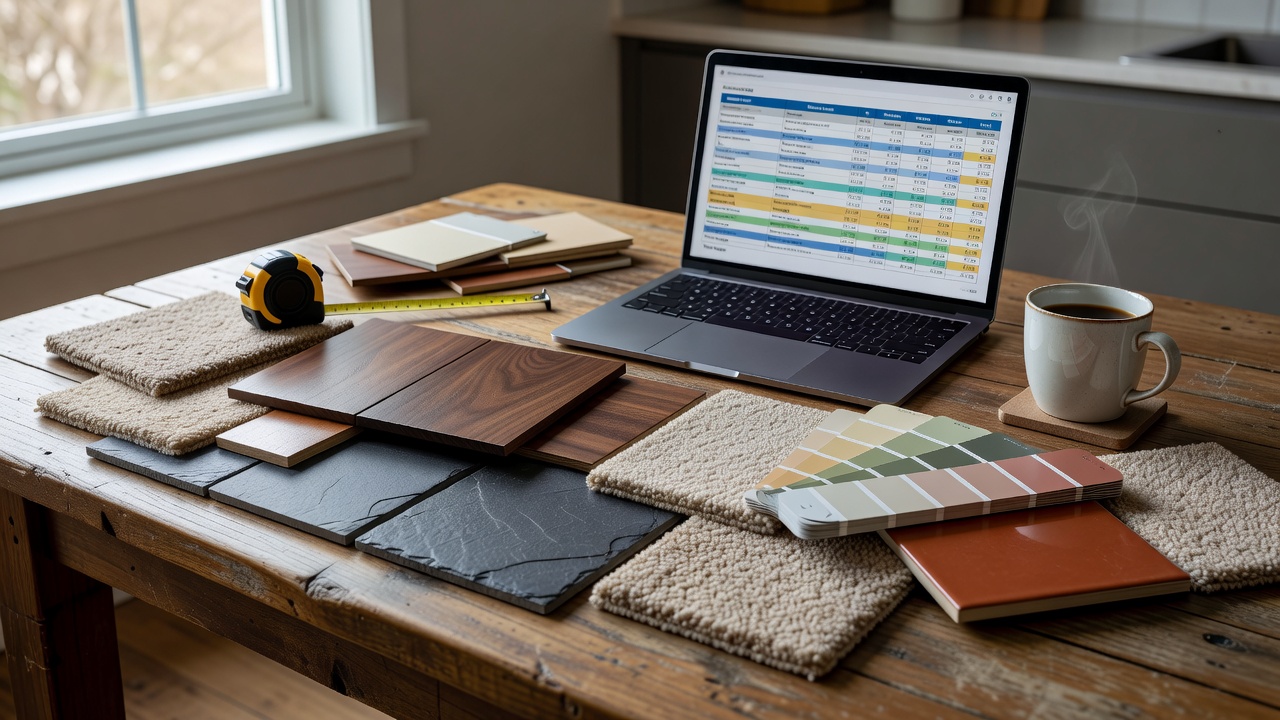
Bring daylight photos of every room (phone flash lies), actual rough measurements or a floor plan sketch, at least one fabric or paint swatch from the dominant furniture, your real hard number (not the aspirational one), and—if you are shopping as a couple—an agreement about who gets final veto power before you walk in. I also bring a cheap tape measure and a notes app with a running total, because the second someone says “and install is only…” my brain goes blank.
What I did not bring the first time: patience for my partner Derek’s sudden conviction that we needed “something warmer,” and a charger. My phone died mid-comparison and I had to screenshot prices on his phone like a hostage.
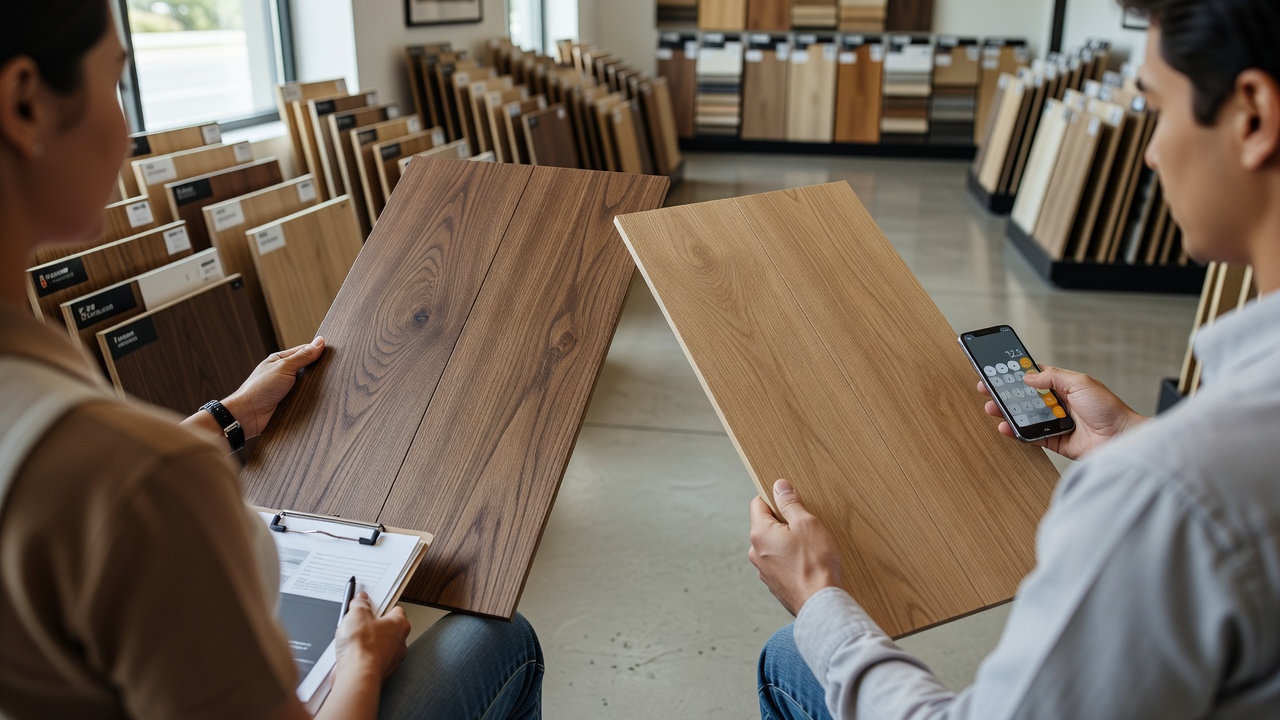
Take the samples home. Seriously. Store lighting is a liar. Put them next to the baseboards at 7 a.m. and again at 6 p.m. If the gray turns purple under your actual windows, you just saved yourself years of quiet resentment. Most places let you walk out with a stack; some want a deposit or a name. Worth it either way. I have a whole [LINK: how to test flooring samples at home] ritual now that involves natural light and judgmental group-chat photos.
Is it better to buy flooring online or in-store?
I wanted online to win so badly. The prices look cleaner. No one hovering. You can spiral in private.
But online photos also lie, return shipping on heavy boxes is a special kind of math, and you still need someone to install it who may not honor the brand’s warranty if the product didn’t come through their channel. In-store you get to scrape the wear layer with a key (gently), hear the click of the locking system, and ask the awkward questions face-to-face. The hybrid that actually worked for me: shortlist online, then go feel the finalists in person and demand the in-store price match or the local equivalent. Pure online only if you already know the exact SKU and have a trusted installer lined up who has worked with that brand before.
Some guy online who acts like vinyl plank is a personal insult would tell you to only buy solid hardwood from a specialty dealer and anything else is “soulless.” Cool. My waterproof LVP was $2.40 a square foot on a stack-out, the dog has already tested it, and I still have money left for curtains. Defensiveness and pride can coexist. (That’s $340 less than the hardwood quote I pretended I never got, so we are not discussing that part with Derek.)
Big box vs local flooring store: which is better?
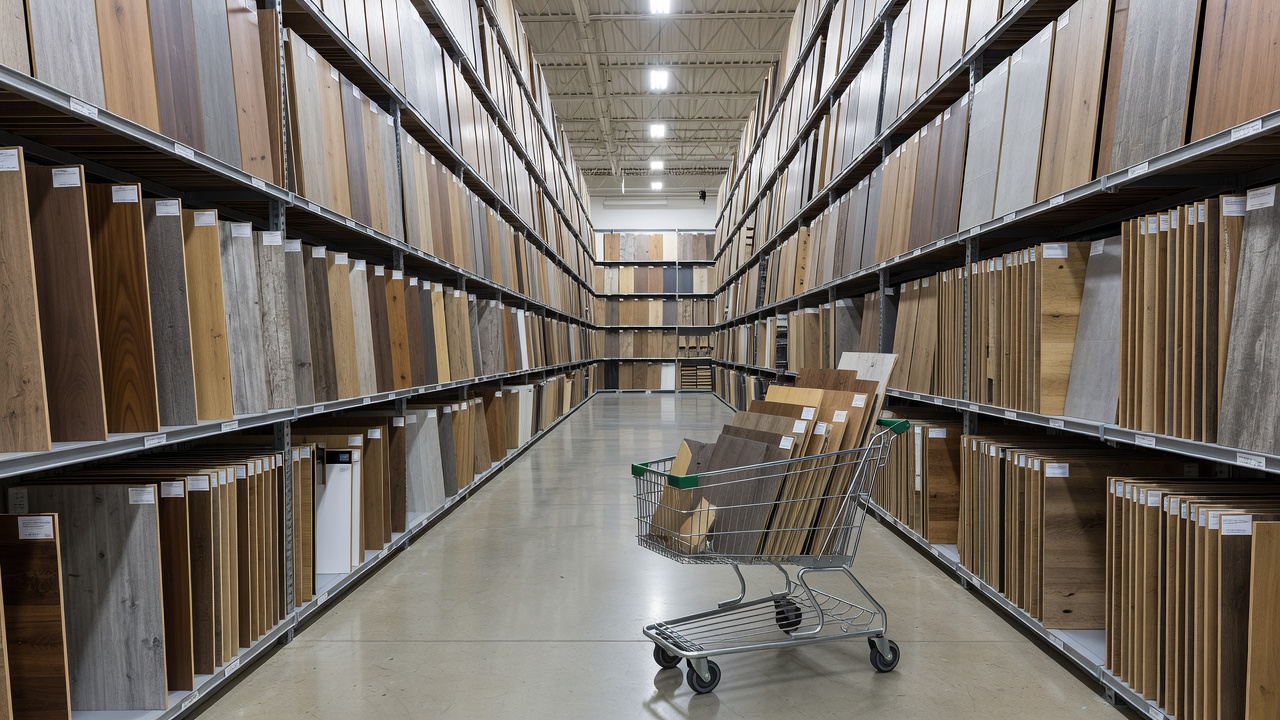
Big box: wider selection on the floor, aggressive promos, you can grab samples and leave without a full consult if you want, prices feel lower until the add-ons hit. Staff turnover means the person helping you might be three weeks into knowing what SPC means.
Local: fewer SKUs on display, but they usually know which ones actually perform in your climate, they often use their own crews or tightly vetted subcontractors, and the warranty conversation is less “see manufacturer site” and more “we stand behind the install.” Quotes tend to be more complete up front. Sometimes the per-square-foot number looks higher; sometimes the final invoice is lower because fewer surprise line items.
I did both. Big box for the initial overwhelm and free samples. Local for the second visit once I had narrowed to three options and needed someone to explain why one “waterproof” claim was marketing and the other had a real core. If your project is small and straightforward, big box can be fine. If you have stairs, sunrooms, or a subfloor that scares you, local is where I stopped panicking.
Hidden fees and sales gimmicks I walked into like a rookie:
- “Free installation” that is free only if you buy the premium pad and the mid-tier or higher plank on the same day.
- BOGO or “buy X get Y” with asterisks that exclude the color you actually want.
- Transition strips, reducer strips, and stair nosing priced like jewelry.
- Old floor removal and haul-away quoted separately after you’ve already emotionally committed.
- Moisture testing or leveling compound that “might” be needed—get the trigger conditions in writing.
- Delivery fees that appear only after the square footage is locked.
Ask for a line-item quote. If they resist, that is data. My spreadsheet now has a column literally titled “things they forgot to mention until I asked twice.”
What questions should I ask at a flooring store?
I keep these in my notes app so I don’t freeze:
- Is installation included, and if so, exactly what labor and materials does that cover?
- Who actually does the install—your employees or a subcontractor—and who warranties the labor?
- What is the full out-the-door price including underlayment, transitions, removal, and tax for my square footage?
- Can I take these specific samples home, and how long do I have before you need them back?
- What happens if the dye lot changes between sample and delivery?
- Is the waterproofing claim about the surface, the core, or the whole system, and what voids it?
Write the answers down while you are still standing there. Smiling and nodding is how I almost signed something that excluded stairs.
My “final decision criteria” list going in looked like this:
- Must be truly waterproof for the dog and my inability to mop correctly
- Under $3.50/sq ft installed or I will spiral
- Warm enough that Derek stops saying “it feels cold”
- Something that won’t make me hate myself when I see it in the group chat
- Actually available this month so I stop living on temporary rugs
By the third bullet I was already bargaining with myself about “warm enough.” By the fifth I had added a sixth criterion that was just “please let this be over.” The list fell apart. The spreadsheet survived. Barely.
I still second-guess the gray I picked. Some days it looks expensive and calm. Some days it looks like I panicked in aisle seven. I do not know if I was right. I know I asked about hidden fees before I paid the deposit, I took samples home under real light, and I did not let a same-day promo clock force the decision. That feels like a win even if the color still haunts me at 6 p.m.
FAQ
Is it better to buy flooring online or in-store?
In-store is better for first-timers because you can feel the product, test color under real conditions with take-home samples, and get a fuller quote on install and extras. Online works if you already know the exact product and have a trusted installer. Hybrid shortlisting online then confirming in person is what finally stopped my tab overload.
What should I bring to a flooring showroom visit?
Daylight photos of your rooms, measurements, décor or paint swatches, a firm budget number, and a way to take notes. Samples only make sense when you can put them in your actual light later.
What questions should I ask at a flooring store?
Ask whether install is truly included and what it covers, who performs and warranties the labor, the complete out-the-door price with all add-ons, and what voids the waterproof or wear warranty. Get dye-lot and timeline answers in writing if possible.
Big box vs local flooring store: which is better?
Big box wins on sample variety and walk-in convenience; local usually wins on installer accountability and fewer surprise fees. Many people (me) use big box to narrow options and local to finalize the quote and crew.
How do I avoid flooring sales gimmicks and hidden fees?
Demand a line-item quote that includes removal, underlayment, transitions, stairs, and haul-away before you put down a deposit. Treat “free install” and BOGO language as conditional until every asterisk is explained.
I still open the spreadsheet sometimes and wonder if I should have spent the extra on the other plank. What would you have done—locked the promo that day or walked out with samples and risked the price going up? I genuinely want to know. My group chat is split five ways and Derek just keeps saying “the floor is fine.” The floor is fine. I think.