Subfloor Moisture Testing: Pro Install Guide
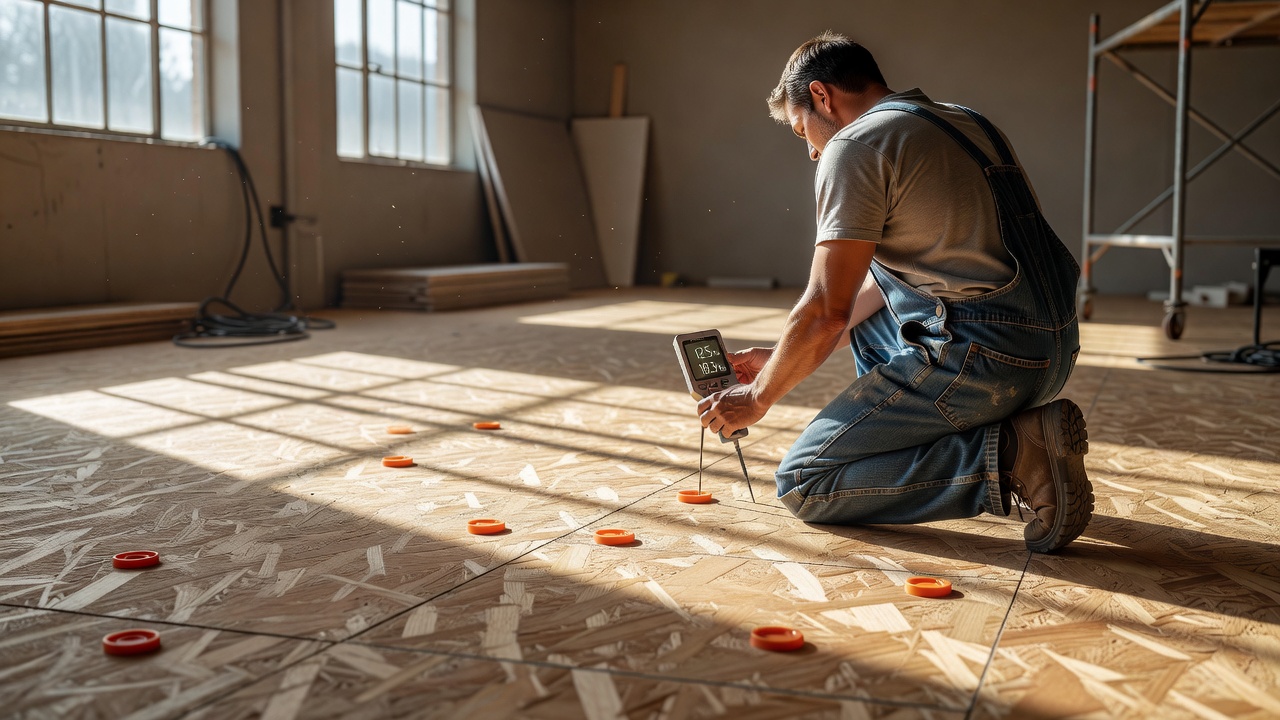 I walked into the Henderson place last March and the slab looked dry as August dirt under those bright can lights. Homeowner swore it was fine. Subfloor moisture testing is measuring the water content or relative humidity inside a concrete or wood subfloor before any finished floor goes down — pin or pinless meters on wood, calcium chloride or in-situ RH probes on concrete — and you write the numbers down. Skip it and you are betting the whole install on a dry look. How do you test? Meter the wood, probe the concrete, compare to the flooring maker’s max, then decide on a moisture barrier. Acceptable moisture levels on concrete usually top out near 75% RH or 3–5 lbs MVER depending on the product; wood subfloors want roughly 6–9% MC and within a few points of the new flooring. That is the short answer. Now the part nobody wants to hear.
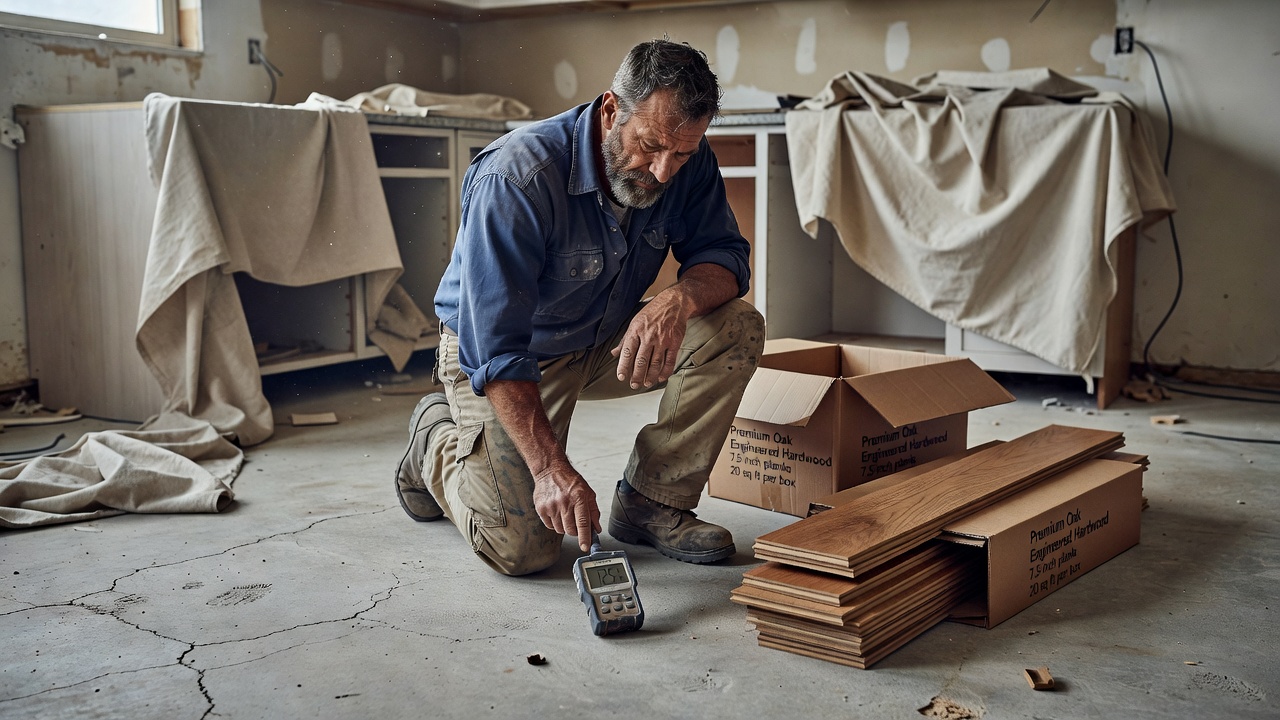
I have been on my knees since Clinton’s first term. One truck. One bad knee. Zero patience for showroom lighting. Subfloor prep is 80% of the job and nobody wants to pay for it. Moisture is the quiet killer. It does not care about your open-concept continuous-plank fantasy that runs straight from the foyer through the wet kitchen like the whole house is one giant dry runway. Trends sell continuous looks. Physics sells callbacks.
How do you test for moisture in a subfloor before installing flooring?
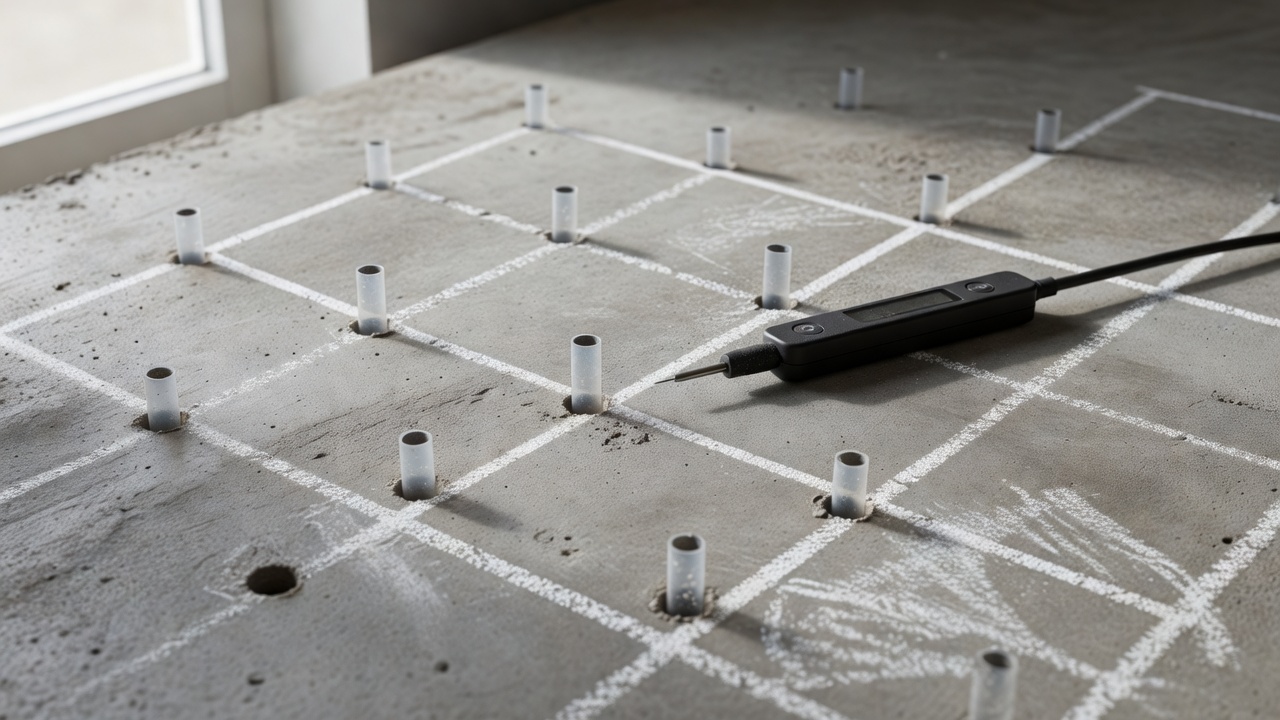
Start with the right tool for the right slab. On plywood or OSB I use a quality pin or pinless moisture meter — same class the mill inspectors use, not the $29 special from the big-box endcap. Take readings across the room, especially near exterior walls, plumbing runs, and any old water stains. Mark the high spots. On concrete you do not trust a surface skim. ASTM F1869 calcium chloride kits give you a moisture vapor emission rate in pounds per thousand square feet per 24 hours. ASTM F2170 is the in-situ RH test — drill holes, sleeve them, drop probes, wait the required time, read relative humidity inside the slab. I prefer RH on most jobs because it tells you what is happening deeper, not just what is evaporating off the top that day.
Document everything. Date, room temp, ambient RH, exact locations, meter model, readings. Manufacturers void warranties when you cannot prove the subfloor was in range the day you started. I still keep a battered notebook in the truck for this. Photos of the meter screen help too. If the numbers are high, you stop. You do not “try a section and see.” That is how you end up owning someone else’s floor.
Never trust a floor that looks fine in the showroom lighting. Same rule for a subfloor that feels dry under your palm after the heater has been blasting all morning.
What is an acceptable moisture level in a concrete subfloor for flooring?
Most glue-down hardwood, LVP, and laminate makers want concrete RH at or under 75% when tested to F2170. Some premium adhesives push to 80–90% if you buy their system and follow it to the letter. Calcium chloride ceilings often sit at 3 lbs or 5 lbs MVER — read the data sheet for the exact floor you are installing, not a blog average. Wood subfloors should read in the 6–9% moisture content range in most interior conditions, and the new flooring should be acclimated so it is within a couple points of the subfloor. If the slab is out of range, you do not install.
I learned that the expensive way on a ranch job outside town about twelve years back. Nice couple. Wanted dark engineered oak through the whole first floor, including a sunken living room that sat a half-step below grade. Slab looked perfect. No musty smell. I was behind schedule and the meter was in the other truck — the one my helper had taken to pick up transitions. I told myself I would check tomorrow. Tomorrow became “after lunch.” We glued it down. Three months later the cups started. Not a little edge lift. Real washboard cups, worst near the low spot by the slider. We pulled half the floor. Underneath, the adhesive had turned to paste. The RH probes I finally set read 89%. Something in the soil side had been feeding the slab slow and steady. No dramatic flood. Just moisture doing what moisture does when you skip the test. I ate the labor and most of the material because it was on me. That floor still lives in my head every time a homeowner says “it feels dry.” Full moisture testing rant starts there and ends with me refusing to start a job until the numbers are on paper. Callbacks cost more than the half-day you spend testing. Always.
If you need a primer on what sits under the finished goods, read up on [LINK: subfloor preparation basics] before you buy a single box of planks.
Do I need a moisture barrier under LVP or hardwood flooring?
Yes more often than the packaging wants you to believe. A moisture barrier — call it a vapor barrier when we are talking concrete — is a layer that slows or stops vapor drive from the subfloor into the finished floor. Under wood over concrete, a proper vapor retarder or the manufacturer’s approved membrane is not optional in most climates. Under floating LVP, the foam underlayment with a plastic film counts as light protection, but on a slab with elevated RH you still need a product rated for the actual readings. “Waterproof” LVP means the plank itself will not swell like solid hickory. It does not mean the adhesive, the locking system, or the subfloor is immune. Water still moves. Mold still grows in the dark. Adhesives still fail.
Vapor barrier vs moisture barrier — people mix the terms. In flooring talk, you want whatever the manufacturer specifies for your substrate and your measured moisture level. On or below grade concrete, assume you need one unless the RH test and the data sheet both say otherwise. Over a clean, dry wood subfloor on a second story, you may only need the standard underlayment. The test decides. Not the Instagram reel.
What happens if you install flooring on a wet or moist subfloor? Cups, crowns, peaking seams, adhesive failure, mold under the surface, buckled rows that walk themselves loose, and a warranty file that gets stamped denied when you cannot produce moisture readings. I have torn out floors that were six months old and floors that were six years old. The delayed ones are worse — the owner already loved the floor, already moved the furniture back, already forgot there was ever a risk.
For product-specific limits after you have clean numbers, check [LINK: hardwood flooring installation requirements] and match them to your meter printout, not to what the salesperson shrugged about on Saturday.
One more hard rule before the questions I get every week: test after the building is closed in, HVAC is running, and the slab has had time to equalize — not the afternoon the concrete truck left.
FAQ
How do you test for moisture in a subfloor before installing flooring? Use a calibrated moisture meter on wood subfloors and ASTM F2170 in-situ RH probes or F1869 calcium chloride kits on concrete. Record location, temperature, ambient humidity, and every reading before you open a box of flooring.
What is an acceptable moisture level in a concrete subfloor for flooring? Most manufacturers cap concrete at about 75% RH or 3–5 lbs MVER; always follow the data sheet for the exact floor and adhesive. Wood subfloors generally need 6–9% moisture content and close parity with the new material.
Do I need a moisture barrier under LVP or hardwood flooring? On concrete, especially on or below grade, yes unless your tested RH and the manufacturer both clear you without one. Floating LVP underlayment helps but does not replace a real barrier when vapor drive is high.
What happens if you install flooring on a wet or moist subfloor? The floor cups, peaks, delaminates, or grows mold underneath, and the warranty usually dies with the missing test paperwork. Repair means tear-out, drying time, and a second install bill.
Is a quick surface meter reading enough on concrete? No. Surface meters can miss moisture deeper in the slab; use in-situ RH or calcium chloride the way the standards describe. I still spot-check with a meter, then I verify with the real test before I commit.
Anyway. Call somebody before you rip anything out. Doesn't have to be me. Should probably be me.