Can LVP Fool Hardwood Snobs? A Discerning Review
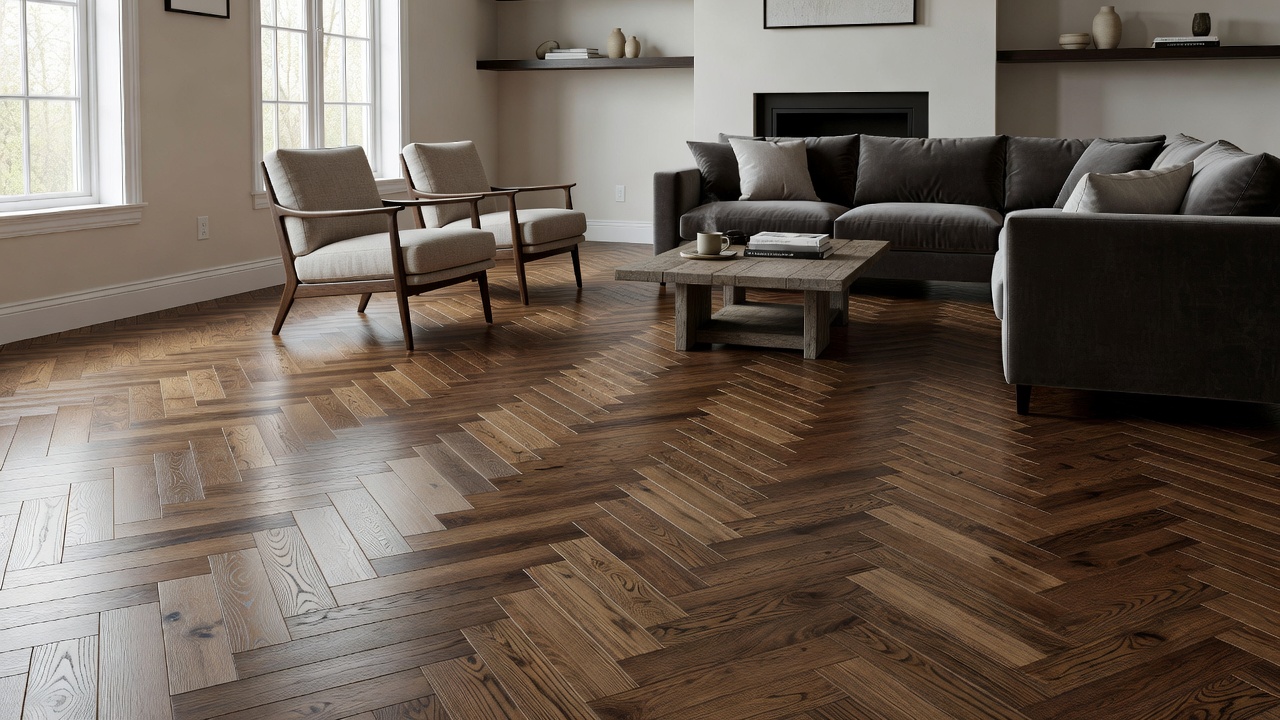 One does not simply walk on a plank and declare the matter settled. One interrogates it. Can LVP fool hardwood snobs? The unvarnished verdict, delivered before the canapés grow cold: the finest luxury vinyl plank can seduce the eye for a dinner party and survive polite scrutiny from six feet away, but it cannot fully fool a hardwood snob who kneels, knocks, and listens. Luxury vinyl plank—LVP—is a multi-layer synthetic flooring product engineered to imitate wood grain through photographic wear layers, rigid cores, and embossed textures, priced typically between $2 and $7 per square foot installed in the better lines. It is theater. Sometimes excellent theater. Theater, however, is not oak.
I arrived at this conclusion not in a salon of Venetian walnut but under the unforgiving fluorescents of what I shall charitably call my eleventh flagship showroom—a Floor & Decor whose coffee was a crime against the bean. Still. One works with the materials one is given.
Does LVP look like real hardwood?
From the doorway, the better LVP performs a credible trompe-l'œil. Wide planks, wire-brushed embossing registered to the print, subtle color variation that does not scream “repeating every four boards”—these are the tells of a manufacturer who has spent actual money on the photograph. Stand at the threshold of a staged great room and you may, for a delicious half-second, believe you are regarding white oak or European walnut. I have watched guests do precisely this. I have been that guest, once, before I remembered my vocation.
Approach, however, and the fiction thins. Real hardwood carries three-dimensional mineral streaks, ray fleck that changes with the angle of afternoon light, and a depth of pore structure no wear layer fully reproduces. LVP’s grain is a picture of grain, however deft. Under raking light—my preferred interrogation method—the embossing can look slightly divorced from the print, like a face whose makeup has slipped a millimeter. The snob notices. The snob always notices.
Does LVP look like real hardwood? To the uncommitted eye at cocktail distance: often yes. To the person who has spent weekends comparing [LINK: engineered hardwood vs solid hardwood] under gallery LEDs: no, not once the sole and the gaze collaborate. The eye can be flattered. The partnership of eye and foot is harder to bribe.
Vinyl Flooring Tasting Notes: Three Contenders Under the Sole
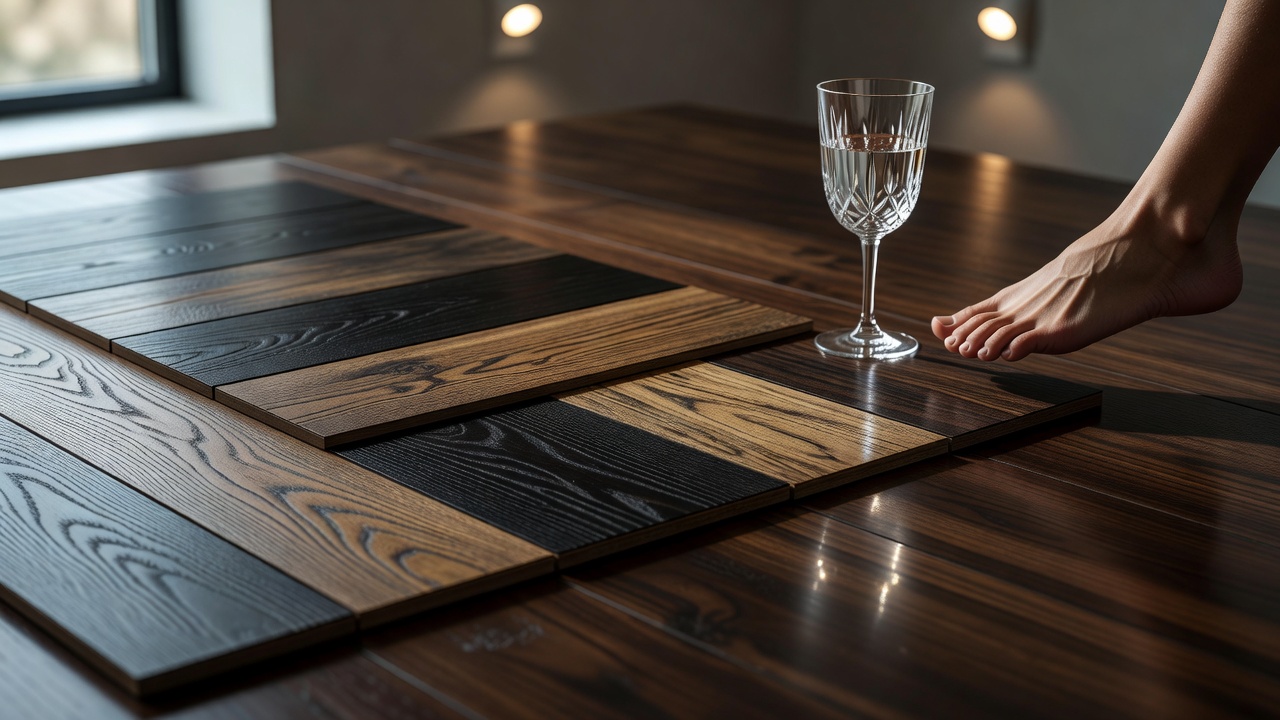
I conducted a proper flight. Not the chaos preferred by certain budget-conscious flooring content creators who film barefoot hops in poorly lit rentals and call it “honest.” One requires method. Three planks. One bare foot. Silence.
Specimen A — “Heritage Oak” rigid core, mid-tier, ~$3.80/sq ft material
On the nose: faint petrochemical sweetness beneath a vanilla-scented underlayment the associate insisted was “neutral.” I remain unconvinced.
On the palate (sole): immediate coolness, then a uniform density—no seasonal movement, no whispered give of true fiber. The click-lock edge announced itself like a guest who clears his throat before every remark. Finish: durable, slightly plasticky ping when knuckle-tested.
Rating: 6.0 Insoles out of 10. Competent understudy. Will not be invited back for the gala.
Specimen B — “Smoked Hickory” premium wear layer, ~$5.50/sq ft
On the nose: almost nothing, which is itself a kind of luxury.
Visual attack: impressive. Cathedrals in the grain photograph actually aligned with the texture. From three feet, dangerous.
Underfoot: warmer than A, thanks to a thicker IXPE pad, yet still that telltale lateral stiffness. Hardwood flexes along the grain’s memory; this flexes like a well-made clipboard. The sound when walked in hard soles was a muted thup rather than the complex tick-tick of nail or glue-down oak.
Rating: 7.5 Insoles out of 10. The one that nearly fooled my companion for an entire canapé. Nearly.
Specimen C — “Reclaimed French Oak” (so named; provenance: a printer in Ohio)
Ambition on the label. On the floor: busy, over-distressed, the flooring equivalent of a novel with too many adverbs. The bevels caught dirt in the showroom already. A tragedy in four millimeters.
Rating: 4.0 Insoles out of 10. Satire without the wit.
The lesson of the flight: modern LVP has closed the visual gap with a ruthlessness that should make certain millwork houses nervous. The acoustic and thermal gap remains a canyon. For a fuller sense of how material performance separates the convincing from the merely ambitious, one might consult a proper [LINK: LVP waterproofing and durability guide]—though I trust you will read it with a raised eyebrow and a good pen.
Can you tell the difference between LVP and hardwood underfoot?
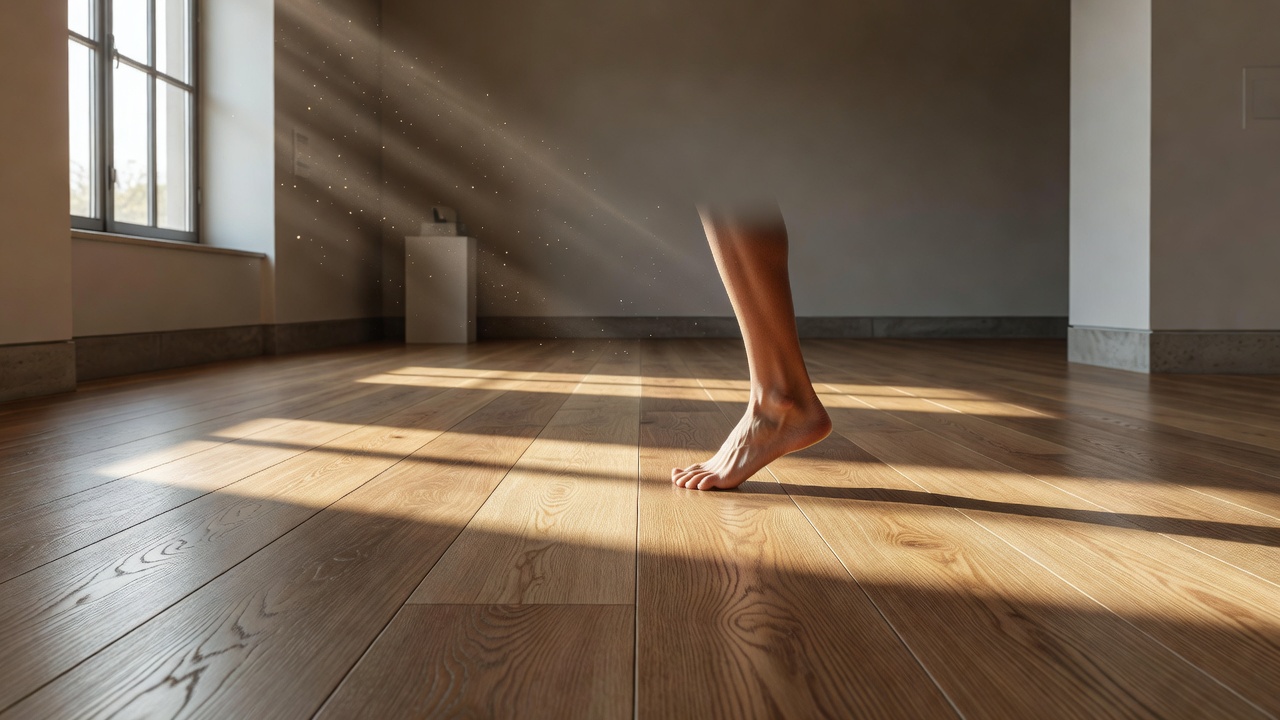
Yes. Immediately. And anyone who claims otherwise is either selling something or has spent too long in athletic socks on concrete.
Hardwood—solid or quality engineered—carries a living micro-flex, a temperature that tracks the room rather than the underlayment’s foam agenda, and an acoustic signature with overtones. LVP, even the rigid-core aristocracy, reads as a single decisive note: cool, consistent, faintly hollow if the subfloor is imperfect. Pets’ nails click differently. Dropped cutlery reports with a brighter, cheaper ring. Children discover they can slide farther in socks, which is either a feature or an indictment depending on one’s philosophy of childhood.
I tested this in my own one-bedroom, where the landlord’s idea of “hardwood” is a mystery laminate from a prior decade. I ordered a sample box, laid Specimen B in the galley, and walked the seam blindfolded. Identification: six seconds. The vinyl announced itself like a tenor who has not warmed up. Authenticity is not merely visual; it is a full-body argument.
Is LVP worth it over hardwood?
For the snob whose identity is welded to material truth: no. You will know. Your feet will file minority reports for years. For the person who entertains often, hosts dogs of indifferent manners, fears the dishwasher’s betrayal, or rents and therefore cannot install $14,000 of white oak for a landlord’s future listing—LVP is not merely “worth it.” It is the only sane diplomacy between aspiration and physics.
Cost remains the vulgar trump card. Quality LVP installed often lands at roughly 40–60% the price of comparable hardwood installations in many markets, with lifespans commonly cited in the 15–25 year range against hardwood’s multi-decade potential when refinished. Refinishing, of course, is the hardwood snob’s sacrament. LVP offers no such penance; when it fails, it is replaced, not reborn. There is something honest in that finality, if one can bear honesty.
Resale is the ghost at this banquet. Which brings us to the question the internet will not stop asking in a whisper.
Does LVP lower home resale value?
It can, in neighborhoods where buyers perform material audits with the zeal of appraisers at a dynasty auction. In starter homes, family suburbs, and any listing that already boasts “updated” in the first three bullets, good LVP is increasingly read as a feature—waterproof, pet-ready, low-drama—rather than a confession. Poor LVP, the shiny thin stuff with cartoon grain, will punish you. Excellent LVP photographed well may not move the needle down at all; it simply will not move it up the way a newly refinished red oak floor still can among the old guard.
I have stood in open houses where the agent said “luxury vinyl” with the same reverence once reserved for “heart pine.” The culture is shifting. The snob’s job is not to pretend otherwise. The snob’s job is to notice how far the shift has gone—and to refuse to call a photograph a tree.
FAQ
Does LVP look like real hardwood?
The best modern LVP can look convincingly like hardwood from standing height and across a room, especially with registered embossing and varied plank design. Up close, under raking light, or to anyone familiar with real grain depth, the photographic wear layer and uniform core usually give it away. Distance flatters; intimacy prosecutes.
Is LVP worth it over hardwood?
LVP is worth it when waterproofing, budget, rental constraints, or heavy household traffic outrank the desire for authentic wood character and refinishability. Hardwood remains worth it when longevity, resale theater in traditional markets, and the sensory truth underfoot are non-negotiable. Choose the hierarchy of your values before you choose the plank.
Does LVP lower home resale value?
Cheap or poorly installed LVP can hurt appeal with picky buyers; quality LVP in the right price tier and neighborhood often reads as practical rather than punitive. It rarely commands the premium of newly finished hardwood, but it no longer automatically signals desperation the way early vinyl once did.
Can you tell the difference between LVP and hardwood underfoot?
Yes. LVP feels cooler, more uniformly rigid, and acoustically simpler; hardwood has micro-flex, temperature nuance, and a richer sound. Blind tests favor the honest sole over the optimistic eye every time.
Can LVP fool hardwood snobs at a dinner party?
For the first hour, if the lighting is kind and no one drops a fork, perhaps. After that, someone always kneels to “admire the grain,” and the charade develops a limp. Plan your seating accordingly.
So. Can LVP fool hardwood snobs? It can rent the illusion by the evening. It cannot purchase the inheritance. The eye may applaud; the sole files a dissenting opinion; the ear refuses to be bribed. I have rendered my judgment in the only currency that matters—Insoles out of 10—and I sleep the sleep of the righteous.
Or I would, if the sample plank in my hallway did not keep catching my sock on the way to make instant coffee.