budget flooring first time homeowners
Best Flooring for First-Time Homebuyers 2026
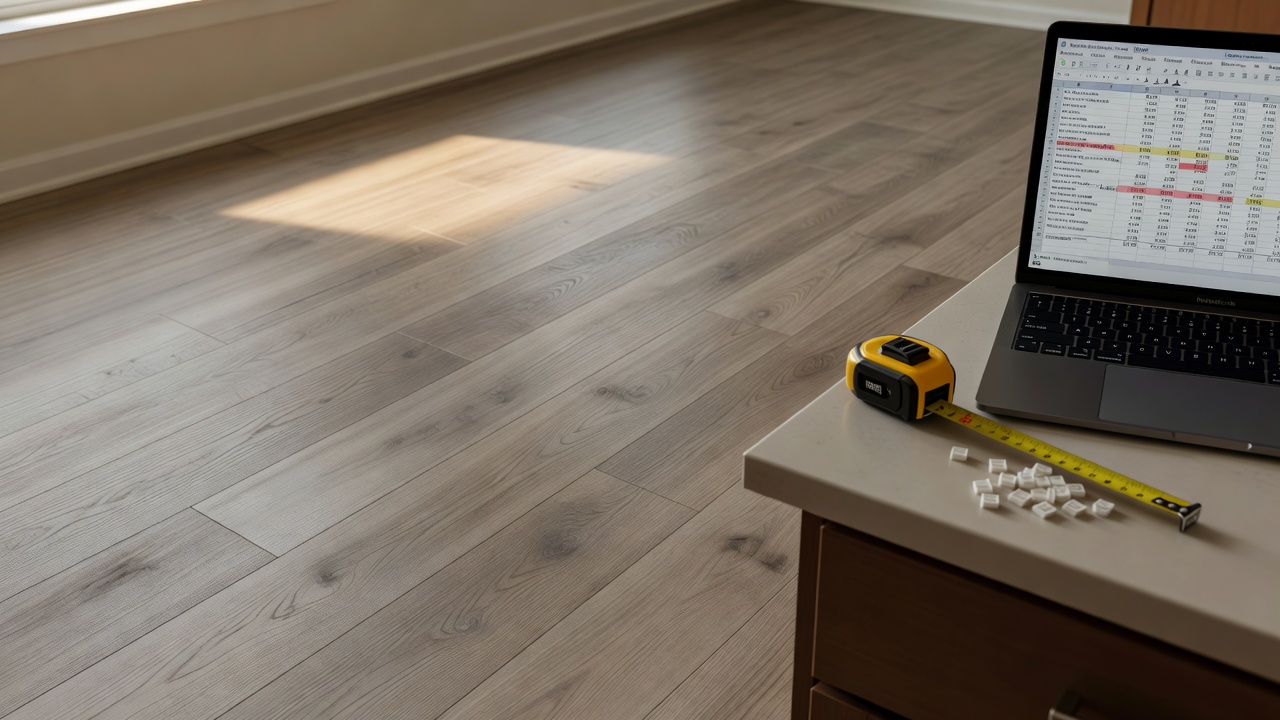
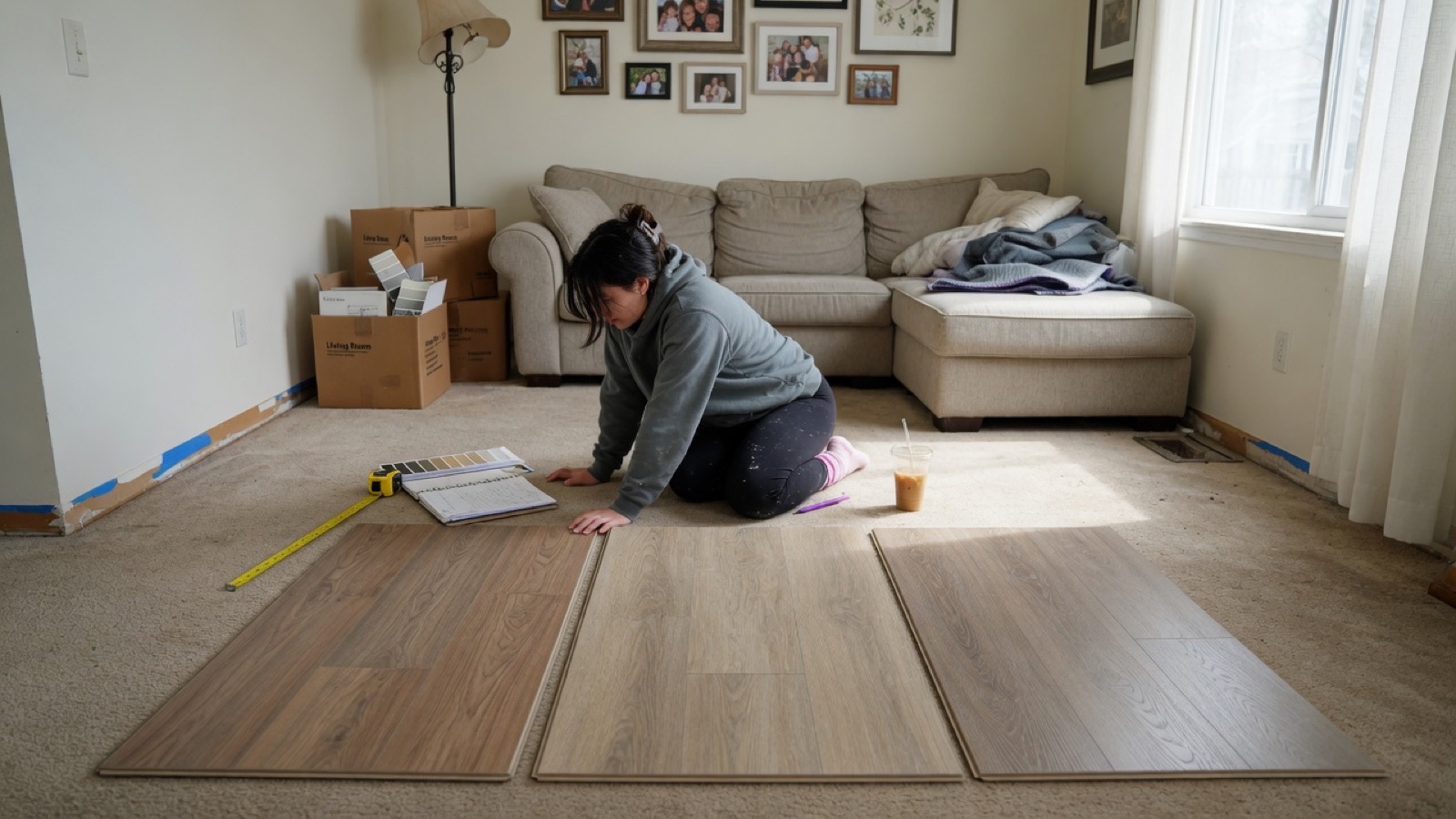 I have seventeen tabs open and a color-coded Google Sheet titled “FLOORING FINAL FINAL v4 (do not touch)” that my husband already closed twice by accident. The short version before I spiral: the best flooring for first-time homebuyers is almost always rigid-core luxury vinyl plank (LVP). It hits the ugly triangle of under-$4-per-square-foot installed DIY, water-resistant enough for a nervous first kitchen, and forgiving when you mess up the first three rows.
Best flooring for first-time homebuyers means the material that survives a tight budget, zero professional crew, pets/kids/spills you haven’t planned for yet, and the resale conversation two owners from now—without requiring a second mortgage or a master’s in underlayment. For most of us that is LVP, then laminate if you’re drier and cheaper, then engineered hardwood only if the spreadsheet still has oxygen after closing costs.
What flooring should first-time homebuyers choose?
I wanted hardwood. Of course I wanted hardwood. Then I ran the numbers for our 1,140-square-foot ranch and the “some guy online who acts like vinyl plank is a personal insult” energy started leaking into every Reddit thread I opened at 1 a.m. Solid hardwood at $8–14/sq ft installed? That’s a car payment. Engineered at $6–10? Still a panic attack when the roof already needs flashing.
So I built the dumb matrix anyway:
- Budget under $3.50/sq ft material + DIY labor = 0: LVP wins hard (Lifeproof, Coretec, the Floor & Decor house brands that go on sale every other Tuesday).
- Moisture risk (kitchen, bath, laundry, dog water bowl disasters): LVP or tile. Laminate only if you enjoy anxiety.
- Can we actually install this ourselves on a long weekend without crying: click-lock LVP or laminate. Glue-down anything is a trap. Tile is a relationship test.
- Resale “looks expensive” score: engineered hardwood if the equity fairy visits; otherwise a good wood-look LVP fools most buyers until they kneel and knock.
- Partner veto power: Derek said “just pick something beige” which is not a criterion, Derek.
By bullet three the matrix was already lying to me because the “cheap” LVP I loved had a 20-mil wear layer I suddenly decided was non-negotiable after one viral pet-scratch video. (That’s an extra $0.80/sq ft, or roughly $340 more than I told my husband, so we’re not discussing that part.)
Real ranges I actually paid or watched friends pay in 2025–2026:
- Rigid-core LVP: $1.79–$3.49/sq ft material, $0 if you DIY, $2–4 if you hire the guy from Craigslist who shows up on time.
- Laminate: $1.29–$2.79, same DIY math, dies faster near sinks.
- Engineered hardwood: $4.50–$8 material, professional install almost required unless you enjoy cupping regret.
- Ceramic/porcelain tile: $1.50–$5 plus thinset and the knowledge that your knees will never forgive you.
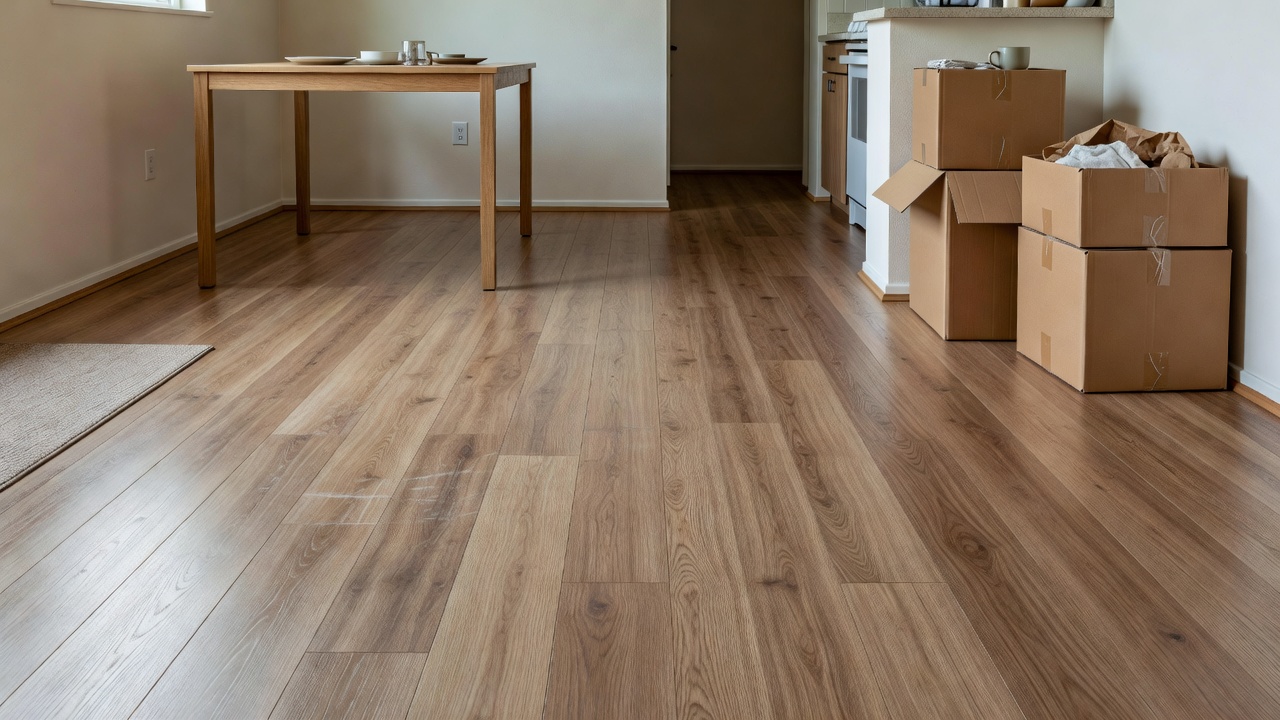
I went LVP in the main living areas and kitchen. Laminate in the two dry bedrooms because the clearance rack at [LINK: budget laminate deals] was screaming. Still second-guessing the bedroom call every time humidity spikes.
Which flooring should I put in which room?
This is where the group chat tried to help and instead sent nine contradictory Pinterest screenshots.
Kitchen & entry: LVP or tile. Full stop. I watched a friend put “waterproof” laminate by the back door and the edge swell after one winter of boots. Our rigid-core LVP laughed at the slow-cooker overflow last month. Underlayment with attached pad saved my back and my sanity.
Bathrooms: either LVP rated for wet areas or small-format tile. I did LVP in the hall bath (easier) and real tile in the primary because I panicked about resale. (Grout is forever. I hate grout.)
Bedrooms: laminate is fine if you’re truly dry and want to save. Carpet only if you love vacuuming and mysterious stains. We did laminate + big rugs so the dog has somewhere soft to ruin.
Basement (if you have one and it’s not a swamp): only LVP or tile with proper moisture barrier. I know people who “just put laminate down there for now.” Those people now own a mold science project.
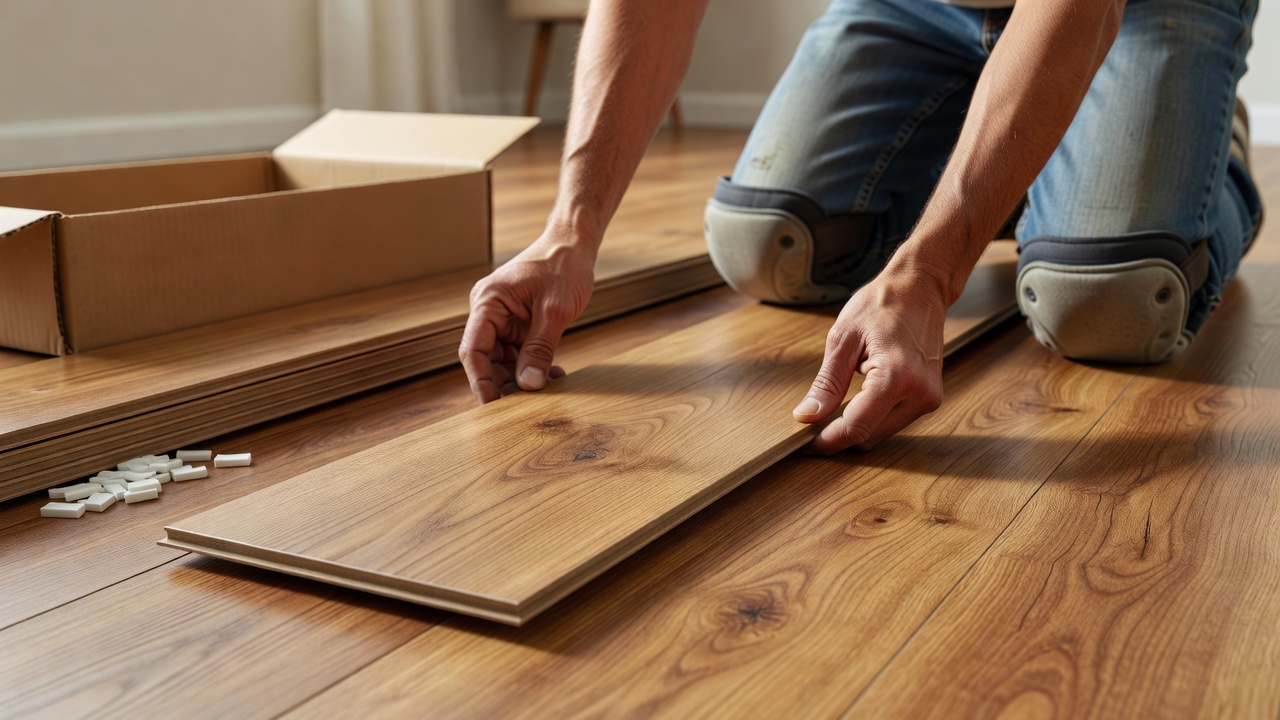
Room-by-room is also where DIY scores matter. Click-lock LVP across an open living-kitchen run is a satisfying weekend. Cutting around toilets is a separate emotional event. Measure twice, order 10–15% extra, and accept that the leftover planks will live in your garage until you move. [LINK: how to calculate flooring waste] saved me from a second emergency store run.
Is LVP worth it for first-time homeowners?
Yes. With caveats I learned the expensive-feeling way.
Worth it because:
- You can return unopened boxes at most big-box places if the color looks wrong under your actual lights (do the 24-hour test, not the phone-flashlight test).
- Rigid core (SPC or WPC) handles temperature swings better than the floppy stuff from five years ago.
- Wear layers 20 mil and up survive dogs and chairs if you use felt pads like a person who has suffered.
- It is the least judgmental material when your first cut is crooked.
Not worth it if you buy the absolute cheapest no-name plank with a 6-mil wear layer and then act shocked when the finish clouds. Also not worth it if you skip acclimation and underlayment instructions because “it clicked fine in the store.” The store is climate-controlled. Your house is not.
I still hear the ghost of that online guy muttering about “real wood” every time someone compliments the floors. Let him. My total material cost for the main floor was under $2,100. His opinion does not pay my escrow shortage.
How much does it cost to replace flooring in a first home?
Ballpark for a typical 1,000–1,200 sq ft first house main level (2026 prices, materials only, mid-tier):
- LVP DIY route: $2,000–$4,200
- Laminate DIY: $1,500–$3,000
- Hire it out LVP: add $2–5/sq ft labor depending on city and whether they have to haul out carpet and tack strips
- Full engineered hardwood pro install: $7,000–$12,000+ and suddenly you’re eating rice for a year
Hidden gotchas that wrecked my original sheet: transition strips ($8–25 each and you always need more), underlayment if it isn’t attached, moisture tests for slabs, and the day you realize the fridge doesn’t roll far enough and you have to pull it with a friend who will never let you forget the noise it made. Budget a 15% “I hate everything” contingency. I used mine on better baseboards because the old ones looked tragic against the new planks.
Retail tips that actually mattered: Floor & Decor and the big boxes run 10–20% off sales constantly—never pay full list. Sample at home for a week. Check the return policy in writing. And if the associate starts pushing the extended warranty hard, smile and walk; most mid-grade LVP already has a residential warranty that covers normal first-home chaos.
FAQ
What flooring should first-time homebuyers choose?
Rigid-core LVP is the default winner for most first-time buyers because it balances cost, DIY feasibility, and moisture resistance. Choose laminate only in dry bedrooms if you need to shave more off the budget, and save engineered hardwood for when the emergency fund is actually full.
Is LVP worth it for first-time homeowners?
Yes—especially 20-mil+ rigid-core options under $3.50/sq ft. It forgives beginner install mistakes and daily life better than laminate or cheap floating floors while still looking finished enough for future buyers.
How much does it cost to replace flooring in a first home?
Expect $2,000–$4,500 in materials for a main-level LVP DIY job on a modest house; double or triple that if you hire labor or step up to hardwood. Always add 10–15% extra material plus transition and underlayment costs.
Which flooring goes in which room for new homeowners?
LVP or tile in kitchens, baths, entries, and basements; laminate acceptable in dry bedrooms; avoid carpet until you know your stain personality. Continuity across open spaces makes small first homes feel bigger.
What are the biggest first-time homebuyer flooring mistakes?
Skipping moisture testing, buying ultra-thin wear layers, under-ordering, and letting resale FOMO push you into hardwood you can’t afford to maintain. Also trusting the store lighting.
I still walk through at night and wonder if the slightly cooler gray tone will look dated in four years or if I should have sprung for the wider plank. Derek says it looks fine. The spreadsheet says we stayed under the number I promised the mortgage broker. Some nights that’s enough. Some nights I open the leftover-box photo album and spiral again.
What would you have picked with my exact constraints—tight cash, one hesitant partner, a dog who believes water bowls are optional, and a pathological need to DIY? Genuinely asking. I might still change the bedroom laminate before we list someday. Or not. The cells are still editable.