Vinyl Plank Wear Layer Thickness: Science Guide
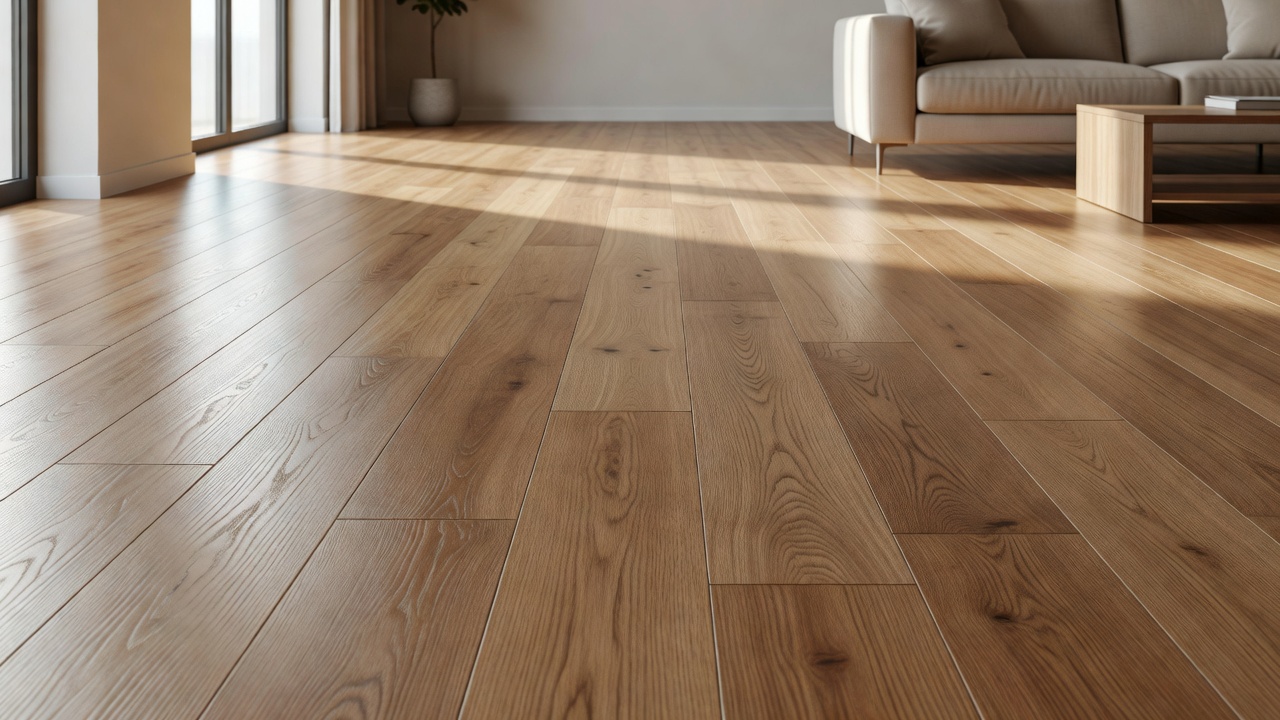 Last Tuesday my neighbor’s golden retriever skidded across her new living-room planks with the grace of a wet bar of soap, and she texted me a photo of the faint scuff like it was a crime scene. I may have replied with a short essay on urethane cross-linking. Sorry. Vinyl plank wear layer thickness is the clear top coat measured in mils (one mil = 0.001 inch) that actually takes the grit, claws, and chair legs; for most homes, a 12 mil wear layer is the practical residential baseline, while 20 mil and up suits pets, kids, and heavier traffic—but the chemistry of that coat (urethane plus aluminum oxide or ceramic beads) often decides failure more than the number on the box.
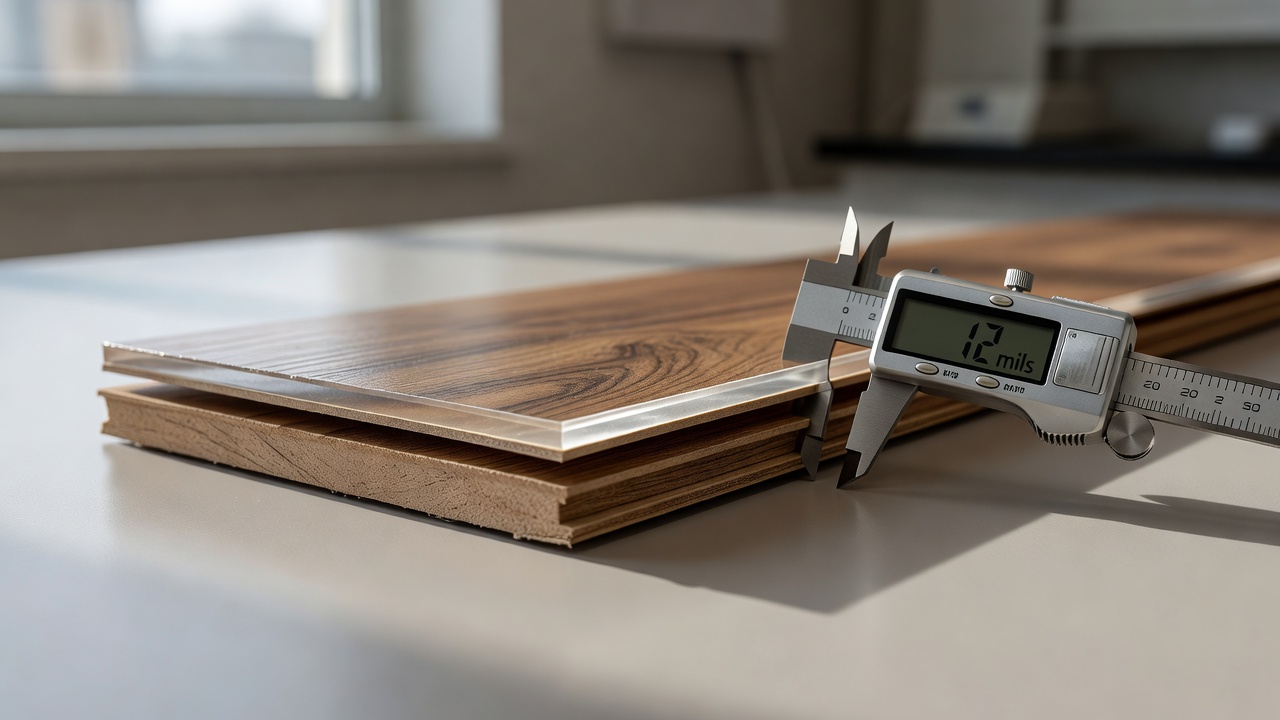
A wear layer, plain and quotable: the transparent protective coating bonded over the printed design film on luxury vinyl plank (LVP) that resists abrasion, stains, and UV fading. Everything below it is décor and structure. The wear layer is the part that lives or dies under household grit.
What is a wear layer in flooring?
Think of LVP as a sandwich. Bottom: backing or rigid core. Middle: a photographic film that looks like oak or stone. Top: a clear polymer shield—the wear layer. That shield is usually a UV-cured urethane (a tough, glassy plastic network) loaded with hard particles. Aluminum oxide (AlOx—lab-speak for “tiny synthetic sapphire grit”) and ceramic bead urethane coating are the common reinforcements. Those particles raise the surface hardness so sand doesn’t plow trenches the first winter you track in driveway grit.
People sometimes confuse wear layer thickness with overall plank thickness. They are not the same. A 6 mm rigid plank can still wear out if the top coat is a flimsy 6 mil; a thinner flexible plank with a well-formulated 20 mil coat can outlast it on the surface. If you’re comparing [LINK: wear layer vs overall thickness], put your money and attention on the mils of clear coat first, then decide core type for dent resistance and underfoot feel.
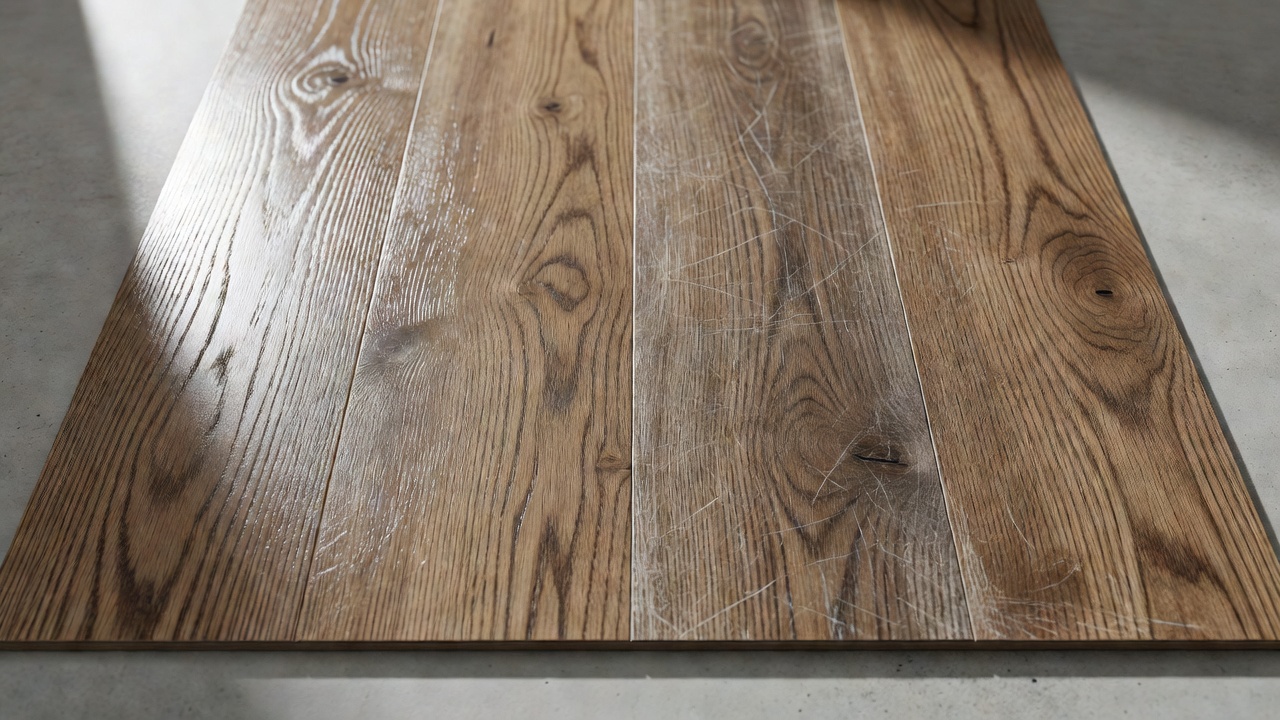
Okay, this is the part where I get a little too into it—feel free to skim. Abrasion in a house is almost never one dramatic gouge. It’s repeated micro-cutting by silica (sand), which is harder than most polymers. The wear layer doesn’t “wear evenly like eraser rubber”; hard particles in the coating take the hits while the urethane matrix holds them in place. When the matrix chalks, yellows, or loses those particles, the print film underneath becomes the next casualty. That’s why composition sits next to thickness on the real report card.
How thick should the wear layer be for residential LVP?
Industry rules of thumb (manufacturer charts, not physics commandments) usually land here:
- 6–8 mil — light residential, low-traffic bedrooms, careful households, temporary spaces. Fine until the first gravelly dog or rolling office chair.
- 12 mil — standard home traffic: kitchens, halls, living rooms for most families without heavy pet claws or constant rolling loads.
- 20 mil and above — pets, kids, multi-generational chaos, light commercial, rental turnovers where you want margin.
So when someone asks what mil wear layer for LVP, I start at 12 mil for ordinary residential and nudge to 20 mil if the lifestyle includes outdoor-indoor grit loops, large dogs, or furniture that scrapes. Warranties often track these bands, but read the exclusions: many void over rolling casters without pads, or over “improper maintenance,” which is marketing for “you dragged a pot with a sandy bottom.”
12 mil vs 20 mil wear layer is not a morality play. Twenty mil gives you more sacrificial polymer before the print shows. It does not automatically mean “twice as good forever” if the 12 mil formula is densely loaded with AlOx and the 20 mil is a soft, under-cured urethane. Spec sheets that only shout mils and stay silent on aluminum oxide wear layer content or ceramic topcoats are doing half the job.
Does thicker wear layer mean better flooring?
Not automatically—and this is where the materials-science hobbyist in me gets delighted. Thickness buys you volume of protection. Formulation buys you quality of protection.
Here’s what’s actually happening underfoot, numbered because my brain insists:
- Grit arrives — silica and soil particles harder than the polymer matrix.
- Asperity contact — those particles press into the clear coat under shoe or paw pressure; peak stresses are local and nasty.
- Micro-cutting and fatigue — repeated passes plow tiny grooves; UV and cleaning chemicals slowly embrittle the urethane if stabilizers are weak.
- Particle pull-out or matrix polish — aluminum oxide or ceramic beads either stay locked and keep shedding the load, or the binder fails and the surface goes cloudy, then thin.
- Print exposure — once the clear coat is gone in a path, the décor film scuffs and the floor “looks worn” even if the core is fine.
A thicker coat delays step 5. A smarter coat (well-dispersed hard phase + thorough UV cure + UV stabilizers) slows steps 3 and 4. Ceramic bead urethane coating systems are popular because the beads are rounded and tough; they can improve scratch appearance and cleanability versus some older AlOx-only blends. Neither magic bead nor magic mil number replaces felt pads and doormats. I know. Rude of physics.
Also rude: sun patches. UV doesn’t “eat thickness” overnight, but it can yellow or embrittle a poorly stabilized wear layer so abrasion accelerates. If your room is a south-facing light box, ask about UV inhibitors the same way you ask about mils. For core and locking systems that handle movement under that sun, see [LINK: rigid core vinyl plank]—surface life and dimensional stability are related roommates, not the same person.
Dry one-liner, as promised: buying mils without reading the chemistry line is like buying a raincoat by weight and ignoring whether it’s actually waterproof.
How long does a 12 mil wear layer last?
Honest range, not brochure poetry: a quality 12 mil wear layer in a typical residential setting often looks good for roughly 10–20+ years, depending on grit load, UV, chair types, and cleaning. High-traffic entries with sandy kids and no mats can scuff the sheen in a few years without “wearing through.” Light-use guest rooms may outlast the cabinet trends. Lab Taber-abrasion or similar ASTM-style cycles (rotating abrasive wheels, counted until a defined endpoint) are how factories rank coats; those numbers are comparative, not a calendar for your hallway. Translate them as “this one survived more standardized sanding than that one,” not “guaranteed until 2041.”
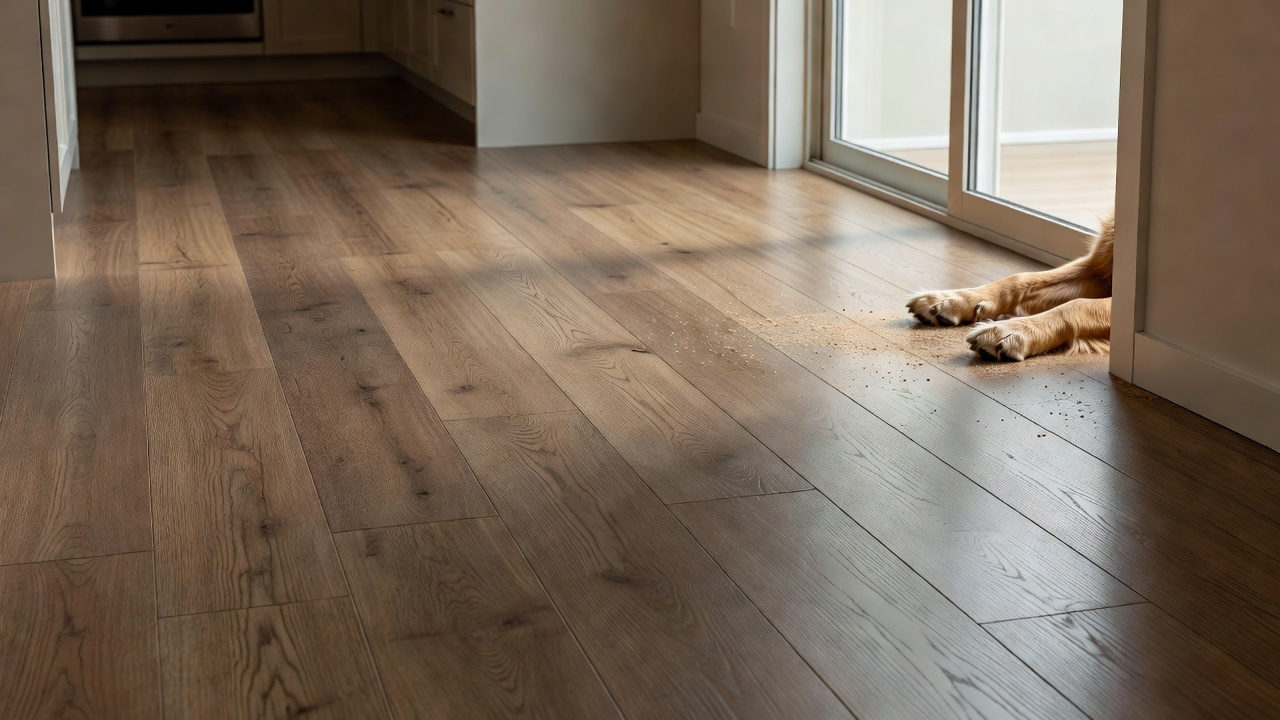
Pets change the math. Claws concentrate force. A 12 mil coat with strong AlOx loading can still be the right buy if you commit to mats and nail trims; a 20 mil coat is the lower-anxiety choice if you’d rather engineer out the worry. Commercial ratings and thicker mils exist because carts and constant grit are simply meaner than a Tuesday dinner party.
FAQ
What is a wear layer in flooring?
A wear layer is the clear protective top coating on vinyl plank that shields the printed design from scratches, stains, and abrasion. It is measured in mils and is separate from the plank’s overall thickness. Everything that scuffs first, scuffs here.
How thick should the wear layer be for residential LVP?
For most homes, 12 mil is the standard residential target; choose 20 mil or higher for pets, kids, rentals, or heavy grit traffic. Match mils to lifestyle, then confirm the coat includes aluminum oxide or ceramic reinforcement. Warranties often follow these same bands.
Does thicker wear layer mean better flooring?
Thicker means more sacrificial material, not automatic superiority—urethane quality, aluminum oxide or ceramic bead loading, and UV cure matter as much as the mil count. A well-formulated 12 mil can outperform a soft, under-specified 20 mil in real rooms. Read composition lines, not just the big number.
How long does a 12 mil wear layer last?
In ordinary residential use, a solid 12 mil coat commonly serves in the 10–20+ year range before looking worn, with wide variance from grit, UV, and furniture. Lab abrasion tests rank relative toughness; they are not a stopwatch for your hallway. Mats and pads still do more than any brochure admits.
What is the difference between wear layer and overall thickness?
Wear layer thickness (mils) is only the clear top shield; overall thickness (mm) includes core, film, and backing and mostly affects dent resistance and feel. Surface life tracks the wear layer; structural behavior tracks the core. Spec both on purpose.
I still think about that golden retriever text thread. Somewhere under the faint scuff is a few tens of microns of cross-linked urethane doing unpaid overtime so the oak photograph stays oak. Next time you catch a sun stripe on your floor, notice whether the sheen in the traffic lane matches the sheen under the sofa—that quiet difference is the wear layer telling you its life story, one micro-cut at a time. Isn’t that a little wonderful?