Cheapest Flooring to Install Yourself: 2025 Budget DIY Guide
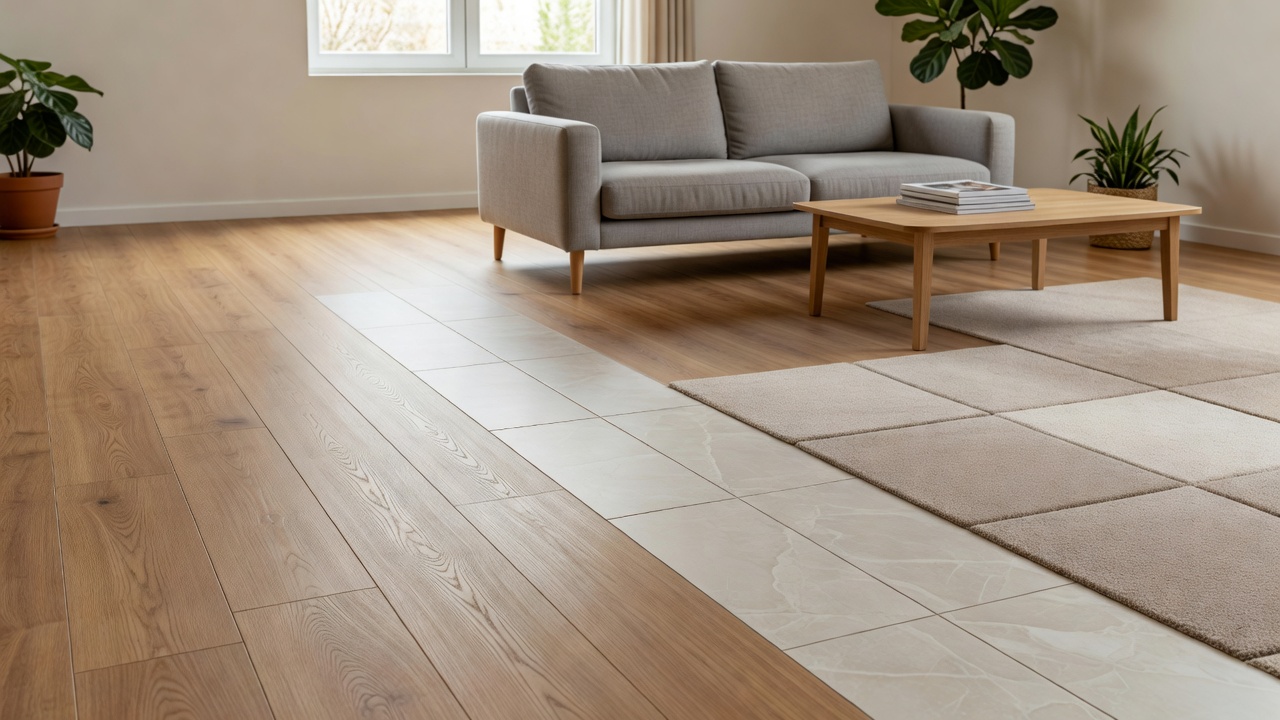 I have fourteen tabs open and three different "final" columns in the spreadsheet and I still don't know if I'm about to ruin the guest bedroom. The cheapest flooring to install yourself right now is peel-and-stick vinyl (tiles or sheets) or entry-level click-lock laminate and budget luxury vinyl plank, usually landing between about $0.70 and $3 per square foot for materials if you shop sales and accept that it will not photograph like a design blog. Cheapest flooring to install yourself just means the lowest all-in material-plus-basic-tools route a first-timer can actually finish without hiring anyone—adhesive or floating systems that skip pro labor. That is the clean answer. The rest of this is the meltdown.
I bought the house eight months ago. Guest room still has the landlord-beige carpet that smells like someone else's dog. My husband (I'm calling him Chris here so he can't search this later) said "just get whatever" which is not a budget strategy. Group chat sent nine contradictory links. I cried once in a Floor & Decor parking lot because the math would not stay still. So. Here is the actual spreadsheet version.
What is the cheapest flooring to install yourself?
For pure material price in 2025 retail reality, peel-and-stick vinyl tiles or sheets still win most square-footage races—often $0.70–$2.00 per sq ft if you catch the right big-box or online clearance. Cheap laminate click systems sit around $1.00–$2.50. Budget DIY luxury vinyl plank (the thinner, less fancy LVP) runs $1.80–$3.50 on sale. Painted floors or just sealing plywood can dip under $1 if your subfloor is already decent and you already own a roller, but "already decent" is doing a lot of work in that sentence.
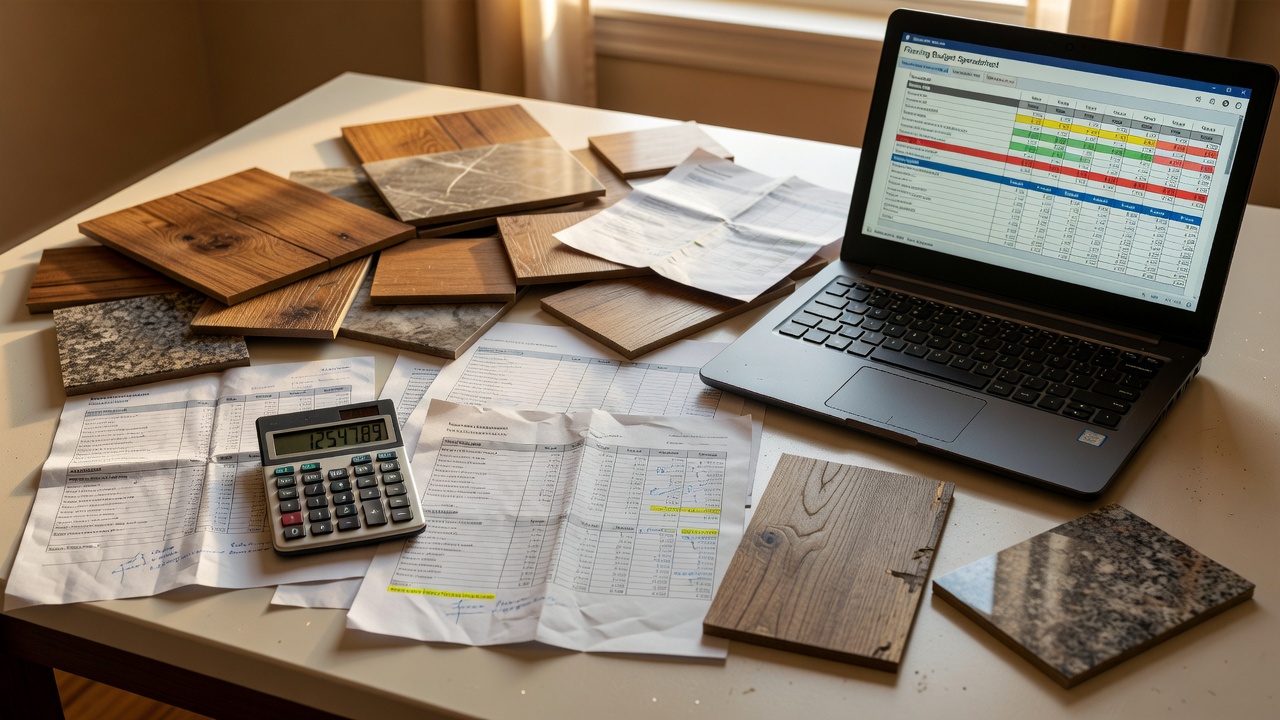
I measured the guest room three times. 148 square feet. Add 10% waste like every tutorial screams. Suddenly you're buying for 163. Peel-and-stick at $1.29 = roughly $210 materials. Underlayment? Some need it, some claim they don't. Leveling compound if the subfloor laughs at you. Knee pads. Utility knife blades that mysteriously vanish. Transition strips. (That's another $85–$140 I did not originally tell Chris about, so we are not discussing that column.)
Some guy online who acts like vinyl plank is a personal insult will tell you this is all garbage and you should save for solid hardwood or at least thick engineered. Cool. I have a first-time-buyer emergency fund and a room that currently feels sticky. Budget DIY flooring options exist because not everyone can wait for the perfect floor. I am allowed to want clean and cheap and done.
Final decision criteria I wrote at 11 p.m. last Tuesday:
- Under $3 per sq ft all-in materials
- Waterproof enough for "someone spills a drink" not "indoor pool"
- Click-lock or peel-and-stick so I do not need a nailer I will use once
- Looks expensive in photos I will never post
- Chris agrees without a forty-minute debate
- Does not make me hate myself in six months when it peels
(That list is already lying. The last two are wishes.)
I also looked hard at [LINK: peel-and-stick vinyl flooring DIY] kits versus open-stock LVP because the packaging makes you feel competent. Spoiler: the kits still require you to read the back of the box while crouched on the floor.
Is DIY flooring worth it?
Yes if your time is cheaper than the labor quote and you can live with imperfect edges. No if the subfloor needs real work or you will spiral every time a plank clicks wrong.
How much can you save by installing flooring yourself? Local quotes I collected (three of them, color-coded) put labor alone at $3–$7 per sq ft for vinyl or laminate floating installs, sometimes more once they see the old carpet and the mystery underlayment. On my 148 sq ft room that's $450–$1,000+ just for someone else to do the part I am terrified of. Materials I already budgeted. Tools I mostly own or can borrow. Net savings for me: somewhere between $500 and $900 depending on how badly I mess up the first two rows and have to buy extra boxes. (Yes I already ordered the extra boxes. They are in the garage. Chris has not asked.)
Is it worth the marriage capital of two full weekends and me muttering measurements out loud? Still calculating. The easiest flooring for beginners to DIY is usually peel-and-stick vinyl or modern click-lock LVP/laminate with a forgiving locking system—no glue open time, no nails, just patience and a tapping block you will lose twice.
What is the easiest flooring for beginners to DIY?
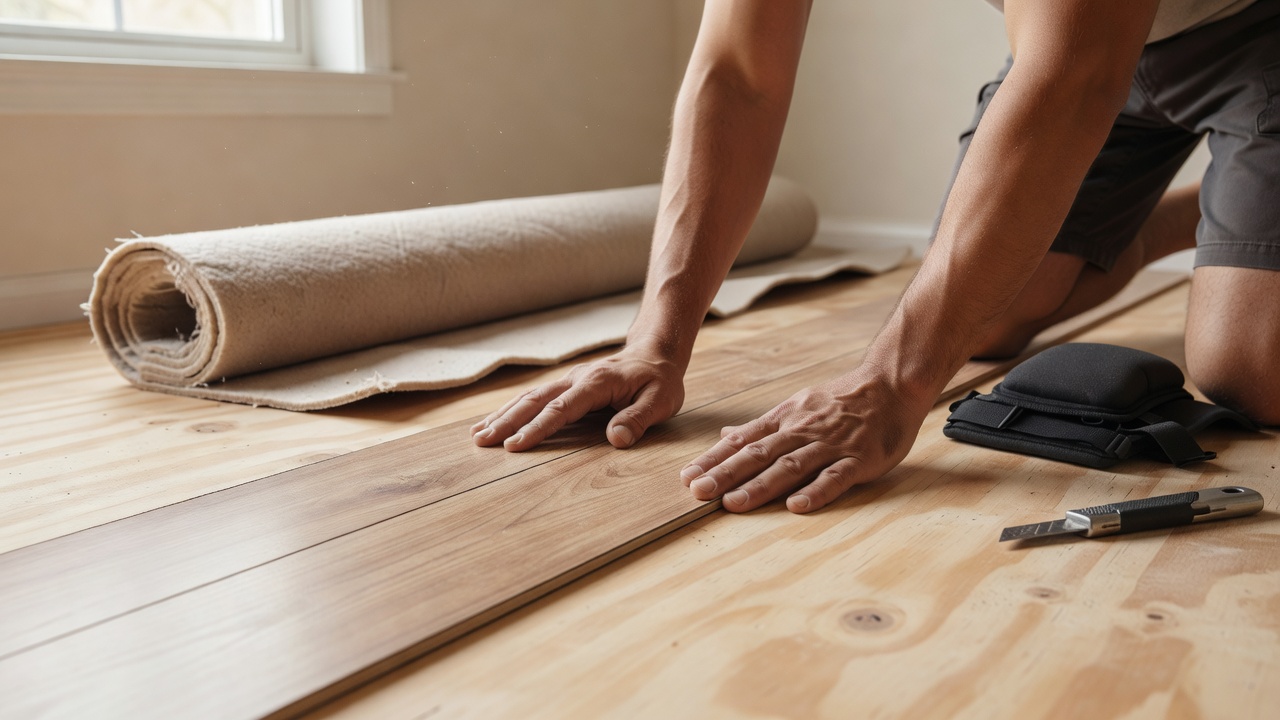
Peel-and-stick if your floor is flat and clean and you accept that "stick" is permanent-ish and unforgiving of dust. Click-lock LVP or cheap laminate if you want floating (can come up later) and you are willing to watch four YouTube videos of people who make it look effortless. Sheet vinyl is cheap but cutting it straight in a real room is a special kind of panic. I ruled out paint after remembering the time I painted a dresser and it still feels tacky in humidity. Not doing that to a floor I have to walk on.
I made a second tab just for "things that can go wrong." Subfloor not level. Moisture. Door that no longer clears. Pattern that looks fine in the store and like a casino in daylight. The [LINK: DIY luxury vinyl plank cost] calculators online always forget the underlayment that the specific brand suddenly requires when you read the fine print at 1 a.m.
Couple logistics nobody puts in the roundup posts: someone has to move the furniture. Someone has to agree on the color while standing under horrible store lighting. Someone has to hold the other end of the measuring tape without sighing. Chris held the tape. He also said the gray-brown sample "looks like every rental" which nearly ended the project. We went with the slightly warmer one. (It was $0.18 more per foot. I ate the difference in the "miscellaneous" column.)
I still do not know if peel-and-stick will look cheap in two years or if the budget LVP will telegraph every tiny subfloor sin. I know the carpet is leaving. I know the spreadsheet now has a "sunk cost of my sanity" line item that is not a joke.
FAQ
What is the cheapest flooring to install yourself?
Peel-and-stick vinyl tiles or sheets and entry-level click-lock laminate or thin LVP are usually the lowest material cost for true DIY, often $0.70–$3 per square foot before tools and prep. Add 10% waste and basic underlayment or leveling and you still beat most pro installs. Everything else is a trade-up for looks or durability.
Is DIY flooring worth it?
It is worth it when labor quotes exceed what you value two weekends of your life at and the subfloor is already in decent shape. It stops being worth it the moment you need major leveling, moisture mitigation, or you discover you hate cutting around door jambs.
How much can you save by installing flooring yourself?
On a typical small bedroom you can save $400–$1,000+ in labor alone compared with mid-range installer quotes for vinyl or laminate. Your real number depends on waste, tools you already own, and how many "oops" boxes you buy.
What is the easiest flooring for beginners to DIY?
Modern click-lock luxury vinyl plank or laminate and quality peel-and-stick vinyl are the most beginner-friendly because they need almost no special tools beyond a knife, straightedge, and tapping block. Flat, clean, dry subfloors matter more than brand hype.
Do I need underlayment for cheap DIY vinyl or laminate?
Many peel-and-stick products want a smooth substrate and no extra pad; many floating LVP and laminate products require or include underlayment for sound and minor imperfections. Read the specific product instructions twice before you skip it—ask me how I know.
I keep opening the spreadsheet. The total is still lower than any quote. The room is still empty of carpet. I am 70% sure this is the right call and 30% sure I will be back on the subreddit in six months asking if the peeling at the doorway is normal. What would you have done with the same numbers and the same slightly judgmental partner and the same fear of doing it wrong forever? Genuinely. I need more data points for the next tab.