Wear Layer Explained: Plain-English Flooring Specs
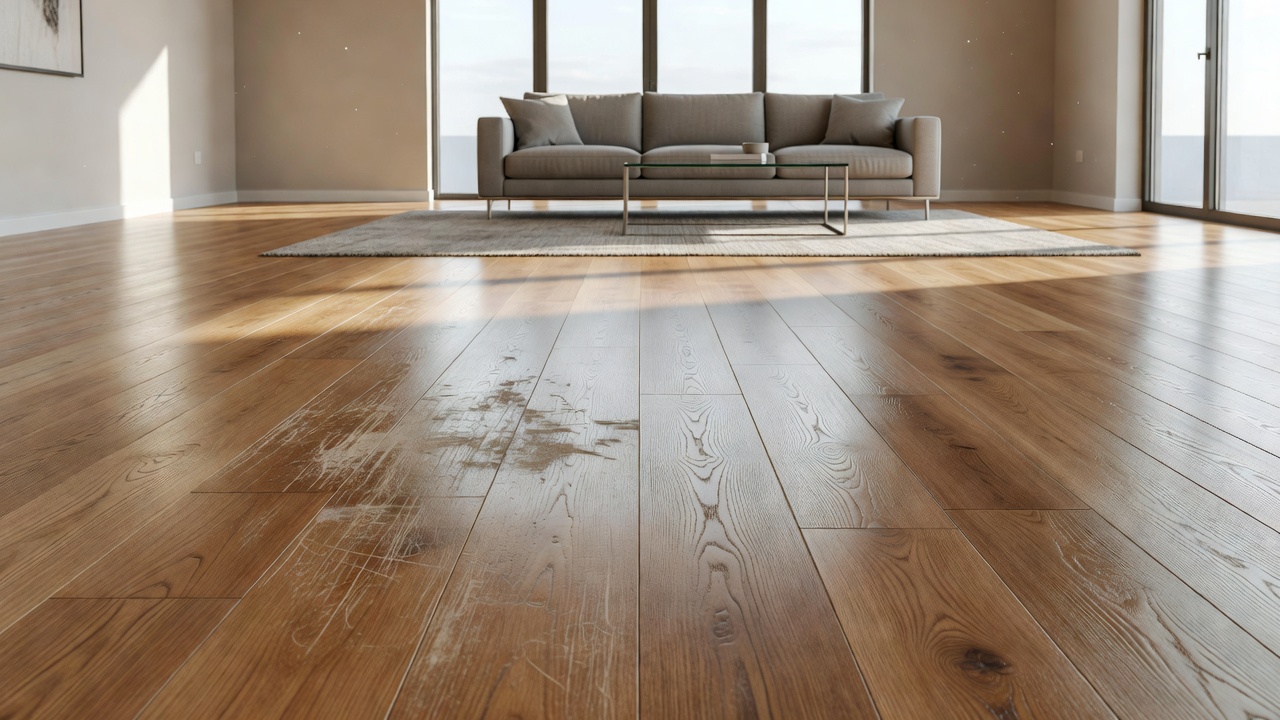 Last Tuesday my dog did that skidding stop on the kitchen LVP—claws, momentum, pure physics—and I watched the light catch the surface afterward like I was waiting for a crater to appear. Nothing. Just a faint haze that wiped off. That tiny non-event is the entire point of a wear layer, and once you see it that way, the specs stop feeling like marketing fog.
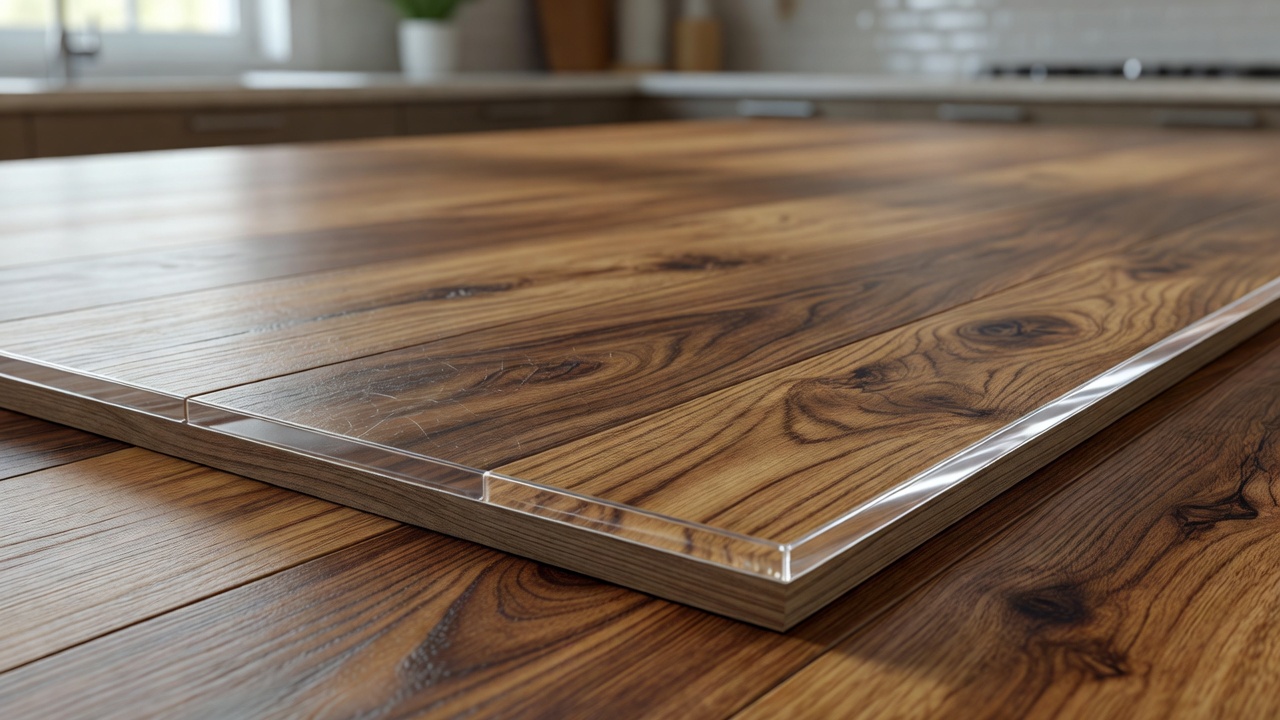
A flooring wear layer explained in one sentence: it is the clear protective top coat bonded over the printed design layer that absorbs abrasion, scratches, and scuffs so the pattern underneath stays intact. Thickness is usually listed in mils (1 mil = 0.001 inch ≈ 0.0254 mm); toughness also depends on the polymer chemistry and any aluminum-oxide or ceramic reinforcements suspended in it. That’s the number that predicts whether your floor ages gracefully or goes cloudy and scratched in year three.
What does wear layer mean on vinyl flooring?
On vinyl plank and tile, the wear layer is a transparent urethane (sometimes PVC-based) film factory-applied to the top of the plank. It is not the total plank thickness—that thicker number includes the core, the backing, and sometimes an attached underlayment. Confusing the two is how people buy a “8 mm floor” and still end up with a 6 mil wear layer that belongs in a guest closet.
Mils are simply thousandths of an inch. A 12 mil wear layer is about 0.3 mm of clear armor; 20 mil is roughly 0.5 mm; 28–40 mil starts wandering into light-commercial territory. The film is usually UV-cured polyurethane loaded with ceramic or aluminum-oxide particles. Those particles are the actual abrasion fighters—the polymer matrix holds them in place and keeps the surface from yellowing.
Okay, this is the part where I get a little too into it, feel free to skim: the cure chemistry matters. A well-cross-linked aliphatic urethane resists UV better than a cheap aromatic one, which is why two floors both labeled “20 mil” can yellow at wildly different rates under a sunny bay window. Thickness is necessary; composition is the quiet co-star.
For a practical [LINK: vinyl plank buying guide], treat the mil rating as your first filter, then ask what’s actually in the film.
What AC rating do I need for laminate in a home?
Laminate doesn’t use mils the same way. Its top surface is a melamine resin overlay saturated with aluminum oxide, pressed under heat onto the décor paper. Durability is reported as an AC rating (Abrasion Class), which comes from a standardized Taber-style abrasion test battery plus impact, stain, and cigarette-burn checks under EN 13329 / ISO-type protocols.
Quick map for homes:
- AC1–AC2 — very light traffic (closets, pure guest spaces). Mostly obsolete for modern living areas.
- AC3 — general residential. Fine for bedrooms and low-traffic living rooms if you’re gentle.
- AC4 — higher residential / light commercial. The sweet spot for most family homes with kids, dogs, and real kitchens.
- AC5–AC6 — commercial and heavy commercial. Overkill for most houses unless you run a yoga studio out of the living room.
The test spins abrasive wheels on a sample until the décor layer shows through a defined percentage of the surface. Lab-speak for “your dog can destroy this and it’ll probably survive” is roughly AC4 with a decent impact score. AC is a system rating, not a pure thickness number—so an AC4 laminate can outperform a thin, poorly reinforced vinyl wear layer even if the mil count looks smaller on paper.
I once watched a sample set fail the stain portion while crushing the abrasion wheels. Numbers are multiparameter. Annoying. Useful.
How thick should a vinyl wear layer be for pets and kids?
Residential tiers that actually match real households:
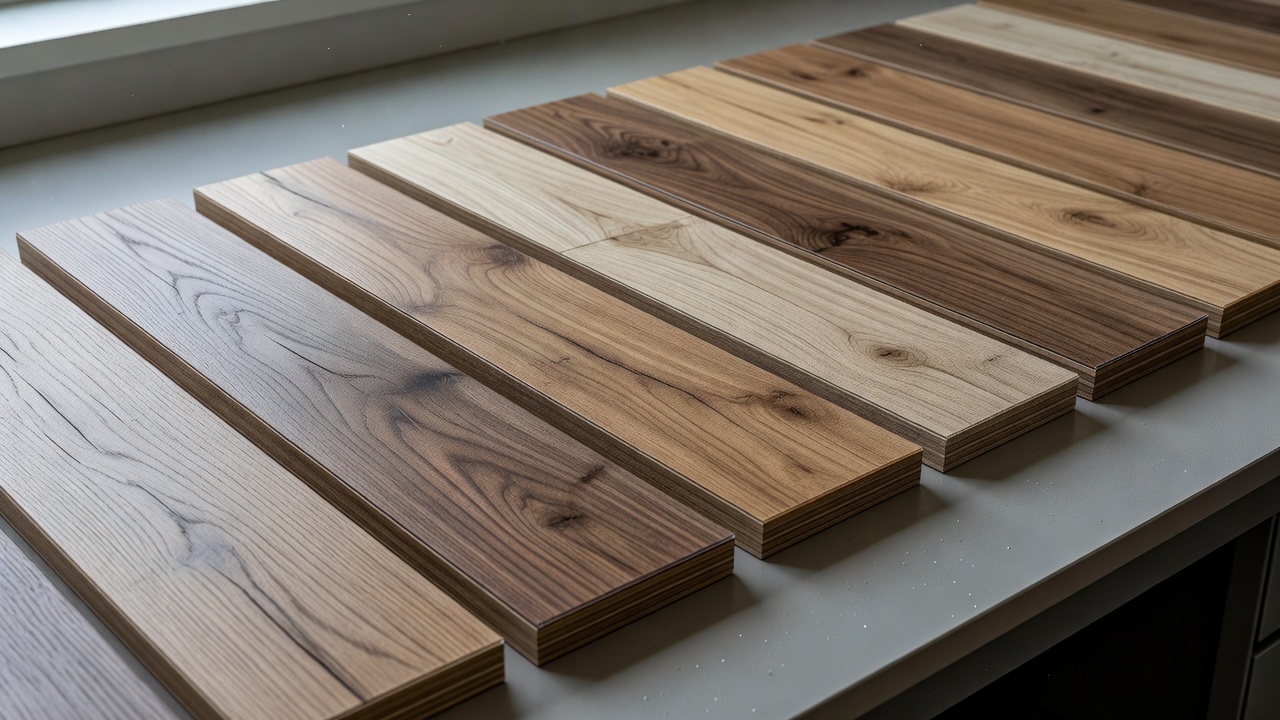
- 6–12 mil — light use, spare rooms, low-claw households. Expect earlier micro-scratching in main paths.
- 20 mil — the family/pets/kids default most materials people (hi) quietly recommend. Good resistance to claw scuffs, dropped toys, and chair drag when the chemistry is solid.
- 22–28+ mil — premium residential or light commercial; useful if you have large dogs, rolling chairs without pads, or a mudroom that sees gravel.
For pets and kids specifically, aim for at least 20 mil on vinyl, and prefer films advertised with ceramic or aluminum-oxide reinforcement. Thickness buys you time; particle loading buys you scratch resistance rather than just delayed failure. Pair it with felt pads and a doormat habit and you’ve stacked the physics in your favor. If you’re also comparing constructions, a quick detour into [LINK: rigid core vs flexible vinyl] helps—core stiffness changes how grit abrades the surface underfoot.
Water is a separate failure mode. Wear layers are excellent at abrasion and mediocre at sealing plank edges; standing water still sneaks into seams on many floating floors. Don’t let a heroic mil rating talk you out of wiping spills.
Is a 20 mil wear layer better than an AC4 rating?
Not directly comparable—different product families, different test batteries. A 20 mil vinyl wear layer describes thickness of a clear polymer film. An AC4 rating describes performance of a pressed melamine overlay system across abrasion plus other abuse tests. Asking which is “better” is a bit like asking whether 50 SPF is better than a lab-tested rain jacket.
What predicts real-home durability:
- Contact abrasion — grit + foot traffic polishing micro-scratches into haze. Wear-layer thickness and hard-particle loading dominate here.
- Point impact — dropped pans, dog nails at a gallop. Core density and overlay toughness matter as much as the clear coat.
- UV and plasticizer migration — sun rooms and cheap films. Aliphatic urethanes and UV stabilizers win; raw mil count does not.
- Edge and seam integrity — moisture and grit intrusion. Installation and product construction, not the wear-layer number alone.
- Maintenance chemistry — harsh cleaners can micro-etch some urethanes. pH-neutral cleaners are boring and correct.
So: a quality 20 mil LVP and a solid AC4 laminate can both be excellent family floors. Choose by moisture exposure, underfoot feel, and how you like the décor layer to look—then verify the wear-layer mils or AC class meets the traffic tier above. Marketing that only shouts one number without the rest of the stack is doing the materials a disservice. (Also me. I take it personally.)
How to read flooring specs without getting spun
When a box or spec sheet waves numbers at you, decode in this order:
- Identify category (vinyl wear layer in mils vs laminate AC class).
- Match the number to traffic reality (20 mil / AC4 for busy homes).
- Scan for reinforcement language (aluminum oxide, ceramic bead).
- Check total thickness and core type separately—they affect feel and denting, not scratch armor.
- Ignore “commercial grade” adjectives unless a real AC5+ or 28–40 mil figure is attached.
That’s how to read flooring specs like someone who has ruined a sample in a lab on purpose.
FAQ
What does wear layer mean on vinyl flooring?
The wear layer is the clear protective top coat over the printed design that takes scratches and abrasion. It is measured in mils and is not the same as total plank thickness. Better films also include ceramic or aluminum-oxide particles for scratch resistance.
What AC rating do I need for laminate in a home?
Most family homes do well with AC4; quieter bedrooms can use AC3. AC5 and above are commercial-leaning and usually unnecessary unless traffic is extreme. Always pair the AC class with sensible pads and mats.
How thick should a vinyl wear layer be for pets and kids?
Choose 20 mil or higher, ideally with ceramic or aluminum-oxide reinforcement. Thinner 6–12 mil layers show micro-scratches faster under claws and grit. Thickness delays wear-through; particle loading reduces visible scratching along the way.
Is a 20 mil wear layer better than an AC4 rating?
They measure different systems—vinyl film thickness versus laminate overlay performance—so neither automatically wins. Match mils or AC class to your traffic, then judge moisture needs and construction. Real durability is chemistry plus full test behavior, not a single trophy number.
Do mils and AC ratings fail the same way?
Often no: thin vinyl can haze from fine grit while still holding thickness, and some laminates chip at edges under impact despite strong abrasion scores. Look at the whole failure picture—abrasion, impact, UV, seams—when you compare products.
Next time a sun patch hits your floor at a low angle, glance for haze in the traffic lanes. That soft scatter of light is the wear layer reporting for duty—or quietly asking for a better doormat. I still find that oddly comforting. Polymers, doing their small invisible jobs while we make coffee.