Flooring Tasting Notes: Barefoot Snob Guide
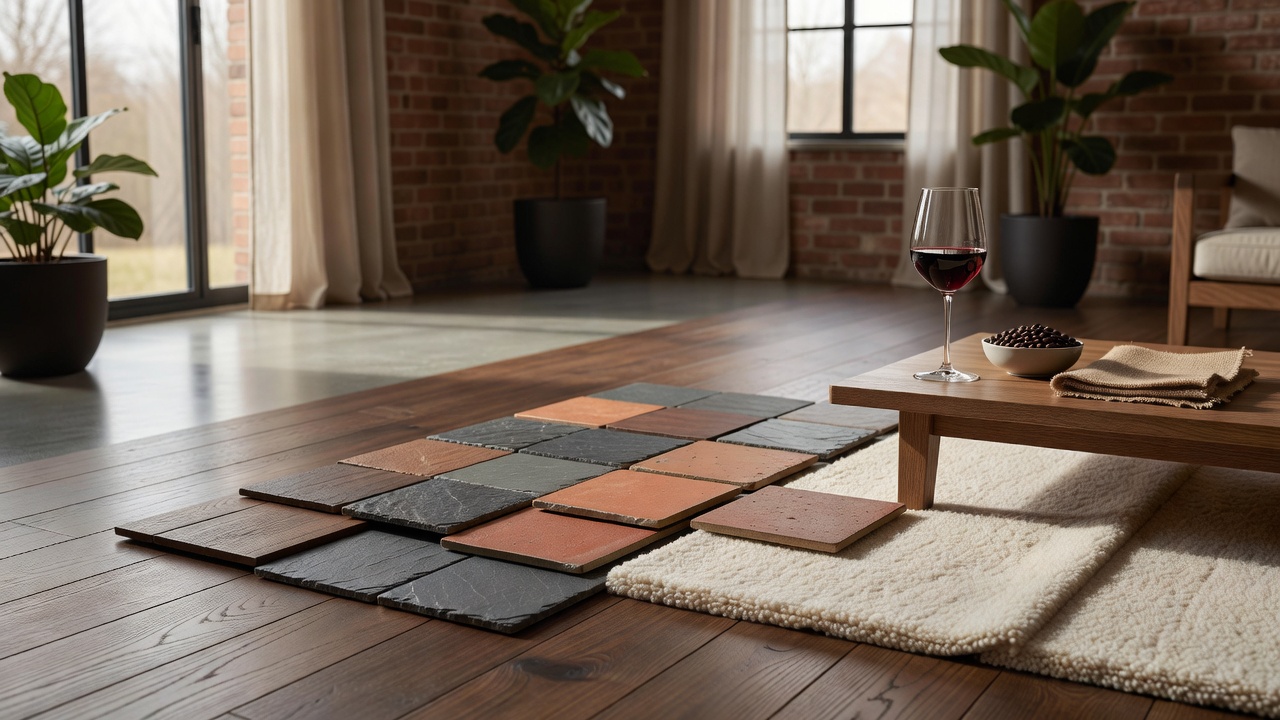 One does not simply walk on a floor of this caliber. One experiences it. Flooring tasting notes are the disciplined ritual of reading a surface the way a sommelier reads a vintage—nose (first impression underfoot), palate (mid-stride texture and temperature), finish (how the sensation lingers after you lift the heel), body (structure and give), and a final Insoles score out of ten. For barefoot homes, hardwood still earns the highest marks for soul and authenticity, cork wins on pure comfort, and LVP approximates the look without the true hardwood underfoot feel—the premium is justified only if your soles are the client, not your resale flyer.
I have performed these appraisals across eleven flagship showrooms (three of them were, regrettably, the same Floor & Decor on different Tuesdays). What follows is not a product brochure. It is a verdict for the discerning sole.
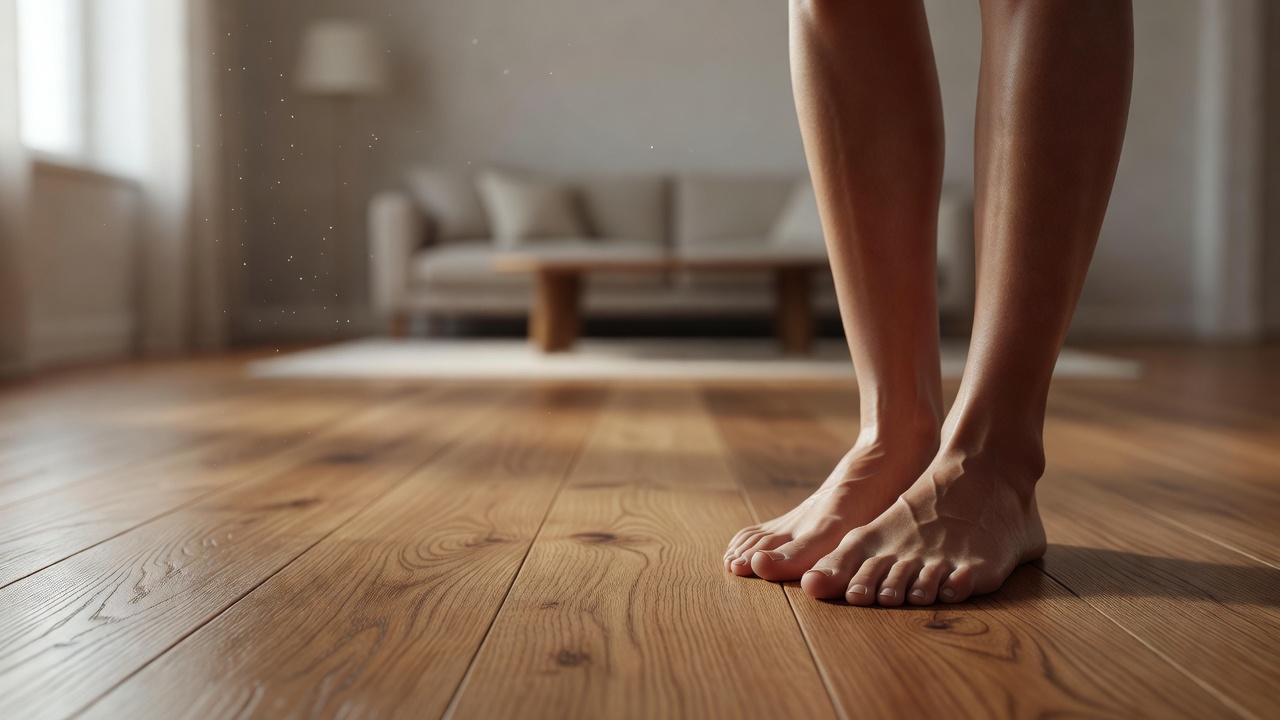
Does LVP feel like hardwood underfoot?
No. It does not. Anyone who insists otherwise has either never stood barefoot on both in the same afternoon or is selling you something with a locking click system and a lifetime residential warranty printed in six-point type.
LVP tasting notes, conducted with the gravity they deserve:
- On the nose: A faint, industrial confidence—polymer ambition layered over a foam underlayment that whispers I am practical before you have taken a second step.
- Palate: Cool at first contact, then neutrally temperate. The embossed grain is a competent forgery, like a hotel’s “estate-bottled” house red. There is bounce, yes, but it is the bounce of engineered cushion, not of living wood. Hollow in the mid-foot if the subfloor was hurried.
- Finish: Short. The sensation ends the moment your weight shifts. No afterglow. No conversation.
- Body: Medium-light. Waterproof swagger that hardwood, for all its poetry, cannot match when a Labrador overturns a water bowl at 11 p.m.
- Insoles: 6.2 / 10
LVP can look like hardwood from the doorway during a showing. Under bare feet at 6 a.m., while the kettle warms, it remains a talented understudy. If your household is barefoot by religion and you are weighing the swap, read the full comparison in my notes on [LINK: LVP vs hardwood barefoot] before you sign anything with a salesperson named Chad.
Budget-conscious flooring content creators will tell you the difference is “negligible.” They settle. I do not settle. I also do not currently own the floors I judge, but that is neither here nor there.
What is the best flooring for bare feet?
The best flooring for bare feet is the one that answers your sole’s actual question, not the one that photographs best for a listing. Ranked by lived underfoot truth rather than Instagram grain:
1. Cork — the velvet revolutionary
How does cork flooring compare for underfoot comfort? It is, without apology, the most forgiving surface a civilized foot can encounter short of actual carpet, which we do not discuss in polite company.
- On the nose: Soft loam, quiet resilience, a suggestion of wine-cellar dignity if the binder is honest.
- Palate: Immediate give. Warm. Joints unclench. Walking on cork is like being forgiven for every poor life choice that led you to a third-floor walk-up.
- Finish: Lingering, almost maternal. Your feet remember it in the car afterward.
- Body: Medium, springy, slightly compressible—excellent for kitchens where one stands like a penitent for forty-five minutes making a sauce no one will adequately praise.
- Insoles: 9.1 / 10
Cork bruises if you drag appliances. It requires a finish that is not a crime against nature. Still: for pure barefoot hedonism, nothing in the hard-surface category touches it. See also my earlier dispatch on [LINK: cork flooring care and feel] if you are prepared to maintain something that rewards affection.
2. Solid or quality engineered hardwood — the classic
The hardwood underfoot feel is why people pay. Real wood conducts the day’s temperature with aristocratic indifference: cool in summer mornings, slowly warming as afternoon light hits the planks. There is micro-texture—the raised latewood, the occasional soft earlywood valley—that no digital emboss has yet stolen with full conviction.
- On the nose: Clean mineral, faint tannin of finish, the ghost of the mill.
- Palate: Firm, articulate, slightly cool then ambient. You feel the joists if the install was theatrical rather than competent. Wide planks speak in longer sentences.
- Finish: Long and contemplative. You notice when you leave it for tile.
- Body: Full. Structural honesty. No fake bounce.
- Insoles: 8.7 / 10 for white oak; 8.4 for red oak (more porous personality, slightly less composure); engineered with a thick wear layer holds at 8.2 if the core is not particleboard theater.
3. LVP / rigid core — the capable pretender
Already scored. Useful. Waterproof. Never the best for bare feet unless “best” secretly means “I refuse to worry about spills and I wear slippers anyway.”
4. Ceramic or porcelain — the penance
Cold, hard, beautiful in photographs of homes where no one actually lives barefoot. Insoles: 3.0, and that is generous because I once stubbed a toe on a grout line during a gallery-adjacent open house and still think about it.
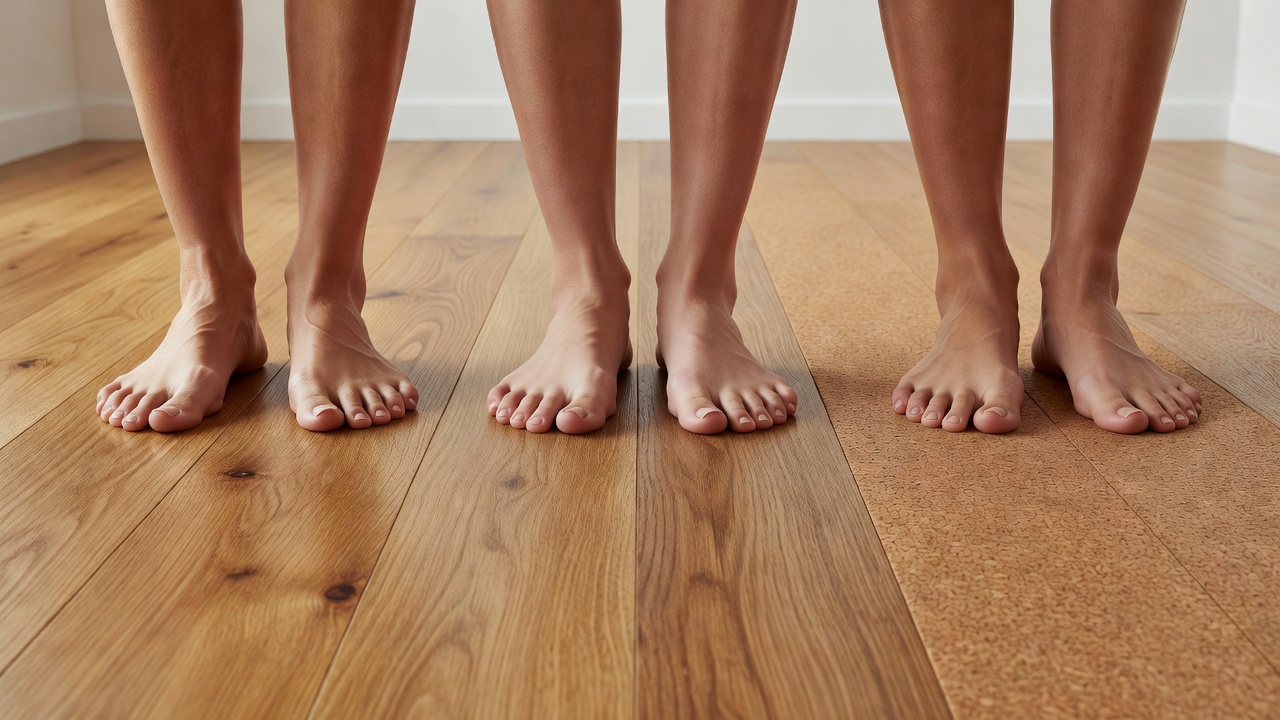
Is hardwood flooring worth it just for the feel?
Yes—if the feel is the point of the room. No—if you are buying theater for future buyers who will cover it with area rugs the color of regret.
Is hardwood worth it for the feel alone? When I say yes, I mean: you will notice every morning. You will develop opinions about finish sheen the way other people develop opinions about coffee origins. You will wince when guests arrive in wet sneakers. That wince is love. It is also expensive love. Installed solid hardwood in a respectable species still runs, in the markets I haunt, roughly $12–$20 per square foot depending on grade, width, and whether the installer has ever heard of acclimation. Engineered with a real wear layer sits closer to $8–$14. LVP, for the same visual gesture, often lands $3–$7 installed if you do not let the upsell destroy you.
The feel premium is real. The ROI argument is a different tasting entirely—resale loves hardwood the way collectors love provenance. But if you are asking purely as a barefoot creature who works from home and paces while on calls, the underfoot soul of wood is the feature, not the bug. Cork undercuts the price of fine hardwood while outscoring it on pure comfort; the trade is dent resistance and certain old-guard appraisers who still clutch their pearls about “soft floors.”
I once spent forty minutes in a designer’s staging unit swirling my bare feet across a smoked oak engineered floor while pretending to admire the art. The art was prints. The floor was the only honest thing in the room. That is the standard.
A brief, necessary deflation: I googled “Janka hardness cork versus white oak” approximately eleven minutes before writing the previous paragraph. The numbers confirmed what the soles already knew. One must keep current.
Flooring Tasting Notes — Full Flight Summary
| Surface | Nose | Palate | Finish | Body | Insoles |
|---|---|---|---|---|---|
| Cork | Soft loam, quiet | Immediate warm give | Long, forgiving | Springy medium | 9.1 |
| Hardwood (oak) | Mineral, finish tannin | Firm, articulate, alive | Contemplative | Full, honest | 8.7 |
| Engineered hardwood | Similar, slightly muted | Close to solid if thick wear layer | Medium-long | Full-minus | 8.2 |
| LVP | Polymer confidence | Cool then neutral, embossed fiction | Short | Medium-light, waterproof | 6.2 |
| Porcelain | Quarry chill | Hard truth | Abrupt | Structural, unkind | 3.0 |
Treat the table as a starting flight, not scripture. Subfloor, underlayment, finish sheen, and whether anyone actually sweeps will rewrite every score. A poorly floated LVP over an uneven slab can drop below 5. A neglected cork can feel like a sad yoga mat by year four.
FAQ
Does LVP feel like hardwood underfoot?
No. LVP can mimic hardwood’s appearance and offer more waterproofing and cushion, but bare feet register cooler temperature, shorter finish, and embossed rather than living grain. The difference is obvious by the second step if you test them the same morning.
What is the best flooring for bare feet?
Cork ranks highest for pure underfoot comfort and joint relief; quality hardwood ranks highest for authentic temperature, texture, and long sensory finish. Choose cork for softness, hardwood for soul, and LVP only if spills and budget outrank sensation.
Is hardwood flooring worth it just for the feel?
Yes if you live barefoot and notice floors daily; the hardwood underfoot feel is a genuine daily luxury. No if the purchase is purely for resale optics you will cover with rugs—then a strong LVP or engineered option may serve without the maintenance premium.
How does cork flooring compare for underfoot comfort?
Cork is warmer, springier, and more forgiving than hardwood or LVP, making it the comfort leader among hard-surface options. It dents more easily and needs a proper finish, but bare feet prefer it almost immediately.
Can flooring tasting notes actually help me choose?
Yes when you translate them into your real morning: temperature preference, standing time in the kitchen, pets, and whether “waterproof” is non-negotiable. The ritual is satire until you realize you have been doing a cruder version of it every time you leave a showroom muttering about “hollow” or “cold.”
There you have it: the underfoot soul ranked, the snobbery examined, the showroom theater gently set on fire and served with a finish note of reality. Choose the floor that earns the Insoles score your life will actually taste—day after barefoot day—not the one that flatters a listing photograph.
I would continue, but the downstairs neighbor has begun that mysterious evening percussion again, and my rental’s builder-grade laminate is transmitting every ambition they have. One must, occasionally, live with the finish one can afford.