2026 Hardwood Floor Stain Colors: Warm Neutrals
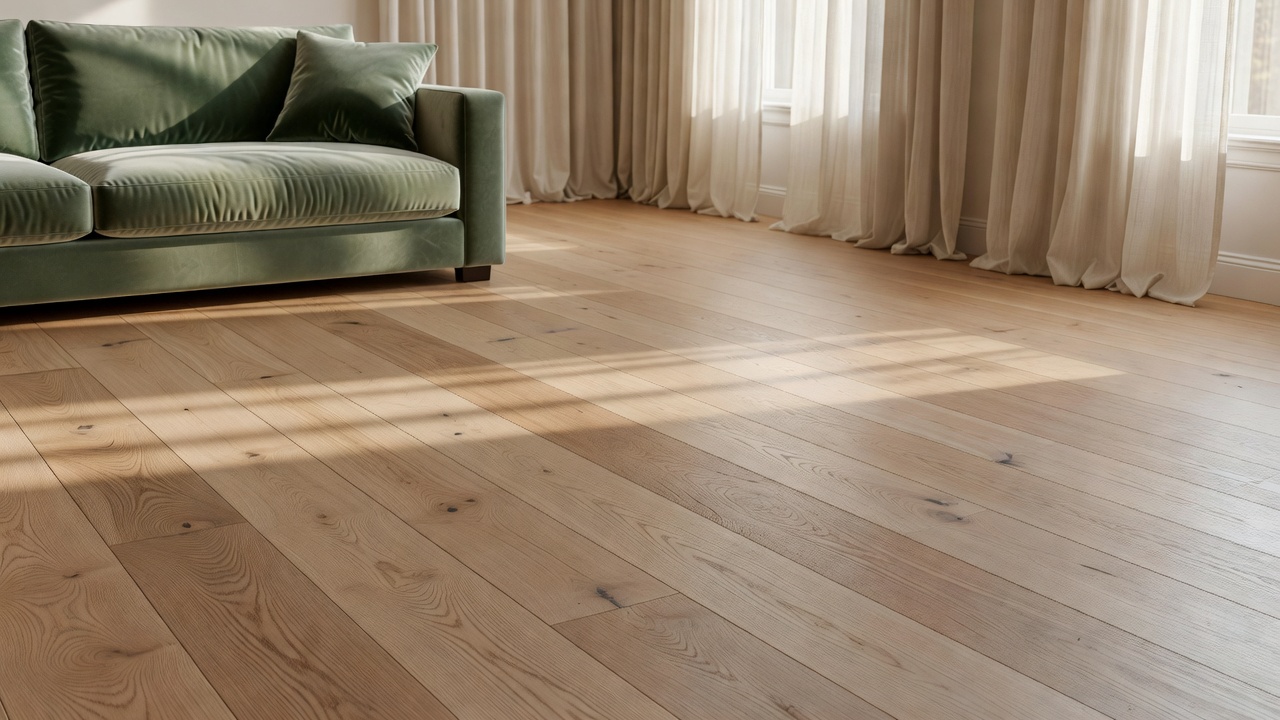
 Late afternoon light pours through linen sheers like warm honey, catching on a velvet sofa the color of dried sage and a single branch of eucalyptus in a matte ceramic vase. The room doesn’t shout. It exhales. Every surface feels intentional, lived-in without apology—until your eye drops and the whole composition locks into place. That lock is the floor.
The most popular 2026 hardwood floor stain colors are warm neutrals: natural white oak with barely-there pigment, honey-caramel midtones, and soft greige that still reads as wood, not paint. Paired almost exclusively with matte or ultra-low sheen finishes, they surgically warm a room’s mood, photograph like a dream for staging, and refuse to date the way cool grays did. 2026 hardwood floor stain colors are the pigmented (or intentionally unpigmented) treatments applied to hardwood that favor warmth, grain honesty, and low-sheen authenticity over cool, opaque, high-gloss trends of prior years.
I staged a townhouse last spring where the buyer walked in, stopped mid-sentence, and just stood there looking down. She didn’t say “nice floors.” She said, “I feel calm.” That is the job.
What Are the Most Popular Hardwood Floor Colors in 2026?
If you are choosing right now, stop scrolling the cool-toned boards. The palette that is actually moving houses and landing in design decks this year lives in a tighter, warmer register:
- Natural white oak — pale, golden undertone, almost raw, grain fully visible
- Honey oak — translucent caramel, like butter left in a warm kitchen
- Soft greige wood — gray only as a whisper over brown, never a full takeover
- Light walnut-kissed neutrals — depth without drama
- Unstained or whitewashed-with-warmth — the “barely there” look that still feels finished
This is my mood board in words: toasted almond, sun-faded linen, raw clay, champagne cork, morning tea with milk, driftwood that never saw the cold ocean, cashmere left on a radiator.
White oak is dominating for a reason. Its open grain takes matte finishes like a love letter—every ray fleck stays legible, every board reads as material instead of surface. I keep telling clients that natural white oak flooring is not a “neutral” the way gray paint is neutral. It is a foundation temperature. It lets furniture float or ground without fighting the undertone war we all lost in 2019.
Honey oak stain trends are back, but not the orange-heavy cabinets of your childhood kitchen. The 2026 version is filtered, translucent, closer to aged European oak than anything sold in a big-box “golden oak” can. When light hits it at four p.m., the room goes cinematic. I had a client cry—happy cry—over a honey-stained herringbone because it made her terrible north-facing living room finally feel like afternoon. That is the power.
Greige wood floors 2026 still exist, but they have been disciplined. The gray is now a veil, not a blanket. If your sample looks like it could pass for painted MDF, put it back.
For more on how species choice changes the entire story, see my notes on [LINK: white oak vs red oak for modern interiors]. And if you are still deciding between solid and engineered under these stains, the practical side lives here: [LINK: engineered hardwood in high-traffic homes].
Is Gray Flooring Out of Style?
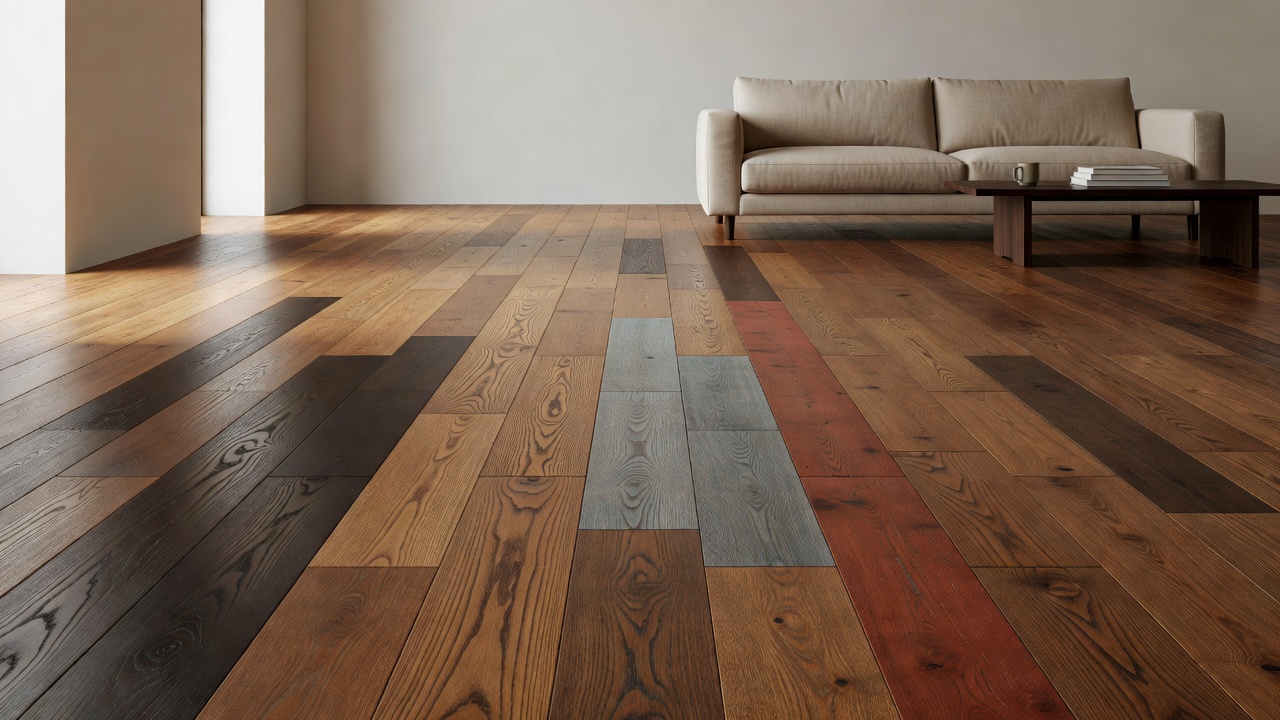
Yes. The cool, ashy, almost-blue gray floors that ruled listings from roughly 2016 to 2022 are dated in the way skinny jeans and all-white kitchens with no hardware are dated—still functional, instantly timestamped.
I know, I know. I installed gray floors. I defended gray floors. I told a contractor in 2018 that warm wood was “too traditional” and watched him raise an eyebrow like I had insulted his mother. The install people will still tell you gray “hides dirt” and “goes with everything.” They are half right about dirt and completely wrong about everything. Cool gray floors make warm paint look dirty, make skin look sallow in photos, and fight every piece of natural fiber furniture you actually want to live with. Staging power collapses the second a buyer’s eye hits that cold plane and thinks 2019 flip.
Warm neutrals do the opposite. They make white walls look creamier, make black window frames look intentional, and let a single rust velvet chair feel like a decision instead of an accident. Gray is not illegal. It is simply no longer the default that signals “current.” If you already have it and love it, keep it—and warm everything else up around it so the floor becomes a deliberate cool note instead of an accidental time capsule.
Matte or Satin Finish for Hardwood Floors?
Matte. Almost always matte for the 2026 look.
The best floor finish sheen right now is the one that disappears. Matte and ultra-matte UV lacquers or hardwax oils let the stain color and the grain do the talking. Satin still has its place in higher-traffic commercial or households that want a gentle glow, but satin catches every cone of recessed lighting and starts to feel like a 2000s builder grade the moment the sun moves. Matte keeps the floor in the background emotionally while keeping it in the foreground aesthetically—an almost unfair trick.
Do matte finishes hide scratches better on wood floors? In real life, yes—especially the micro-scratches from grit and chair legs. High sheen turns every fine line into a light show. Matte diffuses. That does not mean matte is indestructible; it means the damage is quieter, which matters when you are trying to maintain the unbothered mood these warm stains are built for. Water-based matte polys have gotten dramatically better on durability; oil-modified and hardwax oils still win on the hand-feel and repairability that designers obsess over. The install people will push satin “because it’s easier to clean.” Smile, thank them, and specify the matte sample under the actual light of the room. I have watched satin ruin a perfect honey oak by turning it into a skating rink of reflections.
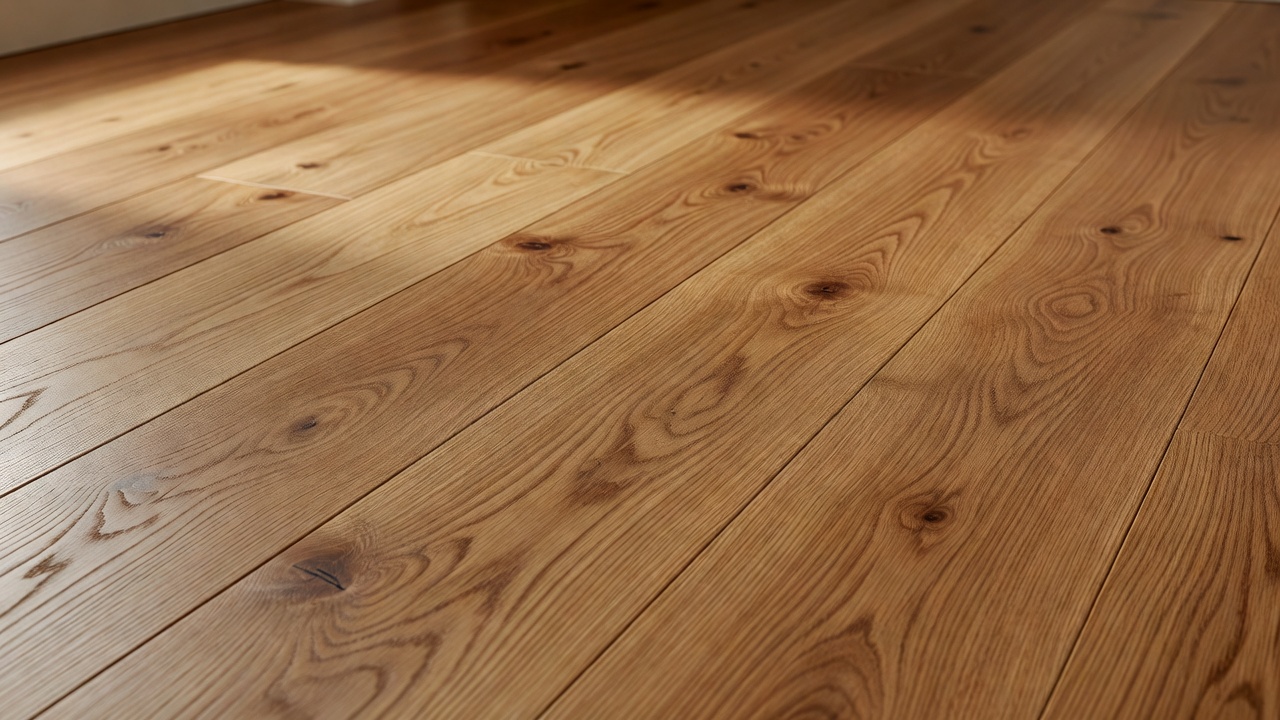
I once stood in a finished living room at dusk—no furniture yet, just the new natural white oak running wall to wall in a dead-flat matte—and felt something uncomfortably close to grief that the job was over. That is the vulnerable part I rarely say out loud: sometimes the floor is so right it makes the rest of the house feel like it has to catch up. I walked the boards barefoot and hated that I had to leave.
The aesthetic autopsy is simple. Cool grays flattened rooms into showrooms. Warm neutrals with matte finishes give rooms a pulse again. They stage faster, photograph warmer, and age into themselves instead of away from the trend cycle. Choose the stain that looks like wood that decided to be beautiful without trying. Choose the sheen that refuses to perform.
FAQ
What are the most popular hardwood floor colors in 2026?
Warm neutrals lead: natural white oak, honey-caramel midtones, and soft greige with brown undertones. These tones pair with matte finishes to create inviting, current spaces that photograph and stage well.
Is gray flooring out of style?
Cool, ashy gray floors popular in the late 2010s are now considered dated for most residential design. Warmer neutrals have replaced them as the default for resale and contemporary interiors.
Matte or satin finish for hardwood floors?
Matte is the preferred sheen for 2026 hardwood floors because it emphasizes natural grain and stain color without glare. Satin remains acceptable for specific high-traffic needs but reads less current.
Do matte finishes hide scratches better on wood floors?
Yes. Matte and ultra-matte finishes diffuse light and make fine scratches far less visible than satin or gloss. They do not prevent damage, but they keep wear from announcing itself.
Are honey oak stain trends too orange for modern homes?
Modern honey oak stains are translucent and filtered, closer to caramel and aged European oak than the orange-heavy formulas of past decades. Under matte finish and warm lighting they read sophisticated, not dated.
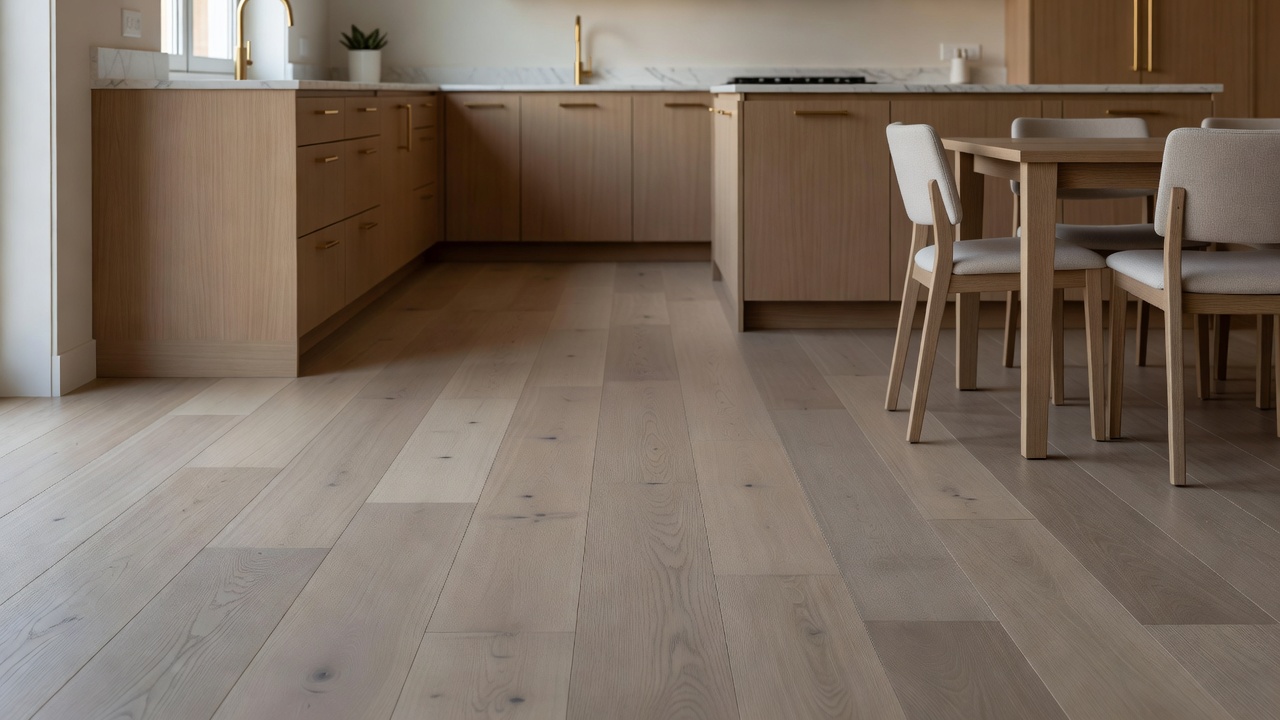
So there it is—the floor as mood architect, not afterthought. Warm stain. Honest grain. Finish that knows when to stop shining. The room you walk into should feel like it already knows you.
What’s the one room that still doesn’t feel like you yet—and what temperature is its floor?