Three-Material Rule Flooring for Cohesive Aesthetics
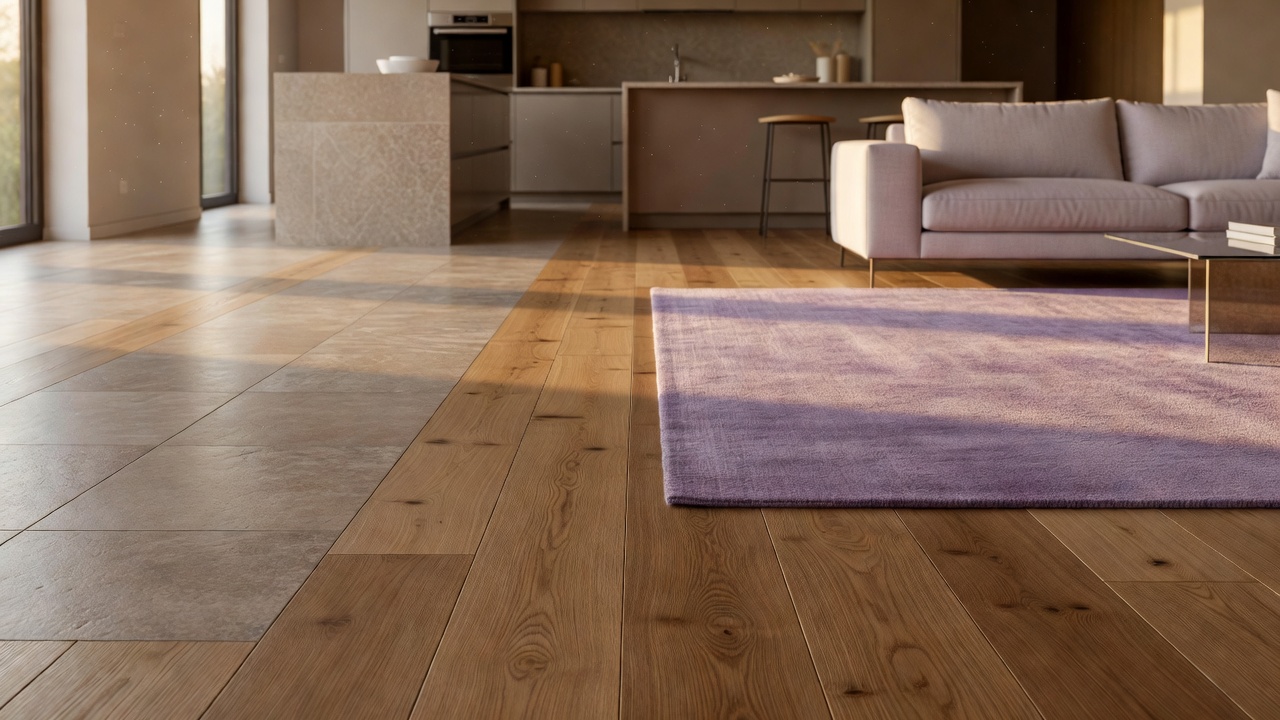
 Late afternoon light is doing that liquid honey thing across a living room that finally knows what it is. Wide-plank oak catches it first—warm, matte, a little lived-in in the good way—then the eye slides to a quiet stone threshold at the kitchen, large-format, soft greige, no drama, and beyond that a low-pile wool runner the color of dried lavender dissolves the last hard edge. Nothing fights. Nothing apologizes. The room doesn’t look “decorated.” It looks inevitable.
That inevitability is the three-material rule flooring principle working in real life. The three-material rule for flooring means limiting a home’s primary floor surfaces to three complementary materials—classically a wood (or wood-look), a hard surface like tile or stone, and a soft layer of carpet or rugs—so undertones, textures, and transitions stay cohesive instead of fracturing the visual story room to room. Use more than three main materials and the home starts reading like a showroom that lost the plot; stay inside the rule and you stage emotional mood, not just square footage.
What is the three-material rule for flooring?
It is not a rigid building code. It is an aesthetic spine. When I autopsy a home that “feels off” without anyone being able to name why, I almost always find a fourth or fifth floor material sneaking in—LVP in one hall, a different wood species in the den, patterned porcelain in a bath that refuses to speak to the kitchen, plus a sea of competing rugs. The eye never lands. Buyers pause. The mood collapses.
The rule of 3 flooring approach gives you a controlled palette: one structural warmth (hardwood, engineered wood, or a high-end wood-look), one cool or grounding hard surface (tile, stone, polished concrete in the right house), and one softness (wall-to-wall in private zones, or a disciplined rug strategy that counts as the third voice). Those three become your cohesive flooring materials. Everything else—thresholds, stair runners, a powder-room moment—has to bow to them or stay quiet enough to disappear.
I once staged a 1920s bungalow where the seller had installed four different “upgrades” in three years. We ripped nothing out. We edited. We let the original oak remain hero, cooled the kitchen with a single limestone-look porcelain that shared the oak’s undertone, and introduced one family of rugs in a single fiber story. The house sold in a weekend. A client cried over the herringbone we kept. I still think about that hallway light.
Yes, I know the install people—the ones who treat floors like pure logistics—will say I’m precious about this. Duke would roll his eyes and call it “decorator math.” Fine. They’re not wrong that transitions need to be buildable and waterproof where they must be. I’ll concede the wet-zone practicality every time. But if the materials don’t sing together, you’ve only installed a problem with a warranty.
How many different flooring materials should you use in a home?
Three primary. That’s the clean answer for whole-home cohesion and for [LINK: flooring for home staging] that photographs like a narrative instead of a catalog.
“Primary” is doing important work here. A powder room can wear a tiny jewel-box tile if its color is already inside your three. Stairs can carry a runner that belongs to the soft third. You’re not counting every square inch of specialty; you’re counting the voices that announce themselves when someone walks the full loop of the house. Four announcing voices and the story fragments. Two can work in a minimal loft, but most real homes need the third for warmth or quiet or that exhale under bare feet at the end of the day.
In 2025–2026 the materials themselves lean warm and matte—natural wood tones over cool grey (yes, I know, grey floors, I KNOW—let me have the memory without the lecture), large-format stones, soft-patterned looks that don’t scream “feature,” durable LVP and laminate only when they truly mimic the hero material’s undertone and sheen. The count still matters more than the trend name. Mixing flooring types aesthetics succeed when the number is disciplined and the undertones are married, not when every room gets a “moment.”
What flooring materials go well together for cohesion?
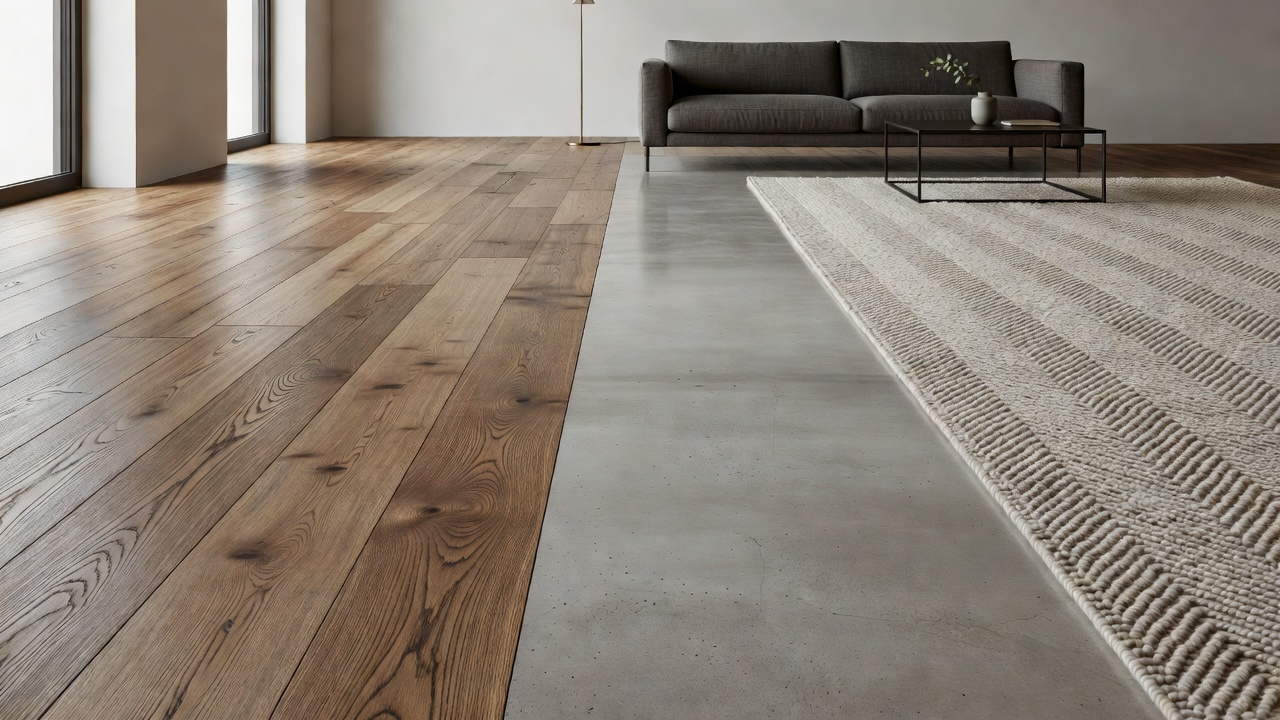
Think in relationships, not shopping lists. Wood wants a partner that shares its undertone temperature—honey oak with warm taupe stone, not blue-grey porcelain that turns the oak orange by contrast. Tile and stone want a finish language that matches the wood’s attitude: matte with matte, soft sheen with soft sheen. Softness—carpet or rugs—should pull one color already living in the hard surfaces so it feels inevitable, not dropped from a different Pinterest board.
Here is the mood board in words I keep pinning in my head for flooring material combinations that behave:
- sun-washed white oak, limestone dust, oat milk wool
- walnut ink, honed basalt, charcoal bouclé
- pale ash, warm concrete, flax linen flatweave
- toasted hickory, creamy travertine, sage low-pile
- smoke-stained engineered, large-format clay tile, ivory sheepskin moments
When the three agree on temperature and texture family, transitions become cinematic instead of apologetic. That is material aesthetics home design at the level that makes a listing feel expensive without a single extra light fixture. If you need a deeper dive on pairing wood species with stone temperatures, I’ve left notes in [LINK: wood and tile undertone pairing].
Does mixing flooring types hurt home aesthetics or staging?
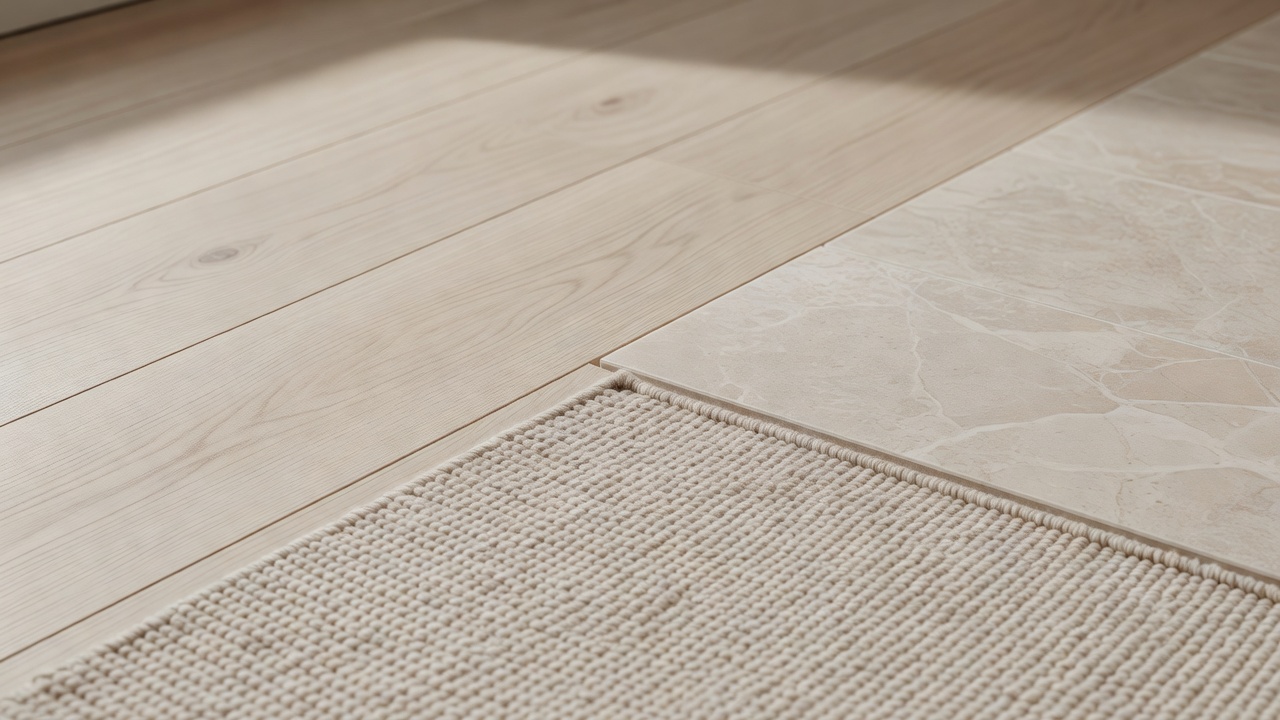
Mixing hurts when it is accidental, undertone-clashing, or counted past three loud voices. Mixing elevates when it is the three-material rule flooring method executed with intention—wood for living warmth, hard surface for kitchen and bath clarity, soft for bedroom hush—so the home reads as one designed organism.
I have watched buyers physically relax when the floor story stays coherent from foyer to primary suite. I have also watched them hesitate at a random LVP hallway that doesn’t match anything, even if the rest of the house is gorgeous. Staging is emotional weather. Too many materials change the weather every eight feet. Professional-level visual narrative needs continuity the way a film needs a color grade.
The vulnerable truth under all this sparkle: I once let a fourth material “just for the mudroom” because the client was charming and the sample was beautiful. The whole first floor went slightly out of tune. We fixed it before photos. I still flinch when I drive past that street.
FAQ
What is the three-material rule for flooring?
The three-material rule for flooring limits a home to three primary floor materials—typically wood or wood-look, tile or stone, and carpet or rugs—so visual harmony and undertones stay consistent. It prevents the fragmented look that comes from too many competing surfaces. Specialty accents are allowed only when they quietly support the main three.
How many different flooring materials should you use in a home?
Use three primary flooring materials for most homes to keep cohesion and staging clarity. Fewer can work in minimal spaces; more than three main voices usually creates visual noise. Count the materials that announce themselves on a full walkthrough, not every tiny specialty zone.
What flooring materials go well together for cohesion?
Materials that share undertone temperature and finish attitude go well together—warm woods with warm stones, matte with matte, soft textiles that pull an existing color. Classic successful sets include oak with limestone and wool, or walnut with basalt and textured neutrals. Match the emotional temperature before you match the trend name.
Does mixing flooring types hurt home aesthetics or staging?
Unplanned mixing with clashing undertones or more than three dominant materials hurts aesthetics and can slow staging impact. Intentional mixing inside the three-material rule strengthens mood and makes the home feel designed. Buyers respond to continuity more than to the number of “upgrades.”
Can LVP or laminate count inside the three-material rule?
Yes, if the LVP or laminate truly matches the undertone and sheen of your chosen wood or stone voice and does not introduce a fourth competing look. It should disappear into one of the three roles, not star as a separate material story. Quality of mimic matters more than the category label.
So walk your rooms at dusk. Notice where the eye stumbles. Notice where the light finally rests. The three-material rule is not about deprivation—it is about letting one beautiful conversation finish its sentence.
What’s the one room that still doesn’t feel like you yet—and which of your three materials is it missing?