How to Tell Real Hardwood from LVP Like a Snob
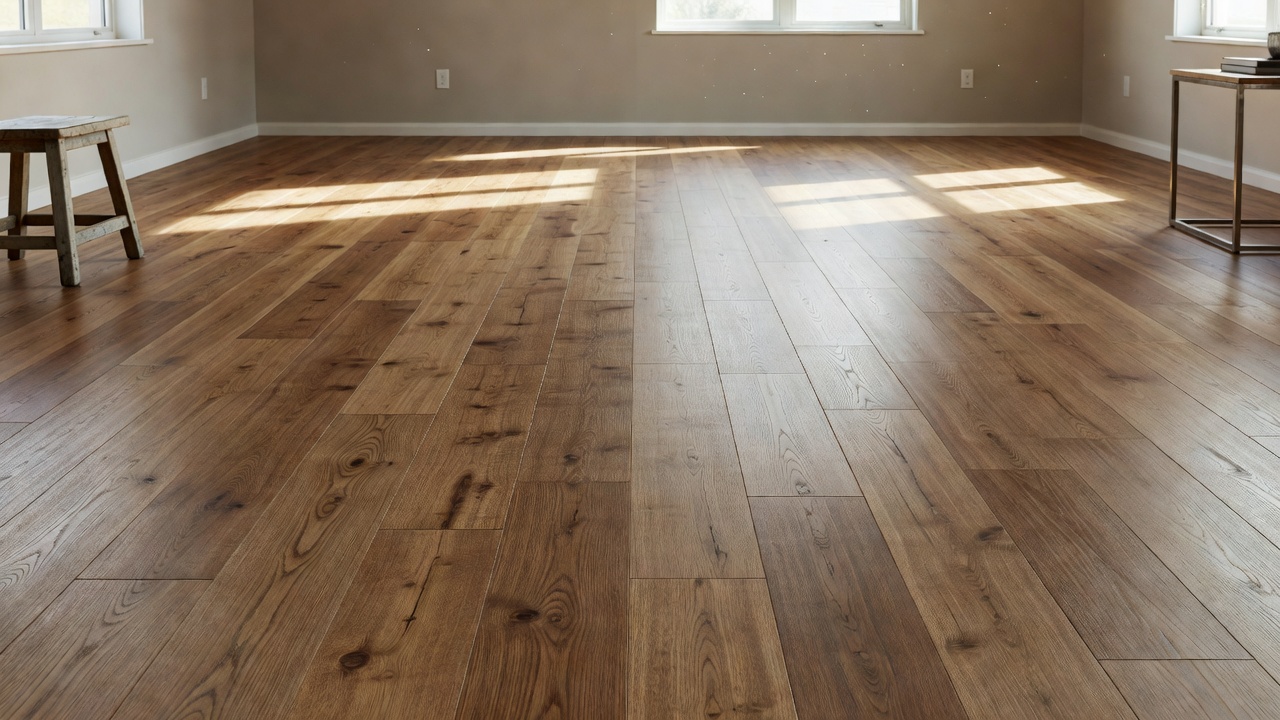 One does not simply walk on a floor of this caliber. One experiences it—preferably in socks one would never admit came from a multipack. To tell real hardwood from LVP, abandon the brochure and deploy the sole, the knuckle, and a cultivated suspicion of perfection: true hardwood is unique grain that never tile-repeats, a cool dense mass that warms only after conversation, and a knock that answers like furniture; luxury vinyl plank is a high-resolution photograph of wood laminated to a rigid core, often betrayed by hollow percussion, printed pattern loops every few planks, bevel theater, and a faintly synthetic barefoot feel. That is the snob test in full. Everything else is showroom lighting and sales choreography.
Real hardwood, for those who require a plain definition before the pageantry: sawn timber—solid or engineered with a genuine wood wear layer—whose surface character is the tree itself, not an image of one. LVP (luxury vinyl plank) is a waterproof, click-lock flooring product whose “wood look” is a printed film over a vinyl or rigid SPC/WPC core. The difference is material truth versus material costume. One can be refinished; the other can only be replaced. One carries the quiet arrogance of dendrochronology; the other carries a warranty and a slightly too-even tan.
I conducted this week’s examination across what I shall continue to call the flagship circuit—three big-box cathedrals of laminate aspiration and one Lumber Liquidators that still smells faintly of ambition and forklift. A designer I know (I do not) once whispered that 2026’s warm-tone rigid-core LVP can “fool anyone under five thousand square feet.” She was wrong, of course. Anyone with a working heel and a conscience remains unfooled.
How can you tell if flooring is real hardwood or vinyl?
Begin with the grain, as one begins with the color of a proper Burgundy—without apology.
Real hardwood offers continuous, non-repeating figure. Knots wander. Rays flicker. Earlywood and latewood argue across the board. Stand six feet back and let the eye travel three or four planks in sequence; nature does not Xerox. LVP, even the expensive rigid-core sort currently posing in warm European oak drag, loops. The same cathedrals of grain reappear every three to eight planks if the print run is thrifty, every dozen if the manufacturer has shame. I once watched a couple circle a display for eleven minutes before the husband muttered, “That knot again.” Marriage saved by pattern recognition.
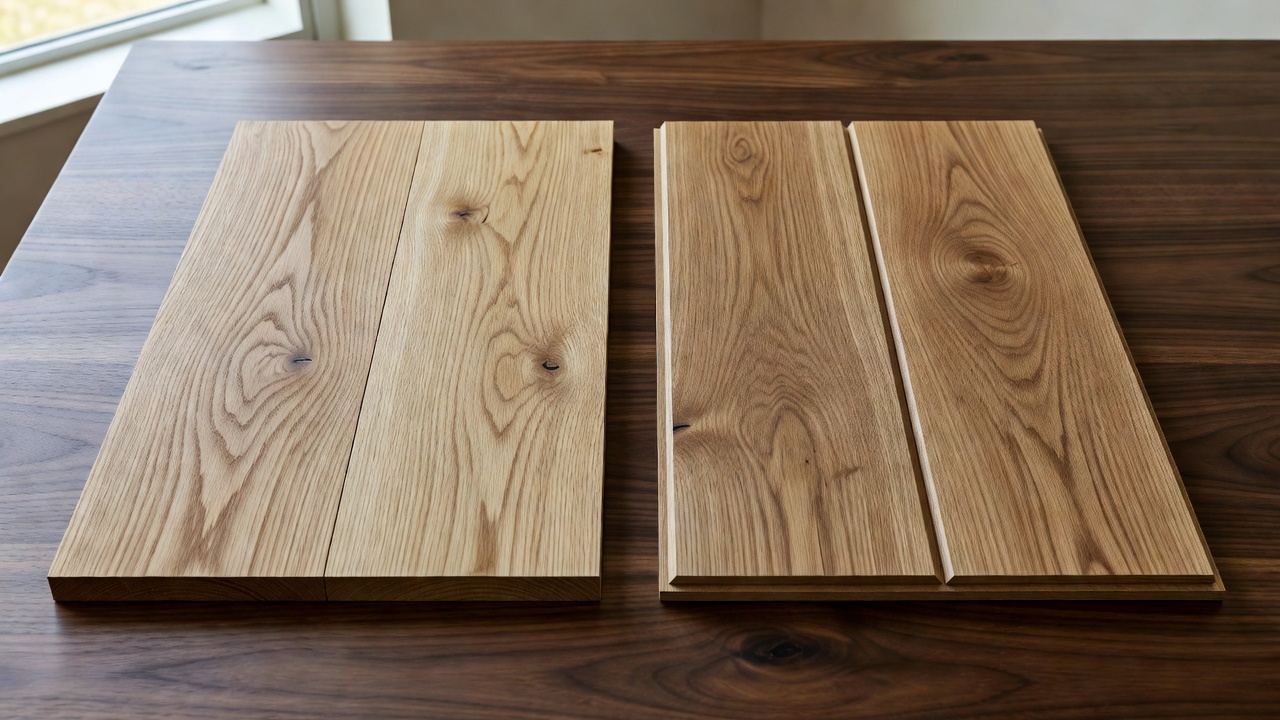
Next, the edge and the end. True hardwood—especially site-finished or quality prefinished—carries micro-bevels or square edges that feel like wood meeting wood. Many LVP lines exaggerate the V-groove until the floor looks like a chocolate bar scored for sharing. Run a fingernail along the joint. Hardwood yields a dry, fibrous micro-texture; vinyl yields a molded polymer ridge that feels like it was decided in a meeting.
Then the underside, if the sample permits. Hardwood (solid) is wood all the way down; engineered hardwood shows plywood or high-density fiberboard strata beneath a real wood veneer—often 2–6 mm of actual species you can sand someday. LVP flips to foam, cork-look underlayment, or a chalky rigid core stamped with batch codes. If you see plastic honeycomb geometry, you are not standing on a tree. You are standing on an idea of a tree.
Sound remains undefeated. Knock with a knuckle. Hardwood replies with a short, dense tok—furniture language. LVP, even over quiet underlayment, often answers with a hollow polymer tick that reminds one of closing a high-end cooler. Walk the sample in hard soles if the associate allows it (they rarely do; bring your own moral courage). Hardwood has mass and a lower, woodier resonance. LVP can be impressively quiet, yet the attack of the footfall is subtly synthetic—more studio apartment than estate library.
Does LVP really look like hardwood?
From a doorway, at golden hour, after two glasses of something with a appellation? Occasionally, yes. The best 2025–2026 rigid-core lines have improved embossing-in-register so the texture almost follows the printed grain, and the color stories—smoked white oak, soft walnut, that ubiquitous “honeyed European”—photograph like a Pinterest board that finally went to finishing school. Distance is LVP’s greatest ally. So is dimmers.
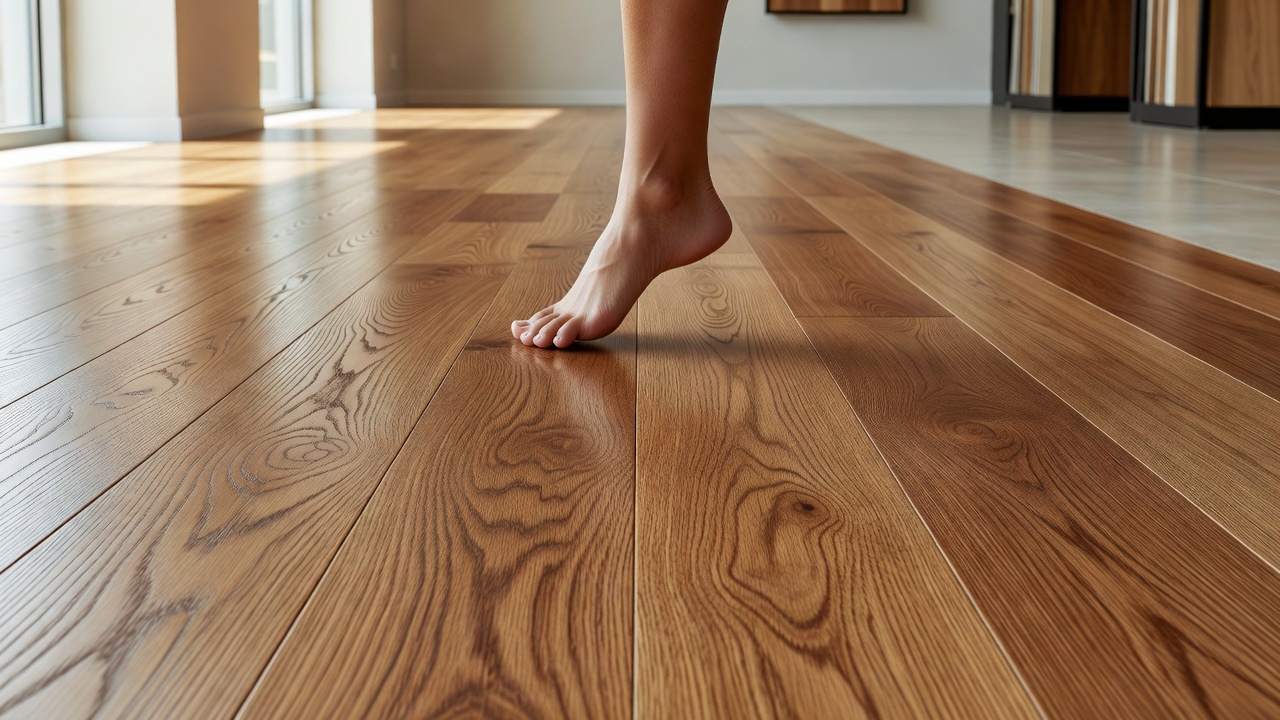
Up close, under the merciless can lights of commerce, the costume slips. Printed pores lack the slight optical depth of real vessel structure. The sheen is too uniform; real wood’s finish catches light in micro-variations where the grain rises and falls. And barefoot—ah. The vinyl plank barefoot feel is the tell that ends marriages of convenience. Hardwood starts cool and slowly accepts your heat like a reluctant host. LVP meets you already at a polite, plastic-adjacent temperature and stays there, a little too eager to please. I rate the current crop of “nearly there” LVP a 6.5 Insoles out of 10 for visual deception at ten feet, collapsing to a 3.0 once the sock comes off.
Budget-conscious flooring content creators will insist the gap has closed. They settle. They always settle. One admires the hustle while declining the invitation to live inside a waterproof brochure.
Can vinyl planks fool hardwood snobs?
Some of the time, some of the snobs, if the snobs are tired or have accepted a complimentary seltzer. I staged a brief theatrical snob test in aisle four for an audience of one bewildered associate named Derek.
Tasting notes — Showroom Flight, August 2026
Specimen A — Solid white oak, 5-inch, matte hardwax oil
On the nose: faint tannin of actual lumber, quiet ambition, a hint of the truck that brought it.
Palate: cool entry, building warmth, long finish of integrity.
Mouthfeel (sole-feel): dense, granular micro-texture, honest.
Verdict: This is wood. 9.5 Insoles.Specimen B — Rigid-core LVP, “Heirloom Oak,” warm taupe
On the nose: clean polymer, new binder clip, the ghost of a design committee.
Palate: immediate visual charm, mid-palate hollowness on knock, short finish of almost.
Sole-feel: polite temperature, embossed suggestion of grain that does not fully convince the arch.
Verdict: Charming houseguest who will never be family. 5.0 Insoles for snob resistance; 8.0 for basements and rentals.Specimen C — Dark-horse cork (because one must remain unpredictable)
On the nose: gentle winery floor, forgiveness.
Palate: buoyant, warm, slightly compressible in a way that feels like kindness.
Sole-feel: neither hardwood nor vinyl—its own republic.
Verdict: Not the assignment, yet undefeated in comfort. 8.0 Insoles for people who have made peace with their knees.
Could Specimen B fool a hardwood snob across a dinner party after dark? If the snob never kneels, never knocks, and never visits in daylight—perhaps. The moment anyone performs the grain-continuity scan or the barefoot inquisition, the opera ends. Material snobbery flooring discourse exists precisely because the body knows before the Instagram caption does.
For longevity theater: real hardwood (solid) can be refinished multiple times across decades; quality engineered with a thick enough wear layer maybe once or twice. LVP is a single-life product—beautiful until it is not, then full replacement. Cost ranges I have observed on the circuit: solid hardwood often $8–$18+ per square foot installed depending on species and finish; good rigid-core LVP frequently $4–$10 installed, sometimes less on promotion. The prestige edge remains hardwood’s; the waterproof party trick and the easier weeknight install remain LVP’s. Choose your religion.
If you are weighing kitchens and spills, do read past the romance into practical comparisons of [LINK: waterproof flooring options for kitchens] and the structural honesty of [LINK: engineered hardwood vs solid hardwood] before you let a sample board dictate your soul.
Is LVP worth it over real hardwood in 2026?
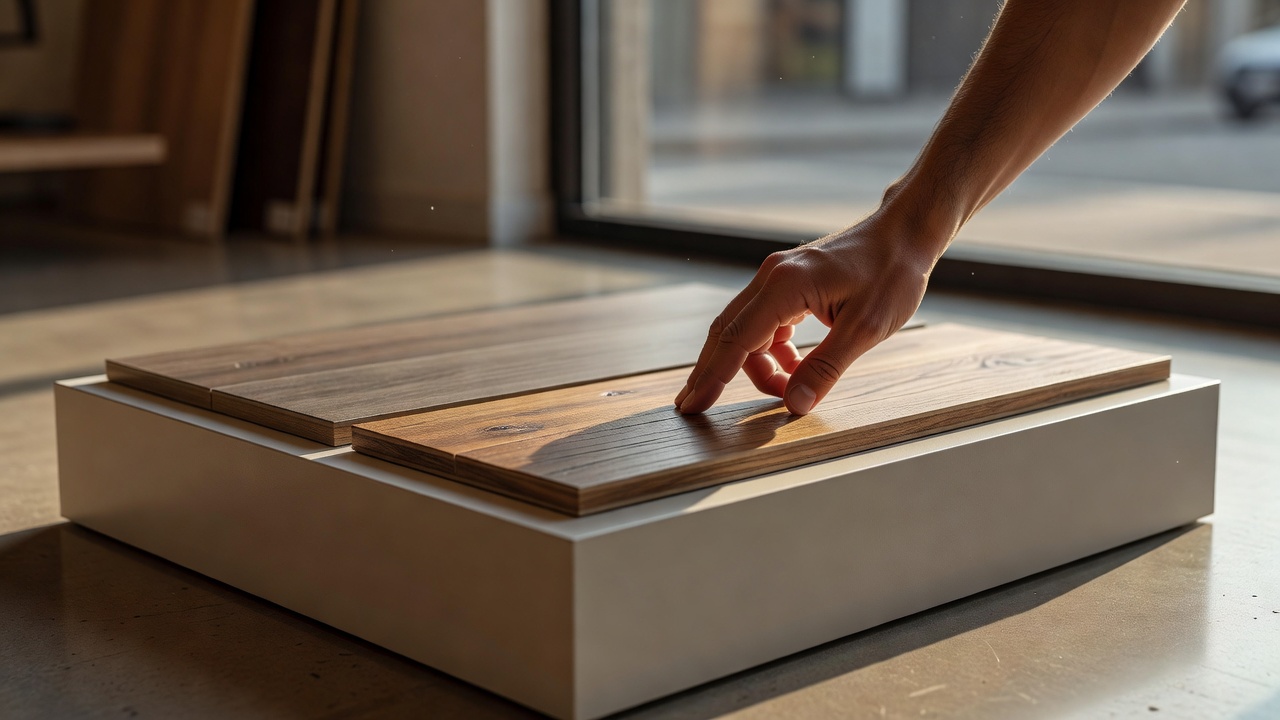
For a basement, a rental, a mudroom that sees the dog’s entire emotional range, or a household that prioritizes flood forgiveness over heirloom narrative—yes, LVP is often the wiser material, and I say that through lightly gritted teeth. For the primary living level of a home you intend to keep, stage, or be buried from, real hardwood still carries the denser soul and the refinishing future. Worth is not only dollars per square foot; it is how the floor answers when you ask it a serious question with your heel.
FAQ
How can you tell if flooring is real hardwood or vinyl?
Check for non-repeating grain, a solid dense knock, cool-to-warm barefoot behavior, and a real wood wear layer or solid thickness on the edge. LVP typically shows printed pattern repeats, a hollower tap, more uniform temperature, and a plastic or rigid composite core underneath.
Does LVP really look like hardwood?
From a distance and in flattering light, high-quality rigid-core LVP can look very close. Up close and barefoot, embossing limits, pattern loops, and synthetic feel usually reveal it.
Can vinyl planks fool hardwood snobs?
Briefly, in dim light, if no one knocks or inspects grain continuity. Sustained barefoot contact and a repeating-knot audit end the performance for anyone paying attention.
Is LVP worth it over real hardwood in 2026?
Yes for wet zones, rentals, and budget-controlled renovations that need waterproofing and speed. Real hardwood remains preferable when prestige, refinishability, and long-term material honesty matter more than absolute water immunity.
What is the fastest hardwood snob test in a showroom?
Knock, barefoot (or sock), and scan four planks for the same knot. Two out of three failures means you are courting vinyl in wood’s clothing.
In the end I pronounce thus: the discerning sole does not hate LVP—it simply refuses to call a photograph a forest. Walk slowly. Knock twice. Distrust perfection. And if the grain repeats before your conscience does, smile politely at Derek, return the sample to its little altar, and go find something that once had leaves.
I delivered this verdict aloud in the parking lot, then drove home to my one-bedroom where the hallway is still the builder-grade laminate I swore I would replace after “the next consulting check,” which is to say I googled SPC core definition again at 1:14 a.m. and went to bed in socks.