acceptable moisture levels flooring
Subfloor Moisture Testing: Pro Install Guide
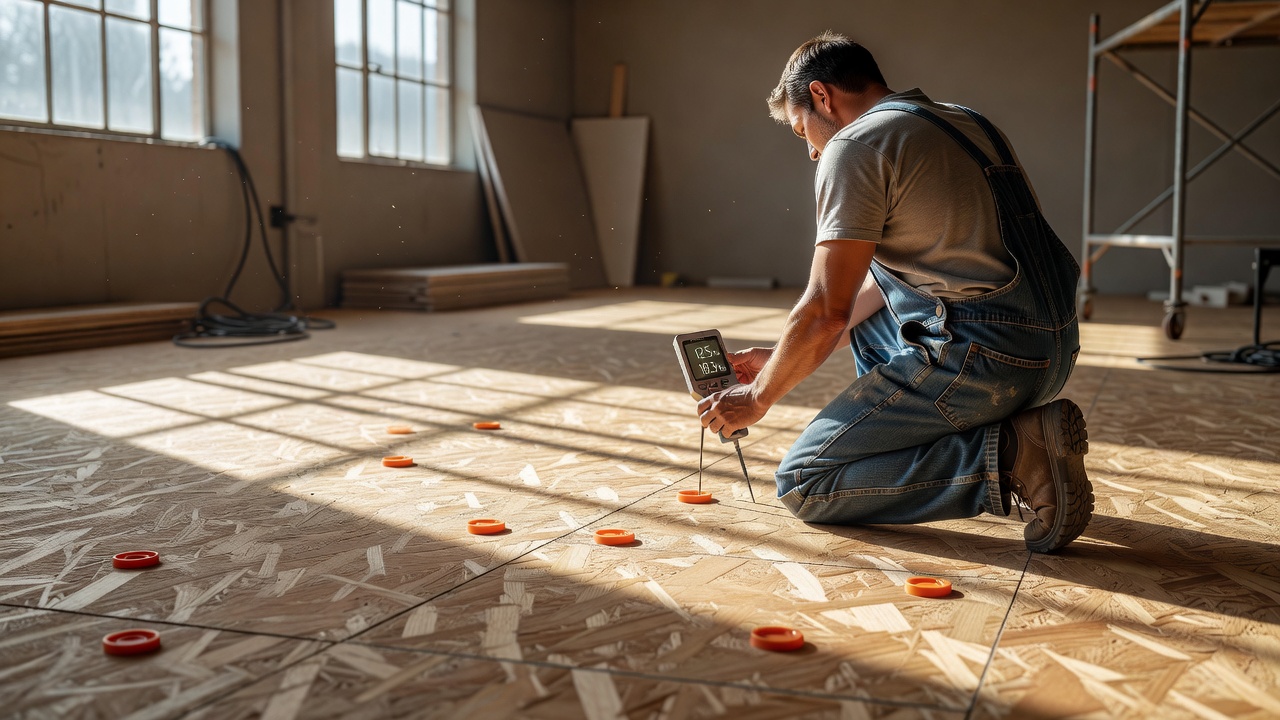 Subfloor moisture testing is how you find out if the slab or plywood under your feet is wet enough to wreck the floor you just paid for — meters, probes, and a little patience before a single plank goes down. Skip it and you get cupping, buckled runs, glue that lets go in six months, and a callback that costs more than the original job. I have been saying that since the mid-nineties and people still wave me off with "it feels dry."
I was on a ranch house outside Abilene last spring, gas-station coffee still cooling on the dash, when the homeowner told me the concrete "looked fine" under the old carpet. Looked fine. I have never trusted a floor that looks fine in showroom lighting, and I sure as hell do not trust a slab that looked fine under twenty-year-old padding. We ran the tests anyway. Numbers came back ugly. He almost fired me for wasting a day. Six weeks later his neighbor — same builder, same slab era — had a brand-new engineered oak floor that looked like a washboard. Neighbor skipped the test. I did not gloat. Much.
Subfloor prep is 80% of the job and nobody wants to pay for it. Moisture is the part of prep that bites hardest when you ignore it.
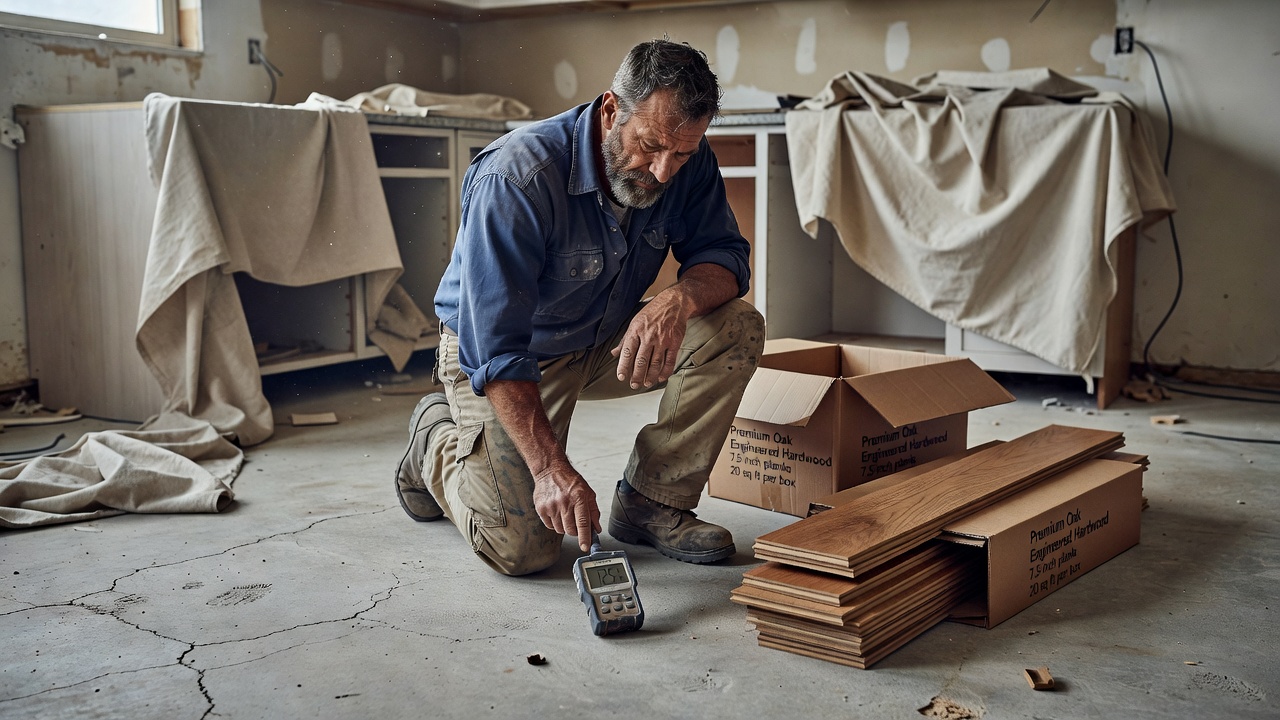
How do you test concrete subfloor moisture before installing flooring?
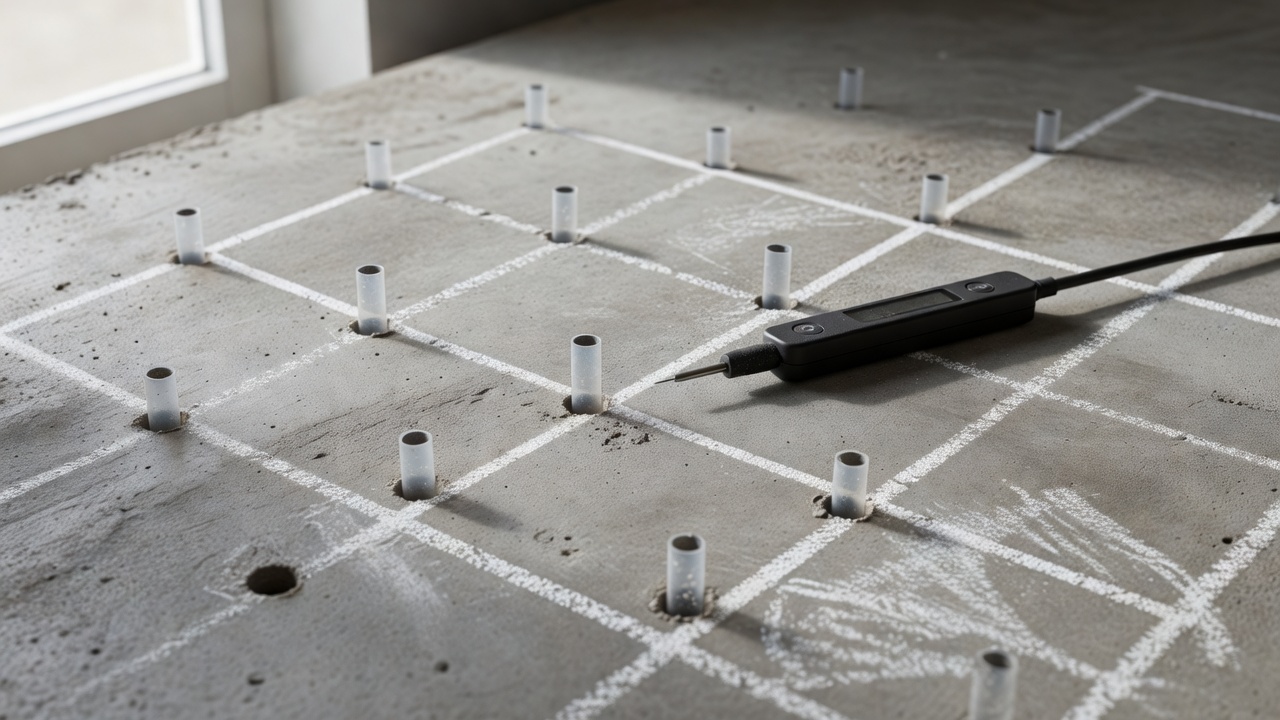
Concrete does not dry the way people think. It can feel bone-dry on top and still be pushing vapor like a slow leak from below. The gold standard is ASTM F2170 RH testing — in-situ relative humidity probes. You drill holes to 40% of slab thickness for slabs drying from one side, drop in the sleeves, wait the prescribed time, and read the relative humidity inside the concrete. Most manufacturers want you at or under 75% RH before glue-down wood, LVP, or anything with a real adhesive. Some products are tighter. Read the damn sheet.
Calcium chloride kits — the old MVER dishes — still show up on specs. They measure moisture vapor emission rate off the surface over 60 to 72 hours. Useful as a secondary check. Not a substitute for F2170 when the adhesive or warranty calls for RH. I have watched guys slap a dish down for three hours, call it good, and wonder why the urethane never cured right.
Pinless meters give you a quick surface scan so you know where to drill. They do not replace the probes. If a sales guy tells you his $200 meter "does the same thing as ASTM," smile, take your coffee, and hire somebody else for the actual test. For a deeper walk-through on what fails after a bad concrete read, see [LINK: flooring adhesive failure causes].
What are acceptable moisture levels for hardwood floors?
Wood is simpler on paper and meaner in practice. Acceptable moisture levels for hardwood floors usually land around 6–9% moisture content for the flooring itself in most of the country, with the wood subfloor at or under 12% and — this is the part that gets skipped — within 2–4% of the flooring you are about to nail or glue. If your oak is at 7% and the plywood is sitting at 14%, you are building a future cupping contest.
Pin meters and quality pinless meters both work on wood if you know what you are reading. Pins leave holes. Pinless is faster for scanning a whole subfloor before you start. Acclimate the product in the space with HVAC running. "It sat in the garage for a week" is not acclimation. I want the house at the temperature and humidity it will live in, not the temperature of a closed-up jobsite in August.
Here is the long version of why I will not shut up about this. Fifteen years ago I inherited a "almost done" white oak job in a new build where the previous crew had "checked moisture" with the back of a hand and a shrug. Subfloor was sitting high teens in spots. They installed anyway because the designer wanted the reveal before the holiday party and somebody had already posted the mood board. Within a winter the boards cupped hard enough you could catch a sock on the edges. Summer came, they crowned, gaps opened, the homeowner cried on the phone, and I spent three weeks demoing premium wood that never should have touched that plywood. Moisture testing is not a line item you cut to save a day. It is the difference between a floor that lasts and a floor that becomes a story I tell strangers on the internet. I still have the bad knee from that tear-out. The designer moved on to the next open-concept fad. I moved on to billing for prep like my livelihood depended on it — because it does.
Never install solid or engineered wood over a subfloor that has not been metered and logged. Write the numbers down. Date them. Keep the printout. Warranties love paperwork and hate "I thought it was fine."
Do I need a moisture barrier under hardwood or laminate flooring?
Over concrete, yes more often than the internet admits. A proper moisture barrier under flooring — 6-mil poly, manufacturer-rated underlayment with a built-in retardant, or the specific membrane the adhesive system requires — is cheap insurance against vapor drive. Basements and slabs on grade are not optional territory. Over a clean, dry wood subfloor in a conditioned space you may not need a full vapor barrier for every product, but you still need the underlayment the manufacturer wrote down, and you still need those moisture numbers in range first. Barrier does not fix a wet slab. It manages a slab you already proved is acceptable.
Laminate and floating LVP crowds love to roll out the foam pad and call it a day. Foam is not magic. If the concrete is above the RH limit, you are floating a raft on a slow flood. For product-specific barrier calls and when poly is enough versus when you need a sealed system, [LINK: moisture barrier underlayment] is worth the click before you buy the wrong roll.
What relative humidity is ideal for flooring installation?
Keep the living space — not just the day of install, the life of the floor — in roughly 30–55% relative humidity with normal residential temperatures. That range is what most wood and many resilient products were built to tolerate. Blast the heat with no humidifier all winter and watch gaps open. Run the place like a greenhouse and watch cups and crowning. HVAC is part of the floor system whether the builder wants to admit it or not. I tell clients: if you cannot keep the house in that band, do not buy a floor that will punish you for it.
One numbered list, because somebody always asks for the short version of what I actually do on site:
- Confirm HVAC has been running and the space is at service conditions. Scan wood subfloors with a calibrated meter; on concrete, map with a pinless unit then place F2170 probes per ASTM depth and count. Log every reading. Compare flooring MC to subfloor MC on wood jobs. Do not open full cartons of wood until the substrate passes. Install the moisture barrier or system the manufacturer specifies only after the numbers clear. Then — and only then — lay floor.
People still try to rush step one because the dumpster is already in the driveway. The dumpster can wait.
I have no patience for the current round of "just put the pretty vinyl down, it is waterproof" thinking. Waterproof wear layer is not the same as vapor-proof installation over a wet slab. You can buy a floor that looks like Italian marble poured by angels and still watch the locking joints telescope when the concrete under it never got tested. Looks are not structure. Prep is structure.
FAQ
What are acceptable moisture levels for hardwood floors?
Most solid and engineered hardwood wants the flooring itself around 6–9% moisture content, the wood subfloor at or under 12%, and both within 2–4% of each other before install. Always defer to the specific manufacturer range for your species and product. If the gap between floor and subfloor is wider than that band, wait and condition — do not hope.
How do you test concrete subfloor moisture before installing flooring?
Use ASTM F2170 in-situ RH probes drilled to the correct depth as the primary method; many specs top out at 75% RH or lower. Pair with a surface meter to choose probe locations and use calcium chloride MVER only if the system still calls for it. Surface "feel" and a quick meter wave are not a test.
Do I need a moisture barrier under hardwood or laminate flooring?
Over concrete and in basements, plan on a proper moisture barrier or rated underlayment once the slab already passes moisture testing. Over dry wood subfloors in conditioned space, follow the product instructions — barrier is not always required, but correct underlayment and verified moisture content still are. A barrier never excuses skipping the meter.
What relative humidity is ideal for flooring installation?
Aim for 30–55% RH in the home during acclimation, install, and everyday living, with normal indoor temperatures. Outside that band for long stretches, wood moves and some adhesives and click systems suffer. Hold the house steady before you blame the floor.
Is engineered hardwood more forgiving of moisture than solid?
Somewhat on the top-side humidity swings, not on a wet slab or soaked subfloor. Engineered still cups, delaminates, and voids warranties when substrate moisture is ignored. Test it like you would solid.
Anyway. Call somebody before you rip anything out. Does not have to be me. Should probably be me.