how flooring color affects mood
Flooring Color Psychology: Set Perfect Room Mood
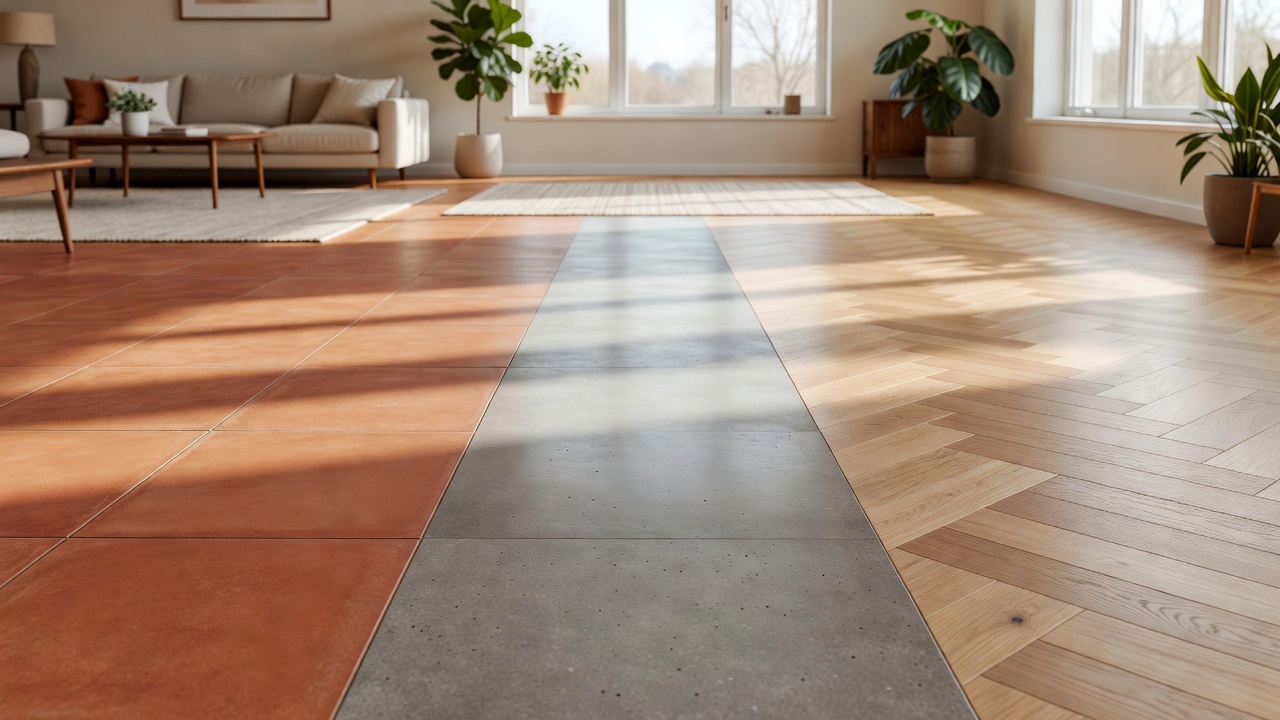 Soft morning light pooling across a pale oak expanse like watered silk, the quiet click of bare feet, a bedroom that exhales the second you cross the threshold—that is the entire brief. Flooring color psychology is the intentional use of floor hue, undertone, sheen, and material tactility to shape how a room feels emotionally and spatially. Pale, cool-reflective floors calm and enlarge; deep, matte tones cocoon and dramatize; warm honeys and terracottas pull people in; cool greiges and misty blues hush the nervous system. Get the floor right and the walls almost behave themselves.
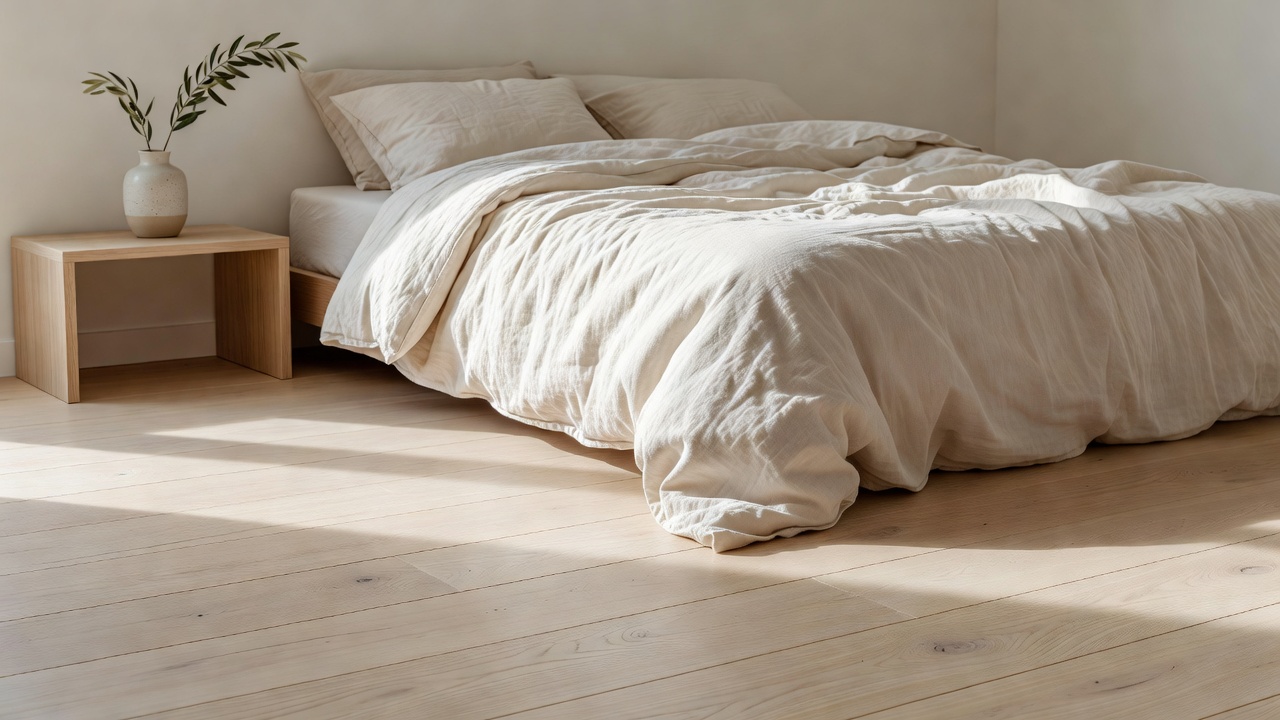
I stage homes the way other people curate outfits, and the floor is the undergarment no one sees until it’s wrong. A client once cried—actually cried—over a herringbone install in a soft taupe oak because the room finally felt like the person she wanted to be at 7 p.m. That is the power we’re dissecting today. Not “pretty floors.” Mood architecture.
How does flooring color affect mood?
Color on the floor doesn’t just sit there; it negotiates with light all day. Light floors bounce photons upward, lifting cortisol and visual weight so the ceiling feels higher and the air thinner in the best way. Dark floors absorb, drop the center of gravity, and create that velvet-box intimacy hotels charge four figures for. Warm undertones (honey, caramel, soft terracotta) signal safety and gathering—your nervous system reads them as hearth. Cool undertones (ash, blue-gray, mist) signal clarity and rest; they lower the volume without asking.
But here’s where the autopsy gets delicious: color never travels alone. Grain direction, sheen level, pattern scale, and material hand-feel either amplify the psychology or quietly sabotage it. A pale floor in high-gloss porcelain can feel clinical instead of calm. The same pale tone in wire-brushed white oak with a hardwax oil matte finish feels like a deep breath. Cork’s micro-texture under bare feet softens even a cooler gray into something cradling. Matte vinyl that mimics stone can lean serene if the print scale is large and the embossing is restrained; tiny busy patterns read anxious no matter the hue.
I still hear the install crews muttering that “color is color, Bianca, stop overthinking the sheen,” and fine—sometimes a straightforward mid-tone oak just works. But when a listing needs to sell in a weekend or a bedroom needs to stop being the place you doomscroll, the full stack matters. Texture is the amplifier. Sheen is the volume knob. Pattern scale is whether the room whispers or shouts.
For 2025–26 I’m watching quiet luxury pale woods with visible but gentle grain, greige LVP with warm undertones that photograph like cashmere, and a return of soft walnut in matte finishes for rooms that want gravitas without the 2014 espresso-floor drama. Yes, I know we all swore off gray. Let me have the right gray—one with a whisper of taupe so it doesn’t go cold under LED.
What is the best flooring color for a calm bedroom?
The best flooring color for a calm bedroom is a light-to-medium cool-leaning neutral with low sheen and open grain—think whitewashed oak, soft greige engineered hardwood, or a large-scale matte vinyl in misty taupe. These tones maximize morning light bounce, reduce visual noise, and keep the floor from competing with bedding and skin tones at 6 a.m.
I want the floor to disappear into serenity, not announce itself. Wide planks or gentle long-board looks help; busy chevrons can feel energetic when you need the opposite. Bamboo in a pale natural or smoked finish can work if the grain stays quiet, but I reach for European oak or a high-end cork composite more often because the underfoot give itself is calming. Cool-toned flooring creates a calm atmosphere fastest when paired with breathable textiles—linen, washed cotton, a single wool throw in oatmeal. Keep the undertone consistent with your wall paint so the eye doesn’t snag.
One vulnerable confession: the bedroom that still doesn’t fully feel like mine has floors that are almost right—a touch too yellow in the afternoon. I notice it every Sunday. Color psychology is ruthless that way; almost is still a daily reminder.
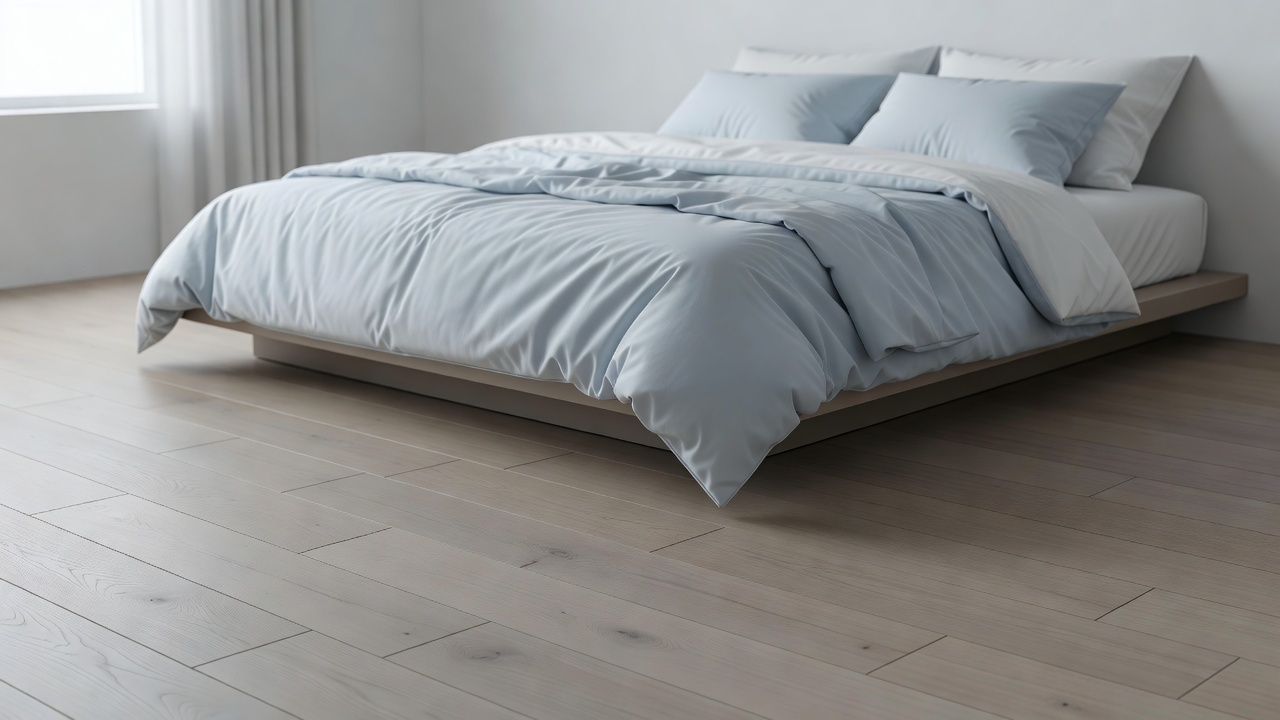
If you’re staging, this is non-negotiable. Buyers walk into a light-floor bedroom and their shoulders drop half an inch. That half-inch is the difference between “nice house” and “I can already see my life here.” Pair it with [LINK: best flooring for bedrooms] guidance on underlayment quietness and you’ve basically written the offer letter for them.
Do light or dark floors make a room feel bigger?
Light floors make a room feel bigger—consistently, measurably, in every open house I’ve ever worked. They erase the visual boundary between floor and wall, bounce light into corners, and reduce the sense of enclosure. Dark floors make a room feel smaller, cozier, and more grounded; use them when you want intimacy or when the architecture already has soaring ceilings that need tethering.
The trick is never absolute. A very dark floor in a tiny powder room with excellent lighting and reflective surfaces can feel jewel-box chic rather than cramped. A washed-out light floor in a cavernous great room with zero texture can feel unfinished and cold. For most residential spaces under 300 square feet, I default light if the goal is air and calm. For libraries, media rooms, or primary suites that want to feel like a private club, I reach for the deeper tones—walnut, smoked oak, deep greige LVP with a dry matte finish—so the room holds you.
Sheen is the secret lever again. High-gloss dark floors can actually expand space by acting like a mirror; matte dark floors compress deliciously. Know which compression you want.
Which flooring colors create a cozy atmosphere?
Warm flooring colors create a cozy atmosphere: honey oak, soft caramel, light walnut, terracotta-leaning LVP, and any wood or wood-look with golden or reddish undertones. These hues trigger the same neural pathways as firelight and baked bread. Layer them with low-to-medium sheen, visible but not frantic grain, and a material that has some give—cork, quality engineered hardwood, or cushioned vinyl—and the room starts inviting people to stay past dessert.
My current mood board in words for cozy:
- sun-warmed honey oak, wire-brushed
- matte terracotta stone-look with soft edge bevels
- caramelized walnut in random-width planks
- oatmeal cork with a satin, almost skin-like hand
- greige that leans taupe, never blue
- the exact color of a perfect latte at 4 p.m.
Cool tones can be made cozy only with heroic textile support and amber lighting; warm tones do half the work for you. In living rooms and dens I almost always specify warm. In kitchens I let the client’s cooking style decide—warm for the people who host, cooler for the ones who want the space to feel like a clean laboratory of flavor. Cross-reference [LINK: warm vs cool flooring undertones] when you’re torn between two samples under the same afternoon light; undertone is where cozy lives or dies.
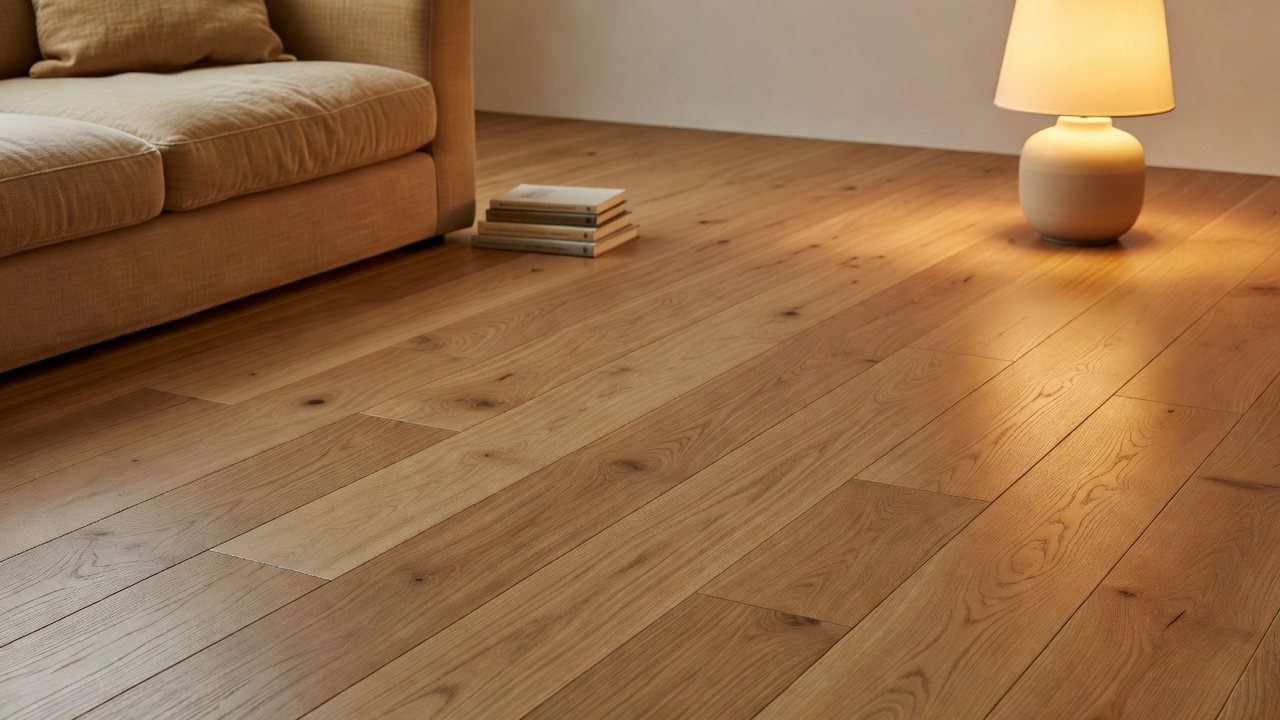
For staging in the current market I lean warm-light rather than dark-cozy unless the architecture is dramatic. Buyers still want the Instagram-ready calm of light floors, but they melt for the emotional temperature of a true honey tone. The 2025–26 sweet spot is light warm—not bleached, not espresso. Just quietly golden.
FAQ
How does flooring color affect mood?
Flooring color affects mood by controlling light reflection, visual weight, and emotional temperature. Light and cool tones calm and expand; dark and warm tones ground and invite. Material texture and sheen intensify or mute those effects within seconds of entering a room.
What is the best flooring color for a calm bedroom?
A light cool-leaning neutral—pale oak, soft greige, or misty taupe—in a matte or ultra-matte finish is best for calm bedrooms. These colors maximize restful light and minimize visual stimulation. Pair with quiet grain and soft underfoot materials for full effect.
Do light or dark floors make a room feel bigger?
Light floors make a room feel bigger by bouncing light and dissolving edges. Dark floors make a room feel smaller and more intimate. Choose based on whether you want air or enclosure.
Which flooring colors create a cozy atmosphere?
Warm tones such as honey oak, caramel, soft walnut, and terracotta-leaning neutrals create a cozy atmosphere. Low sheen and tactile materials like cork or brushed hardwood heighten the effect. Cool colors require extra layering to feel truly cozy.
Does material matter as much as color for mood?
Yes—grain, sheen, pattern scale, and tactility amplify or undercut the color’s psychological job. The same pale gray feels serene in matte wide-plank oak and sterile in glossy small-format tile. Always sample the full stack under your actual light.
The floor is the largest continuous surface in the room and the one your body meets first. Treat it like the foundation of the feeling, not the afterthought you pick from a leftover sample rack. When the light hits just right and the undertone hums and the sheen stays quiet, the whole house exhales with you.
What’s the one room that still doesn’t feel like you yet—and what color is currently under your feet when you stand in it at dusk?