first time homebuyer flooring checklist
Best Flooring for First-Time Homebuyers (2026 Guide)
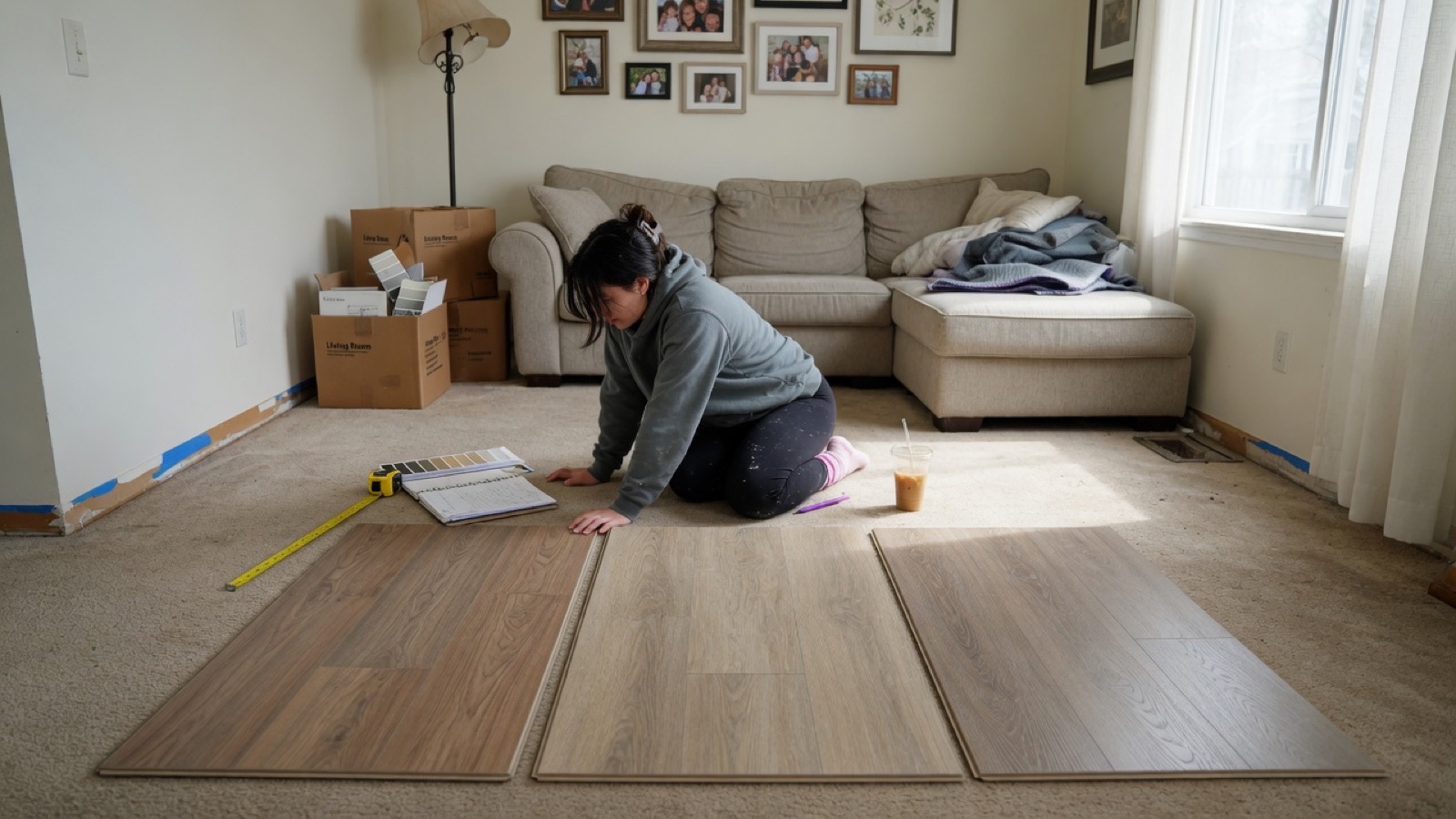 I am on tab four of a spreadsheet that has seventeen conditional-formatting rules and I still don't know what goes in the hallway.
The best flooring for first-time homebuyers is waterproof LVP (luxury vinyl plank) for kitchens, baths, entries, and anywhere life happens hard—plus laminate only in dry, low-drama rooms if the budget is truly on fire, and leave any solid existing hardwood alone unless it's actually ruined. That's the answer. Write it down. I already circled it in three colors and still opened another comparison tab at 1:14 a.m.
Best flooring for first-time homebuyers is the option that survives real pets, real spills, real budget caps, and a DIY skill level that peaks at "watched three YouTube videos and cried once," while not tanking resale in five years.
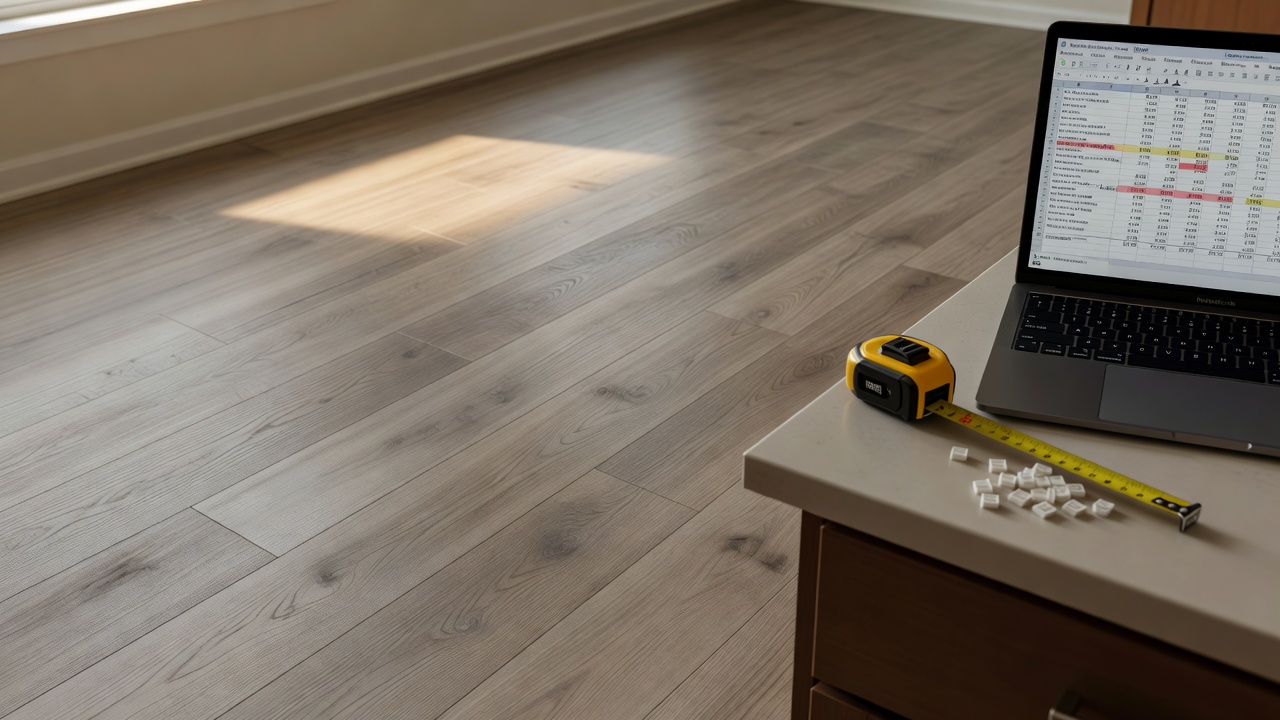
Derek (my husband, who thinks "just pick the pretty one" is a strategy) said the showroom samples all looked the same under the fluorescent lights. The group chat sent nine contradictory PDFs. Some guy online who acts like vinyl plank is a personal insult left a three-paragraph comment under a before/after like I'd personally offended the hardwood gods. I still bought the LVP. (It was $2.47/sq ft on a dead coupon stack that brought the whole main floor under $1,900 materials—$340 more than I told Derek, so we are not discussing that column.)
What are my options for changing the flooring in a first home?
Okay. Actual options, not the fantasy catalog version.
- LVP / rigid-core vinyl plank: waterproof, pet-claw resistant enough, click-lock DIY friendly, $1.50–$4.50/sq ft materials depending how fancy you get. This is the default "I need this house to function" pick.
- Laminate: cheaper upfront ($0.80–$2.50/sq ft), looks decent until the first standing water incident. Fine for bedrooms if you're ruthless about humidity.
- Engineered hardwood: prettier, more money ($4–$9+), not a great first-timer DIY unless you already own a pneumatic nailer and zero fear. Moisture still bites it.
- Solid hardwood: gorgeous, expensive, sandable forever, and the reason my spreadsheet had a panic column labeled "never mind we can't."
- Tile: bathrooms and maybe laundry if you like grout maintenance as a hobby. Cold. Hard. Installation is not beginner vibes.
- Carpet: bedrooms only if you must. Pets + first apartment hangover = I cannot.
- Keep what's there: if the existing hardwood or even mid-grade laminate is solid, refinish or just clean it. Inspection moisture readings matter more than Pinterest. [LINK: inspecting subfloors before new flooring]
I walked our 1,140 sq ft ranch with a moisture meter I bought used off Marketplace ($28, worth it) because every contractor checklist screamed about older homes and hidden damp. Basement edge was sketchy. That killed the "cheap laminate everywhere" dream immediately.
Which flooring should I put in which room?
This is where the matrix was supposed to save me.
Kitchen / entry / mudroom / full baths: LVP. Full stop. Waterproof or you will hate yourself when the dishwasher weeps. We did a medium-oak rigid core, 20 mil wear layer, because the 12 mil looked scary after the golden retriever test videos.
Hallways and living room: also LVP if the budget can stretch (ours barely did). Visual continuity stops the house from feeling like a patchwork quilt of bad decisions.
Bedrooms: laminate if you need to claw back $400–600, or more LVP if you can swing it. I did laminate in the guest room only. (Still second-guessing.)
Basement (if finished-ish): only products rated for below-grade, and only after the moisture situation is actually fixed. Do not ask me how I know the cheap peel-and-stick failed in week six.
Stairs: either keep original or pay a pro. DIY stair noses are how people end up on r/HomeImprovement with photo evidence of regret.
I built a scoring sheet: Budget (1–5), DIY reality (1–5), Lifestyle chaos/pets/kids (1–5), Resale optics (1–5). Then I tried to weight them.
Final decision criteria I swore I'd obey:
- Nothing over $3.25/sq ft installed materials average
- Must be something I can click-lock on a long weekend without calling Derek's cousin
- Has to not look cheap in listing photos in 2031
- Wait, the dog already scratched the sample corner I left on the floor—does the 20 mil actually matter or is that marketing—
- Also the undertone has to not fight the existing oak trim which is warmer than I remembered once the old carpet came up and oh my god the plywood seams
See. Falls apart by bullet three every single time. The score still pointed at LVP for 70% of the house. I followed it. Mostly.
Is LVP or laminate better for first-time homebuyers on a budget?
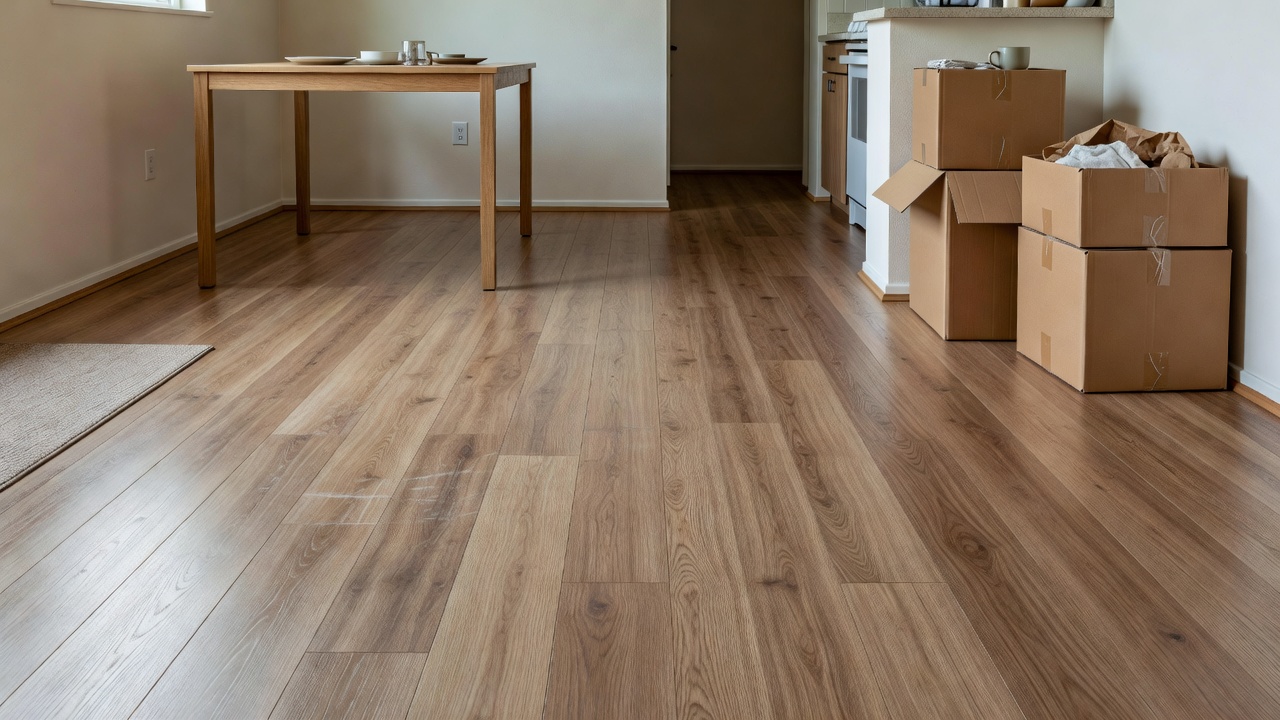
LVP wins for most first-time buyers who have kitchens, bathrooms, dogs, or the ability to spill coffee while answering work Slack. Laminate wins only when the absolute lowest material cost is the only number that matters and the room stays dry.
Real talk numbers from my receipts and the three big-box runs I made:
LVP rigid core we chose — $2.47/sq ft, underlayment mostly attached, total main-floor materials ~$1,870 for 760 sq ft after tax and the coupon that almost expired.
Comparable laminate — would have been ~$1,100–1,300 but I kept reading flood threads and the resale notes about "buyer will rip it out."
Some guy online who acts like vinyl plank is a personal insult can keep his oil-finished white oak. I needed floors that would not swell when the ice maker line wept (it did, twice). Pride and defensiveness both fit in the same cart. The LVP looks like wood from standing height. Guests have complimented it. I still sometimes run my hand along the plank edges checking for peaking like a maniac.
Maintenance expectation, since nobody hands you a real manual: LVP gets swept/vacuumed and occasionally damp-mopped with the non-abrasive cleaner that doesn't void the warranty. No soaking. Felt pads on chairs immediately. Laminate is similar but more terrified of water standing more than a few minutes. Neither wants steam mops. I set a phone reminder for the entry rug shake-out because grit is the real enemy. [LINK: LVP maintenance schedule for new homeowners]
If you're replacing everything, get the subfloor flat. "Pretty flat" is a lie. I spent an extra Saturday with self-leveler in two low spots ($67 in materials and a YouTube spiral). Worth it.
FAQ
What are my options for changing the flooring in a first home?
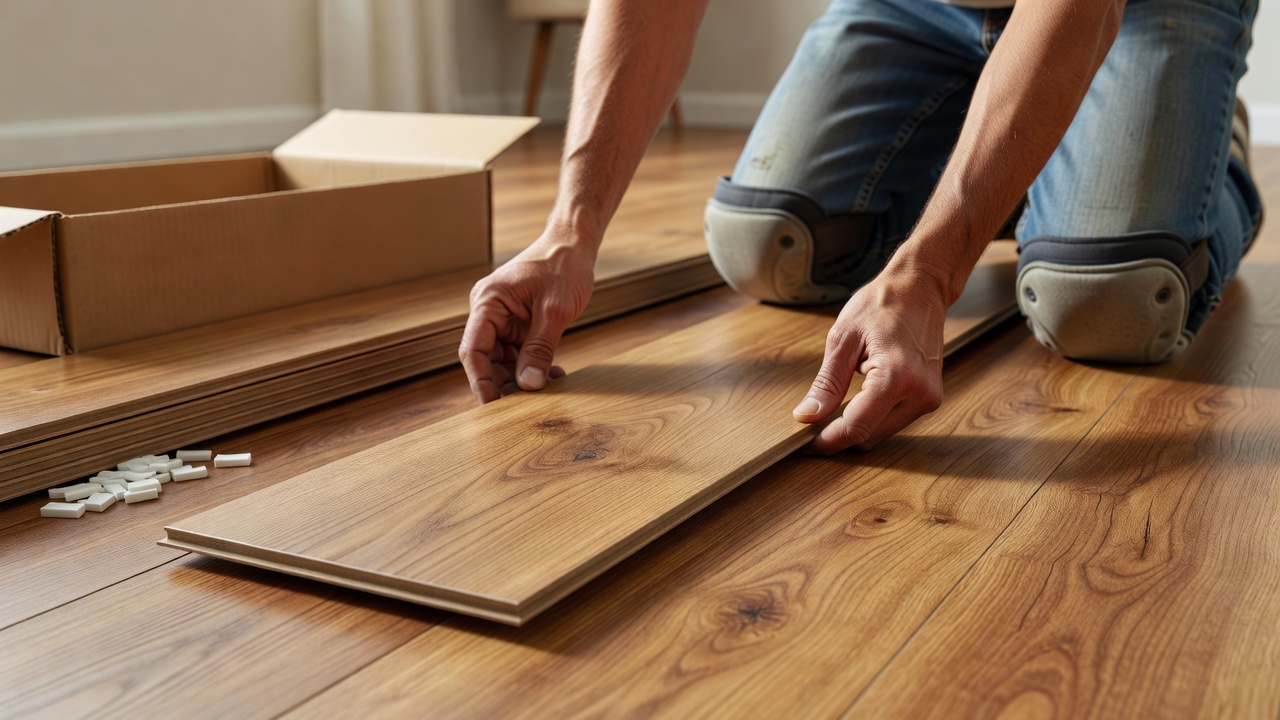
LVP, laminate, engineered wood, solid hardwood, tile, carpet, or refinishing/keeping what already works. Most first-time buyers land on LVP for wet and high-traffic zones because it balances cost, water resistance, and DIY potential.
Which flooring should I put in which room?
LVP in kitchens, baths, entries, and living areas; laminate only in dry bedrooms if budget demands; tile only where you accept grout; carpet sparingly; stairs often left to pros or original material.
What kind of floor maintenance should first-time buyers expect?
Daily or every-other-day sweep/vacuum plus occasional damp mop with manufacturer-approved cleaner. Protect against grit and standing water; use felt pads; skip steam mops. Expect to check transitions and edges every few months the first year.
Is LVP or laminate better for first-time homebuyers on a budget?
LVP is usually better once you factor water risk and lifespan; laminate is cheaper only if every room stays dry and you accept earlier replacement or lower resale perception.
How much should a first-time buyer budget for new flooring?
Materials commonly run $1.50–$4.50/sq ft for solid LVP choices; add underlayment, transitions, baseboard adjustments, tools, and 10% waste. Full main-floor DIY projects often land $1,500–$4,000 materials before any labor.
I keep opening the spreadsheet to tweak the "years until we move" assumption. If it's three years, maybe I overspent on wear layer. If it's eight, I under-bought the prettier grade. Derek still cannot tell the difference between the two finalists I brought home. The dog has not destroyed anything yet. The hallway feels right when I walk it barefoot at night.
I think LVP was correct. I am not 100% sure. What would you have done with the same square footage, the same slightly-in-denial budget, and a group chat that would not shut up?