Science of Flooring Wear Layers: Thickness vs Materials
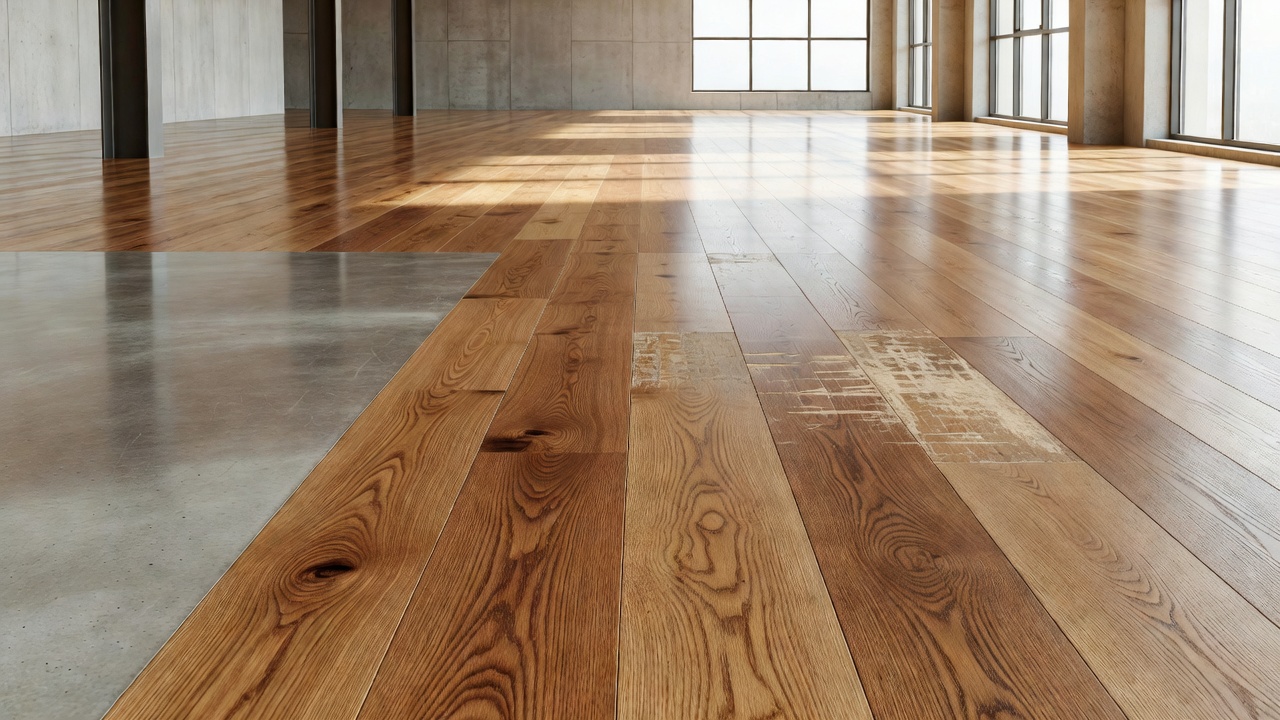 My dog’s nails clicked across the entryway this morning and left nothing. No scuff. No white mark. Same nails, different hallway last year: a faint constellation of scratches by week three. The difference was not “a thicker floor.” It was the science of flooring wear layers — specifically, what that top film is made of, how its particles fight abrasion, and why a well-built 12-mil coat can outlast a lazy 20-mil one.
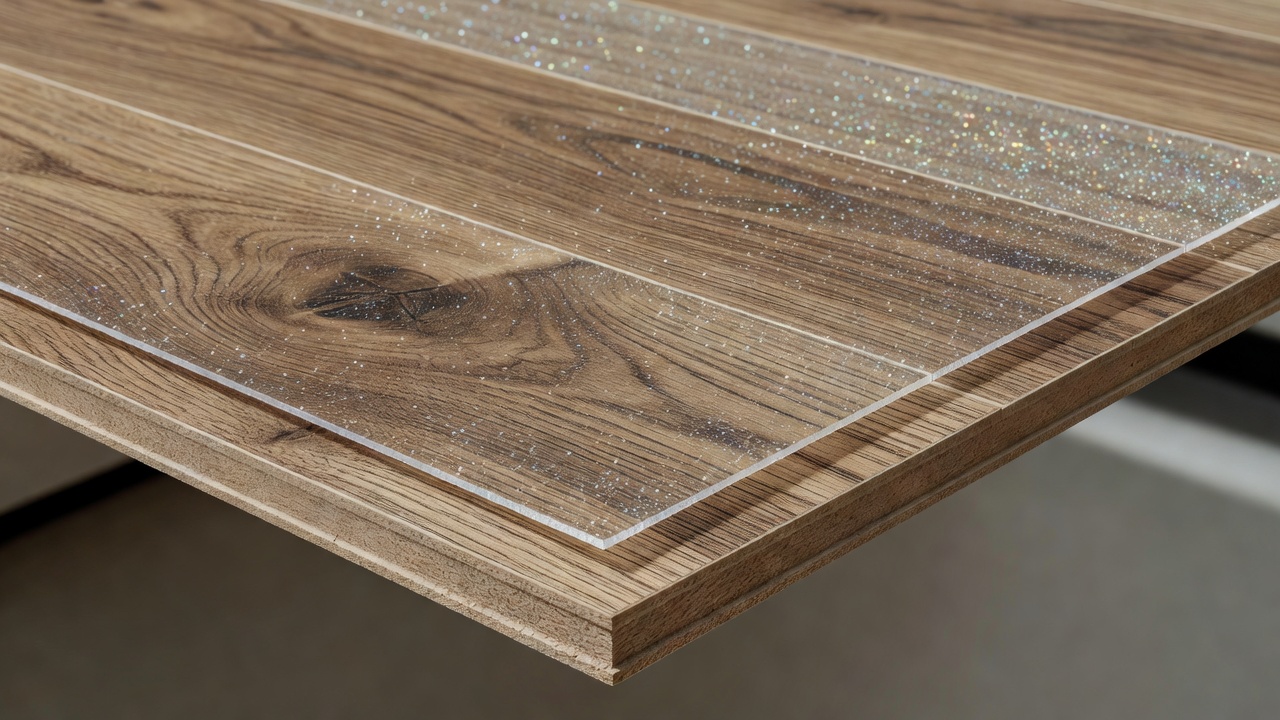
A wear layer is the transparent protective coating on resilient flooring (and the factory finish system on laminate or engineered hardwood) that absorbs abrasion, impact, and UV so the decorative image or wood veneer underneath does not have to. Thickness gets the marketing ink. Composition decides the failure mode. Sorry — I know that is a lot before coffee. I just think it is really cool.
What is a wear layer in flooring?
On vinyl and LVP/LVT, the wear layer is usually a clear polyurethane (sometimes acrylic-urethane hybrid) film laminated or coated over the printed design layer. On laminate, you are looking at a melamine-formaldehyde overlay sheet loaded with abrasive particles, pressed under heat. On engineered hardwood, “wear layer” is slightly overloaded language: people mean either the real wood veneer you can sand or the factory-applied finish (aluminum-oxide-fortified urethane) sitting on that veneer. Different materials, same job description: take the beating first.
What you see is shine and a mil number. What is actually happening is surface engineering — cross-linked polymer networks, hard ceramic inclusions, and a controlled roughness that trades a little initial sheen for a lot of long-term toughness. Isn’t that wild? A floor’s “durability” is often a particle-size distribution problem wearing sneakers.
If you are comparing products right now, it helps to separate the wear story from the structural one. The [LINK: vinyl plank core types] conversation is about denting and stability; this one is about whether the picture still looks like a picture after five winters of grit.
How thick should a wear layer be for residential use?
For residential vinyl and LVP, the plain-English ranges most manufacturers publish still hold as a starting map, not a religion:
- Light residential (bedrooms, low traffic): about 6–8 mil. Fine if the chemistry is honest and you are not hosting a roller-skating league.
- Typical whole-home residential: about 12–20 mil. The sweet spot where composition starts to matter more than bragging rights.
- Heavy residential / light commercial bleed: 20 mil and up. Useful in mudrooms, rentals, and anywhere sand thinks it lives rent-free.
- True commercial: often 28–40+ mil plus aggressive aluminum oxide or ceramic bead loading — thickness alone is not the hero.
One mil is 0.001 inch. So 12 mil is roughly the thickness of three sheets of office paper stacked. Lab wear tests (think Taber abrasion and related ASTM-style rotating-wheel protocols — lab-speak for “we sandpapered this until the décor blushed”) care about when the design layer becomes visible, not how proud the mil number looked in a brochure.
Laminate speaks a different dialect: AC rating (Abrasion Class). AC3 is solid residential; AC4/AC5 climb into commercial. That rating is a performance outcome of the overlay’s particle package and resin system, not a mil callout you can eyeball at the big-box shelf.
Engineered hardwood is its own fork in the road. A 2–3 mm real-wood wear layer (veneer) is about refinishing cycles. The factory urethane on top — often aluminum-oxide enriched — is what survives the first decade of sock traffic before anyone sands anything. Do not confuse “thick veneer” with “unkillable finish.” I have. My notes from that open house still sound personally betrayed.
Is a thicker wear layer always better?
No. And this is where the materials nerd in me gets a little too into it — feel free to skim, I will still be here glowing.
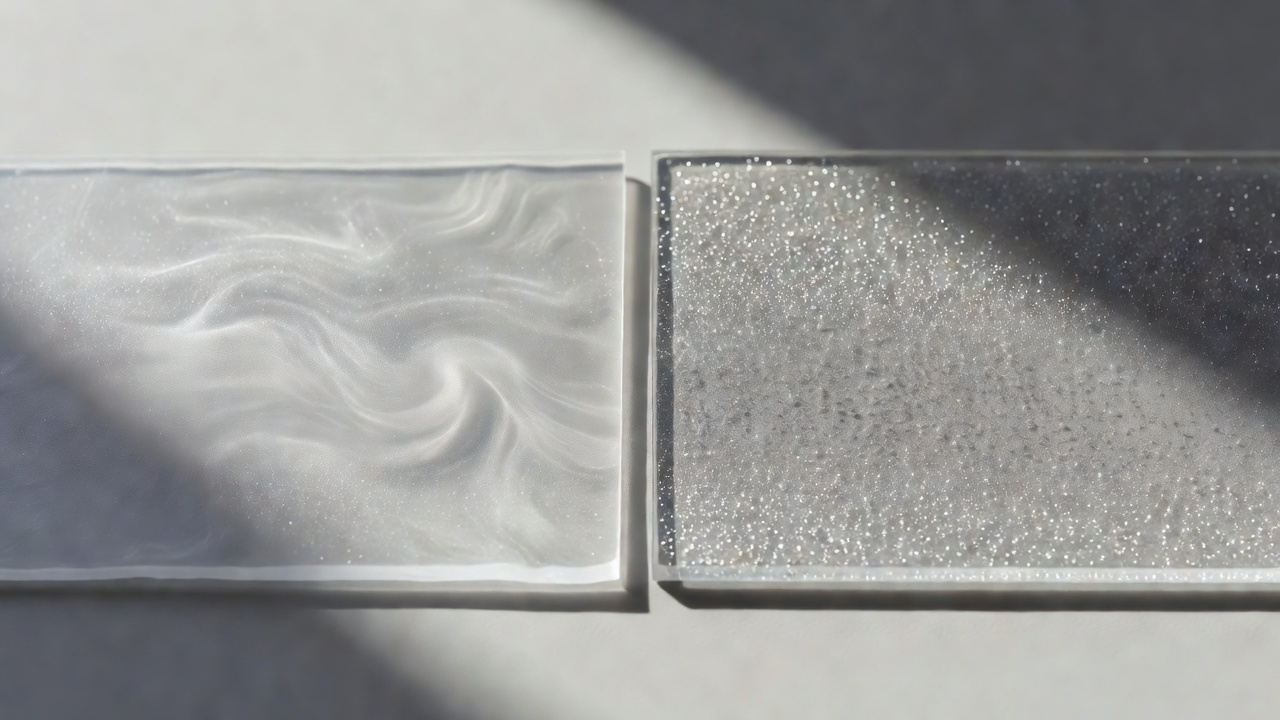
Abrasion is not a polite, even thinning. Hard grit particles plow, chip, and fatigue the surface. A pure soft polymer film, even a thick one, can smear, haze, or micro-scratch into a dull fog. Load that same polymer with aluminum oxide (Al₂O₃ — very hard ceramic particles, Mohs-hardness bragging rights adjacent to corundum) or ceramic beads, and you change the mechanism. The hard inclusions take the micro-impacts; the polymer matrix holds them in place and recovers elastically between insults.
So you can have:
- A thick, lightly filled urethane that looks premium on day one and ghosts into swirl marks by month eighteen.
- A moderate-thickness, high-solids, UV-cured urethane with a sensible Al₂O₃ or ceramic package that keeps optical clarity longer because scratches stay shallower and more scattered.
Cure chemistry matters too. UV-cured systems tend to build a tighter cross-link density (more molecular “handshakes” per unit volume), which improves stain and scuff resistance compared with some older moisture-cured cousins. Additives for UV stability keep the film from yellowing or chalking when a south window decides to conduct a multi-year experiment on your living room.
Thicker still helps if the formulation is competent — more sacrificial material before you hit the print layer. Incompetent thicker is just a taller soft target. Dry one-liner time: mils without minerals is just expensive clear nail polish with better PR.
What’s more important: wear layer thickness or overall plank thickness?
Different jobs. Wear layer thickness (and composition) governs surface abrasion, scuffing, and how long the décor stays photogenic. Overall plank thickness — the total build of wear layer + print + core + backing — governs feel underfoot, acoustic behavior, how the plank bridges minor subfloor unevenness, and joint strength in click systems.
A 5 mm LVP with a serious 20-mil ceramic-reinforced wear layer can look newer longer than an 8 mm plank with a thin, under-filled topcoat. Conversely, that beefy 8 mm core may laugh at stiletto dents that telegraph through a thinner rigid board. If you care about both beauty longevity and structural manners, you specify both — you do not let one number cosplay as the other.
This is also why “wear layer vs overall thickness” comparisons on packaging can feel like someone answering a chemistry question with a tape measure. Ask for the wear-layer mil and what is in it. Ask laminate for AC class. Ask engineered wood for veneer thickness and finish system. Then match the failure mode you actually fear: sand, pets, rolling chairs, sunlight, or the occasional dramatic pasta-water incident (finish chemistry and edge sealing matter there; see also [LINK: waterproof vinyl flooring ratings]).
What’s actually happening when a floor “wears out”
Here is the numbered list I promised myself I would keep rigorous:
- Asperity contact: grit or grit-like debris creates high local pressure at tiny peaks; the polymer yields or the hard particles chip micro-volumes of material.
- Progressive haze: shallow multi-directional scratches increase light scatter; the floor looks dull before the print is truly gone.
- Particle pluck-out: poorly bound aluminum oxide or ceramic beads leave pits that accelerate further wear — formulation quality, not just “has ceramic” checkbox.
- Breakthrough: enough material is gone that the printed design layer scuffs or whitening appears; aesthetically end-of-life even if the core is structurally fine.
- Secondary damage paths: UV embrittlement, plasticizer migration in lower-tier vinyls, and moisture at seams can make the wear layer fail sideways rather than by pure abrasion.
Industry wear tests compress years of that sequence into hours with standardized abrasive wheels and load. Useful. Not identical to your hallway’s unique blend of crushed cereal and ambition. Still: when a manufacturer publishes both mil thickness and a meaningful abrasion or AC result, believe the pairing more than either number alone.
FAQ
What is a wear layer in flooring?
A wear layer is the clear top protective coating (or laminate overlay / factory wood finish) engineered to take abrasion and scuffs so the decorative layer stays intact. In resilient floors it is typically polyurethane; thickness is measured in mils, but particle reinforcement often decides real durability.
How thick should a wear layer be for residential use?
Most homes do well with about 12–20 mil on vinyl/LVP for general traffic; 6–8 mil can suffice in light-use rooms, and 20+ mil helps in mudrooms and rentals. Laminate is better judged by AC rating (AC3+ residential) than by a mil number.
Is a thicker wear layer always better?
No — composition frequently beats raw thickness. An aluminum oxide wear layer or ceramic-bead-filled urethane of moderate mil can resist abrasion longer than a thicker, lightly filled film that hazes and scratches easily.
What’s more important: wear layer thickness or overall plank thickness?
Wear layer thickness and materials control surface longevity; overall plank thickness controls feel, acoustics, and dent resistance through the core. Spec both for the room’s actual abuse pattern instead of treating one as a proxy for the other.
Do ceramic beads and aluminum oxide actually change failure modes?
Yes. Hard particles take micro-impacts that would otherwise plow soft polymer, slowing haze and breakthrough when they are well bound in a properly cured matrix. Poor binding can create pits, so the quality of the system matters as much as the buzzwords.
Tonight, if you walk across your kitchen, tip a lamp low and look for the soft scatter of micro-scratches in the sheen. That haze is a materials diary — polymer, particles, grit, time. You do not need a lab to notice it. You only need to know which layer was supposed to take the hit, and why some of them are quietly better at the job than their mil count admits. I am still a little delighted every time a clear coat turns out to be a composite.