Does LVP Feel Like Hardwood Underfoot? Tasting Notes
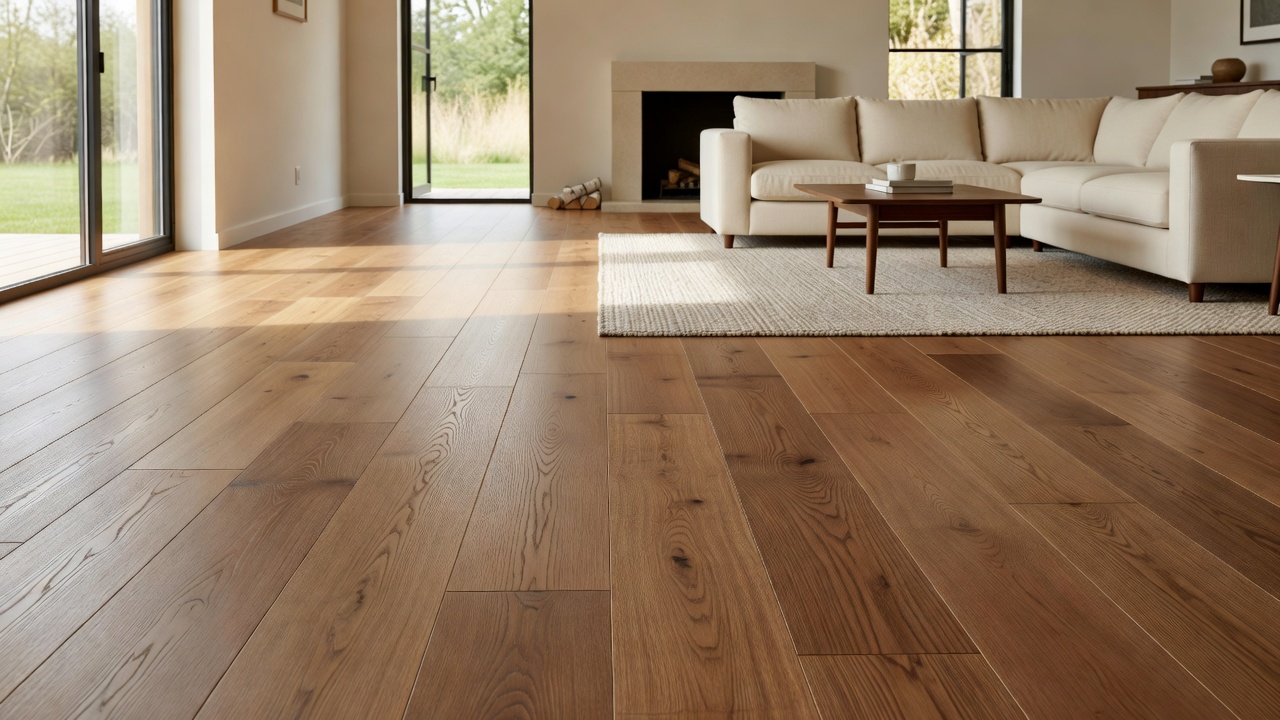 One does not simply walk on a floor of this caliber. One experiences it. After conducting barefoot trials across eleven flagship showrooms—three Floor & Decors, one particularly luminous Lumber Liquidators, and an assortment of lesser temples to the underfoot arts—I can state the matter without hesitation: no, LVP does not feel like hardwood underfoot. Luxury vinyl plank offers a cooler, more uniformly dense, faintly synthetic resilience that never quite achieves the warm, resonant give of true wood. The distinction is not subtle to a trained sole; it is the difference between a well-made rosé and a grand cru Burgundy.
LVP, or luxury vinyl plank, is a multi-layered synthetic flooring product engineered with a rigid or flexible core, a photographic wood-look wear layer, and a protective topcoat, installed primarily for waterproof performance and cost efficiency rather than authentic tactile fidelity. That definition should settle the brochure peddlers. Now we proceed to the serious business of feeling.
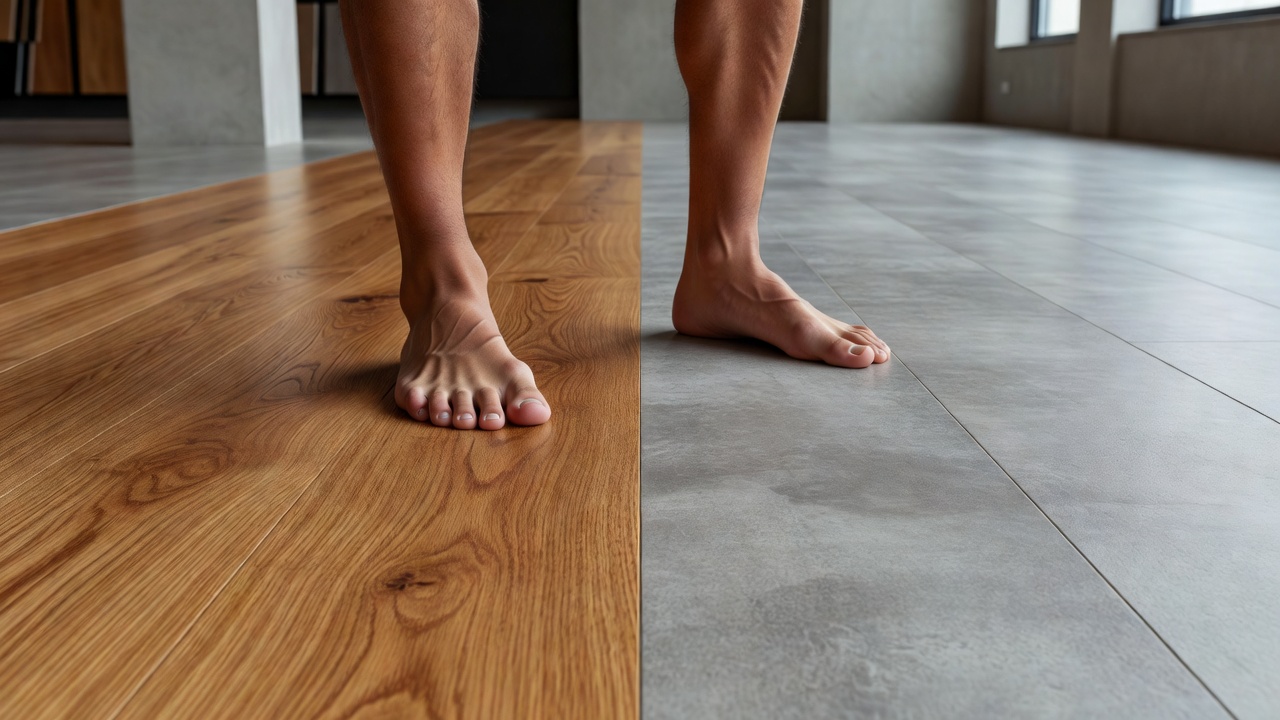
Does LVP Feel Like Real Hardwood Underfoot?
I approached the question as one approaches a blind tasting. Socks off. Eyes half-closed. The showroom manager hovered with the nervous energy of a sommelier who suspects the guest has already formed an opinion. He was correct.
On the nose—metaphorically, of course, though one does catch the faint industrial tang of fresh vinyl adhesive—LVP presents as ambitious. Clean. Almost aggressively neutral. There is none of the faint, living resin scent that rises from a properly finished white oak when the afternoon sun warms it. Hardwood, by contrast, exhales a quiet history: kiln-dried grain, tung oil if one is fortunate, the ghost of the forest.
On the palate—or rather, the plantar surface—the difference becomes decisive. Hardwood possesses body. It yields ever so slightly under the metatarsal, then returns with a living spring. There is temperature variation: cooler near exterior walls, warmer where radiant heat or simple solar gain has done its work. The grain itself offers micro-texture; one feels the cathedral pattern of rift-sawn oak as a gentle topography.
LVP? Uniform density. A polite, engineered bounce that never varies. Cooler by several degrees at first contact, then oddly static. Some of the better rigid-core specimens with quality underlayment approach a muted thud rather than the hollow clack of cheaper click-lock, yet the sensation remains that of walking on a very expensive cutting board. I awarded the finest LVP I encountered—a 7mm stone-polymer core with attached IXPE pad—a respectable 6.2 Insoles out of 10. Solid mid-tier. Not the main event.
Budget-conscious flooring content creators will insist the gap has closed. They are, as ever, settling. One particular creator of my acquaintance—let us call her Marnie—recently declared a big-box LVP “indistinguishable” from white oak. I can only assume she conducted her trial in thick socks after a long day of filming vertical video. The sole does not lie.
For those still weighing options beyond the sensory, I have written at length about [LINK: LVP vs hardwood durability] and the practical calculus of water resistance. But we are not here for practicality. We are here for truth underfoot.
Is Hardwood Flooring Worth It Just for the Feel?
Yes. Unequivocally, unapologetically yes—if the feel is what you actually value.
I have stood barefoot on 100-year-old heart pine in a brownstone whose owner still uses a rotary phone. I have paced new white oak in a glass box overlooking the park, the kind of apartment one visits rather than inhabits. In both cases the floor answered. It recorded the day’s temperature. It absorbed the impact of a heel with dignity and returned a soft percussion that vinyl simply cannot counterfeit. That dialogue between sole and surface is the entire point of having a floor one does not immediately cover with rugs.
Is it worth the premium? Current installed prices for quality solid or engineered hardwood typically range $12–$22 per square foot depending on species, grade, and finish. Comparable LVP lands between $4–$10. The delta is real. Yet for anyone who spends significant hours shoeless—parents of toddlers, remote workers, the simply civilized—the daily sensory tax of synthetic flooring compounds. Over a decade the difference is not merely aesthetic; it is cumulative comfort. Hardwood remains the reference standard for underfoot feel, full stop.
One must, of course, acknowledge the maintenance. Hardwood requires more vigilance around water and heels. I myself once spent an evening googling “how to remove red wine from white oak” after a particularly ambitious tasting note session in my own rental. The floor forgave me. Vinyl would have shrugged. There is character in forgiveness.
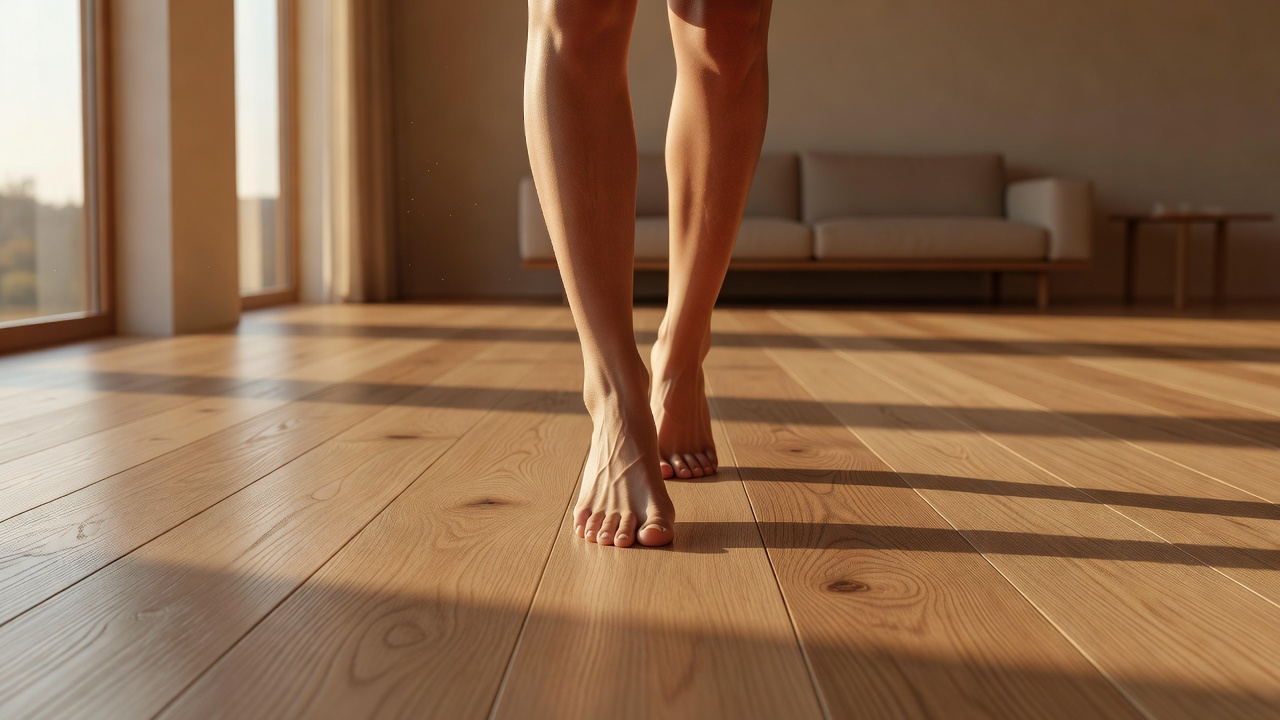
What Flooring Feels Best on Bare Feet?
Here we establish the hierarchy, ranked by pure sensory pleasure for the unshod foot. I conducted side-by-side trials over three humid afternoons and two dry ones, notebook in hand, much to the confusion of sales associates.
Cork sits at the summit. It is the grand cru of barefoot comfort—warm, quietly resilient, almost maternal in its give. The cellular structure of cork creates a natural cushion that reduces fatigue without the trampoline effect of cheap foam underlayment. Temperature remains remarkably stable. On the finish: a soft, matte whisper rather than a click. I score premium cork 9.1 Insoles. It is, regrettably, less common in the big-box temples, which tells you everything about our culture’s priorities.
Hardwood—solid or quality engineered with a real wood wear layer—occupies the noble second tier. Warmth, subtle spring, acoustic honesty. 8.4 Insoles when properly finished with a low-sheen hardwax oil. High-gloss polyurethane drops it half a point; one feels one is skating on a conference table.
Quality LVP with dense underlayment follows at a respectful distance. The best specimens achieve a muted, consistent firmness that some describe as “soft.” They are wrong. It is merely less hard than tile. 6.0–6.5 Insoles depending on core and pad. The photographic layer may deceive the eye; it never deceives the sole.
Ceramic tile and polished concrete finish last among common residential options. They are for people who enjoy the sensation of penitence.
For a deeper exploration of cork’s particular genius, see my earlier notes on [LINK: cork flooring comfort barefoot]. The material remains criminally under-specified by designers who fear its “softness” will read as inexpensive. Philistines.
How Does Cork Compare to Vinyl for Underfoot Comfort?
Cork annihilates vinyl in every sensory category that matters to bare feet. Where LVP presents a closed, slightly plastic membrane between you and the subfloor, cork remains porous in the best sense—breathable, temperature-moderating, and possessed of genuine cellular give. Vinyl’s waterproof virtue becomes a tactile liability; the surface never quite forgets it is a polymer. Cork forgets nothing and forgives everything. The finish on a well-maintained cork floor develops a subtle patina underfoot that vinyl’s wear layer can only imitate photographically. One is craft. The other is marketing.
I will grant vinyl its throne in basements and rental units where flooding is a recurring character in the narrative. Comfort, however, is not its domain.
FAQ
Does LVP feel like real hardwood underfoot?
No. LVP feels cooler, denser, and more uniformly synthetic, lacking hardwood’s warm, variable spring and micro-texture. Even premium rigid-core products with underlayment score noticeably lower on barefoot comfort scales.
Is hardwood flooring worth it just for the feel?
Yes, if you spend substantial time barefoot and value daily sensory pleasure. The premium over LVP buys authentic temperature response, acoustic warmth, and a living surface that improves rather than merely endures.
What flooring feels best on bare feet?
Cork ranks highest for its natural cushion and thermal stability, followed by quality hardwood, then well-padded LVP. Tile and concrete trail significantly for unshod comfort.
How does cork compare to vinyl for underfoot comfort?
Cork is warmer, more resilient, and less synthetic-feeling than any LVP. Vinyl prioritizes waterproofing and price; cork prioritizes the sole.
Can underlayment make LVP feel like hardwood?
Better underlayment improves acoustic dampening and slight cushion, but it cannot replicate wood’s variable density, grain texture, or thermal behavior. The ceiling remains mid-tier.
And so the verdict stands, delivered from the discriminating soles of one who has swirled, sniffed, and judged more planks than is strictly respectable for a man whose current residence features builder-grade laminate he is contractually forbidden to replace. Choose accordingly. The feet, unlike certain budget content creators, keep honest notes.