Why Vinyl Plank Flooring Fails: Wear Layers & Real Causes
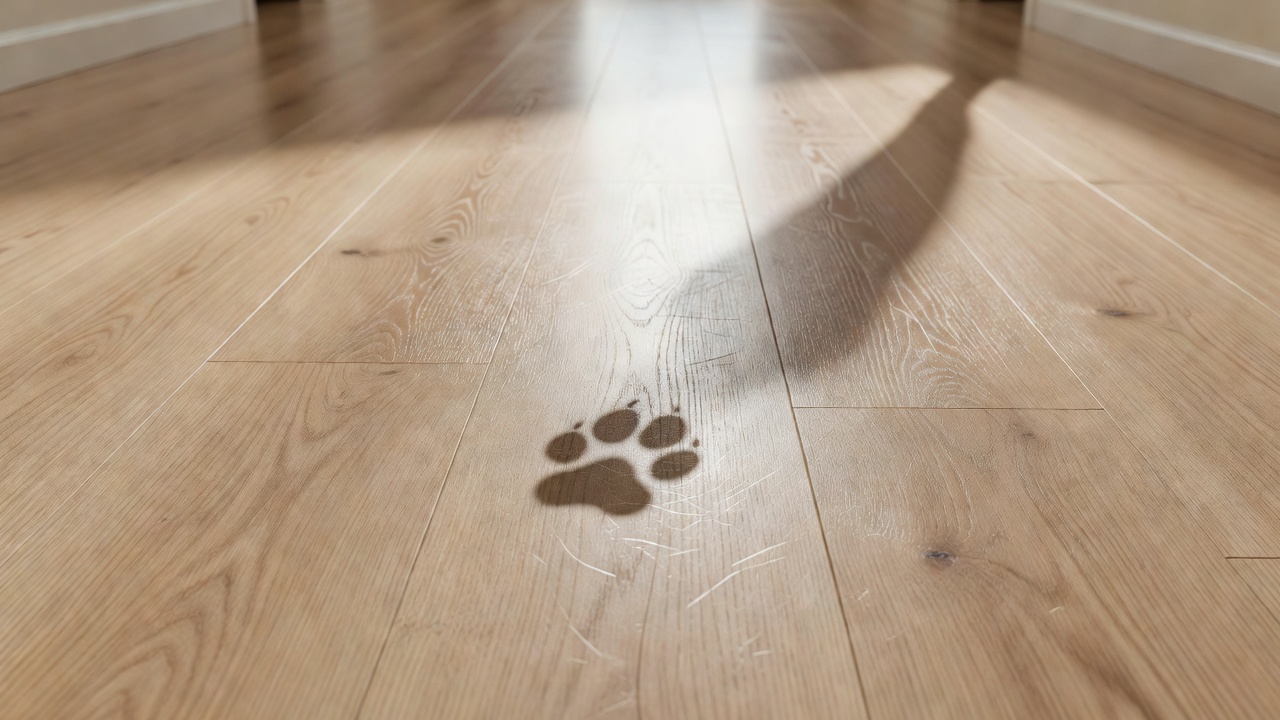
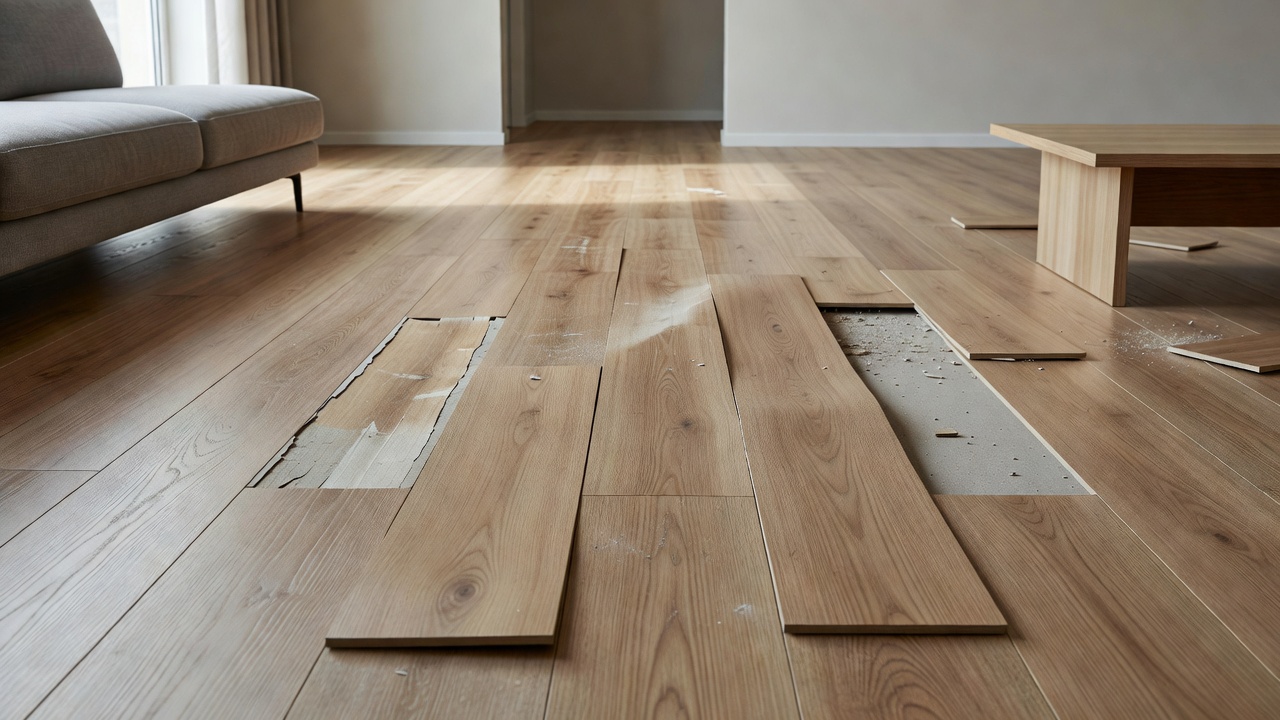 Last Tuesday my neighbor’s golden retriever skittered across her brand-new LVP and left what looked like nothing—until afternoon sun hit the hallway and the finish hazed like frosted glass. That tiny scuff is often chapter one in why vinyl plank flooring fails: not a dramatic flood, but the slow unmaking of polymers, wear layers, cores, and adhesives under ordinary life.
Why vinyl plank flooring fails is polymer degradation plus bond failure. The wear layer (the clear protective skin on top) abrades, crazes, or loses UV stabilizers; the rigid core swells, compresses, or creeps; adhesive interfaces let go. Installation errors get most of the internet blame—and they matter—but the materials have their own chemistry opinions. Vinyl plank flooring failure, defined plainly, is the progressive loss of surface integrity, dimensional stability, or interlayer adhesion that turns a durable floor into a damaged one, usually starting at the molecular level long before you see a lifted edge.
What is actually happening when the floor starts to go
Okay, this is the part where I get a little too into it—feel free to skim if you’re only here for the mil numbers. What you see (scuffs, peeling print film, buckled seams, cloudy patches) is the visible end of a few predictable mechanisms:
- Wear-layer abrasion and finish breakdown. The urethane (or urethane-acrylic) topcoat is a cross-linked polymer network. Dog claws, grit, and chair legs act like tiny grinding media. Once the cross-link density drops and UV stabilizers migrate or degrade, micro-cracks form. Light scatters. That’s the haze. Thinner films simply run out of sacrificial thickness faster.
- Plasticizer and stabilizer migration. Flexible vinyl formulations historically relied on plasticizers; modern rigid cores less so, but residual additives still move under heat and UV. The film can stiffen, yellow, or become brittle at the surface while the print layer underneath stays intact—until it doesn’t.
- Core dimensional change. SPC (stone-plastic composite) and WPC (wood-plastic composite) cores expand and contract with temperature and, to a lesser degree, moisture. If the locking system is already stressed from an uneven subfloor, those micro-movements pry at the joints.
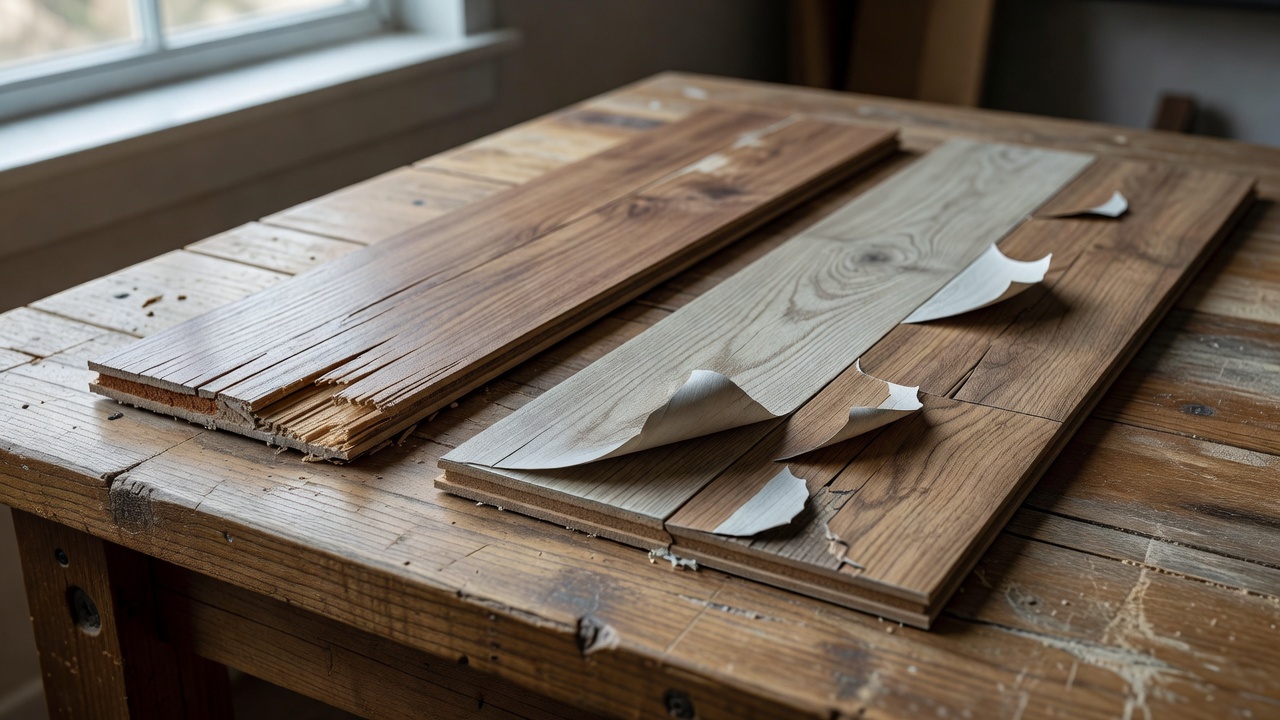
- Interlayer adhesive failure (delamination). The photographic décor film is bonded to the core with heat and pressure plus adhesive chemistry. Moisture vapor, alkaline concrete, or simple thermal cycling can hydrolyze or plasticize that bond line. Once it lets go, you get the classic peeling or bubbling look people call “delamination.”
- Edge and joint fretting. Grit that works into the click joints acts like sandpaper every time the plank flexes. The wear layer at the edge is often the thinnest surviving film; fretting there is why high-traffic paths fail first.
Isn’t that wild? A floor that looked bulletproof in the showroom is basically a laminated polymer sandwich negotiating physics all day. For the install side of the same story—acclimation, flatness, moisture tests—see [LINK: LVP installation mistakes that void warranties]. I’m staying on the materials path here.
How thick should an LVP wear layer be for homes with kids and pets?
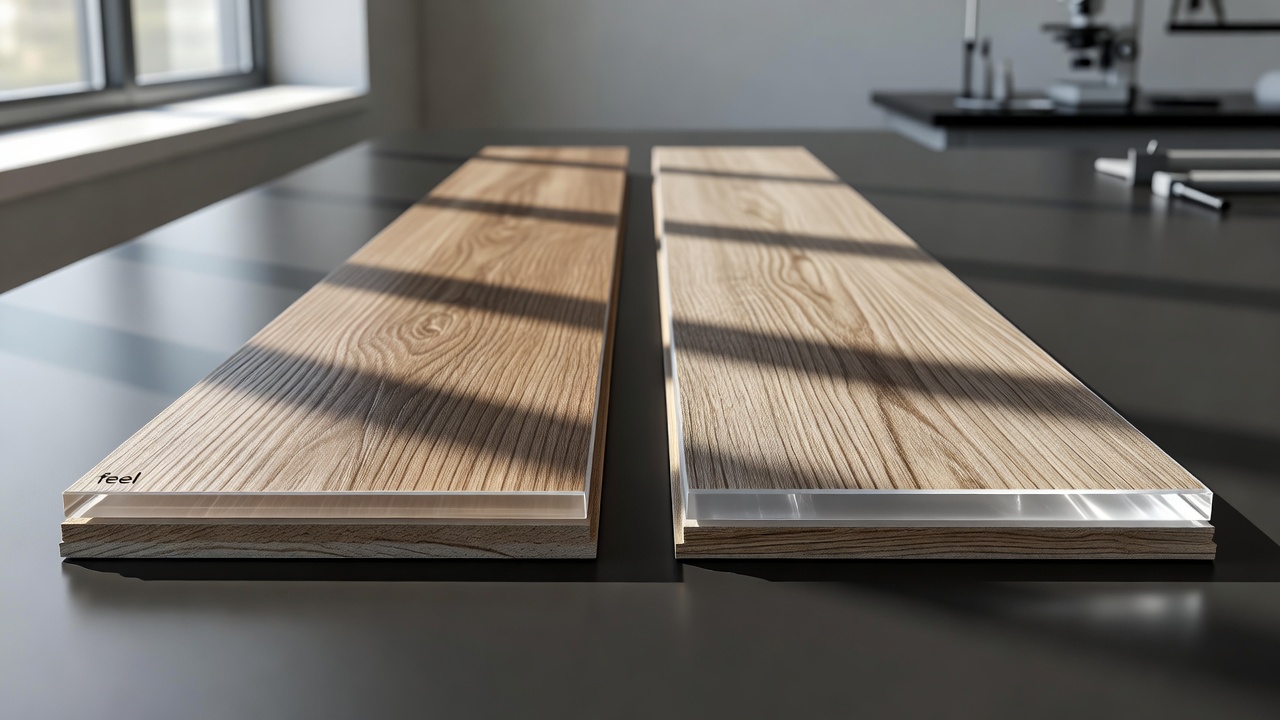
A wear layer is the transparent sacrificial coating (usually urethane-based, sometimes with aluminum oxide) measured in mils—one mil equals 0.001 inch. How thick should an LVP wear layer be for homes with kids and pets? For real residential traffic with dogs and rolling toys, 20 mil is the thickness that consistently outlasts the print film’s cosmetic life; 12 mil is the common “good enough” residential spec that still fails early under grit and claws.
Lab wear ratings (Taber abrasion and similar ASTM-style cycles) translate roughly like this in plain English: 6–8 mil is “apartment turnkey, light socks-only use”; 12 mil is “normal family if you actually use doormats”; 20 mil and above is “your dog can destroy this and it’ll probably survive the finish long enough that you replace it for style, not failure.” The gloss is doing double duty here—12 mil vs 20 mil wear layer is not marketing poetry; it is remaining polymer thickness after years of micro-abrasion.
I still see 12 mil sold hard for “pet-friendly” lines. Sometimes the coating chemistry is excellent and the aluminum oxide load is high, so 12 mil punches above its weight. More often, the thinner film simply reaches the print layer sooner. Once you’re into the ink, the floor looks permanently scratched even if the core is fine. That’s classic LVP wear layer failure—the core didn’t quit; the skin did.
Is a 12 mil wear layer enough for dogs or high traffic?
Short answer: sometimes, for small dogs and meticulous grit control; often not for labs, huskies, or households that treat the kitchen as a highway. Is a 12 mil wear layer enough for dogs or high traffic? It can be adequate if the urethane is densely cross-linked and you keep abrasive dirt off the floor, but high-traffic and large-dog homes statistically chew through 12 mil into the décor layer years earlier than a 20 mil equivalent.
The failure mode is rarely a single dramatic gouge. It’s cumulative: thousands of claw micro-cuts plus silica from the driveway. Each pass removes a little polymer. A 20 mil film simply has more “runway.” Manufacturers know this; that’s why commercial and “pet” SKUs quietly jump to 20–22 mil and advertise the number. If your life includes shedding dogs and sliding dining chairs, pay for the thickness. The chemistry of a great 12 mil coating helps—but thickness is the variable you can verify on the spec sheet without a spectrometer.
What causes vinyl plank flooring to buckle or separate?
Buckling and separation are usually core and joint stories, not pure wear-layer stories. What causes vinyl plank flooring to buckle or separate? Thermal expansion against a fixed obstruction (no expansion gap), moisture vapor driving the core or underlayment, or locking systems already compromised by an uneven subfloor so that normal movement pries the clicks apart.
SPC cores are stiffer and more dimensionally stable than older flexible vinyl, which is great until the whole floating field has nowhere to go on a hot afternoon. The planks push, peak, or telegraph every high spot in the slab. Separation at the short ends often means the locking profile was damaged at install or fretted later by grit. Moisture under the floor can also swell certain underlayments or attack adhesive-bonded layers, which brings us to the cousin problem people mix up with LVP: engineered wood.
Why does engineered hardwood delaminate?
Different stack, similar heartbreak. Why does engineered hardwood delaminate? Moisture cycling weakens the adhesive bond between the real-wood veneer and the plywood or high-density fiberboard core; the veneer cupping stresses that glue line until it lets go. Alkaline moisture from concrete, wet mopping that sits, or a vapor retarder left out of the system are the usual accelerants.
Engineered hardwood delamination causes overlap with vinyl plank issues only at the adhesive-science level: both are multi-layer composites trusting a bond line. Vinyl’s décor film is thinner and more polymer-friendly; wood veneer moves anisotropically (different rates with and against the grain) and is less forgiving. If you’re comparing the two for a basement or over radiant heat, the failure playbooks diverge fast—see [LINK: engineered hardwood vs LVP in basements] for the decision matrix. I promise I will not make you sit through a full adhesive-cure tangent. Today.
One dry note before the FAQ: if your floor failed in under three years and the wear layer still looks thick under a raking light, look down—not at the coating chemistry, but at the slab moisture numbers and the expansion gap that may never have existed. The polymers are not always the villain. Sometimes they are just the witness.
FAQ
What is the most common reason vinyl plank flooring fails early?
The most common cluster is still installation and site conditions—uneven subfloors, skipped moisture testing, and missing expansion gaps—interacting with ordinary wear-layer abrasion. Materials-wise, underspecified wear layers (under 12–20 mil for the actual traffic) turn those stresses into visible failure faster. Chemistry and workmanship are co-conspirators, not rivals.
How thick should an LVP wear layer be for homes with kids and pets?
Aim for 20 mil when kids, dogs, and grit are daily facts; 12 mil is the minimum many manufacturers call residential-grade and can work with strict mat-and-vacuum habits. Thickness is remaining sacrificial polymer—once it’s gone, the print layer scars permanently.
What causes vinyl plank delamination specifically?
Delamination is interlayer bond failure between the décor film and the core, often accelerated by moisture vapor, alkaline conditions from concrete, heat cycling, or marginal adhesive at the factory. It looks like peeling or bubbling of the patterned surface while the core may still be locked in place.
Is a 12 mil wear layer enough for dogs or high traffic?
It can suffice for light dogs and careful households, but high-traffic paths and large active dogs commonly wear through 12 mil into the décor film years sooner than 20 mil products. Verify both mil thickness and the commercial-style abrasion rating when pets are non-negotiable.
Why do some floors fail even with a thick wear layer?
Because the wear layer only protects the surface; core movement, joint fretting, moisture-driven adhesive failure, and UV degradation of the finish chemistry can still ruin the floor. A 20 mil film will not save a floating install that was pinched against a doorway with no gap.
I keep a cheap USB microscope in the junk drawer for exactly these moments—not because every guest wants a cross-section lecture (they do not), but because once you’ve watched a wear layer thin in real time, you never unsee it. Next time afternoon light rakes across your planks, tip your head. That soft haze at the threshold isn’t “just the house settling.” It’s polymer thickness reporting for duty. And if it’s already reporting thin, you now know which layer to blame—and which mil number to buy next time.