acceptable moisture levels subfloor
Subfloor Moisture Testing: Pro Install Guide
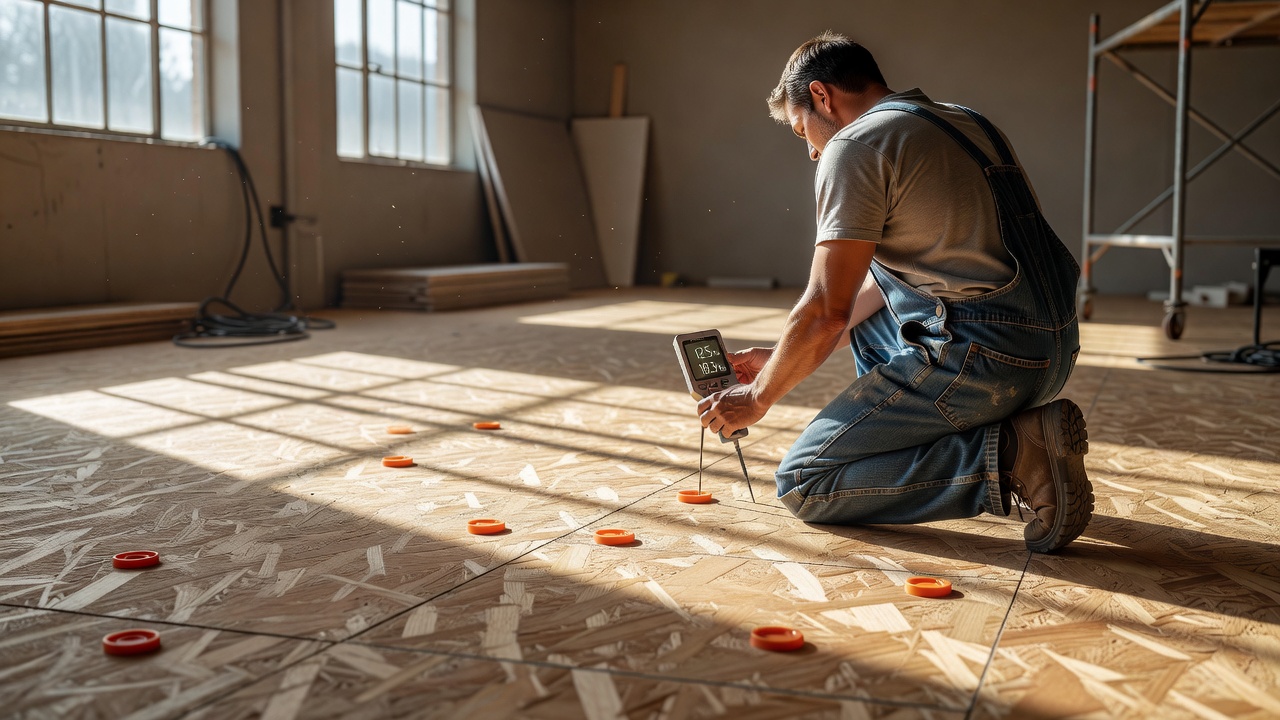 Subfloor moisture testing is measuring the water content—or the water vapor pressure—in a concrete slab or wood subfloor before any finished floor goes down. Skip it and even so-called waterproof LVP will cup, buckle, or spit its locking system within a year. Field limits that actually hold up: ASTM F2170 relative humidity usually under 75–85% depending on the adhesive and product, wood subfloor moisture content under 12% and within 2–4 points of the flooring itself. That’s the whole job in four sentences. The rest is why I still get paid to tear out floors that “looked dry.”
I walked into a ranch in 2019 where the homeowner had already laid 1,800 square feet of gray waterproof vinyl plank over a slab that felt cool and looked perfect under the can lights. No test. No barrier. Just a YouTube video and a big-box receipt. Six months later the planks were peaking at every seam like a bad accordion. The slab was pushing 92% RH at three inches. I told him the truth over gas-station coffee: the floor didn’t fail. The prep never happened.
What are acceptable moisture levels for a subfloor?
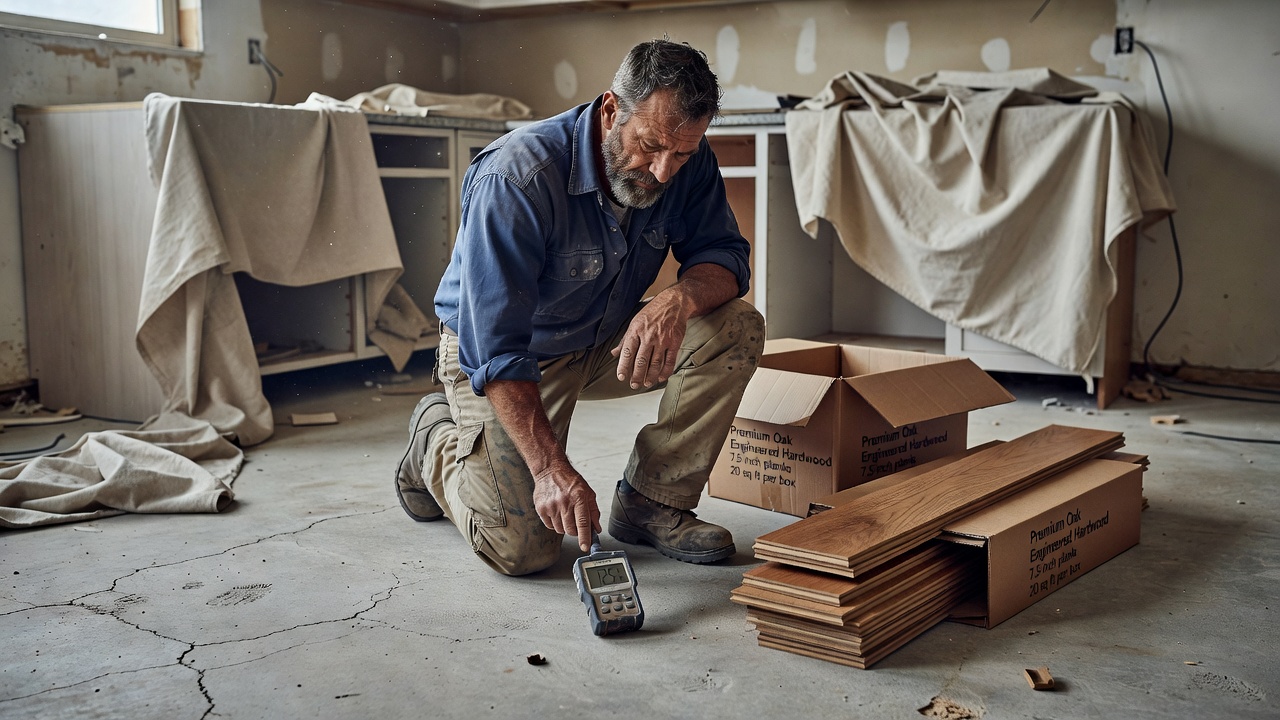
Acceptable moisture levels for a subfloor are not a single magic number—they’re the manufacturer’s written limit for that exact product plus the test method they require. For most engineered hardwood and glue-down LVP over concrete, ASTM F2170 in-situ RH probes need to read 75% or lower at the depth specified (usually 40% of slab thickness). Some premium adhesives and floating floors push the envelope to 85–90%, but only if the data sheet says so in plain English. Calcium chloride (ASTM F1869) still shows up on older specs—3 to 5 pounds per 1,000 square feet per 24 hours is the common cutoff—but RH is what the serious manufacturers want now.
Wood subfloors are simpler and meaner. Pin or pinless meter on the plywood or OSB: stay under 12% absolute, and keep the reading within 2–4 percentage points of the flooring material after both have acclimated in the same space. I once watched a white-oak engineered floor cup like potato chips because the subfloor was at 14% and the planks were at 8%. Looked fine in the showroom. Died in the living room.
If the numbers are high, you mitigate or you walk. No amount of “it’ll dry out” talk fixes vapor drive from a slab that never got a proper vapor retarder under it in 1978.
How do you test moisture in a concrete subfloor?
You test moisture in a concrete subfloor the way the ASTM and the flooring manufacturer tell you to—not with the $29 meter that beeps when you wave it around. Here’s the only sequence I trust after three decades:
- Confirm the slab has been poured at least 30–60 days (longer in cold weather) and the building is enclosed with HVAC running at service temperature and humidity for at least a week.
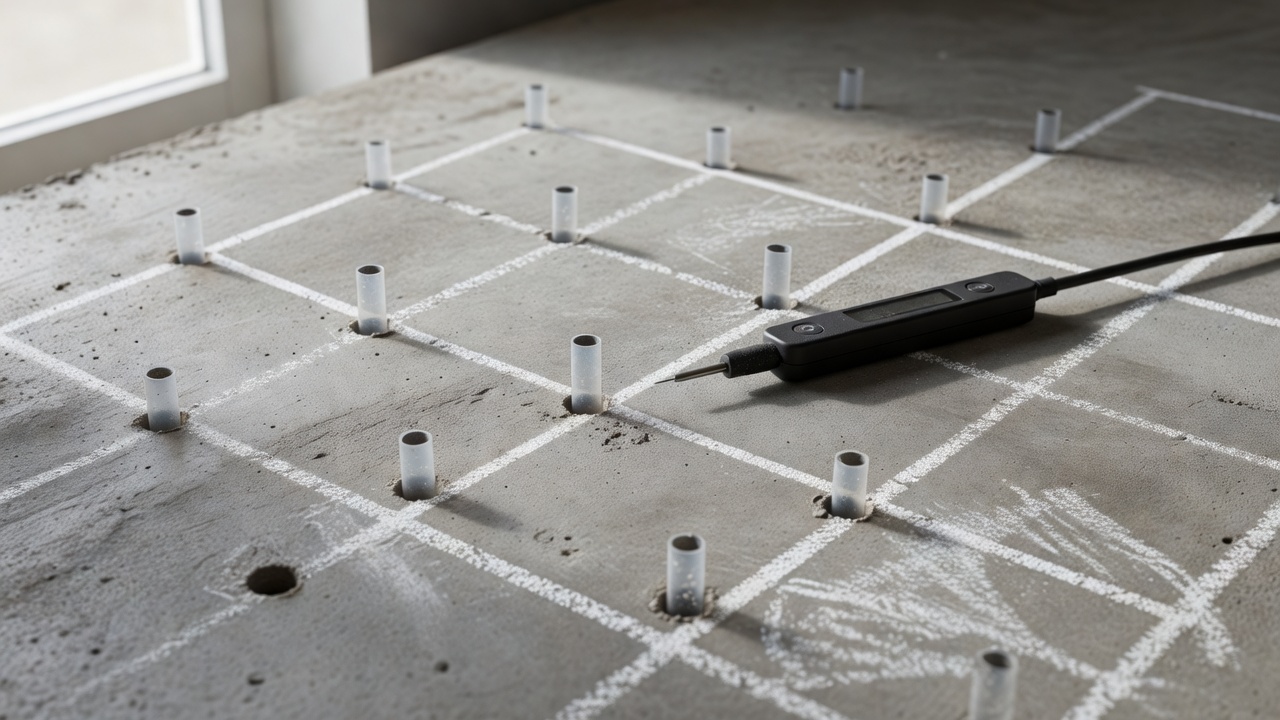
- For ASTM F2170, drill holes to 40% of slab thickness, vacuum the dust, insert the sleeve and probe, wait the equilibration time on the probe instructions—usually 24 hours—then read. Minimum three tests for the first 1,000 square feet, one more per additional 1,000.
- Record temperature, ambient RH, and exact locations on a simple sketch. Photos help when the manufacturer later claims you invented the numbers.
- If the job still uses calcium chloride, seal the dish under the plastic dome for 60–72 hours on a clean, flat section and weigh the difference. I still carry the kit for legacy specs, but RH is cleaner.
Surface meters are fine for spotting wet zones during demo. They are not a substitute for quantitative testing before you open the boxes. I have the ruined-floor photos to prove it—one whole kitchen of wide-plank hickory that looked museum-quality until the radiant heat kicked on and the trapped moisture turned the boards into washboards. Client had paid extra for the “waterproof” finish. Water doesn’t care about marketing copy.
That job still sits in my head when somebody tells me their slab “feels dry.” Feel is not a test method.
Do I need a moisture barrier under LVP?
Yes—you need a moisture barrier under LVP whenever the subfloor can push vapor, which is almost every slab-on-grade and many below-grade jobs. “Waterproof” vinyl plank means the wear layer and core won’t swell like solid wood when somebody spills a glass of water. It does not mean the locking system, the underlayment foam, or the adhesive can survive continuous vapor drive from below. I have pulled more failed floating LVP than I can count where the only crime was skipping the barrier because the box said 100% waterproof.
On concrete, that usually means a true vapor retarder—6-mil poly minimum, better a product rated 0.1 perms or less, seams taped, run up the walls a few inches—or a manufacturer-approved moisture-mitigation coating if the RH is elevated but still within the coating’s range. On wood subfloors over crawl spaces, you still need the ground covered and the joist bays dry; sometimes a [LINK: vapor barrier underlayment] rated for the product is enough. Read the installation instructions like they matter, because the warranty disappears the second you don’t.
Is a vapor barrier necessary under waterproof flooring? Same answer. Waterproof on top does not cancel physics underneath. The fad right now is calling every rigid-core product “waterproof forever” and selling it for basements with zero testing. Looks great on Instagram until the edges telegraph every damp spot in the slab. I’ve seen the callbacks. They’re expensive.
If your numbers are already inside the product’s published limit and the slab has an intact under-slab retarder, some floating LVP systems allow installation with only their attached pad. That is the exception, not the default. Default is test, then decide.
For the full picture on when mitigation coatings beat sheet barriers, see my notes on [LINK: concrete moisture mitigation options].
Why even waterproof floors still fail without testing
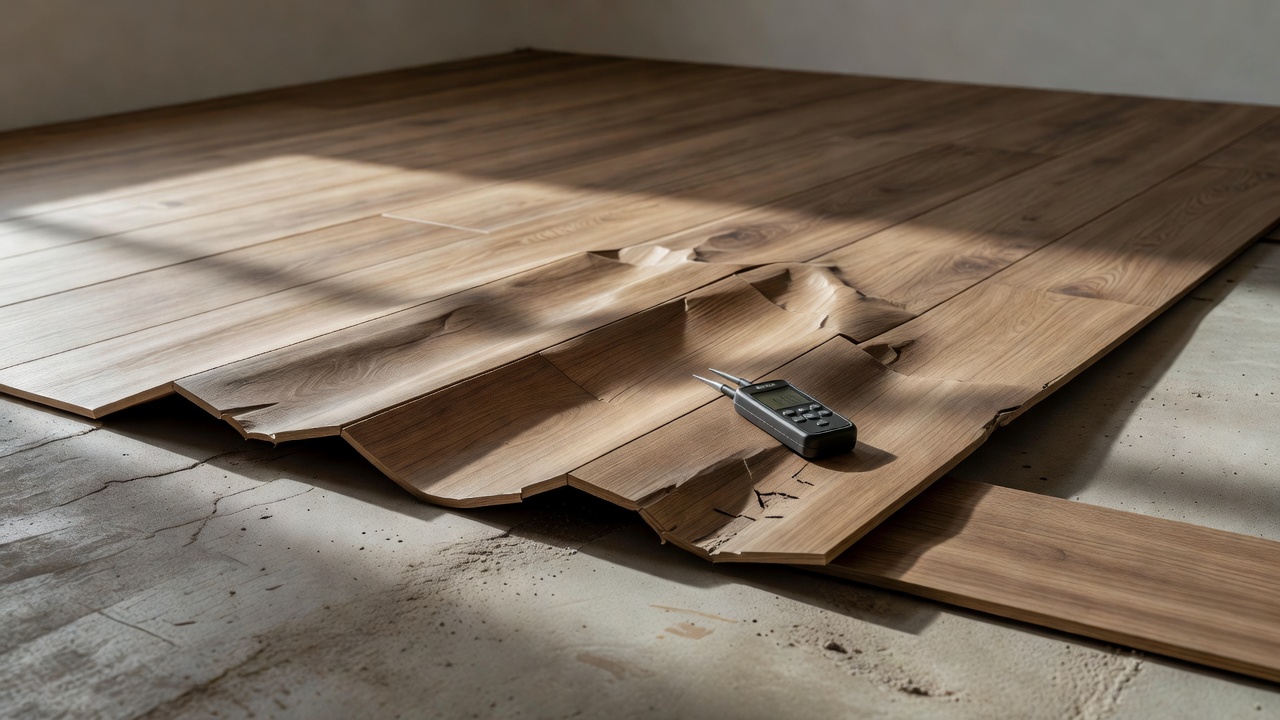
This is the part the product guides skip. Vapor moves from high pressure to low pressure. A warm, wet slab under a cool, dry house will push moisture into every seam, every glue line, every foam underlayment until something gives. LVP cores can be closed-cell and still have the click joints open up or the printed film delaminate at the edges. Glue-down luxury vinyl turns into a skating rink when the adhesive re-emulsifies. Laminate swells at the edges and never goes back. Engineered hardwood cups and stays cupped.
I keep a short mental list of the disasters that started with “but it’s waterproof.” The worst was a whole first floor of wide-plank European oak over a slab that tested 88% RH. Builder had sold the clients on a “moisture-resistant” floating system and a trendy matte finish that photographed like a magazine. No RH test. No barrier beyond the thin pad. Eight months later the boards looked like they’d been left in a swamp. Insurance fought it. Manufacturer voided the warranty on prep grounds. I spent two weeks demoing and putting down a proper mitigation system plus a different floor that could handle the residual vapor. Clients still send a Christmas card. I still won’t take their builder’s calls.
Subfloor prep is 80% of the job and nobody wants to pay for it until the floor is already dead. Moisture testing is the cheapest insurance on the entire project—meter rental or probe kit runs a couple hundred bucks against tens of thousands in flooring and labor.
FAQ
What are acceptable moisture levels for a subfloor?
For concrete, most manufacturers require ASTM F2170 RH readings of 75% or lower; some adhesives allow up to 85–90% with written approval. Wood subfloors should read under 12% and within 2–4 points of the flooring moisture content after acclimation.
How do you test moisture in a concrete subfloor?
Use ASTM F2170 in-situ RH probes drilled to 40% of slab depth, equilibrated per probe instructions, with at least three tests in the first 1,000 square feet. Calcium chloride kits are still accepted on some older specs but RH is the current standard.
Do I need a moisture barrier under LVP?
Yes on any concrete slab that can transmit vapor and on wood subfloors over damp crawl spaces. Waterproof LVP resists surface spills; it does not stop vapor drive from below that opens locks and kills adhesives.
Is a vapor barrier necessary under waterproof flooring?
Almost always on slabs. The waterproof claim covers the top surface, not continuous moisture coming up through the subfloor. Skip the barrier and the warranty usually skips with it.
Can I just use a cheap pinless meter and call it good?
No. Pinless meters are screening tools. Quantitative ASTM methods are what manufacturers and warranties recognize. I have never seen a successful claim won with a beep from a $40 gadget.
Anyway. Call somebody before you rip anything out. Doesn’t have to be me. Should probably be me.