Laminate Flooring AC Rating Explained by Science
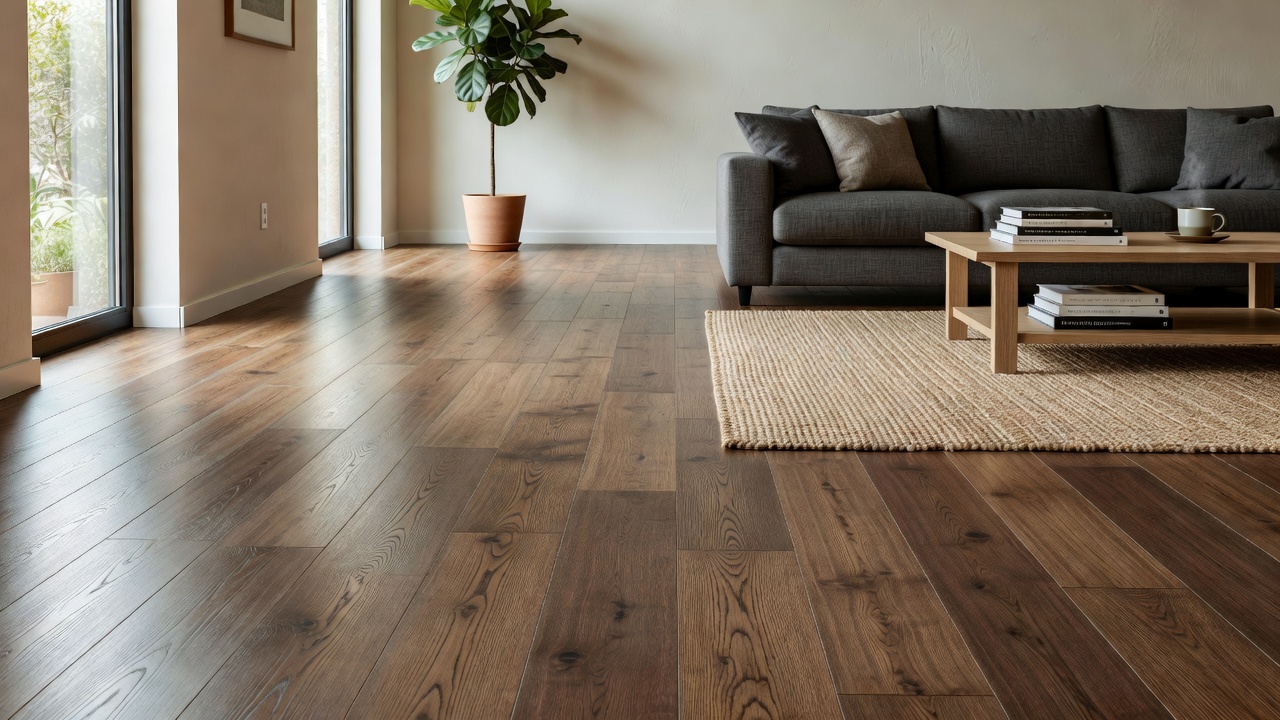 Last Tuesday my neighbor’s Labrador tracked sidewalk grit across a leftover laminate sample I’d been meaning to toss, and I did what any reasonable person would do: I put the plank under a loupe and watched the surface like it was a tiny geological disaster. A laminate flooring AC rating is the abrasion class assigned under the EN 13329 standard—lab-speak for how many revolutions of abrasive wheels a floor can endure before the printed décor layer starts to show through. In plain terms, AC3 covers most residential rooms; AC4 is the step up for busy hallways, kitchens, and pet traffic. The number is less a marketing badge and more a controlled forecast of how the aluminum-oxide wear layer fails under real grit and repeated footfalls.
What is an AC rating for laminate flooring?
The AC rating (abrasion class) is a durability tier derived from standardized mechanical abuse tests. Manufacturers don’t invent the scale in a marketing meeting; they submit planks to EN 13329, the European standard that still underpins most of what you’ll see on North American boxes. The result lands you in a class from AC1 (gentle, low-traffic bedrooms in theory) up through AC5 or AC6 for commercial punishment. For homes, the conversation almost always collapses to AC3 versus AC4.
Here’s the quotable core if you need it for a group chat: a laminate flooring AC rating is a standardized abrasion-and-impact score under EN 13329 that tells you how long the factory wear layer will protect the printed design under expected traffic. Everything else—warranty language, “pet-proof” stickers, the thickness of the plank itself—is adjacent, not identical.
I still catch myself tapping the box label like it might whisper more data. It won’t. The rating is the data.
How is laminate AC rating tested?
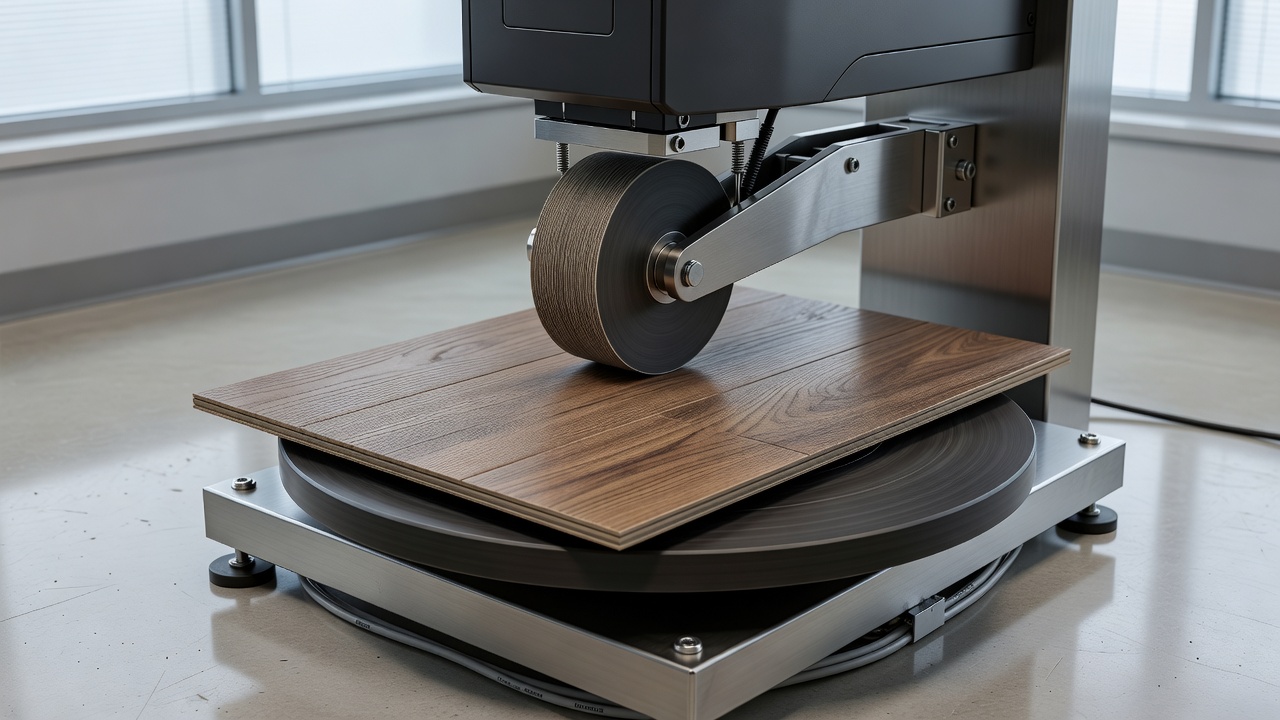
Okay, this is the part where I get a little too into it—feel free to skim if you only came for the shopping number. The heart of the abrasion portion is a Taber-style abraser (or a closely related apparatus specified in the standard). Weighted wheels faced with abrasive paper grind against the wear surface in a fixed path while the machine counts revolutions. Technicians watch for the initial wear point (IP)—the moment the décor paper becomes visible in a defined pattern of spots—and for the final wear-through. Impact resistance, thickness swell after water exposure, and stain resistance also feed into the full EN 13329 classification, but the abrasion revolutions are what people mean when they say “AC rating” at the big-box aisle.
Why aluminum oxide in the overlay? Because it’s hard (high on the Mohs scale), chemically stable, and can be dispersed in a melamine-formaldehyde resin that cross-links into a brittle-but-tough glassy film under heat and pressure. That film is thin—often in the neighborhood of a few tens of microns of effective protective thickness depending on the product—so the rating is really a measure of how well that film, plus the resin system and the quality of the décor paper bond, survives cyclic abrasion.
Isn’t that wild? A number on a box is essentially a compressed report on ceramic particles suspended in thermoset resin losing a fight with sandpaper in a controlled way so you don’t have to run the experiment in your hallway.
How do laminate wear layers actually fail under real traffic?
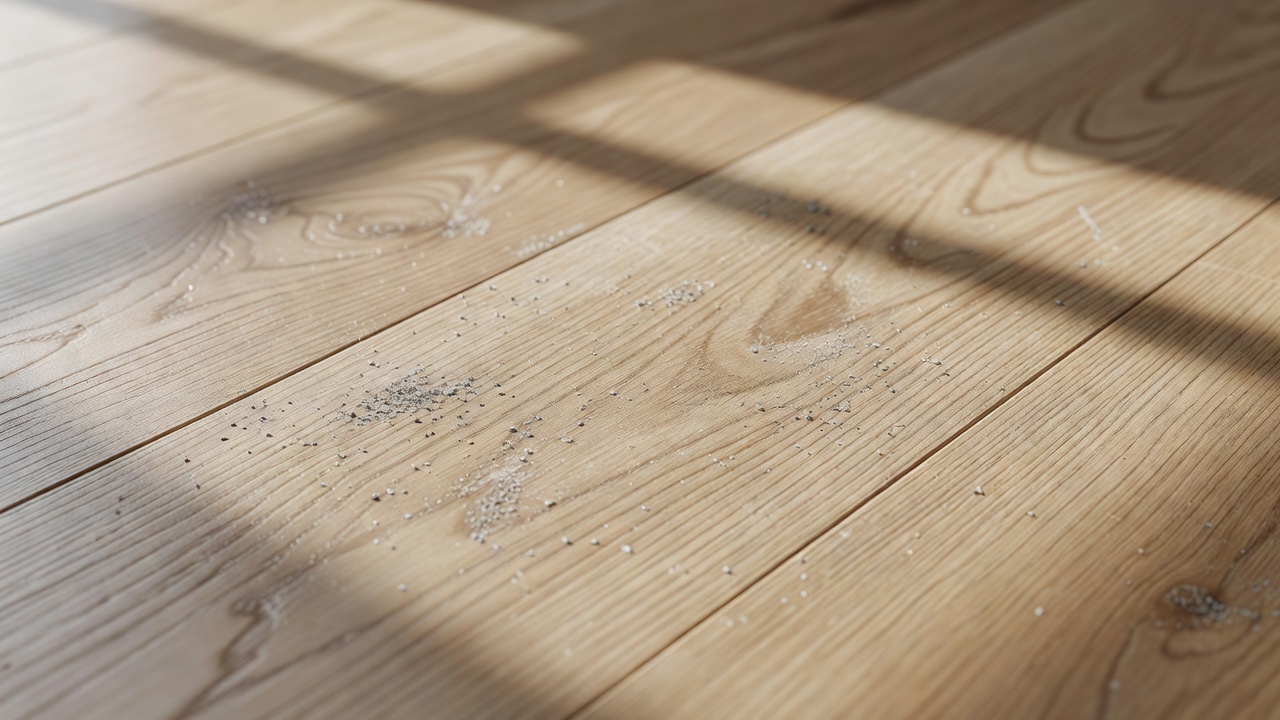
Lab wheels are consistent. Your house is not. Grit—quartz fragments from sidewalks, tracked-in sand, the microscopic debris from pet nails—acts like free abrasive. Each footstep presses those particles into the wear layer and drags them a few millimeters. Over thousands of cycles you get micro-scratching, then haze, then localized loss of the overlay until the printed layer peeks through in high-traffic lanes.
Here’s what’s actually happening, step by step:
- Initial asperity contact. Sharp grit particles concentrate stress on microscopic high points of the aluminum-oxide–filled surface; plastic deformation and micro-fracture begin in the resin matrix.
- Fatigue and polishing. Repeated low-load cycles smooth some areas (that soft sheen you notice near the sofa) while other paths accumulate intersecting scratch networks.
- Décor breakthrough. Once enough overlay is gone in a cluster of spots, the IP condition from the lab test has been reached in real life—only slower, and only where traffic is densest.
- Secondary moisture and dirt packing. Scratches become reservoirs for fines and cleaning residue, which can accelerate further abrasion and make the damage more visible even before full wear-through.
Impact events (dropped cast-iron pan, enthusiastic dog) are a different failure mode: they can crack the brittle overlay or dent the high-density fiberboard core beneath, which the abrasion class only partially predicts. That’s why EN 13329 bundles impact testing into the overall classification rather than letting abrasion stand alone. If you’re comparing constructions, it’s also worth knowing how [LINK: LVP wear layer thickness] is specified in mils—a different language for a different material stack, even when the marketing claims sound similar.
Dry aside: I once spent an evening ranking the scratch patterns on my own kitchen threshold by orientation relative to the door swing. No one asked me to. I regret nothing.
Is AC4 better than AC3 for family homes?
Better is the wrong frame; matched is better. AC3 is engineered for normal residential traffic—living rooms, bedrooms, dining areas without constant grit highways. AC4 assumes higher frequency and often includes tougher impact expectations, which is why it’s the usual recommendation for kitchens, entries, hallways, and homes with dogs who believe the entire floor is a racetrack.
For most family homes without commercial-level abuse, AC3 is genuinely sufficient if you control grit (mats, occasional damp mop, no street shoes as a religion). Jumping to AC4 is rational when you have multiple pets, kids who treat the corridor like a track meet, or an open plan where the kitchen traffic never really stops. Paying for AC5 in a guest bedroom is how you over-spec and under-enjoy your budget. The EN 13329 ladder exists so you can stop guessing; use it that way.
If you’re still weighing constructions after the rating, cross-check installation environment and underlayment choices—moisture and hollow spots will ruin a high-AC floor faster than abrasion ever will. Related reading on core materials lives over in our [LINK: laminate vs vinyl flooring] notes when you’re ready to go sideways into polymer stacks.
What AC rating do I need for residential use?
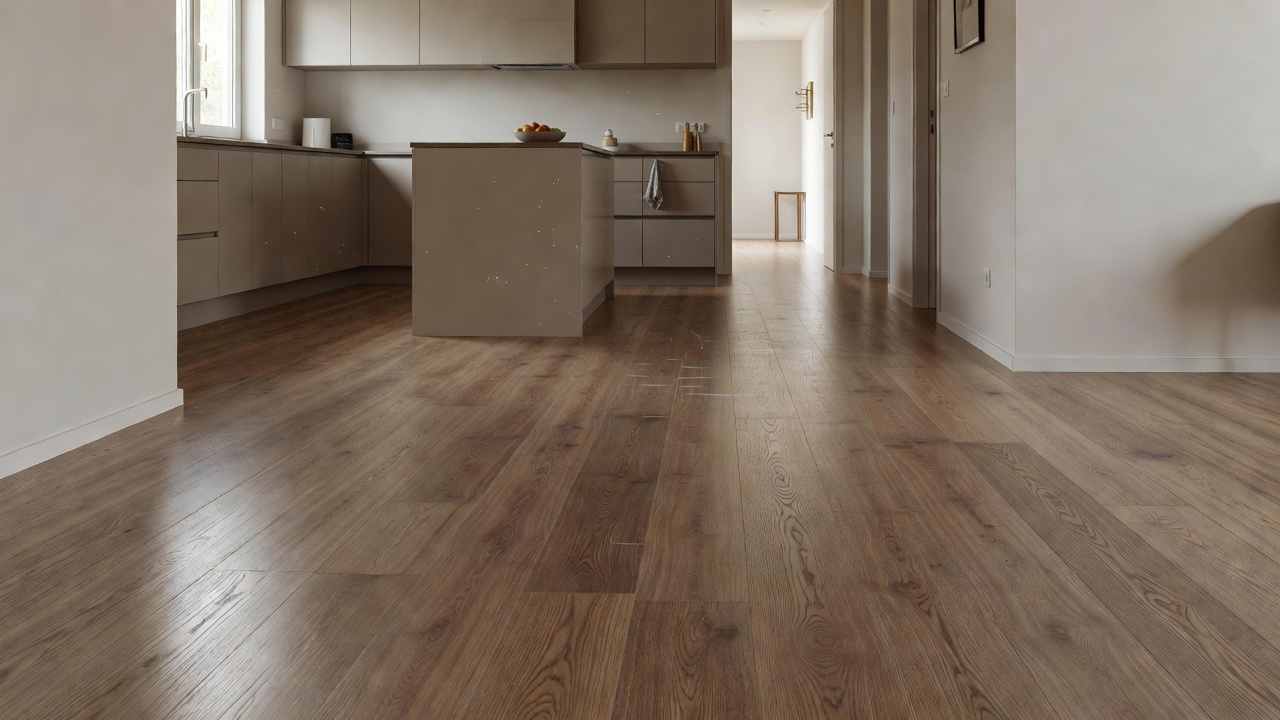
Match the room’s actual traffic and grit load, not the scariest scenario on the internet. Bedrooms and low-traffic dens: AC3 is typically plenty. Main living areas with moderate use: still AC3 for many households. Kitchens, mudrooms, hallways, and any floor that sees wet paws or constant foot traffic: AC4 is the safer default. Commercial-grade AC5 is rarely necessary inside a normal house unless you’re running a home daycare that also doubles as a dance studio.
Warranty language often tracks the AC class, but read the fine print on pet claws and rolling chairs—those are sometimes carved out regardless of the number on the box.
FAQ
What is an AC rating for laminate flooring?
A laminate flooring AC rating is the abrasion class from EN 13329 testing that scores how well the wear layer resists abrasive wear and related stresses before the décor shows through. Higher classes tolerate more revolutions and tougher impact conditions. It’s the closest thing the industry has to a standardized durability shorthand for consumers.
What AC rating do I need for residential use?
Most homes do well with AC3 in bedrooms and general living spaces; choose AC4 for kitchens, entries, hallways, and active pet households. Over-buying AC5 rarely pays off in pure residential settings. Control grit with mats and you stretch either class further.
Is AC4 better than AC3 for family homes?
AC4 is more durable under heavy or gritty traffic, not universally “better.” Families with kids, dogs, or open kitchen-living plans often prefer AC4; quieter households can stay on AC3 without drama. Match the class to the path of most footsteps.
How is laminate AC rating tested?
Under EN 13329, samples undergo controlled abrasion (Taber-type wheels and abrasive media) until defined wear points appear, plus impact, stain, and moisture-swell checks. The combined results assign the AC class. Revolutions to wear-through are the headline number people quote.
How do laminate wear layers fail compared with LVP?
Laminate wear layers are thin thermoset resin films filled with aluminum oxide; they fail by micro-scratch networks and eventual décor breakthrough. LVP relies on a clear PVC or similar wear layer measured in mils that abrades more plastically—different chemistry, different scratch signature, different repair story.
I’ve started noticing the faint polish track from the front door to the kitchen in a way I never did before I understood the fatigue story. Next time you’re home, glance at the highest-traffic lane in low-angle light—you’ll see the same micro-history written in haze and fine scratches. It’s not a defect yet. It’s the wear layer doing the job the AC rating promised, one grit particle at a time. If that makes you want to pull out a loupe, welcome to the club; we meet whenever someone’s dog comes in from the sidewalk.