Vinyl Wear Layer Thickness: What You Really Need
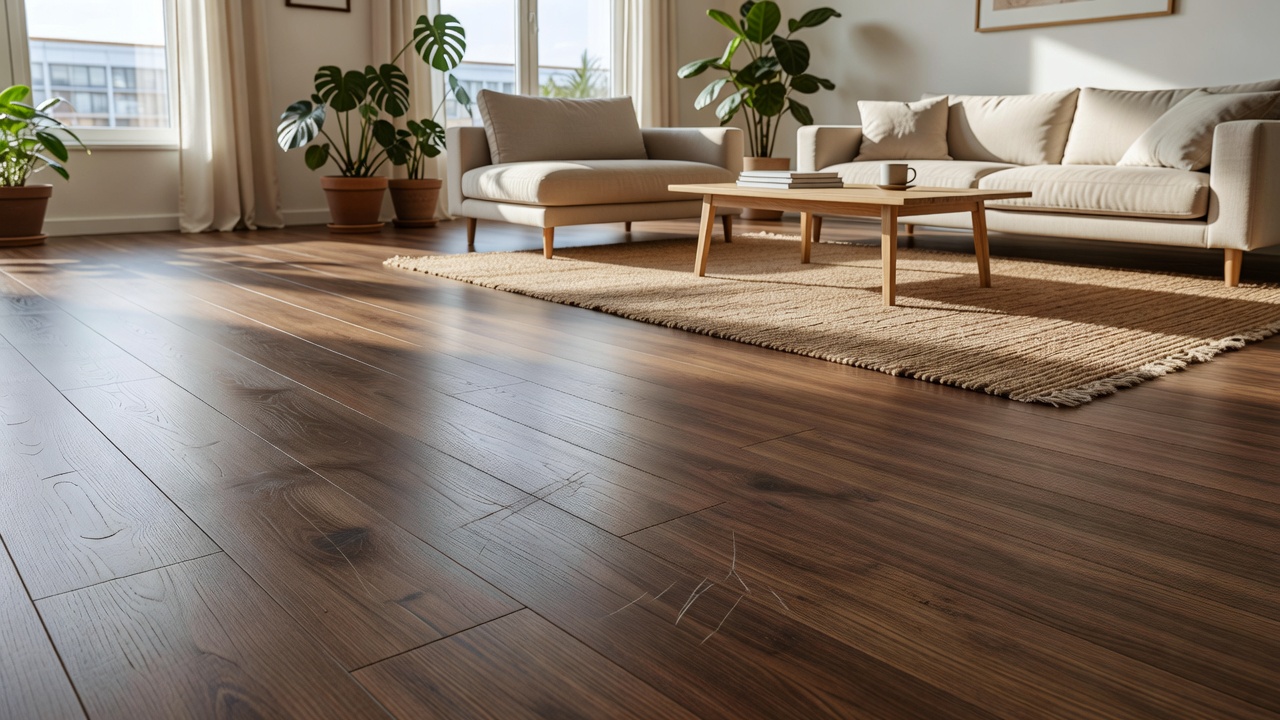 I was watching my neighbor’s corgi do that full-body scramble across her new kitchen floor—claws clicking, hips sliding, pure chaos—and instead of worrying about the dog, I got stuck on the top 0.5 millimeters of polymer. Classic me.
Vinyl flooring wear layer thickness is the clear protective coat (almost always a urethane or enhanced PVC film, sometimes loaded with ceramic or aluminum oxide particles) measured in mils—thousandths of an inch—that sits above the printed design and takes the daily abuse. For most busy homes, 12–20 mil is the practical range that actually holds up; thinner than that and you’re mostly buying hope. The mil number matters, but the chemistry and how it’s tested matter more. Sorry, I know that’s a lot before coffee. I just think it’s really cool.
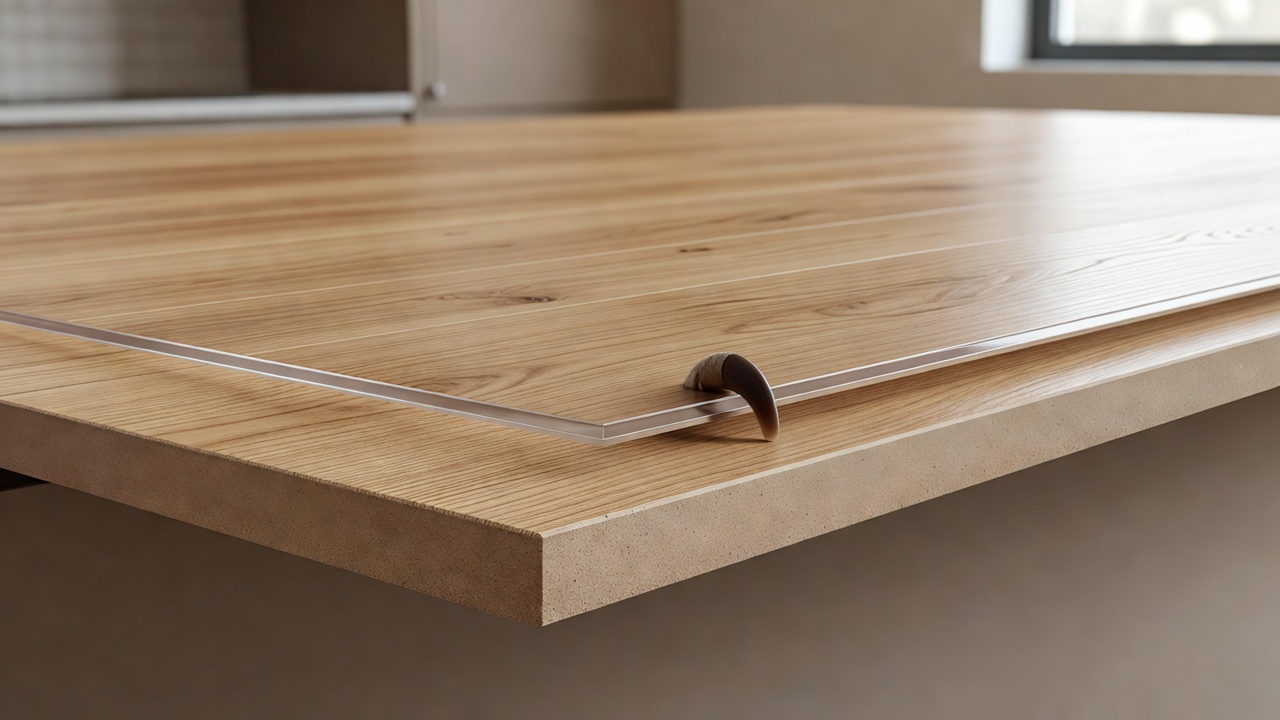
What is a wear layer on vinyl flooring?
A wear layer is the transparent sacrificial skin bonded to the top of luxury vinyl plank (LVP) or vinyl sheet. Its only job is to absorb abrasion, resist stains, and keep UV and foot traffic from reaching the pretty picture underneath. Manufacturers quote it in mils: 1 mil = 0.001 inch ≈ 0.0254 mm. So a 20 mil wear layer is roughly half a millimeter—thin enough to feel invisible, thick enough (when formulated well) to last a decade-plus of real life.
Under the microscope it isn’t just “clear plastic.” Most modern wear layers start as a liquid urethane that gets UV-cured into a tightly cross-linked network. Some brands stir in ceramic microspheres or aluminum oxide grit so the surface behaves a bit like sandpaper turned inside-out: hard particles take the hit while the polymer matrix holds everything together. Isn’t that wild? You’re basically walking on a carefully engineered composite film the thickness of a few sheets of paper.
I get a little too into the cross-linking density sometimes—feel free to skim—but the short version is that a well-cured 12 mil layer with ceramic can outperform a sloppy 20 mil pure urethane. Thickness is necessary; it is not sufficient.
How thick should the wear layer be for residential LVP?
Traffic charts floating around retailer sites are actually decent starting points, even if they skip the materials science:
- Light residential (guest room, low-traffic hallway): 6–12 mil can survive if you’re careful and own no pets.
- Normal family home with kids or a dog: 12–20 mil is the sweet spot most of us should live in.
- Heavy residential or light commercial (mudroom that doubles as dog spa, open-plan kitchen with constant foot traffic): 20 mil and up, preferably with published Taber or ASTM abrasion numbers.
Those ranges come from how the film erodes. Every footstep, chair leg, and grit particle shears off microscopic bits of polymer. A thicker layer simply has more material to lose before the print shows through. But here’s the part the charts rarely spell out: wear is not linear. Once the ceramic particles (if present) start popping out, abrasion can accelerate. That’s why I always look for the test method, not just the mil claim.
ASTM F970 (static load) and various Taber abrasion protocols (CS-17 wheels, specific cycle counts) are the lab-speak versions of “your dog can destroy this and it’ll probably survive.” If a brand won’t share even a summary of those results, treat the mil number as marketing wallpaper.
For the conversion nerds (hi): 12 mil ≈ 0.30 mm, 20 mil ≈ 0.51 mm. Remember that number is only the clear top coat. It has almost nothing to do with the overall plank thickness you see advertised in millimeters. More on that confusion in a minute. If you’re still deciding between constructions, the [LINK: LVP thickness guide] walks through core density and underlayment choices that pair with a solid wear layer.
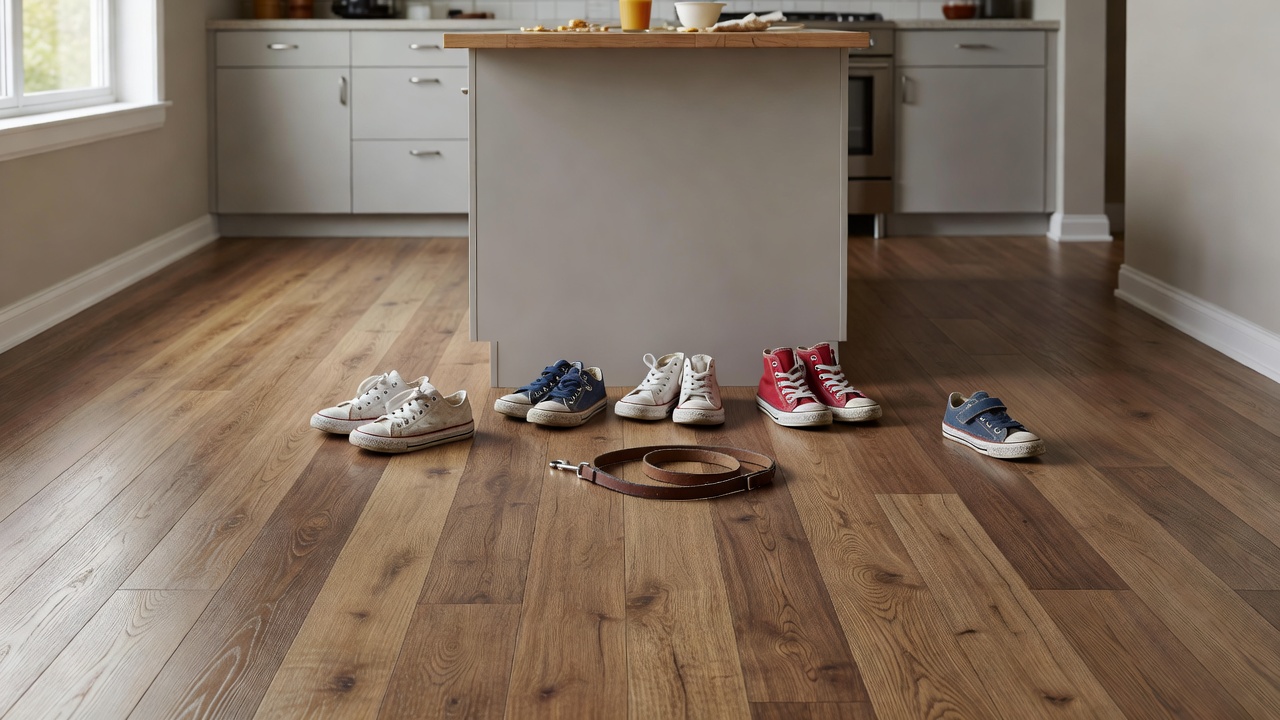
Is 12 mil or 20 mil wear layer better for homes with pets?
For homes with pets (or kids who treat the floor like a skate park), 20 mil is usually the better default—provided the formulation isn’t garbage. A quality 12 mil with ceramic beads and a tough UV topcoat can still win against a cheap 20 mil pure PVC film, but you’re gambling on the manufacturer’s integrity. Pets introduce two failure modes at once: sharp point loads from claws and the occasional dragged grit that acts like mobile sandpaper.
I’ve watched enough accelerated wear tests (and one unfortunate corgi incident) to notice the pattern: 12 mil floors often look fine for three to five years under moderate claws, then suddenly develop micro-scratches that catch light and look dull. 20 mil versions push that cliff further out, sometimes past the ten-year mark, especially if the wear layer includes aluminum oxide. The extra thickness also gives you a larger safety margin when someone inevitably drops a metal dog bowl or drags a chair.
That said, no wear layer is claw-proof forever. The smart move is pairing a 20 mil (or robust 12+ mil) layer with felt pads, regular sweeping, and maybe a [LINK: pet-friendly flooring options] roundup if you’re still product-hunting. And please don’t confuse “commercial grade” stickers with actual ASTM data—some 20 mil commercial products are excellent; others just printed the word bigger.
What's the difference between wear layer and overall thickness?
This is the mix-up that makes materials people quietly sigh in hardware aisles. Overall plank thickness (usually 4–8 mm for rigid core LVP) is the entire sandwich: wear layer + print film + vinyl or SPC/WPC core + sometimes an attached pad. The wear layer is only the top clear coat, typically 0.3–0.5 mm of that stack.
A 6 mm plank with a 6 mil wear layer is not “thicker protection.” It’s a thick core with a thin raincoat. Conversely, a 5 mm plank with a 20 mil wear layer is often the smarter residential buy. Core thickness affects underfoot feel, sound, and how well the plank bridges minor subfloor imperfections. Wear layer thickness affects how long the floor still looks like the sample you fell in love with. They solve different problems. Measuring one and assuming it covers the other is how floors fail early and people blame “vinyl” instead of the spec sheet.
Okay, this is the part where I get a little too into measurement units. One mil is one-thousandth of an inch. There are roughly 39.37 mils in a millimeter. So when a box says “5 mm thick with 20 mil wear layer,” you’re looking at a core-plus-everything of 5 mm and a protective film of about 0.5 mm. The math is simple; the marketing sometimes isn’t.
What’s actually happening when a wear layer fails
- Surface abrasion removes the topmost polymer and any ceramic particles sitting proud of the matrix.
- Micro-scratches accumulate and begin to scatter light—your floor looks cloudy even if the print is intact.
- Once enough material is gone, the print layer itself starts to scuff or stain, and you’re into irreversible damage.
- In cheap formulations, plasticizers can migrate or the UV cure can be incomplete, so the layer yellows or softens and fails faster than thickness alone would predict.
- Edge wear and joint peaking can expose the print from the side even when the field still looks okay—another reason locking systems and core stability matter alongside the mil rating.
Dry one-liner for the dense paragraph above: yes, I just turned “the dog scratched the floor” into a five-step materials failure cascade. You’re welcome.
FAQ
What is a wear layer on vinyl flooring?
A wear layer is the clear urethane or PVC top coat on vinyl flooring that protects the printed design from scratches, stains, and abrasion; it is measured in mils. Thicker, well-formulated layers simply last longer under real traffic. Everything else is commentary.
How thick should the wear layer be for residential LVP?
Most households do best with 12–20 mil; lighter spaces can drop to 8–12 mil, while heavy pet or kid traffic pushes toward 20 mil. Always check for supporting abrasion test data rather than the number alone. Your future self will thank you when the floor still looks intentional.
Is 12 mil or 20 mil wear layer better for homes with pets?
20 mil is the safer choice for pets because it provides more material before claws and grit reach the print layer. A premium 12 mil with ceramic reinforcement can compete, but 20 mil gives a clearer margin. Pair either with basic claw maintenance and you’ll avoid the sad dull patches.
What's the difference between wear layer and overall thickness?
Wear layer thickness (mils) is only the clear protective film; overall thickness (mm) is the entire plank including core. They are independent specs that solve different problems—protection versus feel and stability. Confusing them is the fastest way to buy the wrong floor.
Does a thicker wear layer always last longer?
Not always—formulation, cure quality, and additives like ceramic beads can let a thinner layer outperform a thicker weak one. Still, within the same quality tier, more mils usually equal more years. Ask for the test method if the marketing feels loud.
I still catch myself staring at sun patches on vinyl floors, wondering how many footfalls it took to polish that particular spot of urethane. Next time you’re home, run a fingernail lightly across a high-traffic path and a protected corner. The difference you feel is the wear layer doing its quiet, microscopic job—one of the more elegant thin films we live on without noticing. If that doesn’t make you a little fond of polymer chemistry, I’m not sure what will.