How Flooring Color Affects Room Mood
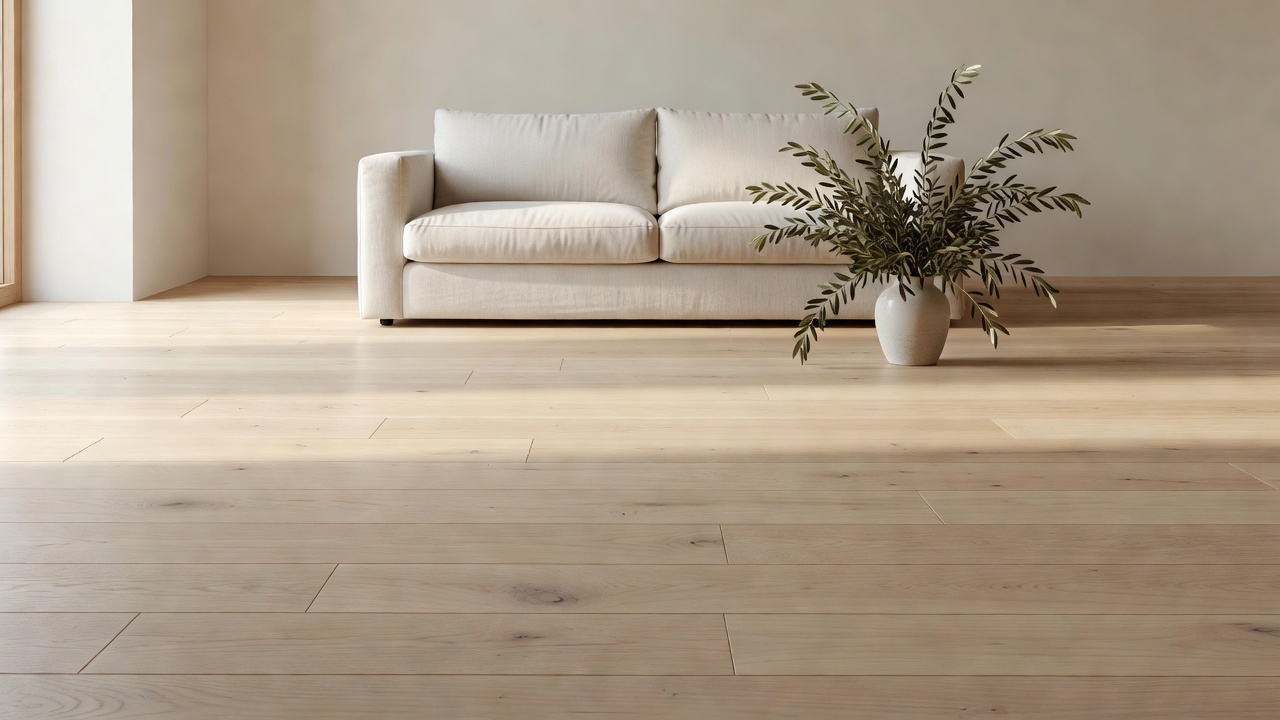
 Late afternoon light pools across a living room that already knows how to breathe. Linen curtains barely move. A single olive branch in a ceramic vessel. The air smells like cedar and something faintly mineral. Before you notice the sofa or the art, you feel the floor—pale oak with a whisper of grain, matte enough to drink the light instead of throw it back. That is how flooring color affects room mood: it sets the emotional temperature of a space before a single accessory arrives, turning calm into something you can stand on, or drama into something you can walk through.
Flooring color psychology is the way hue, undertone, and finish of your floors rewrite a room’s emotional register—light tones open and quiet the nervous system, dark ones gather intimacy and weight, warm tones wrap, cool tones clarify.
I staged a townhouse last spring where the clients kept saying the living room “felt expensive but cold.” Same furniture. Same art. We swapped the near-black engineered oak for a soft greige wide-plank with a low-luster oil finish and suddenly people lingered. The floor had been shouting. Now it was listening.
How does flooring color affect the mood of a room?
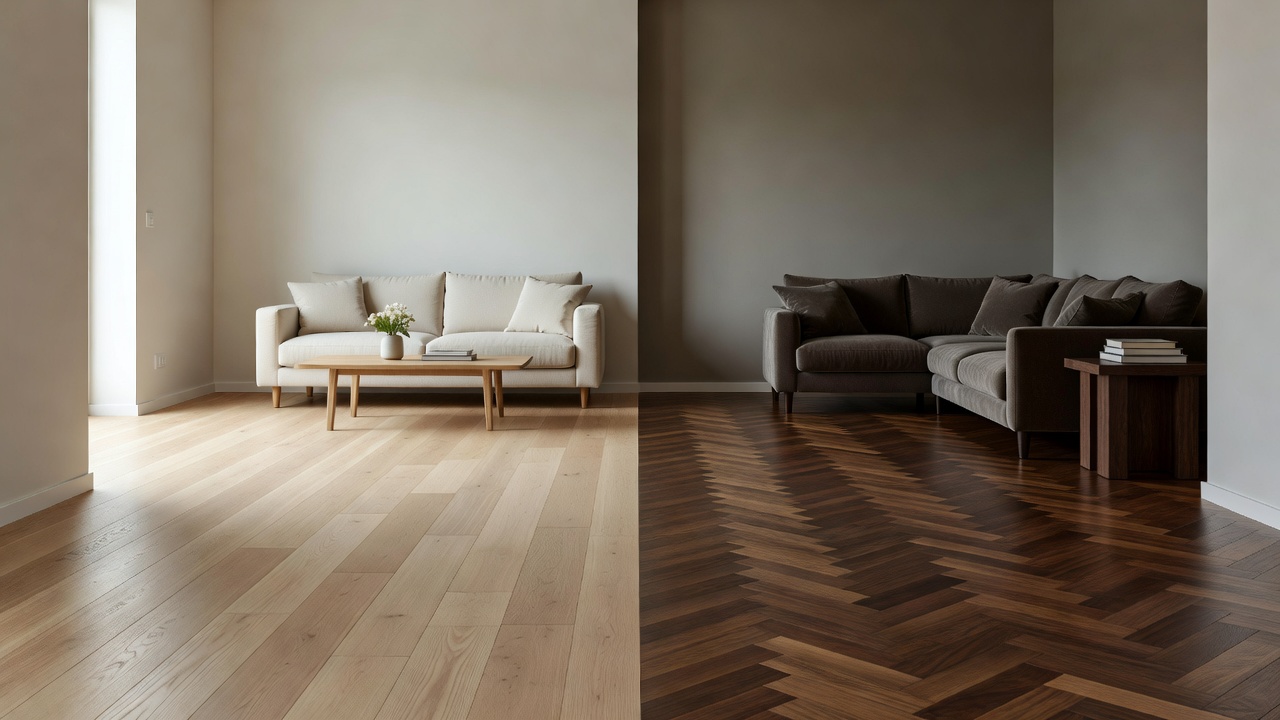
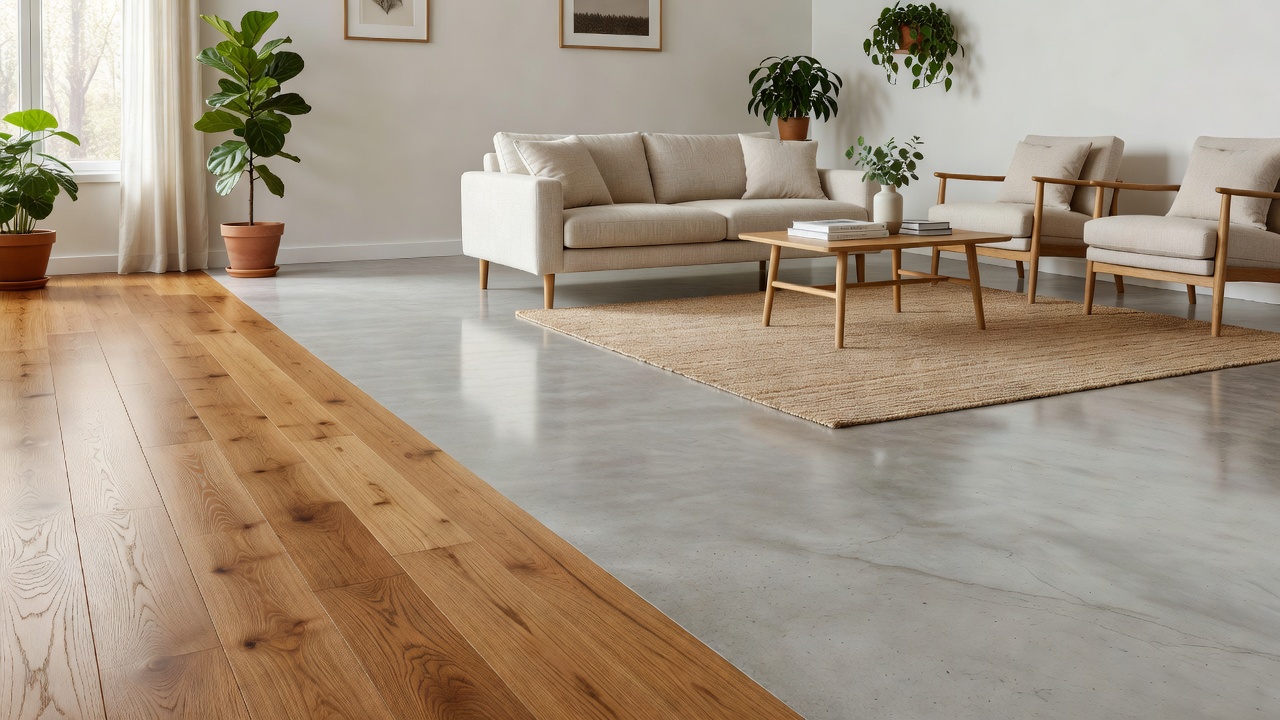
Color on the floor is not decoration. It is atmosphere with mass. Light flooring—think whitewashed oak, soft blonde maple, cloudy limestone-look porcelain—bounces available light upward, visually lifts the ceiling plane, and tells the body there is room to exhale. Dark flooring—espresso walnut, charcoal LVP, deep stained oak—absorbs light, pulls the eye down, and creates a sense of grounded elegance that can feel like a well-cut black coat: intimate, intentional, a little cinematic.
But the real power lives in the marriage of color with material personality. A cool gray oak with a tight, quiet grain reads serene and gallery-like. The same gray in a heavily wire-brushed texture with visible knots becomes moody and collected. Finish is the amplifier: high-gloss dark floors can tip into nightclub energy (gorgeous in a powder room, exhausting in a primary suite); matte or hardwax-oil finishes keep even deep tones from shouting. I still think about a 2024 project where we used smoked European oak with a smoked-oil finish—almost black, almost soft—and the clients started hosting dinner parties again because the room finally felt like a place you wanted to stay after dark.
Yes, the install people will tell you “color is color, just pick something durable.” I hear them. Durability matters. But they are wrong about the rest. A floor that fights the mood you want will make every other design decision work twice as hard. I’ve watched it happen. I’ve fixed it.
Texture and staging multiply everything. A light floor under heavy velvet drapery and low, sculptural furniture stays calm but gains depth. A dark floor paired with pale plaster walls and a single monumental plant becomes a study in deliberate quiet. [LINK: choosing hardwood finishes] is half the conversation once you understand how the surface talks to the color.
What is the best flooring color for a calm bedroom?
For a calm bedroom I reach for light-to-medium floors with warm or neutral undertones and almost no high-contrast grain. Soft white oak in a natural or lightly whitewashed finish. Pale greige engineered hardwood. Even a beautifully executed light limestone-look tile if the room can handle the coolth and you layer rugs generously. The goal is visual silence underfoot so the nervous system can downshift the moment bare feet touch the surface.
Cool gray can work if it stays soft and the undertone is slightly warm (never blue-gray unless you are deliberately chasing spa detachment). Pure white floors in a bedroom often feel sterile unless the rest of the room is aggressively textural—think bouclé, raw linen, unfinished ceramics. I once specified a barely-there blonde maple for a client who couldn’t sleep; she later texted me a photo of the empty room at 6 a.m. with the caption “I can finally hear myself think.” That is the assignment.
Dark floors can create cocooning calm, but only if the walls, bedding, and window treatments stay light and the finish is matte. High-contrast dark floors in a small bedroom often read dramatic rather than restful. Save the drama for the dressing room.
Should I choose light or dark flooring for a serene room?
Choose light if serenity for you means air, clarity, and the feeling that the walls have stepped back. Light flooring is the classic move for serene spaces because it maximizes daylight, minimizes visual weight, and pairs effortlessly with the 2025–2026 quiet-luxury palette of bone, oat, clay, and soft olive. It also forgives clutter better—an imperfect real life still photographs as calm.
Choose dark if your version of serene is enveloping, library-quiet, slightly mysterious. Dark floors can make a room feel held. The catch: they demand discipline elsewhere. Walls must stay lighter or carefully mid-tone. Lighting must be layered so the floor doesn’t swallow the space after sunset. And you will live with every speck of dust and every pet hair until you make peace with it (or hire better cleaning). I love a dark floor done right—there is nothing like walking into a room that already feels like evening—but I will never pretend it is the low-maintenance path to calm.
Warm versus cool undertones matter as much as value. Warm light floors (honeyed oak, soft caramel) lean cozy-serene. Cool light floors (ash, pale taupe, soft gray) lean gallery-serene. Neither is wrong. One will simply feel more like you.
Here is the mood board I keep returning to when clients freeze:
- Sun-bleached oak, matte, almost powdery
- Warm greige with a faint clay cast
- Smoked walnut so deep it reads like velvet
- Limestone-look porcelain the color of morning fog
- Whitewashed pine with quiet knots, barefoot soft
- Charcoal LVP with a stone texture that never shouts
Are warm or cool flooring tones better for a peaceful atmosphere?
Warm flooring tones—honey, caramel, soft terracotta undertones, golden oak—create peaceful atmospheres that feel inhabited and kind. They flatter skin, play beautifully with natural materials, and make social rooms feel like places people actually want to sit down. Cool tones—ash, soft gray, blue-gray stone, pale taupe with green undertones—deliver a cleaner, more modern peace. They quiet visual noise and pair exquisitely with contemporary art and minimal furniture.
For most peaceful atmospheres I still start warm, then cool it with textiles and wall color if needed. Pure cool floors can tip into clinical if the rest of the room doesn’t supply enough organic texture. The 2026 forecast is already drifting toward warmer neutrals again after years of cool gray dominance (yes, I know, grey floors, I KNOW—let me have the redemption arc). A warm light floor under cool plaster walls is one of my favorite current formulas for rooms that feel both calm and alive.
Material choice locks the effect in. A warm tone in wire-brushed oak feels completely different from the same tone in smooth luxury vinyl. Grain direction, board width, and sheen level are not afterthoughts; they are mood instruments. [LINK: light vs dark flooring guide] becomes essential reading once you start comparing samples in the actual light of the room at 8 a.m. and 8 p.m.
I still have one client’s primary suite burned into my memory—floor so pale it almost disappeared, walls the color of unbleached paper, a single imperfect branch leaning in the corner. She cried when she saw it finished. Not because it was perfect. Because it finally felt like the inside of her head on a good day. That is the quiet power we are chasing.
FAQ
How does flooring color affect the mood of a room?
Flooring color sets the emotional baseline of a space by controlling light reflection, visual weight, and psychological temperature. Light colors expand and calm; dark colors ground and intimate; warm tones comfort; cool tones clarify. Material texture and finish amplify or mute those effects.
What is the best flooring color for a calm bedroom?
Soft light-to-medium neutrals with warm or balanced undertones—natural white oak, pale greige, lightly whitewashed woods—support calm by reducing visual stimulation. Keep the finish matte and the grain quiet for the most restful result.
Should I choose light or dark flooring for a serene room?
Light flooring is generally better for airy, spacious serenity; dark flooring works for cocooning, intimate serenity if walls stay lighter and lighting is carefully layered. Match the choice to whether you want the room to feel open or held.
Are warm or cool flooring tones better for a peaceful atmosphere?
Warm tones usually create a more inviting, lived-in peace; cool tones create a cleaner, more minimal peace. Most peaceful rooms benefit from starting warm and adjusting with textiles and wall color.
Can flooring texture change how a color feels?
Yes. The same color in a smooth matte finish reads quieter than in a high-gloss or heavily textured surface. Grain, wire-brushing, and sheen level can shift a floor from serene to dramatic without changing the stain.
The right floor does not just match the mood board. It becomes the mood. It is the first thing your body notices and the last thing guests can name. So stand in the empty room at golden hour. Hold the samples low. Watch what the light does. Then ask yourself—honestly—what’s the one room that still doesn’t feel like you yet?