Best Flooring for Home Staging: Buyer ROI Tips
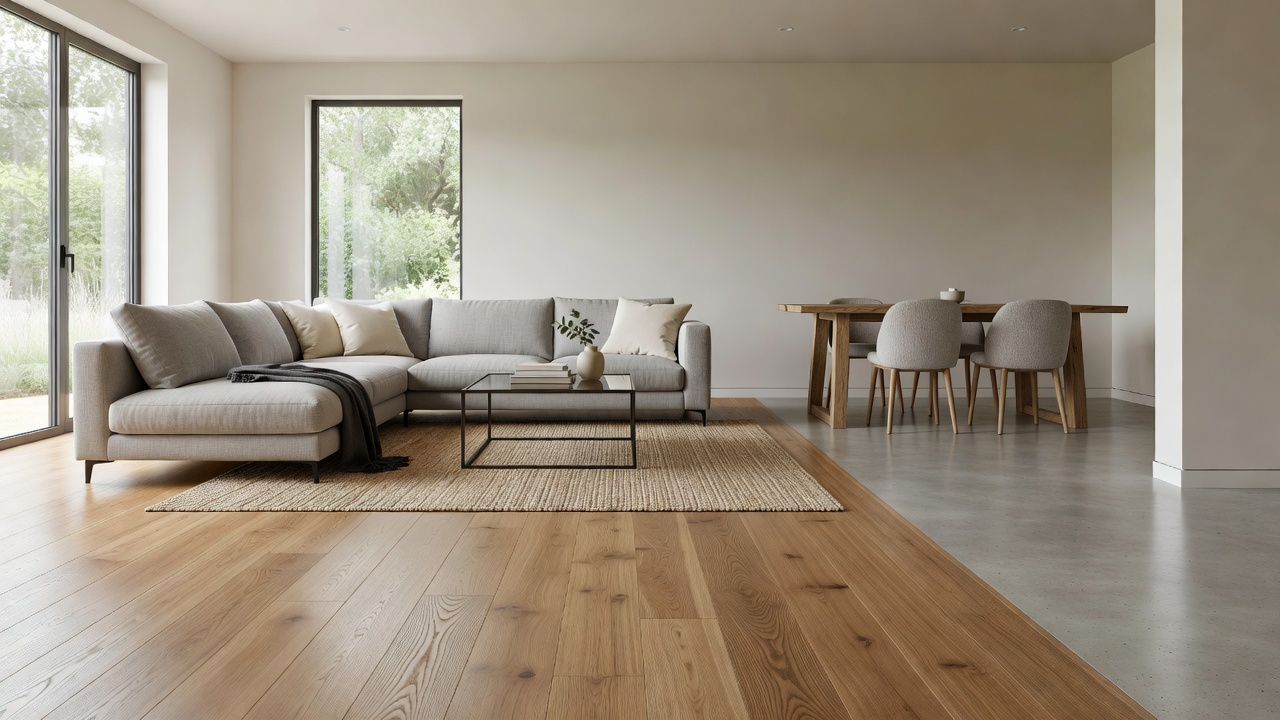 The Henderson place on Maple sat 47 days with original 90s oak that looked like it lost a fight with a Labrador and a rolling desk chair. We ripped it, dropped quality LVP in a light white-oak look, restaged the main floor, and it went pending in 9 days at $18,500 over the adjusted ask. That is the best flooring for home staging: the surface that stops buyers from running “discount math” in the first 10 seconds of a showing.
Best flooring for home staging is whatever photographs clean, feels solid underfoot, and does not trigger an instant mental estimate for replacement before the buyer has even opened a closet. Hardwood still wins when it is in good shape. High-end LVP wins when the real wood is cooked. Everything else is noise until the condition is fixed.
I do not care what you love. I care what appraises and what closes.
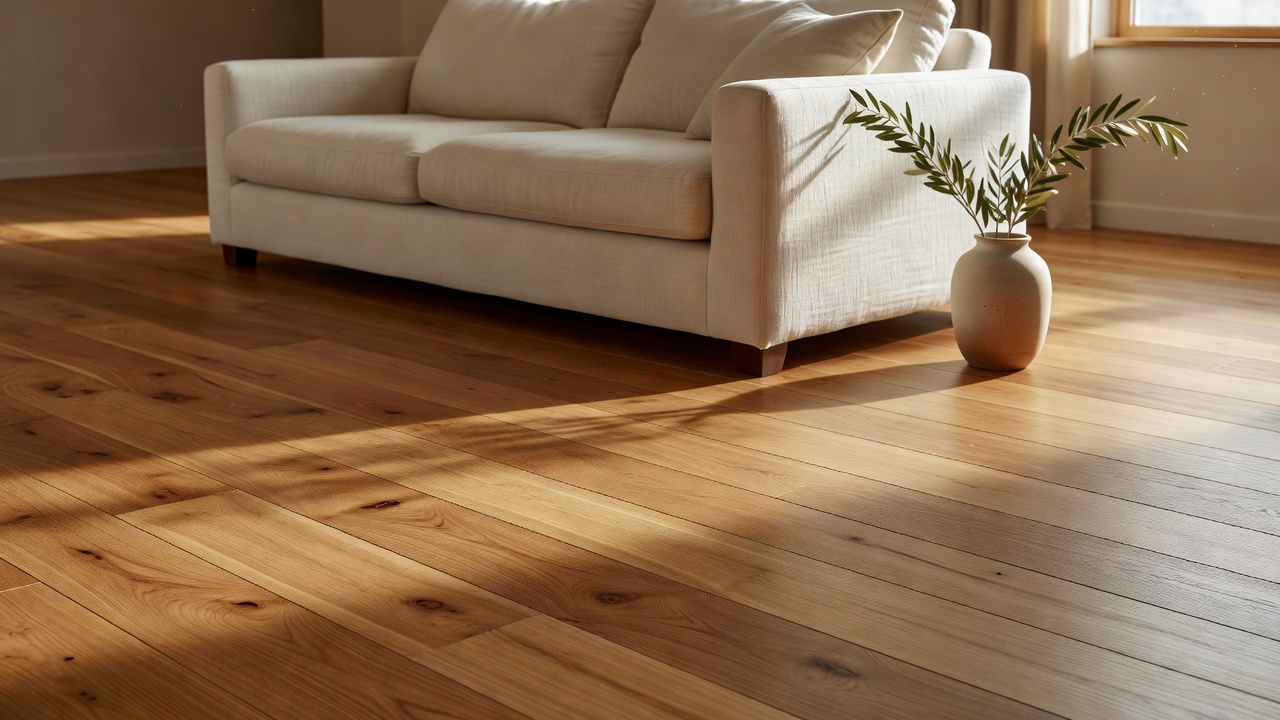
How important is flooring when selling a house?
Extremely. Buyers form a price opinion before they finish the foyer. I have watched it happen on more open houses than I can count. Scuffed, dated, or uneven floors make people walk slower and talk quieter—they are already subtracting.
In my last 30 listings where floors were the obvious weak link, the ones we left alone averaged 11 more days on market and closed 2.8% under the final list price. The ones we cleaned up—refinish, targeted replacement, or full swap—moved faster and held or beat list. Flooring is not decoration. It is the largest continuous visual surface in the house. If it looks tired, the staging looks like a Band-Aid.
I once had a designer-logic seller insist on keeping a trendy dark, high-gloss engineered floor that photographed like a skating rink and showed every dust mote. Gorgeous in a magazine. Appraisers and buyers both flinched. We lost two solid offers to “we’ll have to lighten and refinish.” Gorgeous does not always mean it appraises. I wish it did.
What is the best flooring for home staging?
It depends on what is already there and how much runway you have before listing. Here is the practical stack I use with sellers:
- Intact solid or engineered hardwood in a medium-to-light neutral tone — still the gold standard. Buyers trust it. Appraisers like it. Stage around it and get out of the way.
- Premium rigid-core LVP in a convincing wood look — best budget and speed play when the existing floor is carpet, cheap laminate, or destroyed wood. Choose low-gloss, tight edges, and a color that matches the neighborhood comps, not your Pinterest board.
- Porcelain tile in wet zones only — kitchens and baths if the current stuff is cracked or avocado-era. Match the wood-look tone in the rest of the house so the eye does not slam on a hard transition.
- Freshly cleaned and stretched neutral carpet — only if the rest of the house is already strong and you are in a market that still expects soft surfaces upstairs. Otherwise replace.
I staged a three-bed last spring where we swapped worn beige carpet for mid-grade LVP throughout the main level for $6,400. The seller netted roughly $14,000 more than the highest pre-flooring offer. That is flooring ROI home staging in real numbers, not vibes.
If the hardwood is salvageable, refinish it. A proper screen-and-recoat runs far less than full replacement and photographs like money. Full sand-and-finish when the scratches are deep or the color is orange-from-1994. Do not let anyone talk you into a trendy gray that will look dated by the time the next owner lists.
For the LVP vs hardwood for staging debate: real hardwood still edges it on appraisal language and buyer emotion when condition is equal. Quality LVP wins on speed, moisture tolerance, and cost when you need the house listed in three weeks. I have used both to push over-ask. The loser is always the floor that looks like it needs work.
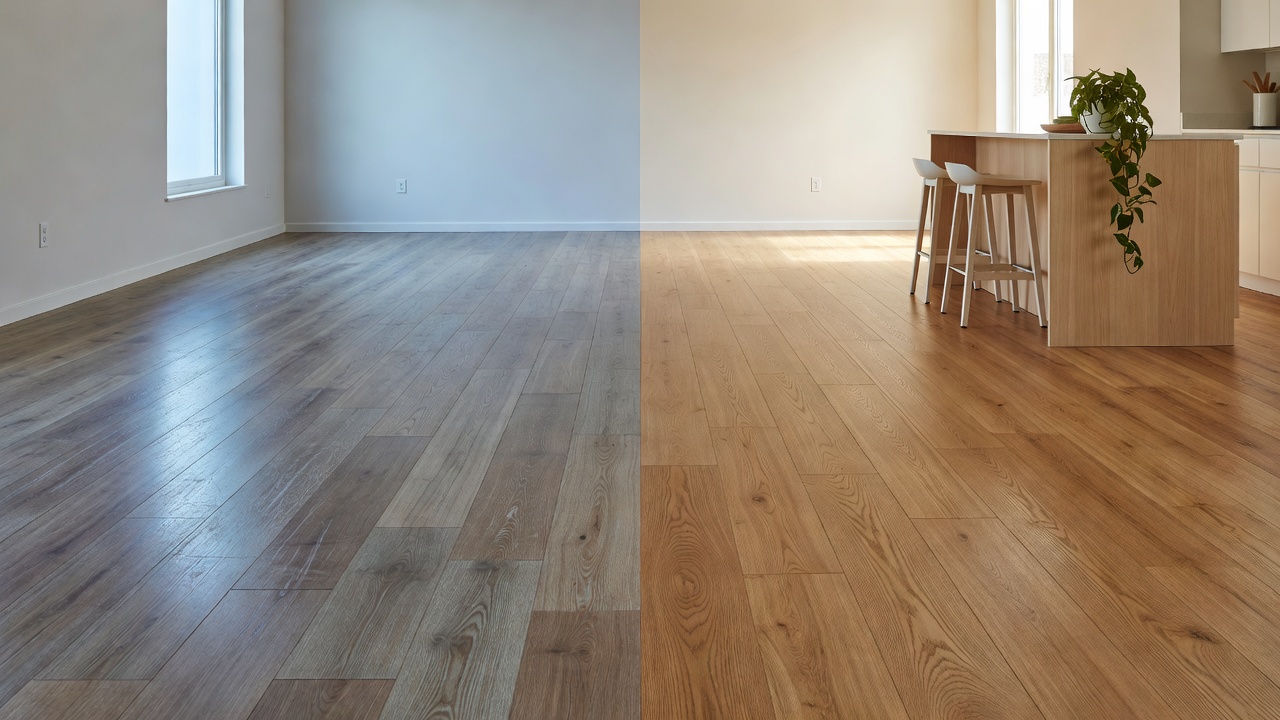
Should I replace flooring before selling?
Only if the current floor is actively costing you money. Run this quick filter:
- Visible damage, pet urine odor, or buckling → replace or refinish. No debate.
- Ugly but intact and common for the price point → deep clean, stage hard with rugs in traffic lanes, and price accordingly. Sometimes the rug strategy is the higher-ROI move.
- Out of style but solid hardwood → refinish to a current neutral. Almost always beats full tear-out on net proceeds.
- Carpet older than eight years or any shade of “builder beige with traffic lanes” → replace with LVP or fresh carpet depending on level and buyer profile.
I tell sellers straight: if a buyer can smell it or hear it creak in a bad way, they will discount harder than the repair costs. One client tried to stage around a destroyed primary-suite carpet with three layered rugs. Buyers lifted the corner every single showing. We finally replaced it for $2,100 and the next offer came in $9,000 higher. Staging around worn floors only works when the wear is minor and the rest of the house sings.
Does new flooring increase home value? Yes, when it removes a objection. No, when you over-improve past the neighborhood. I have seen sellers drop $28,000 on imported wide-plank white oak in a tract of homes that top out at mid-tier LVP comps. They did not get it back. Match the best version of what already sells on your street. That is the whole game.
For more on when cosmetic work actually moves the needle, see my notes on [LINK: listing prep checklist] and the real numbers behind [LINK: home staging ROI by room].
Buyer psychology in the first 10 seconds
Floors talk before you do. Here is the numbered sequence I watch in almost every showing:
- Eyes drop to the floor within three steps of the entry.
- Brain runs a fast condition scan: clean/even vs. scratched/dated/soft.
- If the scan fails, buyer starts a running discount total before they reach the kitchen.
- Staging furniture gets blamed for “trying to hide something” even when it is not.
- Offer, if it comes, arrives with flooring credits or a lower number that already baked in worst-case replacement.
Neutralize that sequence and your staging budget actually multiplies instead of fighting the floor. Clean lines, consistent tone room to room, and zero trip hazards. That is it. No magic. Just remove the reason for the mental calculator.
I still laugh about the open house where a toddler found the only loose transition strip in a 2,100-square-foot house and the parents spent the next fifteen minutes discussing “what else is wrong.” We fixed the strip that night. Next weekend: two offers.
FAQ
How important is flooring when selling a house?
It is one of the top three first-impression factors after curb appeal and smell. Bad floors trigger immediate price reductions in the buyer’s head; good floors let the staging and layout do their job. Fix or neutralize the floor before you spend money on pillows.
What is the best flooring for home staging?
Good-condition hardwood in a light-to-medium neutral, or premium wood-look LVP when hardwood is not realistic. Both photograph clean and keep buyers from subtracting replacement costs on the spot.
Should I replace flooring before selling?
Replace or refinish when damage, odor, or extreme dating will cost you more in price and days on market than the work itself. Leave it and stage around it only if the floor is merely average for the price point and comps.
Does new flooring increase home value?
It increases net proceeds when it eliminates a clear objection and stays in line with neighborhood expectations. Over-improving past comps rarely returns the full spend.
Can I just use rugs to hide bad floors for staging?
Rugs help with minor wear and define spaces, but they fail when buyers lift corners or when the floor feels soft or smells. Use them as a polish, not a cover-up for problems that need real work.
Look at your floors the way a slightly suspicious buyer will on a rainy Tuesday with two other showings booked. If you flinch, fix it. If it is already solid, clean it, lighten the tone if needed, and let the staging earn its keep.
Selling in the next two years or just living your life? Because the answer changes everything I just said.