LVP Wear Layer Thickness: Mils Explained Simply
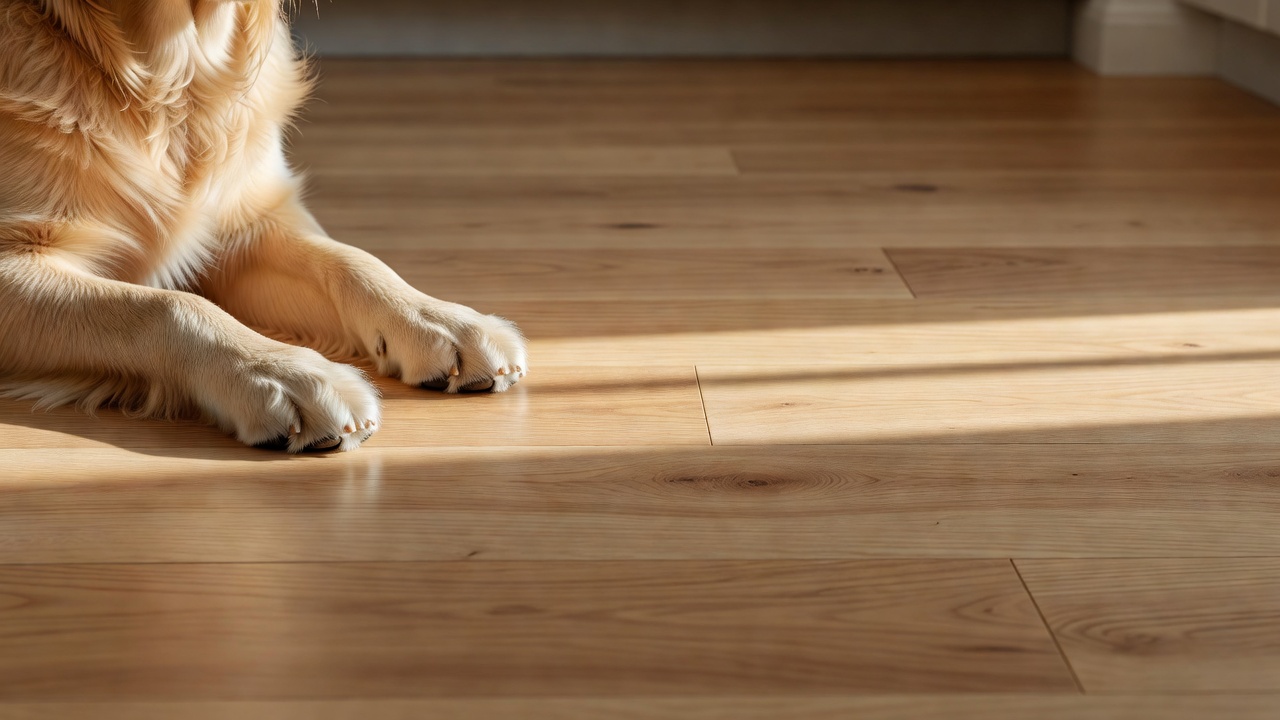
 Last Tuesday my neighbor’s golden retriever did that full-body skid across their kitchen like the LVP was a frozen pond. Claws, momentum, a little yelp of joy. I watched the contact path and—sorry, this is the part where my brain leaves the room—immediately started thinking about urethane cross-link density and ceramic bead packing.
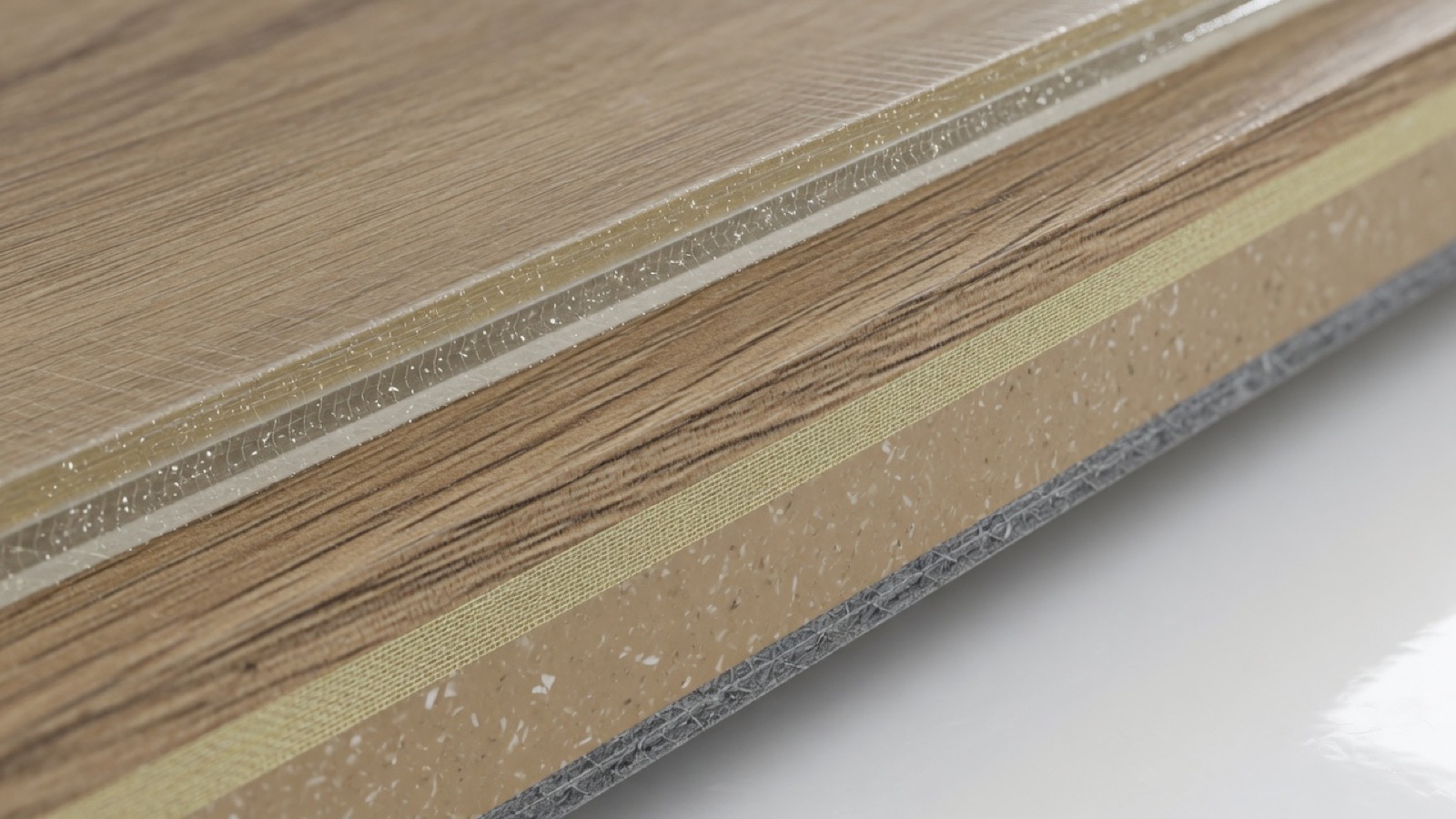
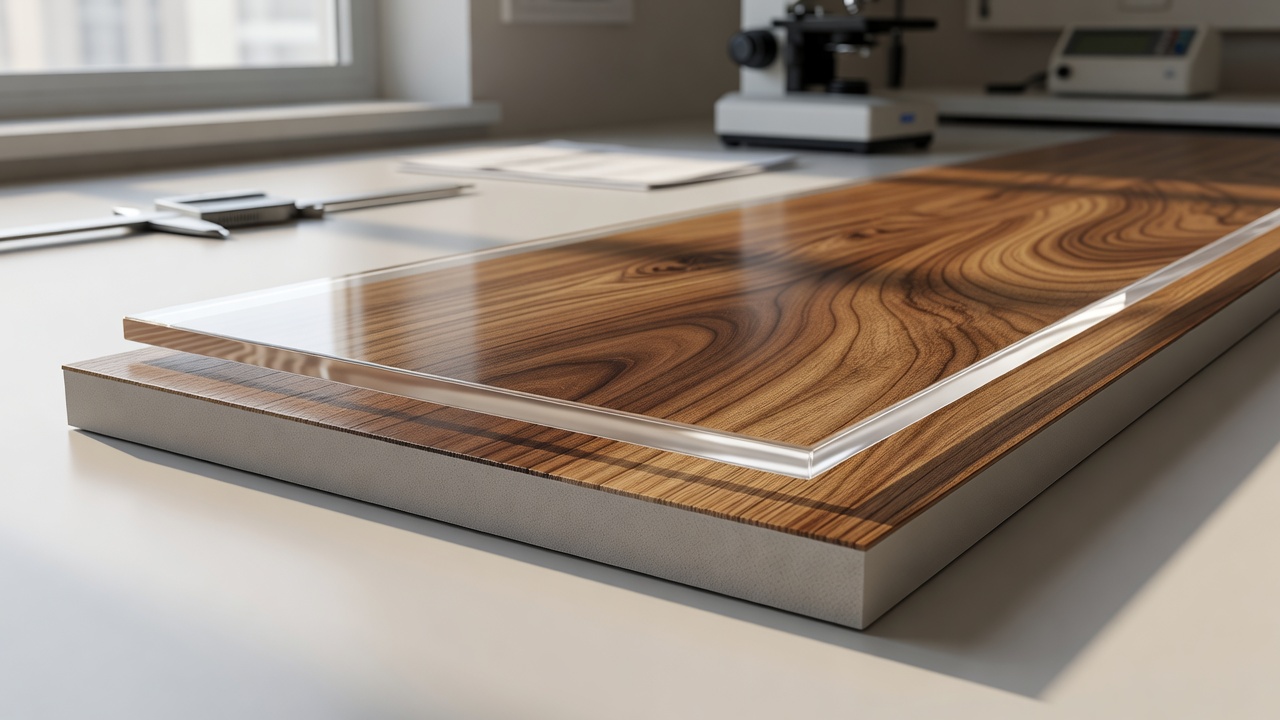
Here’s the clean answer before I zoom any further: LVP wear layer thickness is the transparent protective coating sitting on top of the printed design layer, measured in mils (one mil = 0.001 inch). It is the surface that actually takes abrasion, scratches, and UV. For most residential rooms, 12 mil is the practical baseline; 20 mil is the step that meaningfully extends life under pets, kids, and high traffic. Thicker helps, but the polymer chemistry and any ceramic or aluminum-oxide enhancement matter at least as much as the mil number on the box.
What is a wear layer on vinyl plank flooring?
In plain terms, the wear layer is a thin, clear film of polyurethane (sometimes acrylic-urethane hybrid) laminated or coated over the decorative print. It is not the whole plank. Overall plank thickness might be 5 mm or 8 mm; the wear layer is usually a fraction of a millimeter. That distinction—wear layer vs plank thickness—is the first place marketing confuses people. A thick plank with a thin wear layer still scuffs. A thinner plank with a robust wear layer often outlasts it in the living room.
Under the microscope the wear layer is a network of polymer chains. Manufacturers often add ceramic beads or aluminum oxide particles so that hard grit doesn’t immediately plow through the soft organic matrix. Some topcoats are UV-cured for higher cross-link density (lab-speak for “the molecules are holding hands more tightly, so it takes more energy to tear a path”). Isn’t that wild? The same chemistry that keeps a car clear-coat from dulling is doing micro-scale work under your coffee table.
I keep a cheap jeweler’s loupe in the junk drawer for exactly this kind of nerding. You can sometimes see the ceramic sparkle if the light hits right. Most people do not do this. I am not most people.
How important is wear layer thickness for LVP?
Very—more important than almost any other single number on the spec sheet for day-to-day durability. Abrasion (the slow sanding of the surface by grit under shoes) and scratch (a single sharp event) both start at the wear layer. Once that layer is breached, the print layer is exposed and the plank looks permanently damaged even if the core is fine.
Standards bodies and manufacturers lean on Taber abrasion or similar rotating-abrasive tests. A higher mil rating generally correlates with more cycles before the print shows through. That is why installers and retailers cluster recommendations like this:
- 6–8 mil — light residential, low traffic, guest rooms. Fine until it isn’t.
- 12 mil — standard residential sweet spot. Hallways, kitchens, living rooms with normal shoes and the occasional pet.
- 20 mil — heavy residential and light commercial. Multiple dogs, kids with chairs, rental units, anything that sees grit tracked in daily.
- 22–30+ mil — true commercial or “I never want to think about this floor again” residential.
Notice I said “generally correlates.” A poorly formulated 20 mil can lose to a well-formulated 12 mil with ceramic enhancement and a tough UV topcoat. Thickness is necessary but not sufficient. Still, if you only get one number, get the mils.
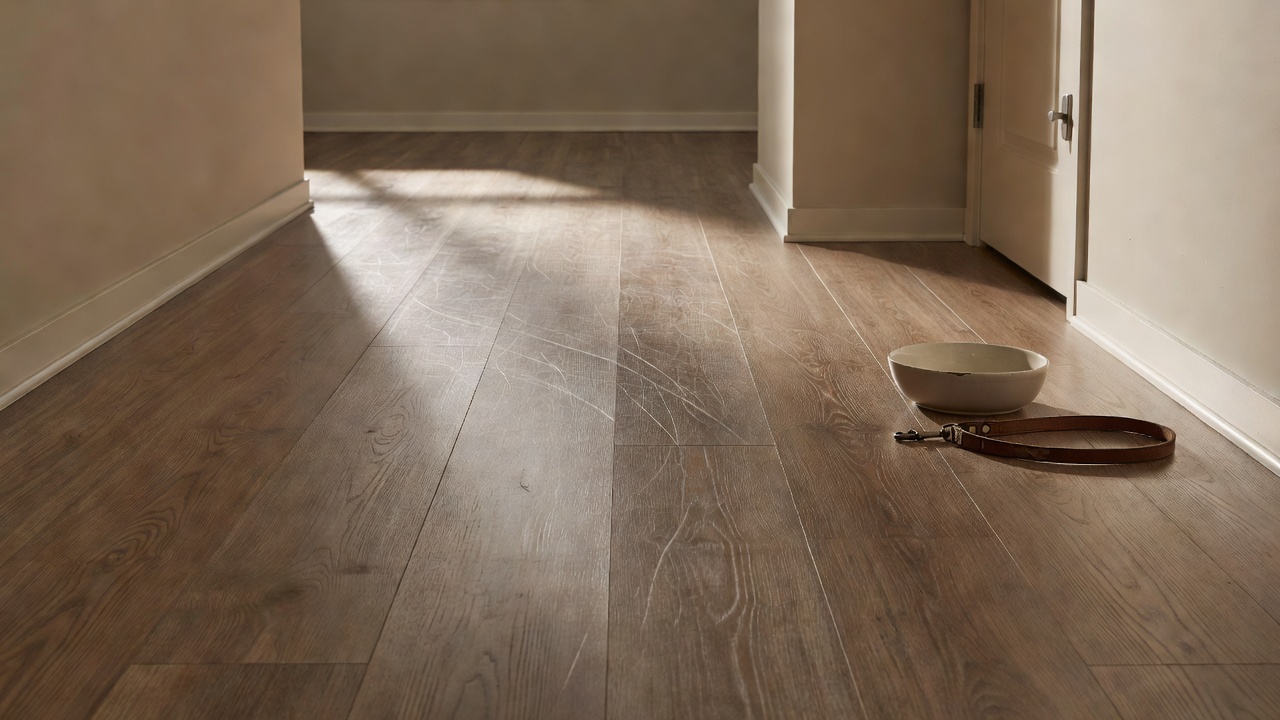
Okay, this is the part where I get a little too into it—feel free to skim. Abrasion failure is usually progressive: micro-scratches accumulate, scatter light (that dull look), then eventually a continuous path reaches the ink. Scratch failure is more discrete: a sharp point exceeds the local yield strength of the polymer and the particle packing can’t deflect it. Ceramic beads raise the effective hardness of the composite surface; they don’t make the urethane itself harder, they just force the scratch tip to hit something stiffer more often. Dry one-liner: your dog’s claw is basically a hardness tester you never calibrated.
For homes with pets and kids, I treat 20 mil with a ceramic-bead or aluminum-oxide enhanced topcoat as the default recommendation unless the budget or the room’s actual use clearly says otherwise. You can read more about how that interacts with core construction in [LINK: rigid core vs flexible LVP] and how it compares when people are deciding against wood look-alikes in [LINK: engineered hardwood vs LVP durability].
What wear layer thickness do I need for residential use?
Match the mils to the actual abuse pattern, not the room’s aspirational Pinterest board.
- Bedrooms, closets, formal dining rarely used: 12 mil is usually enough. Soft-soled traffic, limited grit.
- Kitchens, family rooms, hallways, stairs: start at 12 mil minimum; prefer 20 mil if you have dogs, kids who drag chairs, or a household that tracks sand.
- Entryways and mudrooms: 20 mil, full stop. Grit is an abrasive slurry when it’s wet. The wear layer is fighting a materials-science cage match every winter.
- Rentals or “we’re not refinishing anything for fifteen years” homes: 20 mil with enhanced topcoat. The marginal cost is almost always smaller than one service call or one angry security-deposit fight.
Also check whether the manufacturer publishes a residential vs commercial warranty tied to the wear layer. That warranty language is often the honest translation of their own abrasion data.
Does a thicker wear layer always mean better durability?
No. Always is a strong word, and materials rarely grant always. A thicker pure urethane without particulate enhancement can still micro-scratch under silica grit. A thinner layer with dense ceramic loading and a highly cross-linked UV topcoat can look better longer in real kitchens. Cure quality, adhesion to the print layer, and UV stabilizers (so the polymer doesn’t chalk or yellow and become brittle) all ride alongside thickness.
Failure modes I have actually seen or examined:
- Print show-through after years of chair scoot and grit—classic wear-through.
- Edge wear where planks meet and micro-flex; thickness helps, but locking system and underlayment matter too.
- Coating delamination—rare with modern LVP, but spectacular when the wear layer loses adhesion and peels like old nail polish. Chemistry and process, not mils.
- Gloss loss without thickness loss—the surface roughens at a scale that scatters light before you’ve worn a measurable mil away. Enhanced topcoats fight this harder.
So yes, buy thicker when you can. Also read the fine print for “ceramic bead,” “aluminum oxide,” or “UV-cured urethane.” Those phrases are doing real work.
Quick FAQ
What is a wear layer on vinyl plank flooring?
The wear layer is the clear polymer topcoat (usually polyurethane) that protects the printed design from abrasion, scratches, and UV. It is measured in mils and is separate from the overall plank thickness. Everything else on the plank is underneath that sacrificial, hardworking film.
How important is wear layer thickness for LVP?
It is the single most useful durability number on the spec sheet for residential traffic. Once the wear layer is gone, the floor looks damaged even if the core is intact. Pair thickness with coating chemistry for the real-world result.
What wear layer thickness do I need for residential use?
Twelve mil covers typical living; twenty mil is the sensible upgrade for pets, kids, entries, and heavy daily traffic. Match the room’s grit and claw load, not just the square footage.
Does a thicker wear layer always mean better durability?
Not always—formulation, ceramic or aluminum-oxide enhancement, and cure quality can let a strong 12 mil outperform a mediocre 20 mil. Thickness is still the best first filter; chemistry is the tiebreaker.
Is wear layer the same as total plank thickness?
No. Plank thickness (in mm) is the whole sandwich—wear layer, print, core, backing. You can have a chunky 8 mm plank with a fragile 6 mil wear layer. Ask for both numbers.
I still catch myself watching light rake across a vinyl floor at a friend’s house, looking for that first haze of micro-scratch. It’s a ridiculous habit. It’s also free. Next time someone skids a chair or a dog takes the corner too fast, you’ll know which thin, clear, quietly heroic layer just took the hit—and roughly how many mils stood between the claw and the pretty picture underneath.