Vinyl Wear Layer Mils Explained Plain English
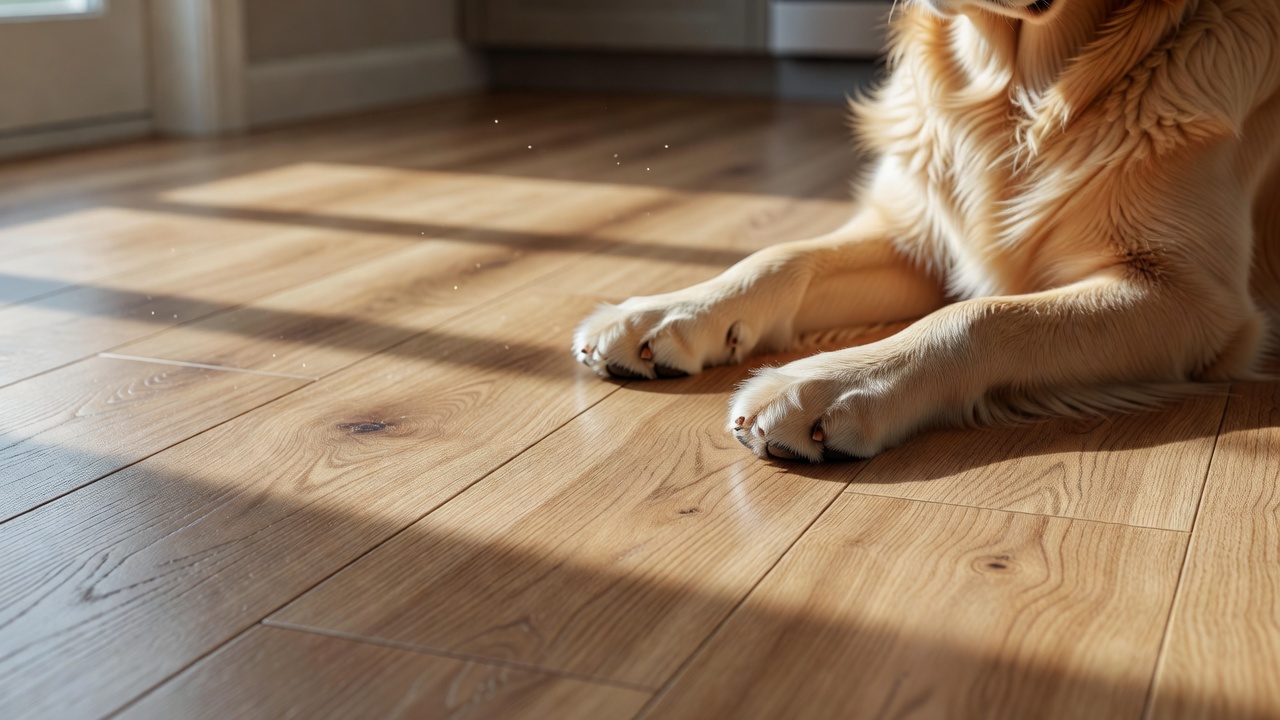
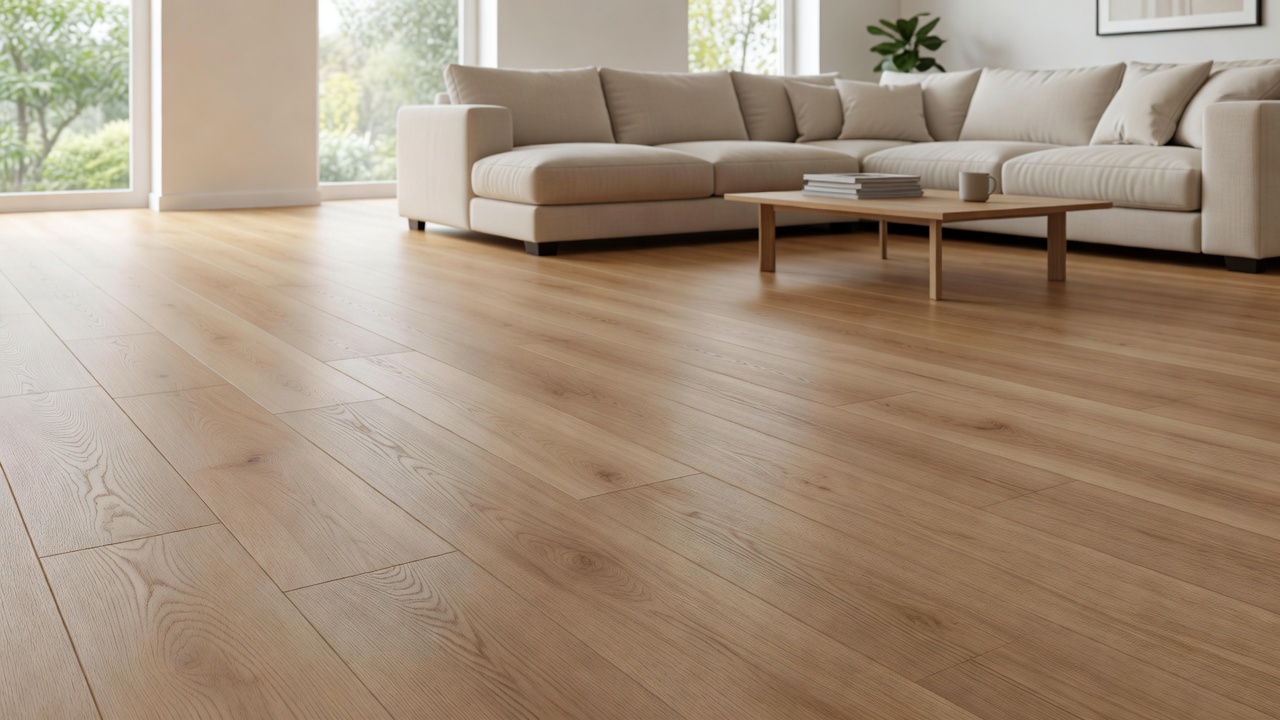 My dog’s nails clicked across the kitchen this morning and left a faint white haze on a plank that, according to the box, was “built for pets.” I crouched down, tilted my head, and felt that familiar little jolt of delight: the haze is not the print layer dying. It’s the wear layer starting to micro-abrade. And that is exactly why vinyl wear layer mils explained in plain English matters more than the total thickness number printed in bold on the sample sticker.
A vinyl wear layer is the clear, sacrificial polymer film bonded on top of the decorative print; its thickness is measured in mils (1 mil = 0.001 inch, or roughly 0.0254 mm). That single number is the best first-order predictor of how long the floor will keep looking new under foot traffic, pet claws, and sliding chair legs—far more than overall plank thickness. Thicker mils buy you more polymer to grind through before the picture underneath shows. Everything else is chemistry details, and those details are where the fun (and the failures) live.
What does mil mean in vinyl flooring wear layer?
A mil is one-thousandth of an inch. That’s it. No secret industry code. When a manufacturer stamps “20 mil wear layer,” they mean the clear top coat is 0.020 inches thick before any factory coating or embossing compresses it slightly. Convert it if you like metric: 12 mil ≈ 0.30 mm, 20 mil ≈ 0.51 mm, 30 mil ≈ 0.76 mm. The number is pure geometry—how much transparent polyurethane or PVC alloy sits between the world and the ink.
But geometry alone is only half the story. The wear layer is usually a highly plasticized PVC or a urethane-acrylate hybrid that has been cross-linked (chemically linked into a tighter molecular net) so it resists gouging. Many modern versions also carry ceramic bead or aluminum-oxide particles suspended in the topmost microns. Those particles act like microscopic armor plating. Lab tests such as the Taber abrasion method (ASTM-style spinning abrasive wheels) basically count how many cycles it takes to wear through that armor and expose the print. “20 mil with ceramic” is lab-speak for “your dog can destroy this and it’ll probably survive longer than the 12 mil without beads.”
Okay, this is the part where I get a little too into it—feel free to skim. At the polymer level, abrasion is not a clean shave. Soft PVC chains can smear and re-deposit; harder cross-linked urethanes fracture into micro-platelets that then act as third-body abrasives, accelerating wear in a feedback loop. UV light (that sunny patch by the patio door) cleaves some of those cross-links over years, dropping surface hardness even if the mil thickness hasn’t changed much. Additives—UV stabilizers, hindered amine light stabilizers, and the ceramic grit—matter as much as the starting thickness. I’ve seen 12 mil floors with excellent bead packages outlast cheap 20 mil floors that were basically clear plastic wrap. Specs without chemistry context are only half a sentence.
How thick should the wear layer be for residential use with pets?
For a normal family home with one or two dogs, kids, and the occasional dragged dining chair, 20 mil is the comfortable sweet spot. Twelve mil can work if traffic is light and you commit to felt pads and no outdoor grit, but pets raise the abrasion load dramatically. Claws concentrate force into tiny contact patches; each step is a mini-scratch test. Twenty mil gives you roughly 60–70 % more polymer volume to sacrifice before the print layer is compromised, and most pet-rated lines also load that extra thickness with the ceramic or aluminum-oxide package.
Commercial-grade 28–30+ mil is overkill for most houses unless you run a daycare out of the living room or host weekly dance parties. The jump from 20 to 30 mil buys diminishing returns once the additive package is already good. What actually fails first in real homes is rarely pure thickness: it’s edge peaking from poor underlayment, UV yellowing of cheaper print layers, or the wear layer delaminating because the adhesive system between layers was under-cured. Still, if the choice is between a well-reviewed 12 mil and a well-reviewed 20 mil at similar price, take the 20. Your future self, crouching over a cloudy plank, will thank you.
Is total plank thickness or wear layer more important?
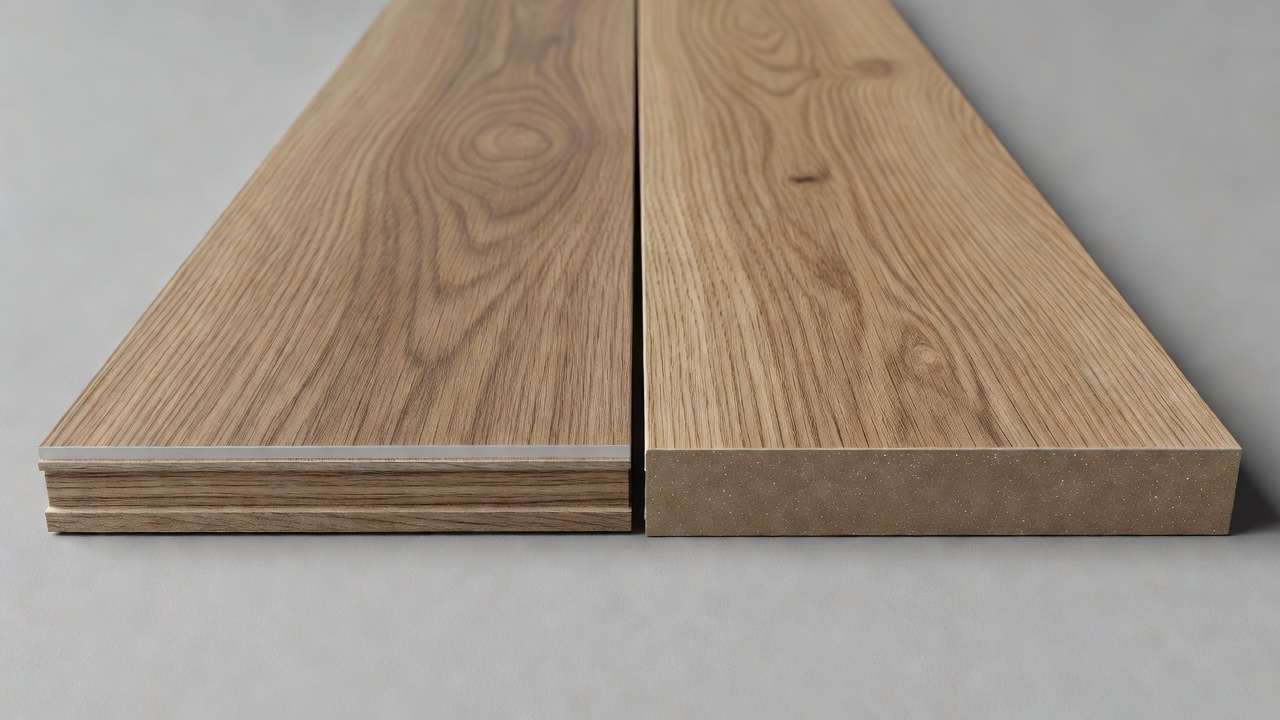
Wear layer. Full stop. Total thickness (the 5 mm, 6.5 mm, 8 mm number) mostly affects how the plank feels underfoot, how well it bridges minor subfloor imperfections, and how sturdy the click-lock joints feel during install. A thick core with a 6 mil wear layer will still look destroyed in three years of dog traffic. A thinner rigid core (SPC or WPC) with a 20 mil wear layer will keep its face far longer. I keep a small collection of failed samples on a shelf in my office—yes, really—and the pattern is boringly consistent: print exposed, wear layer gone, core still structurally fine.
If you want both comfort and durability, look for 6–8 mm total thickness and 20 mil wear. Just don’t let a salesperson wave the total-thickness number as proof of toughness. That’s like judging a winter coat by how fluffy the lining is while ignoring whether the outer shell is ripstop or tissue paper. For more on how core construction interacts with surface performance, see [LINK: spc vs wpc vinyl flooring]. And if you’re comparing specific products, the durability conversation pairs naturally with [LINK: best lvp for dogs and kids].
Here’s what’s actually happening when a wear layer fails under real household abuse—numbered because the sequence is tidy and I can’t help myself:
- Surface micro-scratching – grit or claw tips plow shallow grooves; the polymer either displaces (soft PVC) or chips (harder urethane).
- Third-body abrasion – those chips become loose particles that roll and grind under the next footstep, accelerating material loss.
- Gloss collapse – the embossed texture flattens or fills with debris; light scatters differently and the floor looks dull even if color is intact.
- Print strike-through – once enough mils are gone, the decorative film is exposed and any further abrasion removes ink or pattern.
- Secondary chemistry – UV and residual plasticizer migration can embrittle what’s left, so the remaining film cracks rather than wears smoothly.
Isn’t that wild? The mil rating is just the starting fuel tank; the additives and the environment decide the miles per gallon.
Is a 12 mil wear layer enough for a family home?
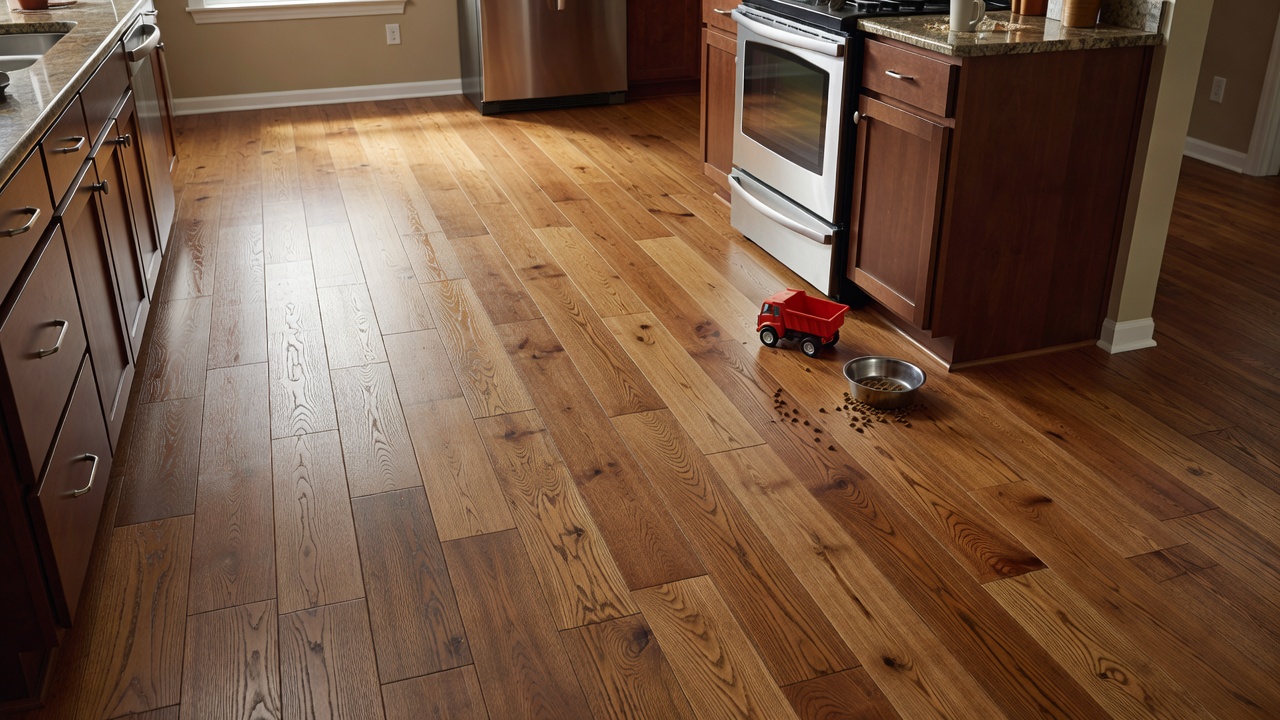
Sometimes. If the household is light-footed, shoes-off, no large dogs, and the product includes a decent aluminum-oxide top coat, 12 mil can look good for 10–15 years in bedrooms and low-traffic living areas. Kitchens, entries, and hallways are riskier; the same 12 mil often shows haze and fine scratching within 3–5 years once grit is tracked in. I would not choose 12 mil as the primary surface for a main floor with pets. The math is simple: less polymer means you reach print exposure sooner under the same abrasion rate. Manufacturers know this—that’s why “pet-proof” marketing almost always starts at 20 mil.
One dry aside: I once watched a 12 mil floor in a rental unit lose its sheen in a single academic year of college tenants. The total thickness was a respectable 5 mm. Thickness did not care.
FAQ
What does mil mean in LVP wear layer terms?
A mil is 0.001 inch of clear protective polymer thickness on top of the printed design. Higher mil numbers mean more material to abrade before the pattern shows damage.
How thick should wear layer be for residential use with pets?
Aim for 20 mil or higher when dogs or heavy claw traffic are present; 12 mil is marginal and usually needs excellent additive packages and meticulous grit control to last.
Is wear layer or total thickness more important for durability?
Wear layer thickness (and its ceramic or urethane quality) determines surface life; total plank thickness mainly affects underfoot feel and joint stability.
Is 12 mil vs 20 mil wear layer a big real-world difference?
Yes. Twenty mil typically provides substantially longer resistance to claw marks and chair scuffs before the print layer is threatened, especially once factory top-coat additives are similar.
Can I convert mil to mm easily for flooring specs?
Multiply mils by 0.0254: 12 mil ≈ 0.30 mm, 20 mil ≈ 0.51 mm. Most European-style data sheets already list both.
I still catch myself checking the wear layer on every sample that comes through the house, holding it to the light like a weird translucent jewel. Next time you’re standing in a flooring aisle or scrolling product pages, tilt the plank and look for that clear top film. Notice how the light catches the embossing. You’re not just buying a picture of oak—you’re buying a thin, carefully engineered polymer shield measured in thousandths of an inch. And once you see it that way, the mil number stops being marketing noise and starts being the most honest sentence on the box.