Cork Flooring Tasting Notes: Underfoot Snob Guide
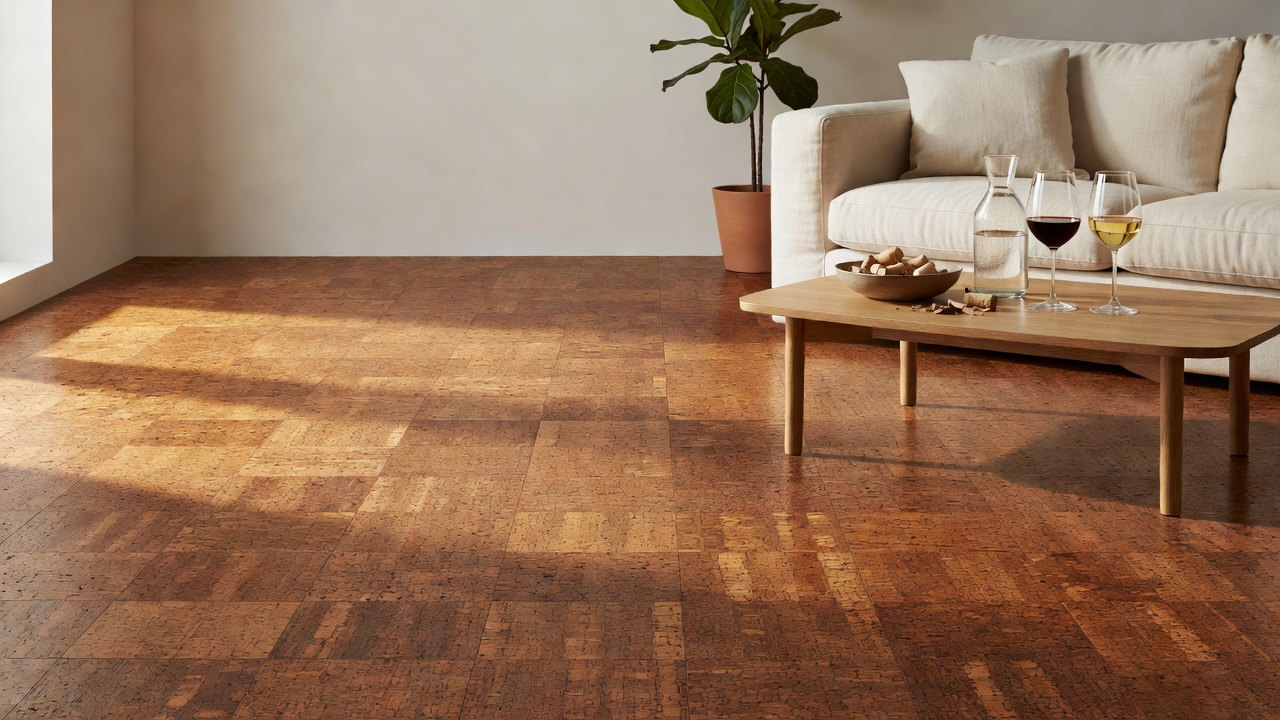 One does not simply walk on cork. One experiences it—the quiet rebound, the muted applause of the sole against bark that once held wine. Cork flooring tasting notes are the refined sensory evaluation of how compressed cork presents its buoyant underfoot palate: spring, warmth, finish, and the faint aftertaste of eco-theater. After circling the better aisles of three Floor & Decors and one unusually polished Lumber Liquidators, my verdict is plain: cork is worth it for the barefoot connoisseur who ranks joint-friendly give above hardwood solemnity, scoring a decisive 8.2 Insoles out of 10 provided moisture and heel traffic are managed like a cellar inventory. The springy theater justifies the discerning sole’s investment when comfort is the primary vintage.
The Official Cork Flooring Tasting Notes
I swirled the sample with my heel. I aerated. I judged.
On the nose: faint notes of Mediterranean cork oak, quiet ambition, and the residual optimism of a 2019 renovation brochure. No harsh VOC bite—cork arrives already finished in character, like a wine that refuses to need decanting.
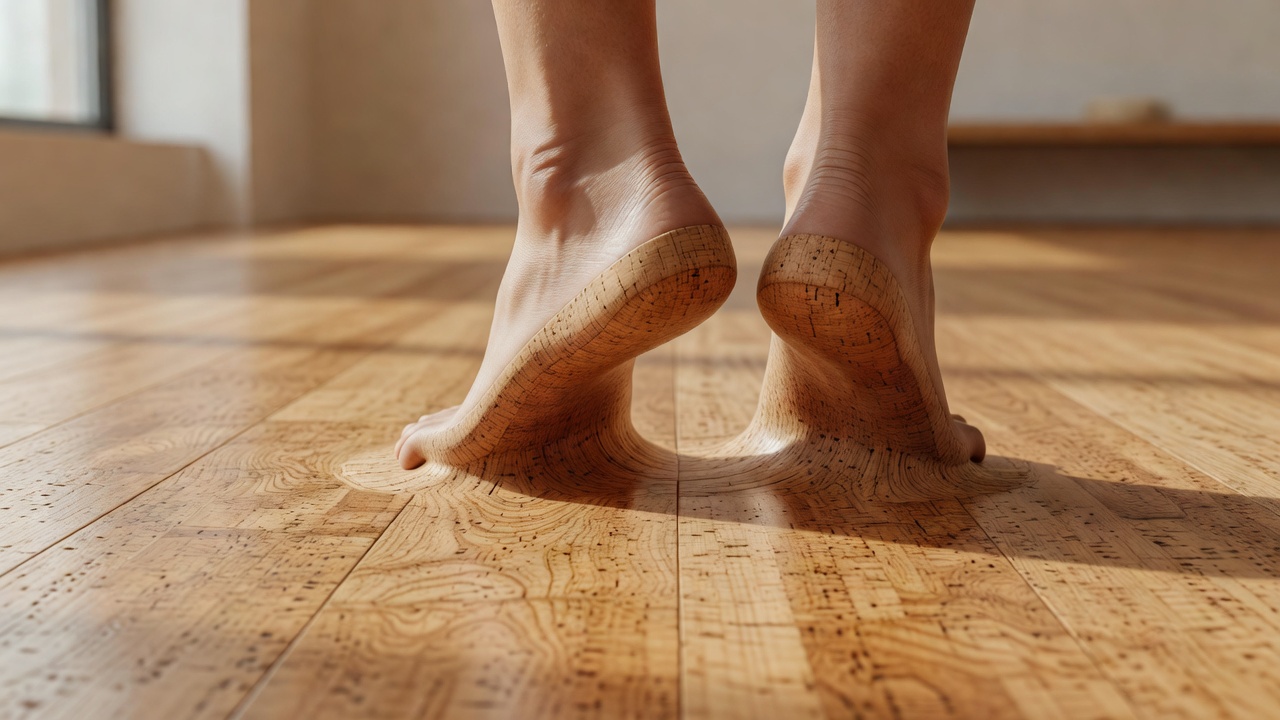
On the palate (underfoot): immediate lift. Not the cheap trampoline of bargain foam underlayment, but a refined, cellular bounce—those tiny air pockets in the bark acting as nature’s own suspension. Mid-sole develops a gentle warmth within three steps; the finish is dry, almost chalky in its matte discretion, never the plasticky sheen that screams [LINK: luxury vinyl plank alternatives]. Finish length is excellent: the comfort lingers after you’ve left the room, a phantom spring in the calves.
Structure: medium body. Softer than white oak, more articulate than padded carpet. Tannins—if we must stretch the metaphor—appear as mild surface resilience; heavy furniture leaves temporary impressions that recover like a good Burgundy opens in the glass. Pairing suggestion: bare feet at 68°F, linen trousers, and the vague sense that one is living better than one’s lease suggests.
I have walked cork in showrooms staged as “organic modern lofts” and in actual apartments where the previous tenant’s cat had already conducted its own tasting. The material holds. It does not pretend to be stone. It does not apologize for being kind.
Does Cork Flooring Feel Soft Underfoot?
Yes—decidedly, intentionally soft in the way a well-made insole is soft without collapsing into mush. The cellular structure of cork delivers a cushioned give that most barefoot guides correctly rank near the top for joint-friendly comfort. You feel the floor receive you rather than merely tolerate you. Compared with the unyielding applause of traditional hardwood, cork murmurs. Compared with the slightly synthetic flex of many LVPs, cork feels warmer and more organic, less like walking on a very polite yoga mat.
Is the softness uniform? Nearly. Floating cork with a quality underlayment reads plush; glue-down can feel a touch firmer, more “architectural.” Either way, the barefoot experience remains the material’s signature virtue. I once lingered so long on a sample plank that a salesman asked if I required medical assistance. I required only silence and better lighting.
How Does Cork Compare to Hardwood Underfoot?
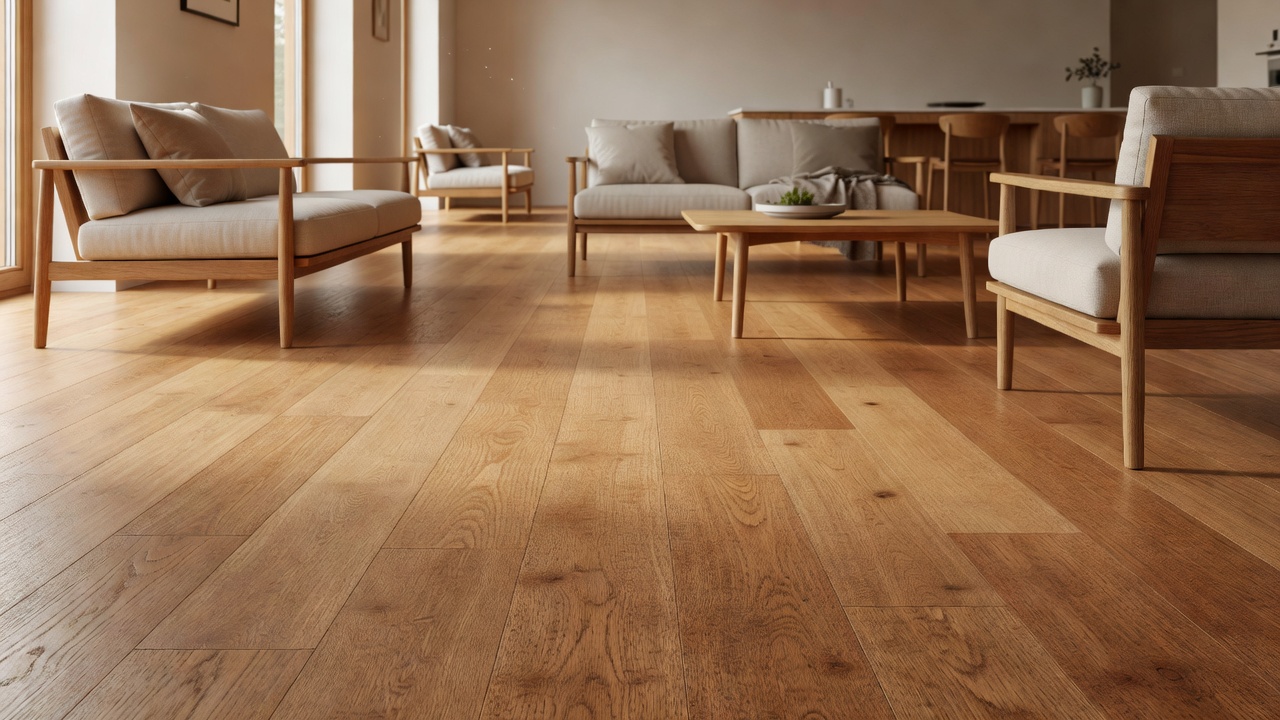
Hardwood—especially a thick solid or a well-engineered white oak—offers gravitas. It is the full-bodied red: solid, resonant, slightly cool until it isn’t, announcing every heel strike like a critic clearing his throat. Cork is the unexpected orange wine of flooring: textural, lively, lower in formal tannin, higher in approachable charm. Where hardwood says I have been here for a century, cork says I will still be comfortable at 11 p.m. when you pad to the kitchen.
The trade is durability theater versus comfort theater. Hardwood wins the long-game scratch narrative if you own dogs with opinions and chairs that never learned to lift. Cork wins the daily barefoot referendum and the winter-morning barefoot referendum especially. I have tested both in the same afternoon; my soles voted cork, my imaginary future resale value muttered hardwood. For the present tense of living, cork’s underfoot conversation is simply more generous. Those seeking the full oak experience may consult my notes on [LINK: engineered hardwood underfoot feel], but they will forfeit the bounce.
Is Cork Flooring Worth It?
For the household that lives barefoot or in soft-soled slippers, yes—cork flooring is worth it. The comfort premium is real, the warmth is immediate, and the eco-story (renewable bark harvest) supplies the sort of dinner-party provenance that budget-conscious flooring content creators endlessly chase while quietly installing builder-grade laminate. Cork justifies its mid-range price—typically competitive with better engineered woods and above basic LVP—when the primary use case is residential comfort rather than commercial punishment.
Caveats, because even a great vintage has them: prolonged standing water is unkind; heavy point loads can leave temporary dimples; and some finishes wear faster in high-traffic corridors if one refuses area rugs like a philistine. Still, the discerning sole does not buy cork to host a roller derby. One buys it to feel something civilized underfoot every single day. That is worth the invoice.
I should note, purely for the archive, that I conducted part of this evaluation in my own one-bedroom rental after the landlord’s “luxury vinyl upgrade” left the place feeling like a dentist’s waiting room. Cork samples from the clearance bin performed admirably on my existing subfloor. One works with the cellar one has.
What Flooring Feels Best for Bare Feet?
Among materials I have personally auditioned with unshod rigor, cork consistently ranks in the top tier for barefoot comfort—alongside thick cork-backed engineered options and certain densely padded vinyls that know their place. Pure cork’s combination of natural spring, thermal warmth, and quietness edges out cooler stone, louder laminates, and the aristocratic chill of unfinished wide-plank oak. If the question is purely hedonistic—what feels best—cork answers with a polite but firm rebound. Hardwood can be glorious; it is rarely soft. The most comfortable flooring underfoot is the one that forgives yesterday’s standing and tomorrow’s pacing. Cork does both.
One brief aside for the gallery set: I once overheard a designer (I do not know her; I stood near her at an opening that served indifferent Prosecco) dismiss cork as “too wellness-coded.” She was wearing heels that could puncture a lesser floor. I wished her well and returned to the sample that actually cared about my metatarsals.
FAQ
Is cork flooring worth it for everyday homes?
Yes, if barefoot comfort and warmth rank higher than maximum scratch resistance. Cork delivers genuine underfoot spring and quiet at a mid-range price, making it a strong residential choice when moisture is controlled. The investment rewards the sole daily rather than the resale brochure alone.
Does cork flooring feel soft underfoot?
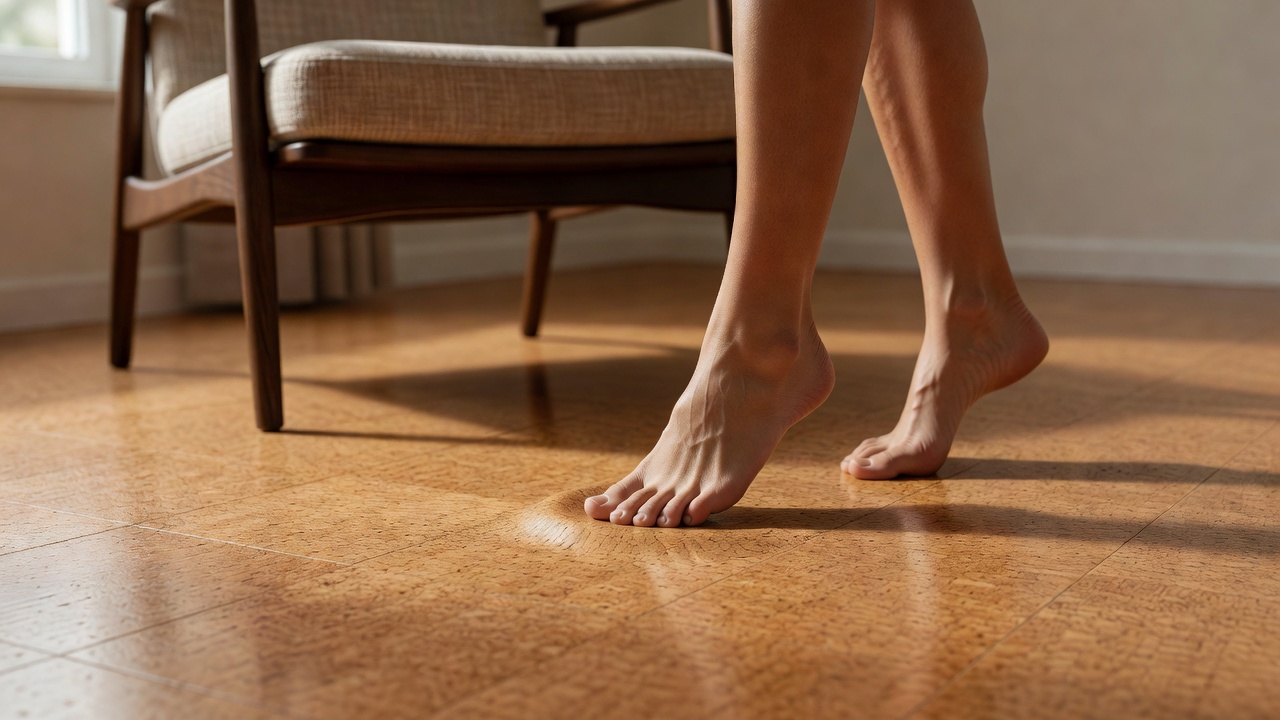
It does—noticeably cushioned thanks to its natural cellular structure, without the spongy collapse of cheap foam. Most walkers describe an immediate gentle give and residual warmth after a few steps. Softness is cork’s clearest sensory signature.
How does cork compare to hardwood underfoot?
Cork is springier, quieter, and warmer on first contact; hardwood is firmer, more resonant, and cooler until body heat accumulates. Choose cork for daily barefoot ease and hardwood for formal solidity and long-term refinishing potential. They serve different underfoot philosophies.
What flooring feels best for bare feet?
Cork ranks among the most comfortable options for bare feet due to its buoyant give and natural insulation, often edging out solid hardwood and basic LVP in blind sole tests. Thick padded vinyl can compete on pure plushness, but cork feels more organic. Personal preference still rules the final step.
Will cork flooring hold up in a kitchen?
It can, with a quality sealed finish and prompt attention to spills, though it remains less ideal than tile or properly waterproof LVP for chronic wet zones. Many owners succeed with cork in kitchens by treating it as a finished wood equivalent. Area rugs near the sink remain a civilized insurance policy.
Thus I pronounce cork flooring a legitimate acquisition for any household that still believes the floor should participate in the living rather than merely survive it. The tasting notes do not lie: spring on the attack, warmth through the mid-palate, a clean, matte finish that refuses vulgarity. Eight-point-two Insoles. Recommend with confidence to anyone whose feet have opinions.
I shall now return these sample planks to the trunk of a car that is not, strictly speaking, mine for another eleven days on the lease. The showroom lighting was flattering. Reality, as ever, requires socks by November.