engineered hardwood delamination causes
Why Engineered Hardwood Delaminates: Real Causes
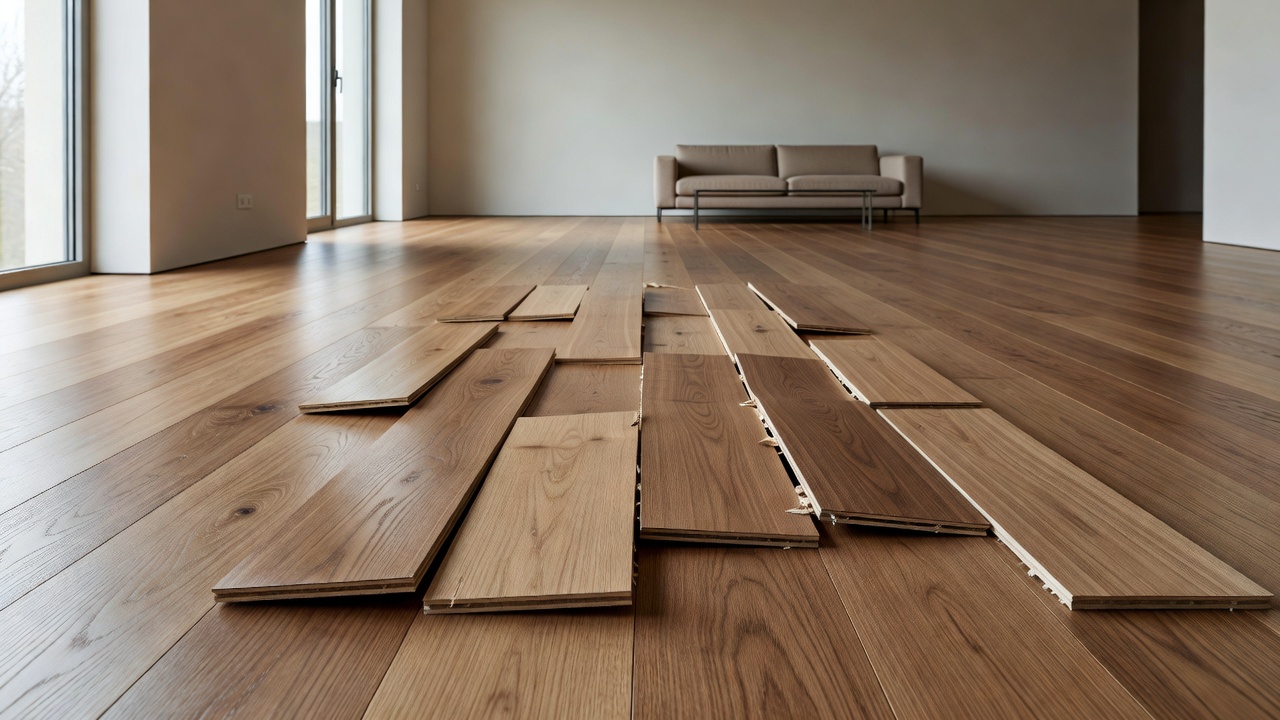 I noticed it first as a soft blister under the dining chair leg—afternoon light, wrong angle, the kind of household nothing that turns into a materials problem if you stare too long. Engineered hardwood delaminates when the adhesive bond between its layers fails, almost always at the glue line that pins the thin real-wood wear layer to the multi-ply (or HDF) core. Moisture is the usual villain, but heat cycling, under-cured glue, and paper-thin veneers can open the same microscopic gap. Delamination in engineered hardwood is the separation of factory-bonded layers—wear veneer from core—so the top peels, bubbles, or lifts like a sticker that never quite stuck. That is the short version. The longer version is, frankly, more fun.
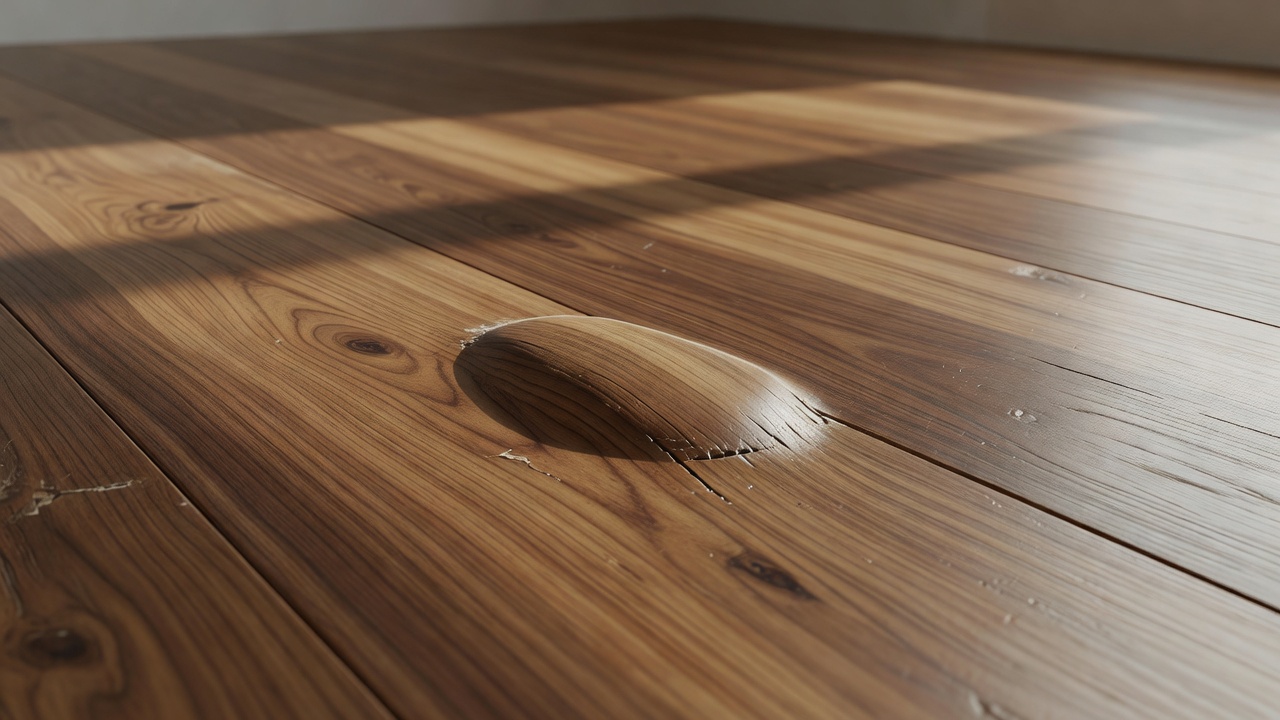
Why does engineered hardwood delaminate?
What you see on the surface—a ripple, a hollow spot, a corner that wants to curl—is the last chapter. Underneath, you are watching polymer chemistry and wood anatomy disagree with each other.
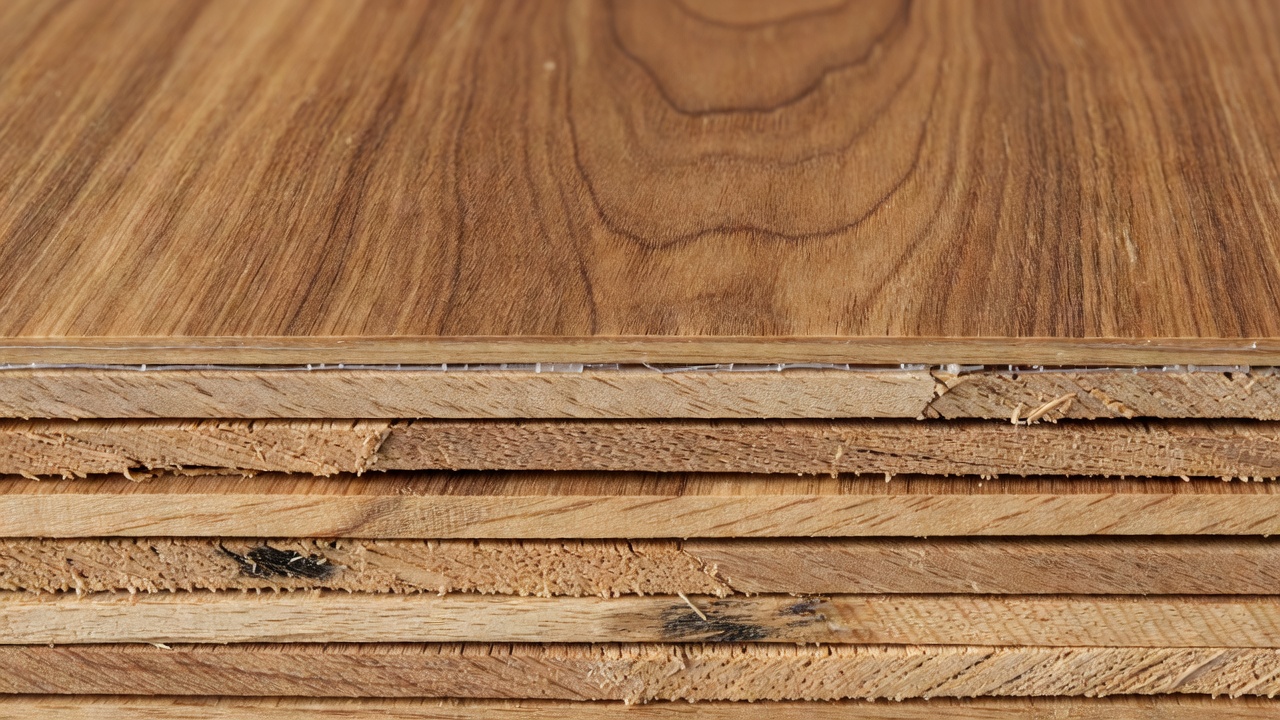
Engineered planks are a stack: a decorative hardwood wear layer (usually 0.6 mm to 6 mm), an adhesive film, and a core of cross-banded plywood or high-density fiberboard. The glue is supposed to be a continuous, cross-linked network that ignores humidity swings. When it does not, you get engineered wood glue line separation. Here is what is actually happening, in order of how often I see it show up in failed samples and installer photos:
- Moisture finds the interface. Liquid water or vapor migrates into the core or along the edges. Wood swells; the cured adhesive does not (or swells at a different rate). Shear stress builds at the bond line until the polymer network cedes. This is flooring moisture damage delamination in textbook form—slab vapor, wet mopping, pet accidents left overnight, or a kitchen leak nobody noticed for a week.
- The adhesive never fully cured or was the wrong chemistry. Some plants rush the press cycle. Incomplete cross-linking leaves a weaker, more hydrolytically sensitive film. PVA-type glues hate prolonged damp; better polyurethane or EPI systems tolerate more, but only if the factory actually used them and gave them time.
- Ply balance and density are off. A core that is denser on one face than the other, or a wear layer cut against the grain in a way that fights the core’s expansion direction, creates built-in stress. Humidity swings just finish the job. Cupping often shows up first; delamination follows if the glue was already marginal.
- Heat and UV age the bond. Near south-facing glass or over radiant heat that spikes past the adhesive’s glass-transition comfort zone, the polymer can embrittle. Micro-cracks become paths for moisture. (Okay, this is the part where I get a little too into it—feel free to skim—the glass-transition temperature is basically the point where a plastic stops being springy and starts being brittle. Your floor should never live there.)
- Mechanical abuse at a thin wear layer. High heels, dragged appliances, or sand under a chair leg can crush or fracture a skimpy veneer. Once the wear layer is cracked, moisture and stress concentrate at the glue line. Wear layer failure flooring is often delamination’s opening act.
Isn’t that wild? A floor that looks like one solid plank is really a laminated composite arguing with water molecules.
If you are mid-research on [LINK: engineered hardwood vs solid hardwood], keep the glue-line story in mind—solid boards do not delaminate this way because there is no factory glue plane to fail. They cup and check instead. Different failure mode, same humidity physics.
Does wear layer thickness matter in engineered flooring?
Yes. Loudly. Thickness is not just “how many times can I sand this.” It is a structural variable in whether the wear layer can survive everyday shear without tearing free of the adhesive.
A 0.6–1 mm veneer (common on budget planks) has almost no bending stiffness of its own. Any localized load—dog claws, a dropped cast-iron pan, the wheel of a rolling chair—deflects it hard against the glue line. That is what happens when wear layer wears through and why thin veneers delaminate earlier under the same moisture load as thicker ones. A 3–4 mm wear layer distributes stress, gives you a real refinishing allowance, and simply presents more wood substance for the adhesive to grab.
Manufacturer specs often list wear-layer thickness in millimeters or as a fraction of an inch. Translate that: under about 2 mm, you are buying a surface that is decorative first and structural second. Lab abrasion ratings (the Taber-style or European AC-style numbers you sometimes see borrowed from laminate talk) measure surface scuff resistance, not glue-line toughness—so a high abrasion score on a 1 mm veneer can still leave you with delamination risk if the bond or the core is weak. Lab-speak for “your dog can destroy the finish and the plank may still peel anyway.”
When you are comparing products, ask for the wear-layer thickness in writing and for the adhesive type if they will share it. Pair that with how the floor will be used. A low-traffic guest room forgives a thinner veneer; a kitchen with a water bowl and a shepherd mix does not. For more on reading those boxes without a materials degree, see [LINK: how to read engineered flooring specs].
What are the most common reasons vinyl plank floors fail?
I get asked this in the same breath as engineered wood questions, so here is the quick materials parallel. Luxury vinyl plank (LVP/LVT) rarely “delaminates” in the hardwood sense because its print film and wear layer are usually fused under heat and pressure, not glued the same way. When vinyl plank floors fail, you more often see:
- Plasticizer migration and embrittlement at the edges or in hot windows, so the wear surface cracks or the plank telegraphs every subfloor bump.
- Core swelling from moisture in cheaper WPC/SPC products that were never meant for wet slabs without a serious underlayment strategy—edges peak, joints open, the click system fractures.
- Installation and subfloor sins—the same cast of characters that kill engineered wood: uneven slabs, no expansion gap, skipped acclimation, trapped construction moisture.
So the failure language differs (gapping, peaking, joint breakage versus classic glue-line peel), but the root physics rhyme: moisture plus dimensional change plus a weak interface. If your project is choosing between categories, the delamination risk profile is one honest differentiator—engineered hardwood can peel at the veneer; vinyl more often comes apart at the locking joint or turns into a moisture sponge at the core.
Can you refinish engineered hardwood after the wear layer fails?
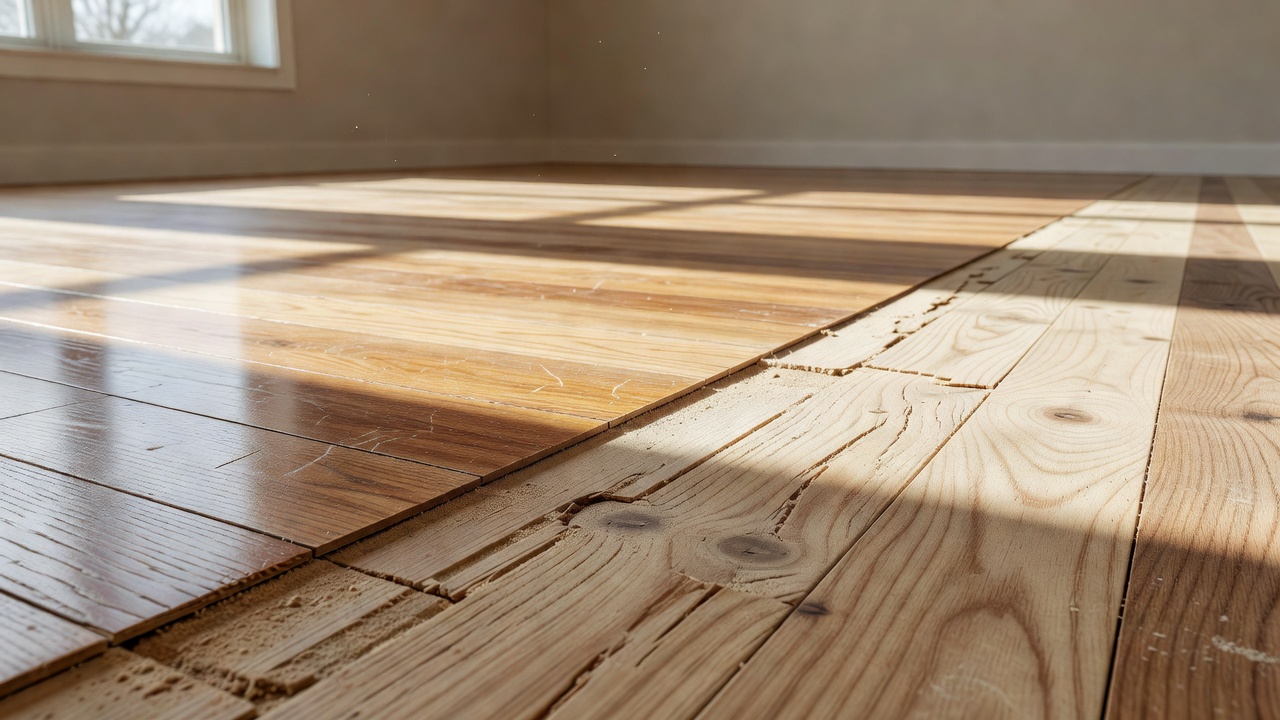
Only if enough wood remains. Once the wear layer is sanded through to the glue or the core, you are done—there is nothing left to refinish, and any stain will look blotchy over adhesive residue or plywood. A 3 mm+ wear layer might give you one careful professional sanding; a 1 mm layer is essentially a single-lifetime finish. If delamination has already started, refinishing will not re-bond the veneer. You stop the moisture source, replace the affected planks if the system allows, and treat the rest as a diagnostic for the whole install.
FAQ
Why does engineered hardwood delaminate?
Engineered hardwood delaminates when the adhesive bond between the wear layer and the core fails, most often from moisture-driven swelling, incomplete glue cure, or stress on a thin veneer. The result is peeling, bubbling, or hollow spots along the glue line. Everything else—heat, UV, mechanical abuse—usually just accelerates that bond failure.
Does wear layer thickness matter in engineered flooring?
Yes. Thicker wear layers (roughly 3 mm and up) resist localized shear better and leave room for refinishing; sub-2 mm veneers flex hard against the glue line and delaminate sooner under the same loads and humidity. Thickness is a structural spec, not just a sanding count.
What are the most common reasons vinyl plank floors fail?
Vinyl plank more often fails from core moisture swelling, click-joint breakage, plasticizer loss, and subfloor unevenness rather than classic hardwood-style delamination. The shared theme with engineered wood is still moisture plus dimensional change at a weak interface.
Can you refinish engineered hardwood after the wear layer fails?
Only while real wood still remains above the glue line—typically one careful sanding on a 3 mm+ veneer. Once you hit adhesive or core, or once delamination has separated the layer, refinishing will not restore the bond; plank replacement is the honest fix.
How do I spot delamination risk before I buy?
Look for stated wear-layer thickness, any mention of adhesive type or waterproof claims tied to real test methods, and installation requirements around moisture testing of slabs. Vague “durable multi-layer construction” language without numbers is not a spec—it is marketing.
I still catch myself checking the angle of light across my own floors now, looking for the first hint of a blister that means a polymer network somewhere has given up. You might too, next time a glass of water sits a little too long. That small domestic moment is just wood, glue, and humidity negotiating in plain sight—and once you have seen the mechanism, it is hard to unsee.