acceptable subfloor moisture levels
Subfloor Moisture Testing: Pro Guide Before Install
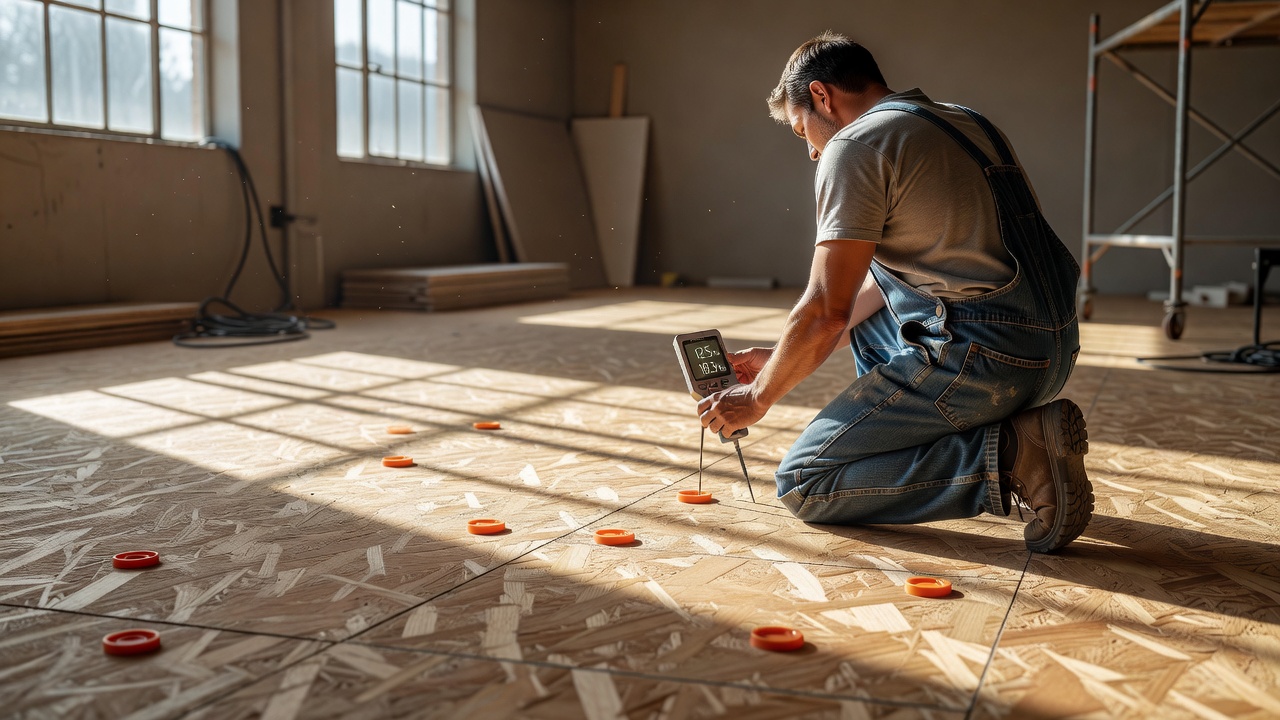 Subfloor moisture testing is measuring the water sitting in or under your subfloor before you glue, nail, or float anything on top of it. Acceptable numbers are not a vibe check — hardwood wants wood moisture content in the 6–9% range matched to the jobsite, and concrete usually needs relative humidity under 75–80% by ASTM F2170 for most adhesives and finishes to hold. Skip the test and you get cupping, peaking, failed glue lines, mold under “waterproof” planks, and a manufacturer that laughs at your warranty claim. I learned that the expensive way more times than I care to count.
I was three cups into gas-station coffee on a slab job in ’09 when the homeowner told me the concrete “felt dry” and the LVP he’d already bought was “100% waterproof so we’re fine.” Floor looked perfect for six weeks. Then the edges started lifting like bad pie crust. We pulled a corner. Black on the foam, glue turned to goo, and the slab still reading 92% RH. That one cost him a full tear-out plus a proper mitigation system. Subfloor prep is 80% of the job and nobody wants to pay for it until the floor is already ruined.
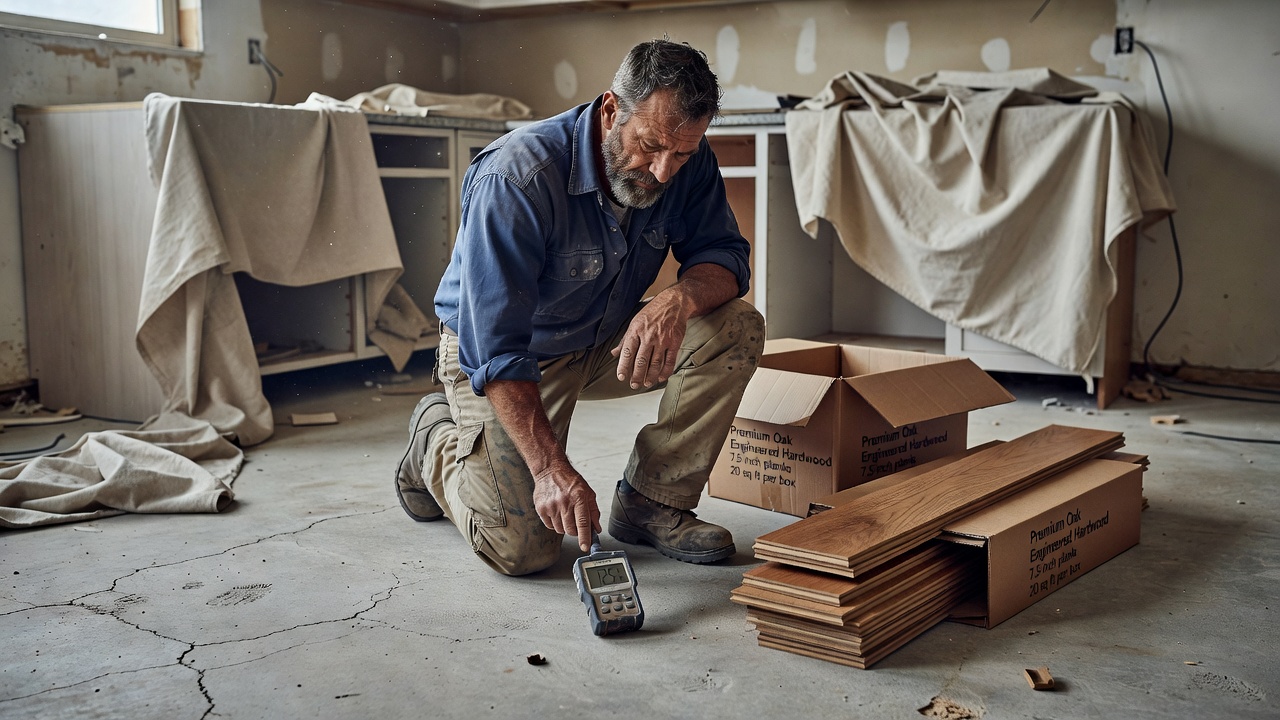
What is an acceptable moisture level for a subfloor before installing hardwood?
Wood subfloors and solid or engineered hardwood need the subfloor moisture content within 2–4 percentage points of the flooring itself, and both usually land between 6% and 9% once the house is at normal living conditions. That’s the number I write on the work order. If the plywood is sitting at 14% and you nail 7% oak on it, the oak will move when the subfloor dries — or worse, when the seasons flip. I use a pin or pinless moisture meter on the wood, multiple spots, not just the pretty center of the room. Crawl spaces and edges near exterior walls lie the most.
Concrete under hardwood is a different animal. Most adhesive and finish makers want concrete relative humidity at or below 75–80% when tested to ASTM F2170, or a calcium chloride result (ASTM F1869) under 3–5 lbs depending on the product. Some newer adhesives claim higher tolerance. I still test. Claims on a tube do not pay for my callbacks. If you’re looking at [LINK: hardwood acclimation] before install, moisture testing is the step that makes acclimation mean anything — dry wood on a wet slab is just expensive kindling waiting for humidity to do its work.
Never trust a floor that “looks fine” in the showroom lighting. That same oak looked museum-perfect in the store. On the wet slab it turned into a washboard in one heating season.
How do you test concrete subfloor moisture for flooring?
You do not lick it. You do not wait “until it looks light gray.” You run a real test.
For in-situ relative humidity — the one I trust most — you drill holes to 40% of slab thickness (or 20% if drying from one side only), drop in ASTM F2170 sleeves, let them equilibrate the required time, then read with a calibrated RH probe. Three tests for the first 1,000 square feet, one more for every additional 1,000. I mark the holes on a sketch so the homeowner can’t claim I invented the numbers later. Calcium chloride kits (F1869) still show up on older specs; they measure vapor emission from the surface over 60–72 hours under a sealed dome. Useful, but they only see the top. A slab can pass calcium chloride and still murder an adhesive when the core is wet. That’s why F2170 exists.
I carry both. On a big pour I want the RH numbers. On a remodel with unknown history I sometimes run both and photograph everything. Document or donate the floor later — those are the options.
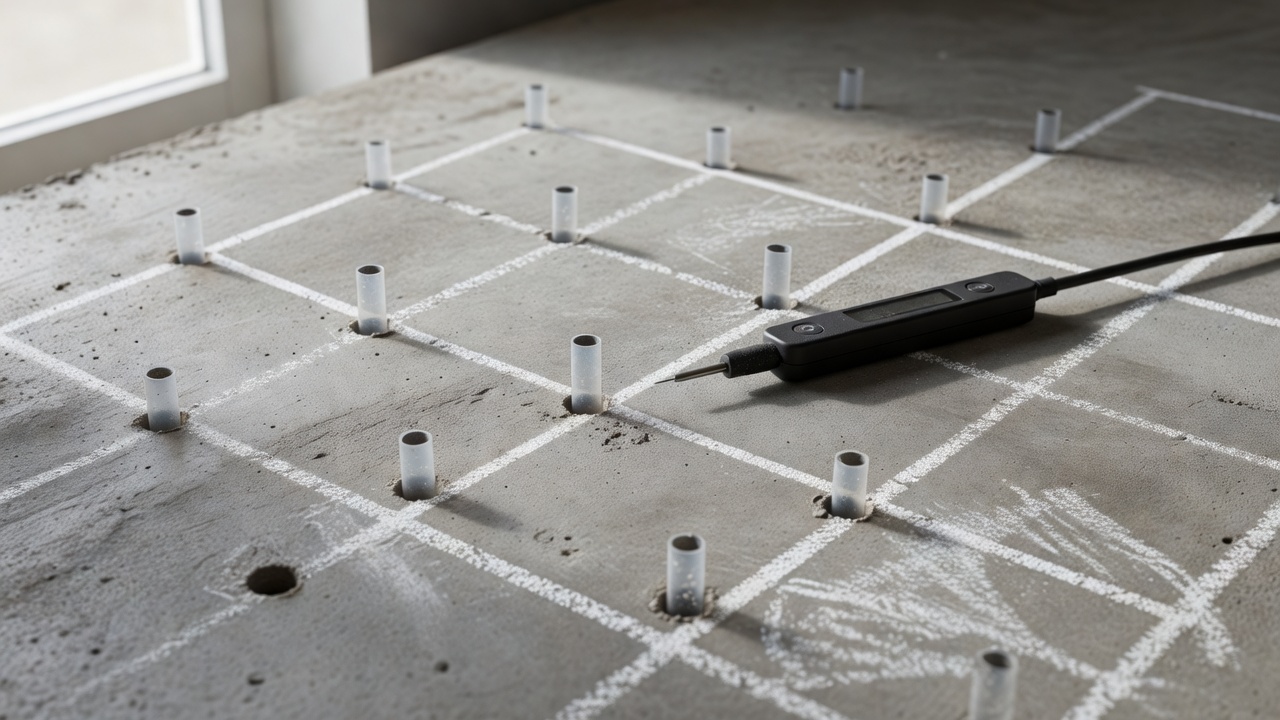
Moisture meters that just sit on the surface are screening tools, not the final word. They help me decide where to drill. They do not replace the hole. Anyone selling you a $40 pinless gadget as “all you need before LVP” is selling you a future problem.
When the numbers come back high, you do not throw a plastic sheet down and pray. Basic 6-mil poly is a moisture barrier under flooring in the old-school sense — it slows vapor. It does not fix a slab that’s pumping moisture like a damp basement. High readings mean concrete moisture mitigation flooring systems: topical sealers rated for the RH you actually measured, epoxy moisture barriers, or full mitigation membranes the adhesive manufacturer lists as compatible. I have watched people roll out the cheap underlayment from the big-box endcap over a 90% RH slab because some video called it “waterproof.” The floor failed. The warranty said “must meet ASTM moisture limits.” End of story.
Do I need a moisture barrier under vinyl plank or LVP?
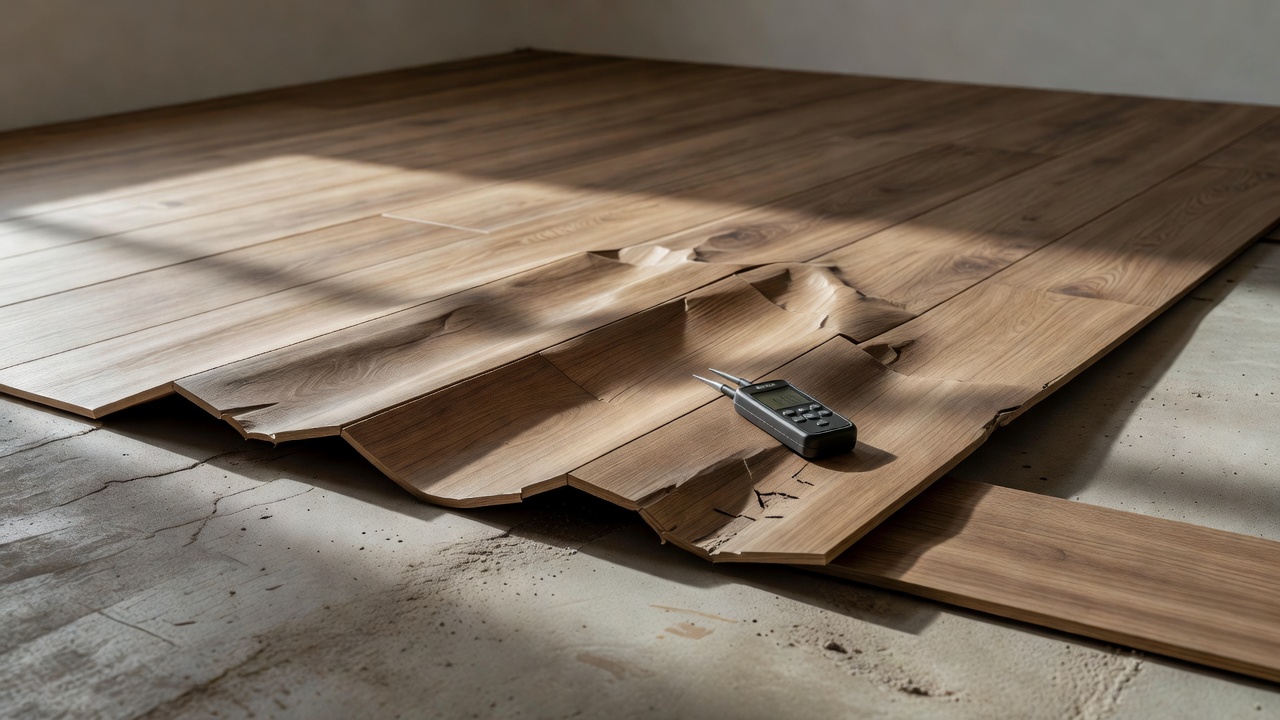
On or below grade concrete, yes — almost always. Above-grade wood subfloors that are dry and properly ventilated, sometimes the pad is enough if the manufacturer says so. Read the install instructions for the exact SKU, not the marketing banner. “Waterproof” LVP means the plank itself will not swell like solid hardwood when a dog pees on it. It does not mean the click joints, the foam, or the adhesive love a wet slab. Trapped moisture under LVP still grows mold, still softens underlayment, still makes the floor smell like a gym bag in August. I have pulled enough of it to stop being polite about this.
A vapor barrier for LVP on concrete is either the underlayment the brand specifies with a stated perm rating, or a separate mitigation product when the RH test fails. Do not mix random foam with random film and call it engineered. That is how you void both warranties at once. For a plain-English map of film vs integrated pads vs when mitigation is the real job, see moisture vapor barriers under floors — then still obey the LVP install sheet. If the slab fails the test, mitigation first — barrier second. Order matters.
Same rule applies to the current fad of sticking ultra-thin rigid core planks over every surface in the house because the catalog called them “pet proof and waterproof forever.” Pet proof is not slab proof. I will install the stuff when the numbers pass. I will not cosign skipping the meter because the internet said the floor doesn’t care.
What happens if you install flooring over high-moisture subfloor?
Cupping and crowning on wood. Peaking at the joints. Adhesive that never cures or re-emulsifies into slime. Underlayment that turns to mush. Mold. Buckling that trips the dog. And a manufacturer who asks for your moisture documentation, hears silence, and denies the claim in one paragraph. I have seen solid oak cup so hard the finish cracked in lines. I have seen engineered floors delaminate from the bottom up because the core sat in vapor for months. I have seen “100% waterproof” LVP with black growth on the foam and owners who swore the slab was dry because the basement dehumidifier was running.
The short version: the floor moves, the finish fails, the glue lets go, and you pay twice. Moisture does not negotiate.
One more thing people hate hearing — the test is not optional because the room “feels dry” or because you are in a hurry for the photographer. I once had a couple insist we skip testing so the open house photos could happen on schedule. We tested anyway. 88% RH. They delayed two weeks for mitigation. Floor is still flat ten years later. The ones who rush me are the ones who call me back angry.
Here’s the only numbered list I will give you on this topic:
- Test the subfloor the way the flooring and adhesive manufacturers specify — usually ASTM F2170 for concrete RH, meter readings for wood.
- Compare the numbers to the written limits for that exact product, not a blog average.
- If you fail, mitigate with a system rated for the actual reading, then re-test if the manufacturer requires it.
- Document every reading with photos and a simple sketch before the first plank comes out of the box.
- Install only after the numbers pass. Not before. Not “close enough.”
That is the whole job in five lines. Everything else is expensive theater.
FAQ
What is an acceptable moisture level for a subfloor before installing hardwood?
Wood subfloors and hardwood flooring should both read roughly 6–9% moisture content and stay within 2–4 points of each other. Concrete under hardwood generally needs 75–80% RH or lower by ASTM F2170 unless the adhesive specifically allows more. Those are the lines I will not cross for a pretty sample board.
How do you test concrete subfloor moisture for flooring?
Drill and sleeve for ASTM F2170 in-situ RH tests at the required depth and quantity of holes, or run ASTM F1869 calcium chloride kits where the spec still calls for them. Surface meters screen; they do not finish the job. Write the numbers down.
Do I need a moisture barrier under vinyl plank or LVP?
On concrete at or below grade, yes — use the barrier or underlayment the LVP manufacturer specifies, and step up to full mitigation if RH tests fail. “Waterproof” plank is not a free pass on a wet slab. Above-grade dry wood is a different conversation; still read the instructions.
What happens if you install flooring over high-moisture subfloor?
Wood cups or crowns, adhesives fail, underlayments grow mold, joints peak, and warranties die. You pay for the floor twice and listen to me say I told you so. Test first.
When is concrete moisture mitigation required instead of a basic vapor barrier?
When your RH or emission numbers exceed what the flooring or adhesive allows. A sheet of poly slows vapor; it does not repair a wet slab. Mitigation systems — rated sealers, epoxies, membranes — are what keep the floor down when the test fails. See [LINK: concrete moisture mitigation systems] if the meter is already giving you bad news.
Anyway. Call somebody before you rip anything out. Doesn’t have to be me. Should probably be me.