Matte Flooring Aesthetics: Why Low-Sheen Wins 2026
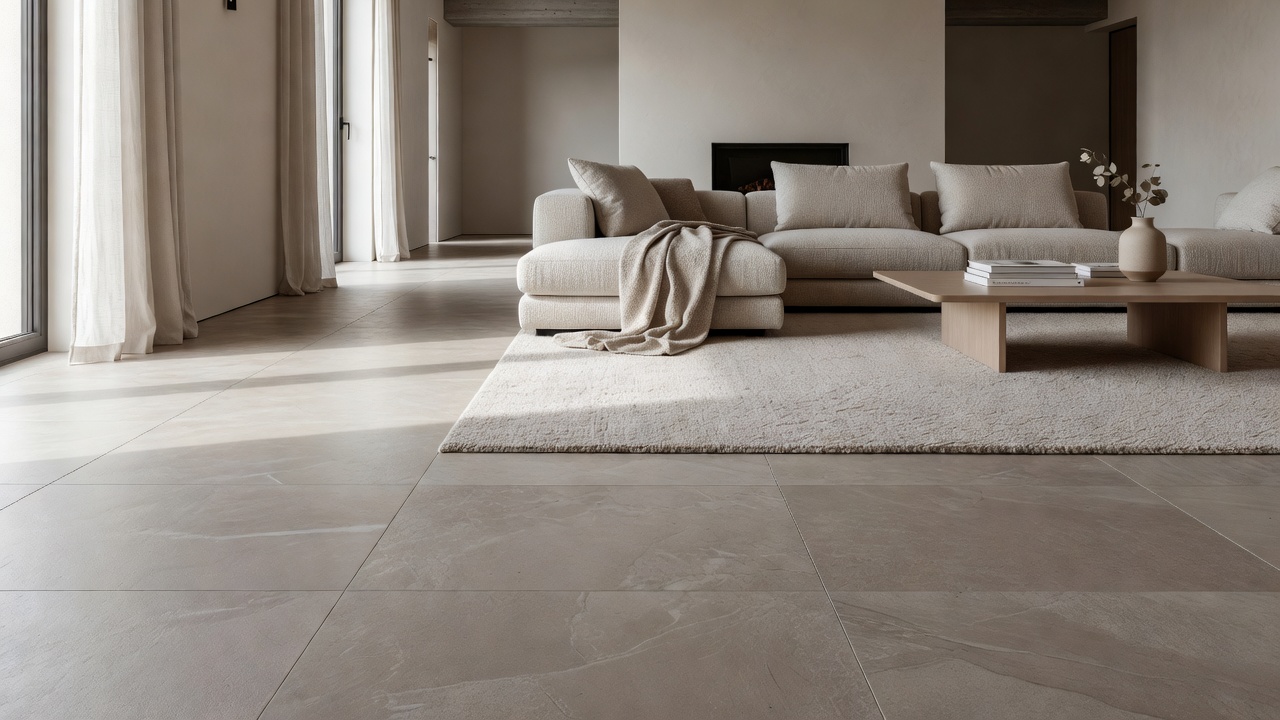 Late afternoon light slides across a room the color of warm chalk and unbleached linen. Curtains barely breathe. A single olive branch in a clay vessel throws a soft shadow that doesn’t bounce—it settles. Nothing here is trying to perform. The space feels like it has already decided who it is. And then your eye drops, and you understand why: the floor is holding the entire mood without a single specular flash.
Matte flooring aesthetics win 2026 because low-sheen finishes stop competing with the room and start completing it. Matte flooring aesthetics are the visual and tactile language of floors finished to absorb rather than mirror light, revealing true grain, stone depth, and wood character while softening glare, concealing daily life, and shaping a quieter, more intimate atmosphere. That is the entire thesis. Everything else is just how the light behaves once you stop forcing it to bounce.
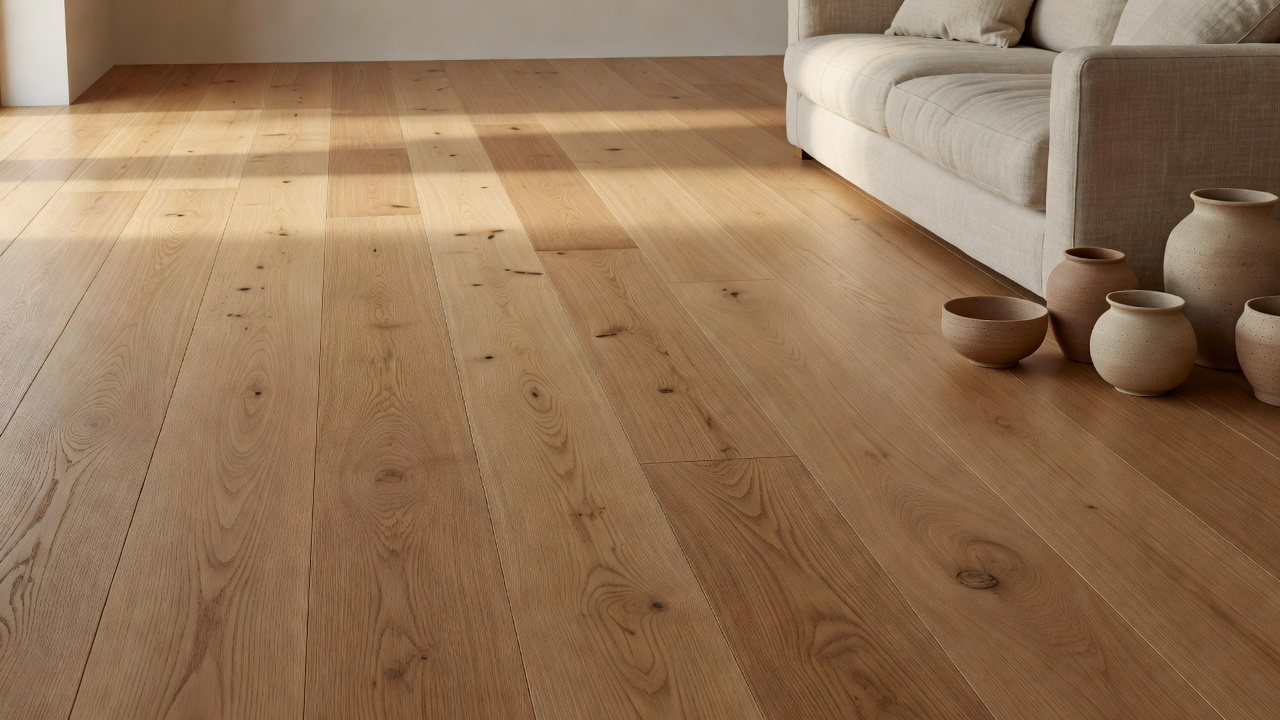
I have staged houses that sold before the weekend open house and one client who cried standing on a new herringbone because it finally felt like home instead of a showroom. Gloss used to be the default signal for “expensive.” In 2026 it reads as trying too hard. Matte—and its close cousin satin when you need a whisper more protection—lets the material keep its dignity.
How Does Flooring Sheen Affect the Look of a Room?
Sheen is not a finish detail. Sheen is mood architecture.
High gloss throws light around like a nervous host. Every footprint, every dust mote, every slight undulation in the subfloor becomes a conversation piece you never wanted. The room feels brighter, yes, but also thinner, more public. Matte does the opposite. It drinks the light and gives it back as atmosphere. Edges soften. Shadows lengthen in a way that feels intentional. Warm wood tones deepen instead of bleaching out under overheads. Cool stones stay grounded rather than turning into ice rinks.
I keep a private mood board in words for the rooms that haunt me after I leave:
- chalky white oak with the faintest silvered grain
- limestone that still remembers the quarry
- smoked herringbone that looks hand-rubbed by time
- clay-adjacent taupe LVP that fools every client until they kneel
- velvet-matte black porcelain that absorbs sound and light equally
These are not trends I am embarrassed by. (Yes, I know, grey floors, I KNOW—let me have the memory of 2019 before we move on.) They are proof that natural texture flooring aesthetics only fully activate when sheen drops low enough for the eye to read the surface instead of the reflection sitting on top of it.
The install people will tell you matte shows every swirl mark if the applicator was careless. They are not entirely wrong. A poorly applied matte finish can look cloudy. But a well-executed one? It forgives the house its living. I will die on that hill, then concede they deserve better dust containment on site. Fair.
When I want a room to feel collected rather than decorated, I reach for matte first. It is the difference between a space that photographs well and a space people actually want to stay inside. For deeper material pairings that amplify this effect, see how we approach [LINK: warm wood tone pairings] in staged listings.
Is Matte Flooring Better Than Glossy?
For most residential rooms in 2026—yes. Not universally, not dogmatically, but directionally and decisively.
Gloss still has its moments: a tiny powder room where you want jewel-box drama, a commercial lobby that needs to signal polish under constant traffic. Everywhere else, matte (or a true satin that sits closer to matte than to semi-gloss) simply serves the architecture better. It reduces visual noise. It lets large-format planks and tiles read as continuous planes instead of shattered light fields. It makes herringbone feel like an heirloom gesture rather than a high-gloss flex.
Clients ask me constantly whether they are “losing luxury” by going matte. The opposite happens. Luxury right now is the absence of glare. It is the confidence to let European white oak look like European white oak instead of a lacquered boat deck. When I specify for professional staging, matte finishes photograph cleaner under mixed lighting and make buyers linger longer in the listing photos. That is not soft preference. That is measurable in time-on-page and offer speed.
Satin versus matte hardwood finishes is the only real debate left. Satin gives a hair more cleanability and a soft glow at raking angles; pure matte is the full aesthetic commitment. I use both. I never apologize for either.
Does Matte Finish Hide Scratches and Dust Better?
Yes. Dramatically.
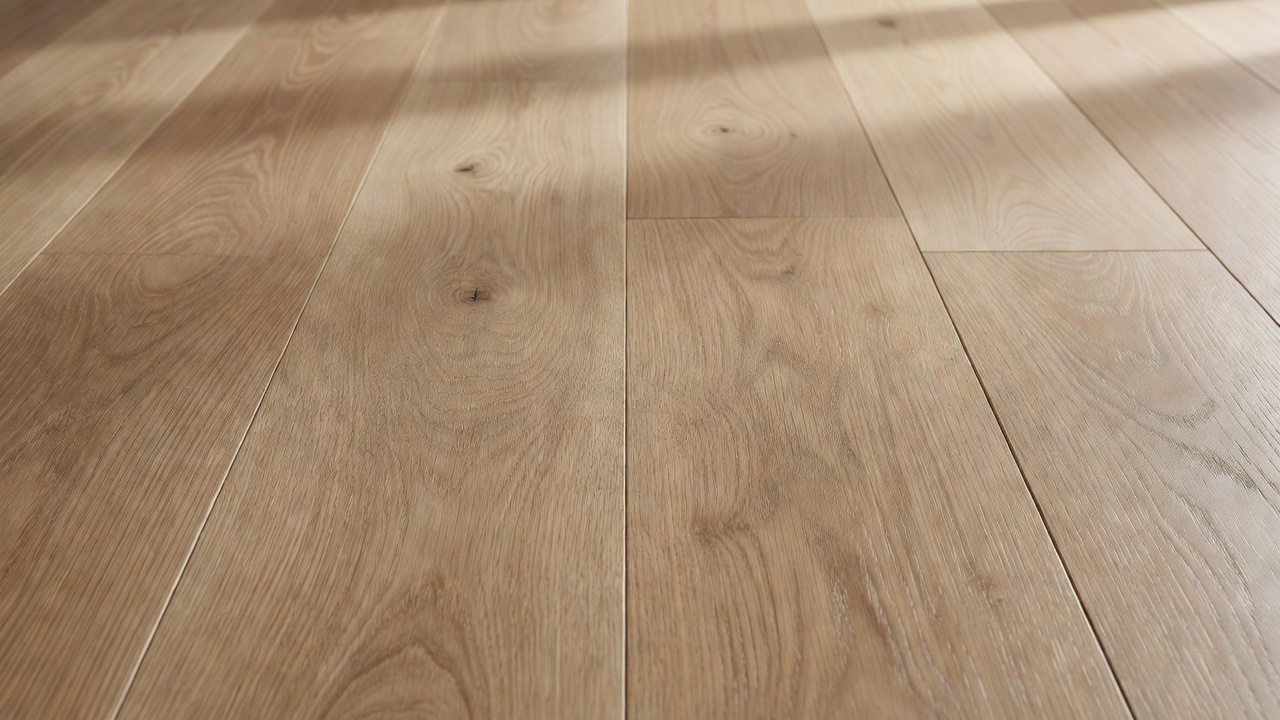
Gloss is a spotlight for every micro-abrasion and every piece of grit that walked in on someone’s shoe. Matte diffuses those same marks into the overall texture. Dust becomes less of a daily indictment. Pet nail trails soften. The floor ages into itself instead of aging into a maintenance schedule.
This is why matte has become the default recommendation when I am prepping a home for market. Buyers open the door, the light is kind, the floors do not scream “look at my flaws,” and the entire emotional temperature of the house drops into something calmer and more desirable. Best matte finishes for home staging are currently the ones that keep a faint material honesty—no plastic deadness, just quiet depth. If you are weighing durability claims against pure aesthetics, the practical side lives in our [LINK: flooring durability guide], but the feeling side lives here.
I once walked a listing the morning of photos and realized the previous glossy polyurethane had turned the beautiful original boards into a skating rink of regrets. We screened and recoated matte in forty-eight breathless hours. The photographer cried (in a good way). The house went pending in nine days. I still think about that living room when I cannot sleep.
What Flooring Finish Is Best for Natural Aesthetics in 2026?
Matte. Full stop. Or a satin so restrained it barely registers as sheen.
The 2026 eye wants material truth: the porosity of stone, the cathedral grain of oak, the subtle movement in large-format porcelain that mimics hand-troweled plaster. High sheen flattens all of that into a single reflective plane. Low sheen lets the story stay. Pair it with warm wood tones, gentle herringbone or chevron, and oversized formats that reduce grout chatter, and the room stops performing trend and starts feeling inevitable.
That is the quiet power of matte flooring aesthetics this year. Not louder. Deeper.
FAQ
Is matte flooring better than glossy?
Matte is better for most homes in 2026 because it reduces glare, reveals natural material character, and creates calmer rooms. Gloss still works in small dramatic spaces or high-traffic commercial settings, but residential interiors favor low-sheen for both beauty and daily livability.
How does flooring sheen affect the look of a room?
Sheen controls how light behaves: gloss multiplies reflections and can make a space feel brighter yet colder and more chaotic, while matte absorbs light to soften edges, deepen color, and produce a grounded, intimate atmosphere.
Does matte finish hide scratches and dust better?
Yes. Matte diffuses light so fine scratches, scuffs, and dust are far less visible than on glossy surfaces that spotlight every imperfection. This makes matte especially practical for real life and for homes being staged.
What flooring finish is best for natural aesthetics in 2026?
A true matte or very low satin finish is best. These sheen levels allow wood grain, stone texture, and material depth to remain the focus instead of surface shine, aligning with the current preference for understated natural elegance.
Can I mix matte floors with glossier elements in the same home?
Absolutely. Matte floors pair beautifully with a single glossy tile moment in a shower or a high-sheen piece of furniture; the contrast actually heightens the quiet of the floor.
I still remember the first time I stood in a fully matte-floored apartment after years of specifying the shiny stuff. The light was so kind I felt briefly, ridiculously, like the room was protecting me. That is the part I cannot put in a specification sheet.
So tell me—what is the one room that still does not feel like you yet? I am already seeing it in low light, waiting for the floor to stop performing and simply be.