AC Rating Laminate Flooring Explained Simply
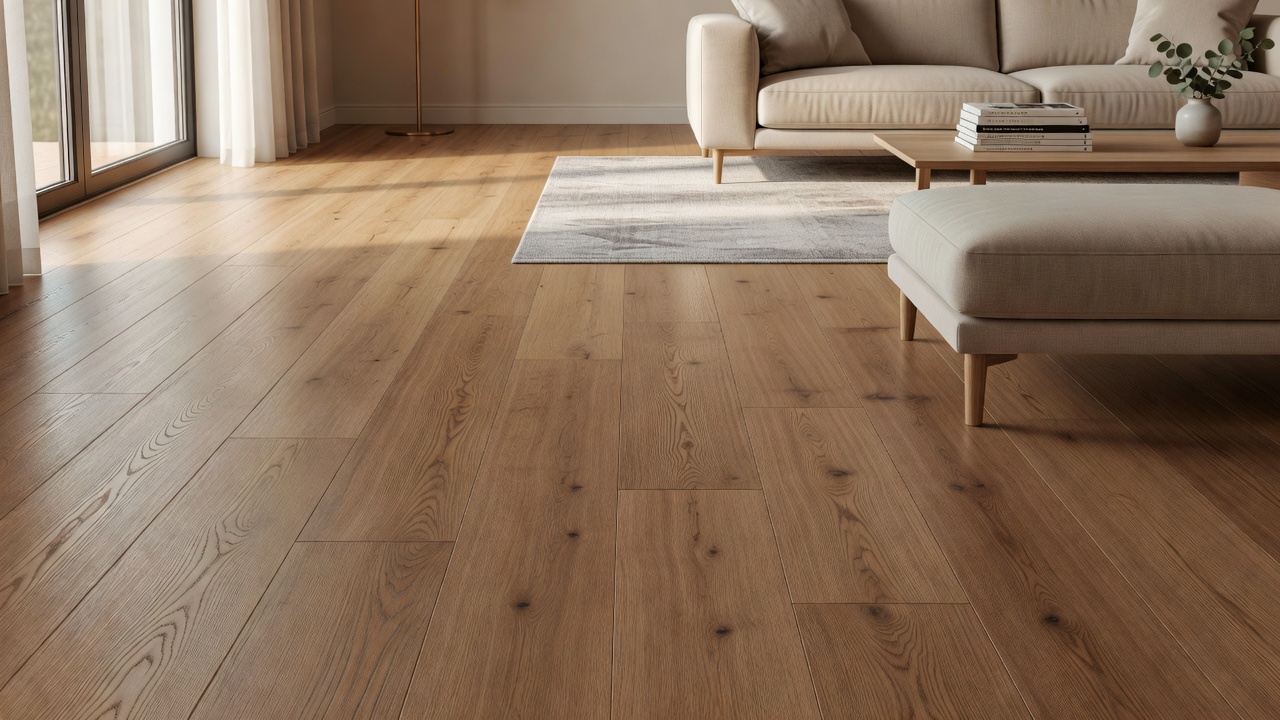 I was watching my dog’s nails click across the kitchen last weekend—same path every morning to the water bowl—and I started thinking about aluminum oxide. Not the romantic version of pet ownership, I know. But those microscopic grit particles she tracks in are basically sandpaper, and the only thing between them and the pretty wood-look photo layer in laminate is a thin coat of resin loaded with aluminum-oxide particles. That coat is what an AC rating for laminate flooring tries to quantify.
AC rating laminate flooring is a durability classification under the European standard EN 13329 that ranks how well a laminate’s aluminum-oxide wear layer resists controlled abrasion before the décor paper shows through. Higher numbers mean the sample survived more revolutions under grinding wheels in a lab. AC3 is the usual residential baseline; AC4 and AC5 step up for heavier traffic. The rating is useful—and also incomplete in ways that are quietly fascinating once you look at how the test actually works.
What does AC rating mean for laminate flooring?
The letters stand for Abrasion Class. The scale most retailers still quote runs AC1 through AC5 (you will occasionally see AC6 on commercial-leaning lines). In plain terms:
- AC1 — light residential, bedrooms you barely enter
- AC2 — general residential, moderate living areas
- AC3 — heavy residential / light commercial — the default “fine for a normal house” recommendation
- AC4 — general commercial / very busy homes
- AC5 — heavy commercial
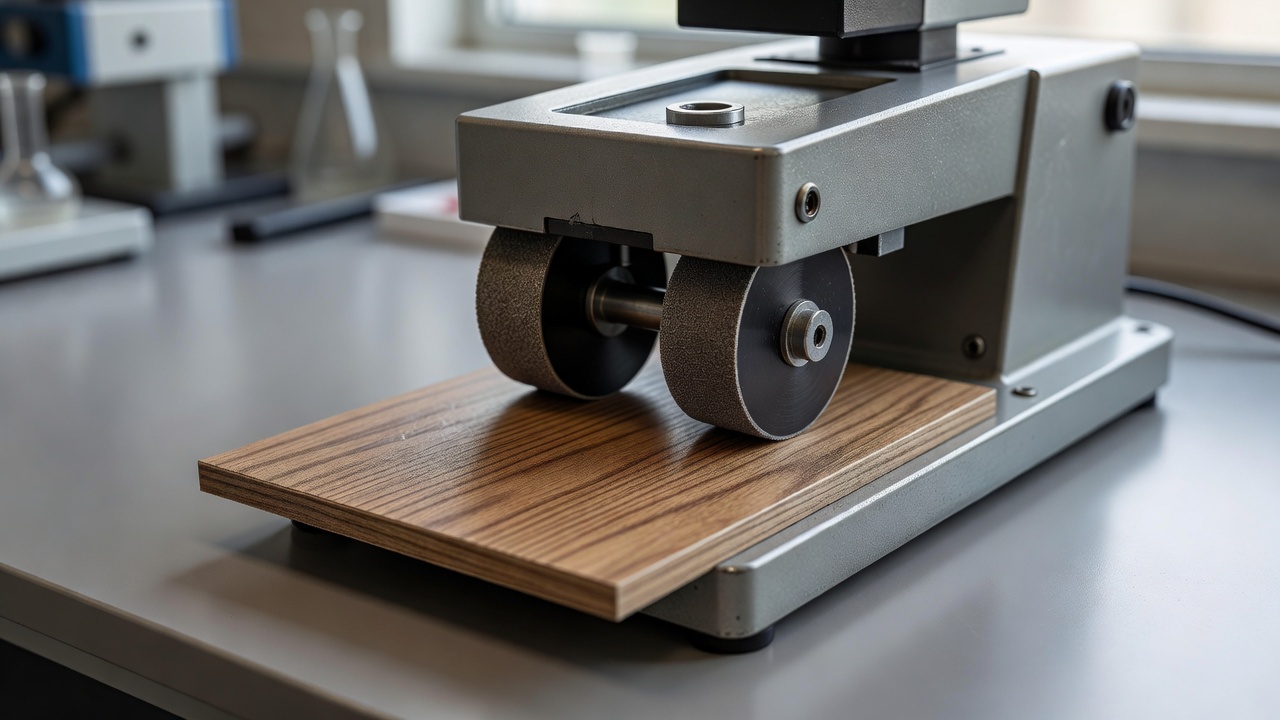
Manufacturers earn the number by running planks through the Taber-style abrasion protocol spelled out in EN 13329. Two abrasive wheels loaded with specific grit paper grind a circular path on the surface. Every so often the paper is refreshed. Technicians watch for the point at which the printed décor layer becomes visibly exposed in a defined pattern—the “initial wear point.” More revolutions before that happens = higher AC class.
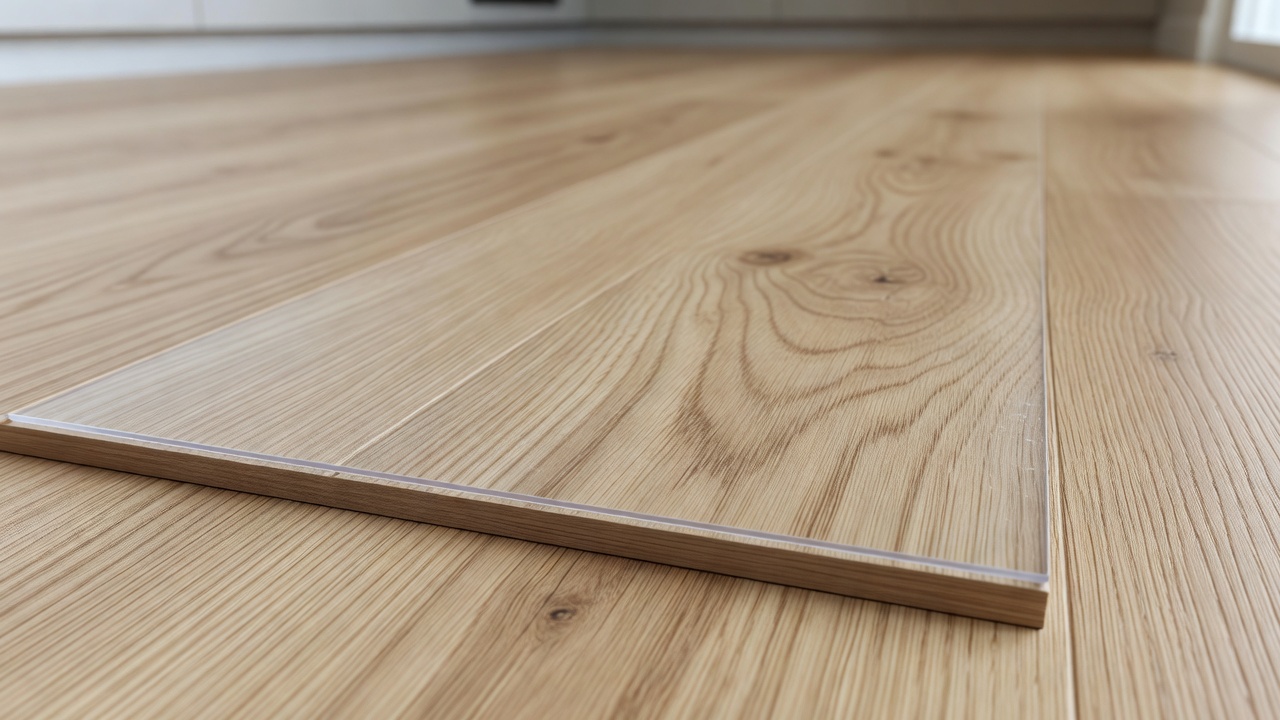
The wear layer itself is usually a melamine-formaldehyde overlay densely packed with aluminum-oxide (Al₂O₃) particles. Those particles are harder than most household grit, so they take the beating first. Thickness of that overlay, particle size distribution, and how evenly the oxide is dispersed all influence the score. It is not simply “thicker = better,” though thickness helps; dispersion quality matters a lot. Sorry—this is the part where I get a little too into it. Feel free to skim the next paragraph if particle packing is not your idea of a good time.
What is actually happening under the wheels, step by step:
- The abrasive paper first scuffs the outermost resin-rich skin.
- Exposed aluminum-oxide grains begin to fracture or pluck out, taking tiny bits of surrounding melamine with them.
- Micro-pits form and link up; the surface turns microscopically matte in the wear track.
- Eventually enough overlay is gone that the printed décor paper (or the protective ink layer on it) is breached—the failure criterion the standard counts.
- The number of revolutions at that moment, plus results from related impact, stain, and thickness-swelling tests in the same standard, bins the product into an AC class.
That last point is easy to miss on a product page: AC is not only the abrasion number. EN 13329 is a suite. A floor can abrade well and still fail classification if it swells too much at the edges or dents under a dropped weight. Still, abrasion is the headline number everyone markets.
How is laminate AC rating tested—and why does my floor still scratch?
Here is the materials-science catch. The EN 13329 abrasion wheels apply a relatively uniform, rolling abrasion. Real homes apply something messier: angular silica grit from the sidewalk, pivoted chair legs, dog nails that concentrate force on a tiny radius, and the occasional dragged suitcase. Rolling wheels and sharp point loads do not remove material the same way.
I have watched (under a cheap USB microscope, do not judge me) how a single piece of quartz grit embedded in a shoe sole can plow a fine trench through an AC3 overlay long before the Taber wheels would have reached initial wear point on a lab sample. The décor layer is still fully covered everywhere else, so the plank has not “failed” the standard—yet you see a shiny scratch every time the light hits it at 4 p.m. The rating predicts when the picture disappears. It is less precise at predicting when the gloss pattern looks ruined to a human.
NALFA (the North American Laminate Flooring Association) has its own certification with similar spirit but different test details; some products carry both. Neither system fully captures grit-plus-pivot wear. That is not a conspiracy. Lab tests need to be repeatable across factories and decades. Real living rooms are gloriously non-repeatable.
If you are comparing laminate to rigid-core vinyl, you will notice LVP/LVT talks in mils of wear layer (a 20 mil wear layer LVP is a common premium claim) rather than AC classes. Different construction, different test traditions. A thick vinyl wear layer can be very tough, but it is urethane-based chemistry, not melamine-plus-oxide, so the failure modes look different under the same grit. I keep a longer side-by-side in [LINK: laminate vs LVP wear layer comparison] if you want the full nerd-out.
What AC rating do I need for a home?
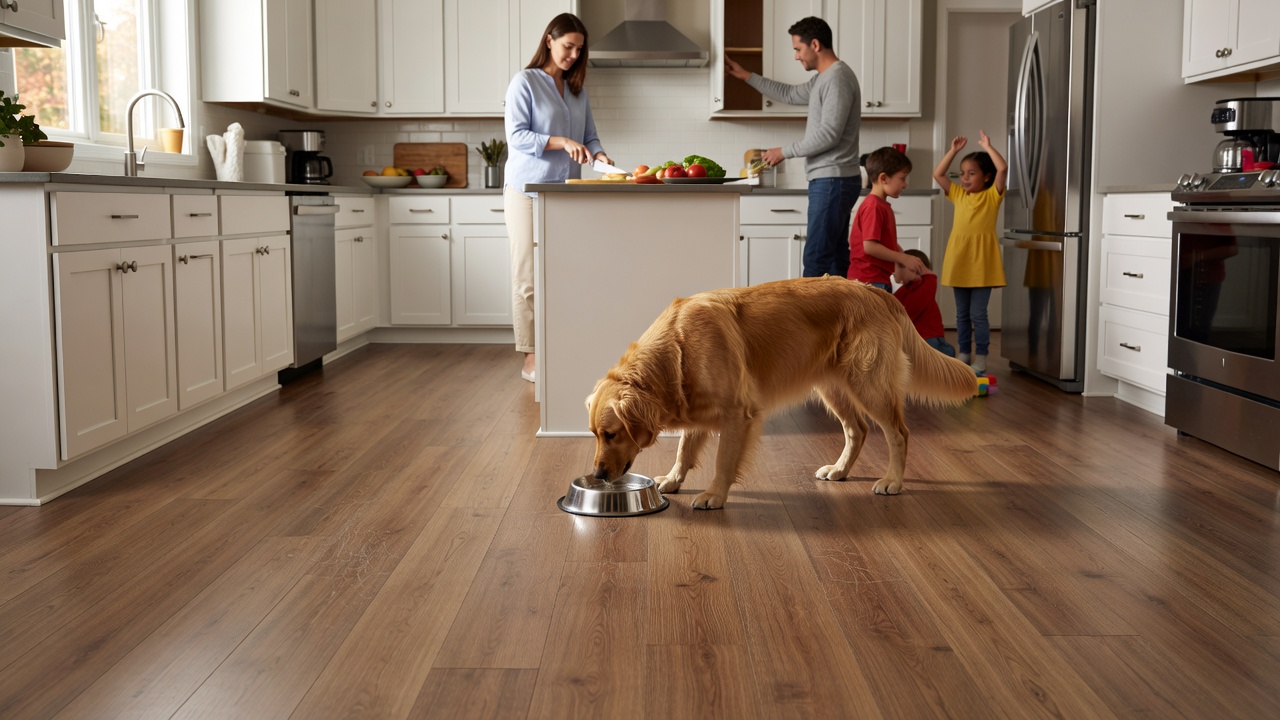
For most houses without a home daycare or a pack of huskies, AC3 is the honest baseline. It is what the standard itself positions for heavy residential use. If you have heavy shedding dogs, kids who treat hallways like racetracks, or a direct path from a sandy yard into the kitchen, AC4 is the calmer choice. AC5 is usually overkill unless you are also running a small retail space out of the front room.
Room-by-room shortcuts I actually use when friends text photos of sample boxes:
- Bedrooms, closets → AC2 or AC3 is fine
- Living rooms, dining, hallways → AC3 minimum
- Kitchens, family entries, mudrooms → AC3 or AC4
- Anything with an exterior door that sees winter grit → lean AC4 and get serious about walk-off mats
Also look at the wear-layer story the brand tells alongside the AC number. Some AC4 products simply use a denser or slightly thicker oxide overlay; others pair the rating with better edge sealers so moisture does not open a second failure path. Edge swell is how a lot of laminate actually dies in kitchens, not pure abrasion. Worth reading the fine print on [LINK: water-resistant laminate vs waterproof claims] before you fall in love with a shade.
Is AC4 better than AC3 for residential use?
Usually yes, in the narrow sense that it survived a harsher lab abrasion threshold and often a tougher impact package. In a quiet adult household with socks and robot vacuums, you may never notice the difference in ten years. In a house with two labs and a skateboard, you will. “Better” is load-dependent.
Price deltas are often modest—sometimes only a dollar or two per square foot between a solid AC3 and a credible AC4 from the same brand family—so I tend to recommend the step-up when the plank style is one you already like. Just do not assume the jump from AC3 to AC4 is linear immortality. It is more revolutions on a wheel, not a force field.
One dry observation after too many product data sheets: marketing copy loves “AC5 commercial grade in your home!” Commercial grade is real; it is also sometimes a thinner plank with a heroic overlay and less concern for barefoot acoustics. Check total thickness and the attached underlayment story, not only the badge.
FAQ
What does AC rating mean for laminate flooring?
AC rating is the Abrasion Class label from EN 13329 that sorts laminate by how many abrasive-wheel revolutions its aluminum-oxide wear layer withstands before the décor layer shows. Higher class numbers indicate greater lab-measured wear resistance. It is the industry’s shorthand for “how hard is this surface to wear through.”
What AC rating do I need for a home?
AC3 covers typical residential traffic; choose AC4 for pets, kids, or grit-prone entries. AC1–AC2 suit low-traffic bedrooms only. Match the class to the actual abuse pattern of each room rather than buying one rating for the whole house out of habit.
Is AC4 better than AC3 for residential use?
AC4 meets a higher abrasion (and usually impact) threshold, so it is more forgiving under heavy use. In low-traffic adult homes the difference may never appear; in busy or pet households it often does. The upgrade is frequently worth a small price gap when you already like the design.
How is laminate AC rating tested?
Under EN 13329, abrasive wheels grind the surface until the printed décor becomes visible; revolution count plus companion tests for impact, staining, and swelling determine the AC class. The protocol is standardized and repeatable, but it does not perfectly mimic sharp grit or pivoted point loads common at home.
Does a higher AC rating stop all scratches?
No. AC ratings track when the décor layer is exposed, not when fine gloss scratches become visible under raking light. Grit control, felt pads, and mats still matter regardless of class. Think of AC as a wear-through rating, not a scratch-invisibility cloak.
I keep a cheap jeweler’s loupe in the junk drawer now. Every few months I check the high-traffic lane by the kitchen sink—partly for early warning, partly because the micro-topology of a wear layer mid-life is oddly beautiful. Next time light rakes across your own floor at a low angle, look for the faint matte constellation of micro-pits. That is aluminum oxide doing its quiet, sacrificial job. Kind of wonderful that a standardized grinding wheel in a European lab predicted any of it at all.