what does mil mean in vinyl flooring
Vinyl Flooring Wear Layer Explained: Mils Decoded
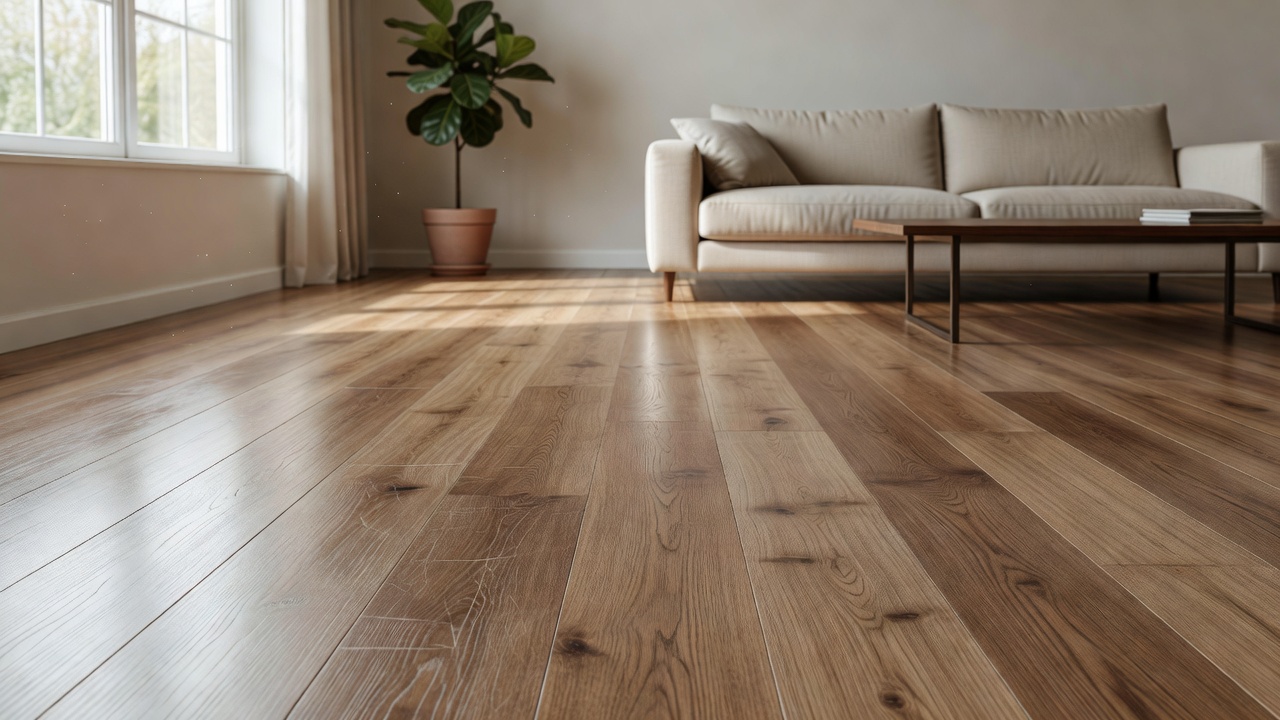 I was watching my neighbor’s golden retriever skitter across their new LVP last weekend—claws clicking, the usual chaos—and I caught myself wondering not about the noise but about the polymer chain density in the clear coat taking that impact. (Sorry. Occupational hazard.)
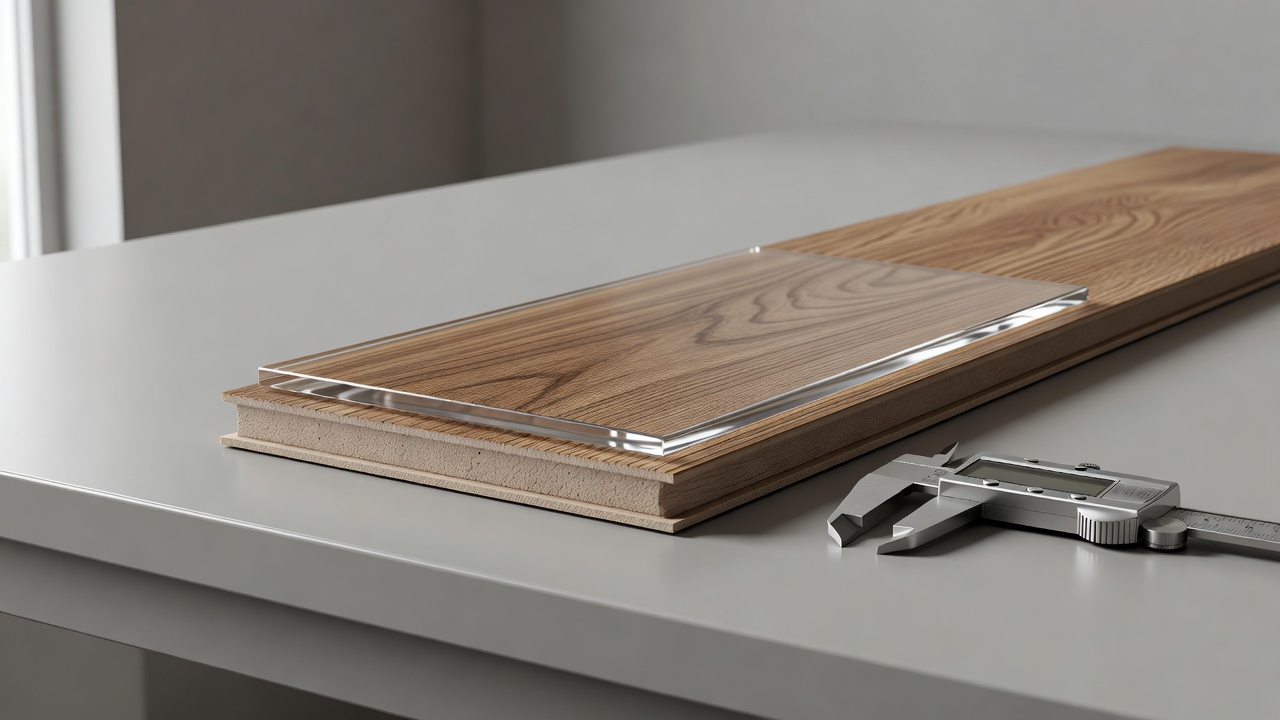
The vinyl flooring wear layer explained in plain terms: it is the transparent protective topcoat bonded over the printed design layer, measured in mils (thousandths of an inch), and it is what actually absorbs abrasion before the pattern wears through. Thickness matters, but composition, cross-linking density, and additives often decide whether a 12 mil layer outlasts a cheap 20 mil one. That is the part the traffic charts usually skip.
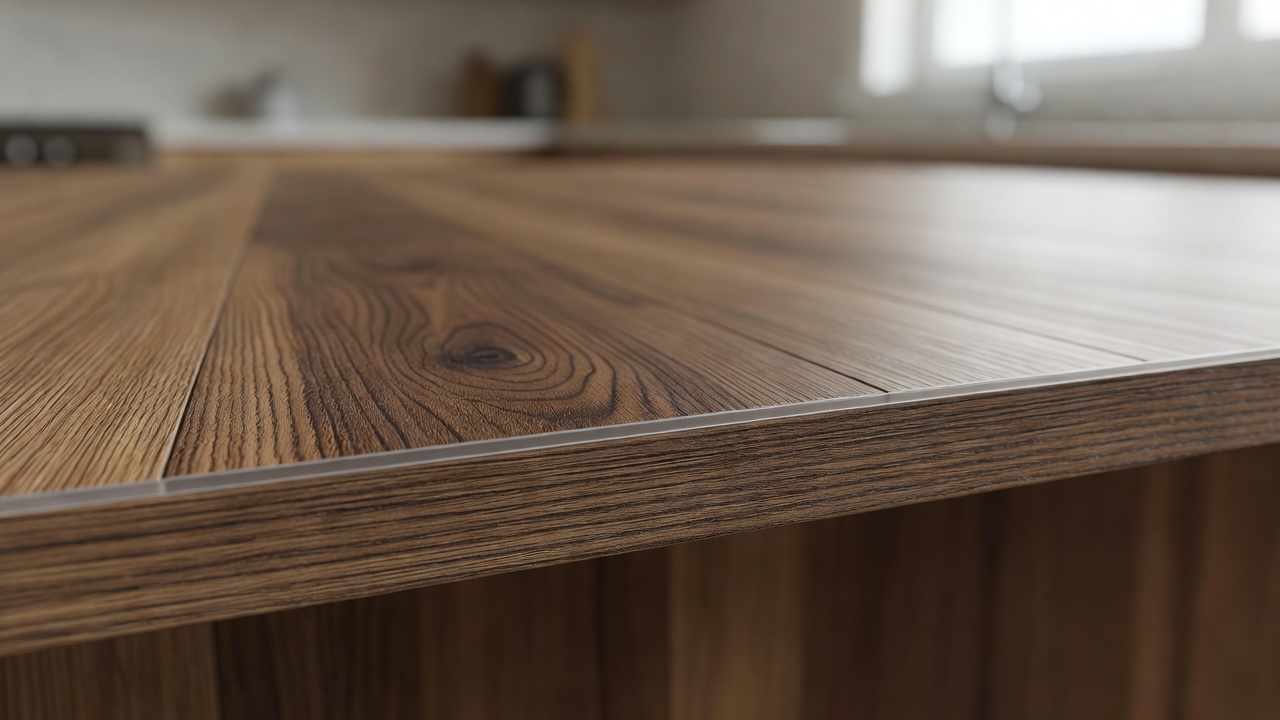
What does mil mean in vinyl flooring?
A mil is one-thousandth of an inch. Not a millimeter. Not a “mill” as in factory. Just 0.001". So a 12 mil wear layer is 0.012" thick—about the thickness of three sheets of copy paper stacked. A 20 mil layer is 0.020". Manufacturers love the unit because it lets them sound precise without forcing you to squint at decimals.
Under the microscope (or, fine, under a decent USB one I may or may not keep in a kitchen drawer), the wear layer is almost always a clear PVC or urethane-fortified PVC film. Sometimes you get aluminum oxide or ceramic beads suspended in it—hard particles that raise the surface hardness so grit cannot dig as deep. The film is calendared or coated onto the print layer, then often UV-cured so the polymer chains cross-link into a tighter network. Cross-linking is lab-speak for “the molecules hold hands so tightly that scratches have a harder time tearing them apart.”
Isn’t that wild? The thing protecting your floor is basically a very thin, very stubborn plastic raincoat with optional microscopic armor.
What’s the difference between mil and mm in flooring specs?
This one confuses people constantly, and for good reason. Total plank thickness is almost always listed in millimeters (mm)—think 5 mm, 6.5 mm, 8 mm rigid core. The wear layer sits on top of that stack and is listed in mils. They are not interchangeable units for the same measurement.
Quick conversion if you need it: 1 mm ≈ 39.4 mils. So a “0.5 mm wear layer” claim (you still see these occasionally from overseas specs) is roughly 20 mils. Most North American residential LVP sticks to mils for the wear layer and mm for the whole plank. When someone says “how thick should LVP wear layer be,” they mean the mil number, not the core. Mixing them up is how you end up comparing a 20 mil topcoat to a 5 mm board and wondering why the math feels wrong. [LINK: lvp thickness guide] walks through the full stack if you want the sandwich diagram.
How thick should the wear layer be for residential use?
Standard traffic charts still hold as a starting map:
- 6–8 mil: light residential, low traffic, guest rooms
- 12 mil: standard residential, most living areas
- 20 mil and up: heavy residential, pets, kids, light commercial
But thickness alone is an incomplete story. I have seen 12 mil urethane-coated layers with dense aluminum-oxide loading outperform bare 20 mil PVC in Taber abrasion testing (the spinning-wheel sandpaper test manufacturers cite). The failure mode is rarely “the whole layer vanishes at once.” It is progressive: micro-scratches accumulate, light scatters differently, then the print layer starts to ghost through in high-traffic lanes.
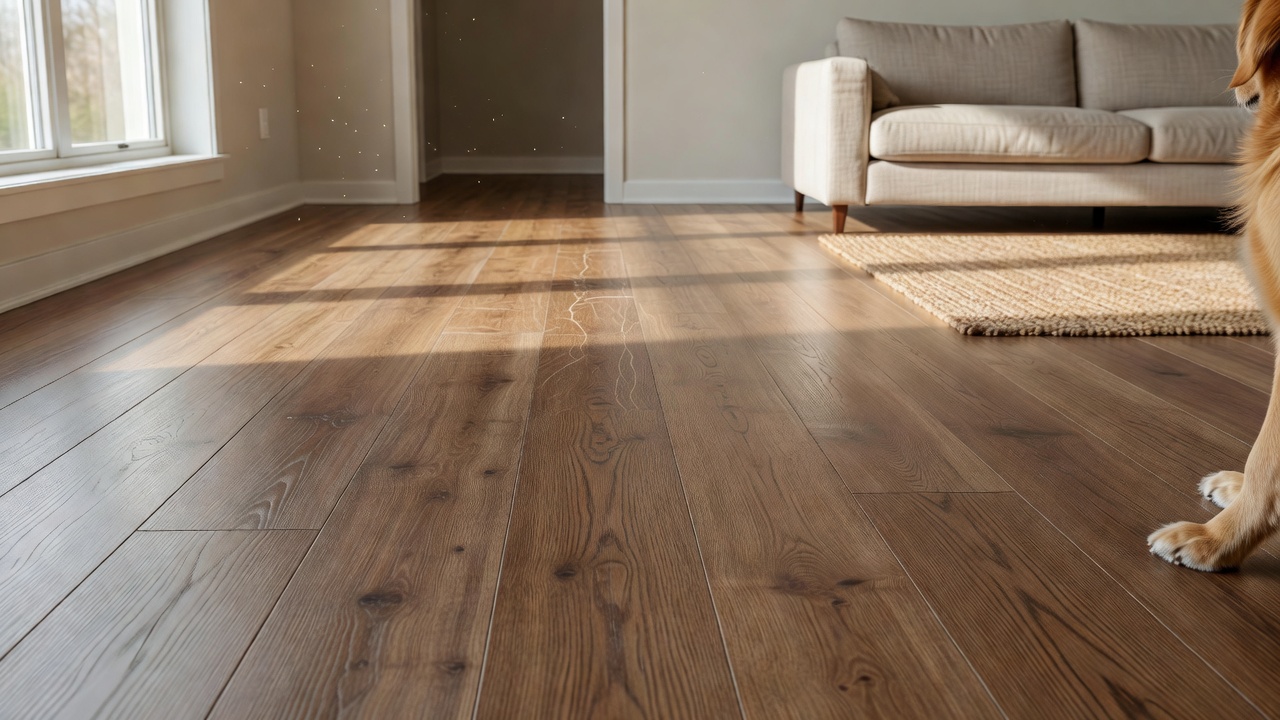
For pets and kids specifically—is a 12 mil wear layer enough for pets and kids?—often yes, if the formulation is good and you are not running a dog-agility course indoors. Large-breed claws plus grit tracked from the yard will abrade faster than sock feet. A 20 mil layer simply gives you more sacrificial material before the print is at risk. If your household includes both a shepherd mix and a toddler with a toy kitchen that migrates, I lean 20 mil. If it is mostly adults and a cat who judges you from the sofa, a quality 12 mil is usually fine. [LINK: best flooring for pets] has the claw-and-grit side of that decision.
What’s actually happening when a wear layer fails
- Abrasive particles (sand, grit) act like tiny chisels under foot traffic.
- Soft or poorly cross-linked polymer yields; hard particles or dense networks resist.
- Micro-scratches multiply and deepen until they breach the clear coat.
- UV and plasticizer migration can embrittle older layers, accelerating the process.
- Once the print layer is exposed, you see whitening, pattern loss, or color shift—cosmetic failure long before structural failure of the plank.
Okay, that is the part where I get a little too into it. Feel free to skim. The takeaway: buy the mil rating that matches your traffic, then look for aluminum oxide or ceramic-bead language and a reputable UV-cured urethane topcoat. AC ratings (more common on laminate) are a different test family; they do not map cleanly onto mil thickness, so treat “AC4 equivalent” claims on vinyl with polite skepticism unless the manufacturer publishes the actual abrasion cycles.
Price-wise, moving from a basic 12 mil to a solid 20 mil residential line often adds $0.50–$1.50 per square foot at retail, depending on the core and brand. Not nothing, but cheaper than replacing a floor five years early because the hallway ghosted.
FAQ
What does mil mean in vinyl flooring?
A mil is one-thousandth of an inch (0.001"). Wear layers are measured this way so a 12 mil coat is 0.012" thick and a 20 mil coat is 0.020". It is not the same as millimeters used for total plank thickness.
How thick should the wear layer be for residential use?
Most homes do well with 12 mil for standard traffic; 20 mil is the safer choice for heavy use, pets, or active kids. Formulation quality can matter as much as the raw number.
Is a 12 mil wear layer enough for pets and kids?
Often yes for moderate households if the coating includes aluminum oxide or similar hard additives. High-traffic pets plus outdoor grit push the recommendation toward 20 mil for longer print protection.
What’s the difference between mil and mm in flooring specs?
Mils measure the thin wear layer; millimeters measure overall plank thickness. They describe different parts of the product and should not be treated as interchangeable.
Does a thicker wear layer always last longer?
Not always. A well-formulated 12 mil with dense cross-linking and hard-particle additives can outwear a soft, additive-light 20 mil. Thickness is the budget of material; chemistry is how efficiently that budget is spent.
I still catch myself checking the light rake across my own hallway at certain hours of the afternoon, looking for the first micro-scratches the way other people check for dust. Once you know the wear layer is a engineered film doing real polymer work under every footstep, the floor stops being background. It becomes a very thin, very patient experiment running in plain sight.