How Flooring Color Affects Mood: Design Guide
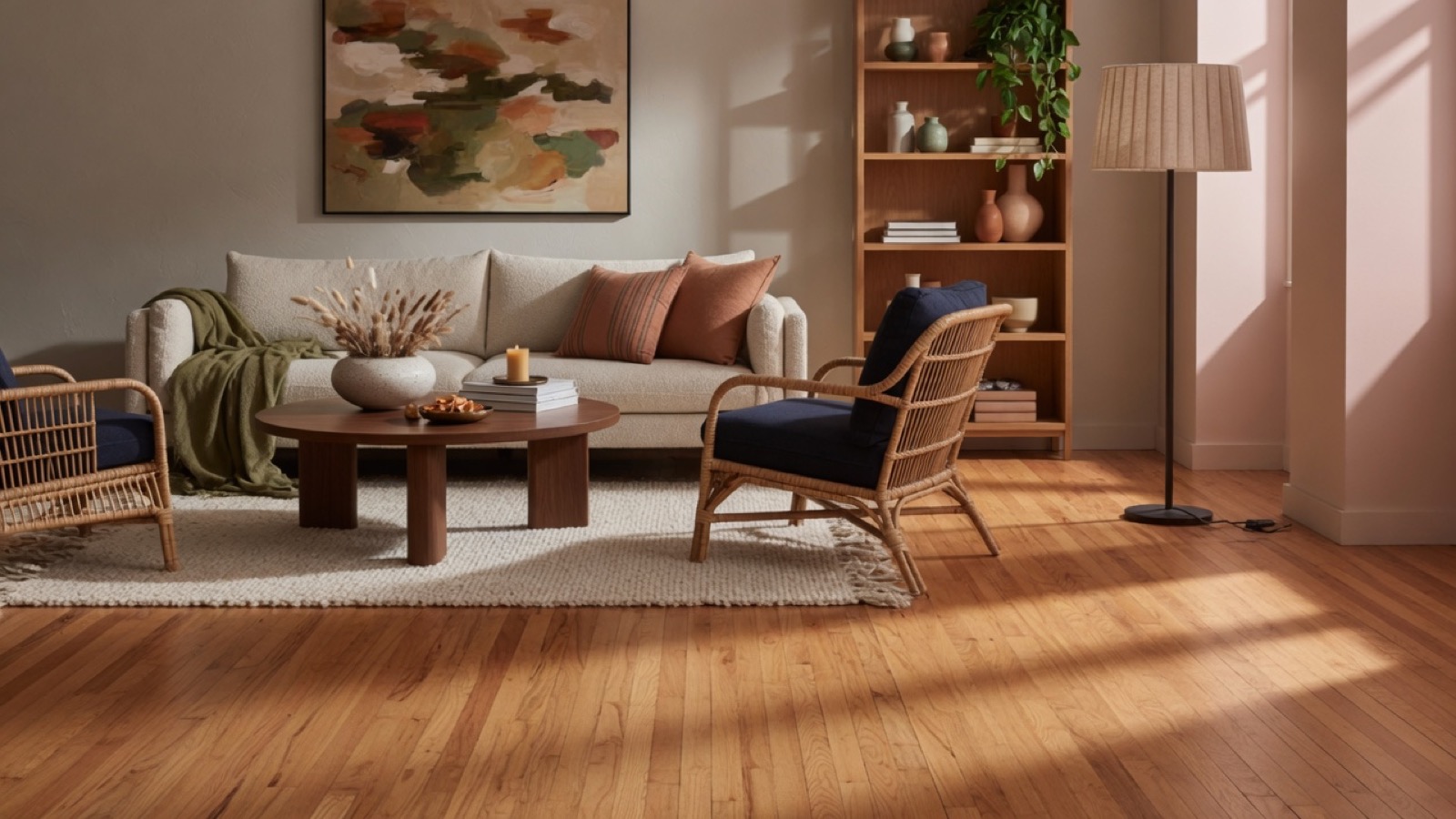 Morning light slips across the floor like champagne poured too slowly—honeyed, deliberate, catching every micro-bevel in the white oak until the entire room exhales. No furniture yet. Just that hush of pale grain and the sudden certainty that you could finally sleep here. That is how flooring color affects mood: it is the first emotional temperature a room sets, before the sofa arrives, before the art is hung. Flooring color psychology is the deliberate use of hue, undertone, and surface finish underfoot to shape calm, energy, intimacy, or expanse in a space. Light floors lift and quiet the nervous system; dark ones gather you in; warm tones wrap; cool ones clarify. The rest is staging alchemy for 2025-26—texture, sheen, the way a matte finish swallows light differently than a soft satin—and I will autopsy every inch of it.
I still remember the client who cried when we pulled the protective paper off her new limed European oak. Not because it was expensive. Because the room finally felt like the version of herself she kept promising to become. That is the power we are dissecting today.
How does flooring color affect the mood and size of a room?
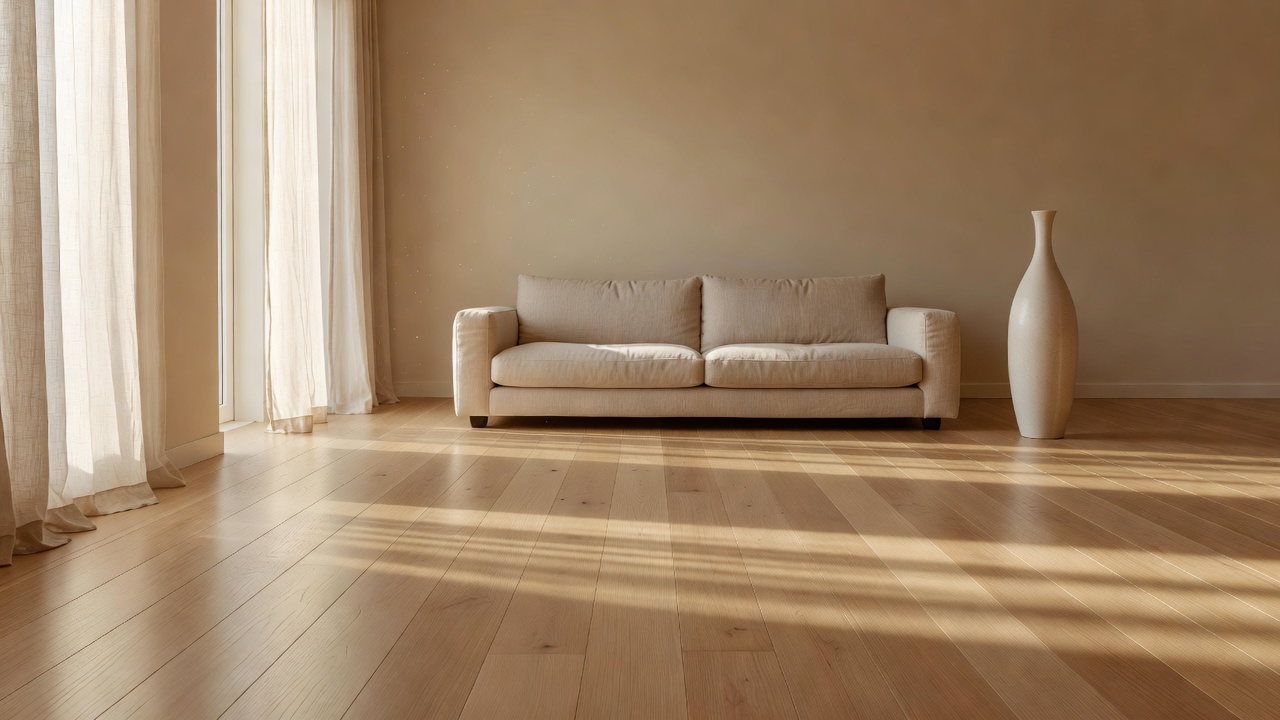
Color underfoot is architecture’s quietest liar. Pale, cool-leaning floors bounce light upward and sideways, visually stretching walls and ceilings so a narrow brownstone parlor suddenly breathes like a loft. Dark, warm floors do the opposite—they drop the visual weight, pull the perimeter inward, and create the sensation of being held. I staged a 2025 Park Slope parlor last spring with nearly black fumed white oak in a chevron that made the twelve-foot ceilings feel intimate instead of cavernous; the buyers wrote “cozy cathedral” on three separate offer sheets. Finish matters as much as chroma: a wire-brushed matte drinks light and deepens the cocoon, while a low-luster satin keeps dark floors from reading funereal. If the install people insist “dark floors shrink everything,” they are half-right and entirely missing the point—shrinkage is sometimes the entire mood you are engineering.
The material itself multiplies the effect. Wide-plank rift-sawn white oak in a soft greige reads cooler and more expansive than the same color in a busy character grade full of knots; those knots introduce visual static that can either energize or agitate depending on the room’s job. For serene spaces I reach for quiet grain—straight, low-contrast, almost fabric-like underfoot.
What is the best flooring color for a calm bedroom?
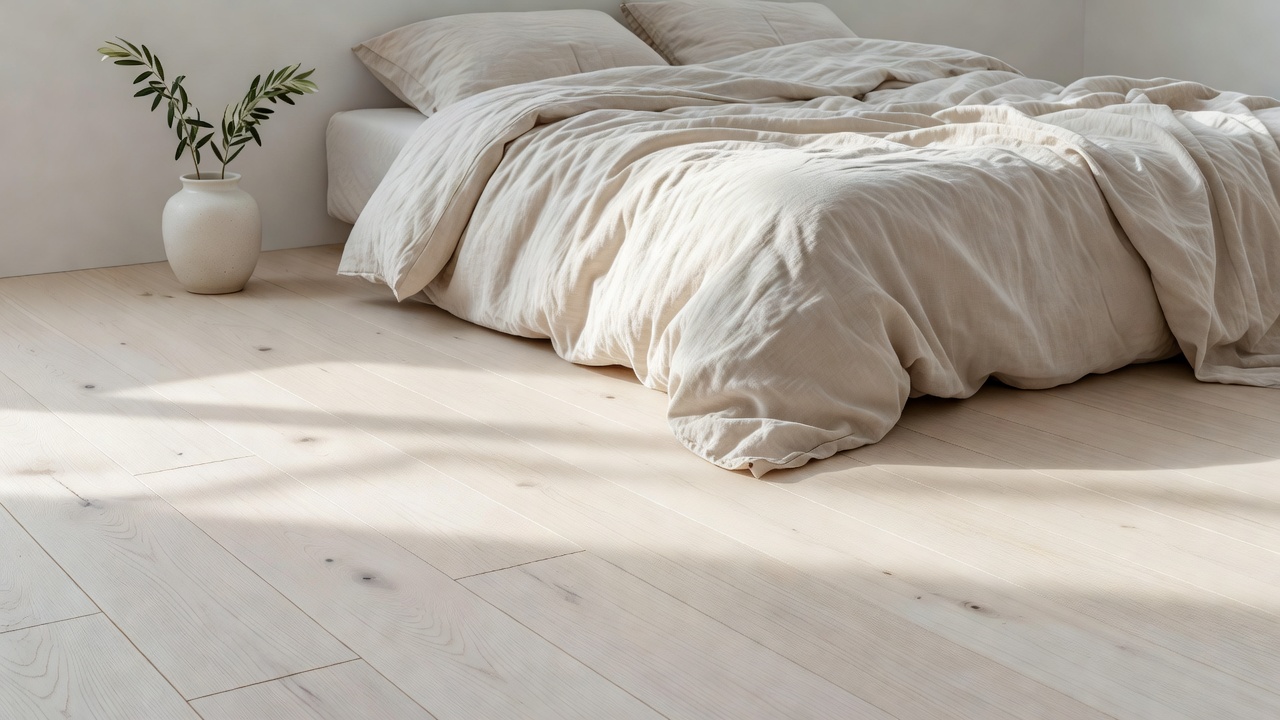
The best flooring color for a calm bedroom is a light-to-medium warm-neutral with low visual noise—think oat, soft taupe, or barely-there greige oak—paired with a matte or ultra-matte finish that refuses to glare at 6 a.m. Cool pure grays still haunt 2018 Pinterest boards (yes, I know, grey floors, I KNOW—let me have this moment of residual affection before we bury them), but they can read clinical when you are trying to downshift. Warmth underfoot signals safety to the body before the mind catches up. I specify European white oak in a custom “morning linen” stain for most primary suites now: it photographs ethereal, feels barefoot-soft, and refuses to compete with bedding. Layer a low-pile wool rug in a slightly deeper twin tone if you need extra hush; the floor still does the emotional heavy lifting.
In a recent NoHo loft we used the same light oak throughout the open plan but switched the bedroom to a tighter, almost carpet-like grain pattern. The subtle shift told the nervous system this zone is different without a single threshold strip. That is staging for the way people actually live in 2025-26—fluid yet psychologically zoned.
Should I choose light or dark flooring for a serene room?
Choose light flooring when serenity needs air and possibility; choose dark when serenity needs enclosure and gravity. Light floors (especially those with cool-to-neutral undertones) flood a room with reflected daylight, lowering cortisol the way a clean horizon does. Dark floors create a grounded, almost monastic quiet—think library, think private chapel. The decision is never purely optical; it is circadian. North-facing rooms already starved for warmth usually cannot carry dark floors without sliding into gloom, unless you counter with high-CRI lighting and pale walls that bounce what little light exists. South-facing rooms can handle the drama of deep walnut or charred ash and still feel expansive because the sun keeps working.
I once fought a contractor (the install people will always say I’m being precious) who wanted to “brighten” a meditation room with pale maple. We held the line on nearly black smoked oak with a hand-scraped texture. The client now texts me photos of the late-afternoon light pooling like liquid amber across it. Dark did not destroy serenity; it concentrated it. Light would have diluted the ritual.
For pure serene multipurpose rooms—living areas that must also host quiet work—I land on the middle path: medium warm greige with a whisper of pink or gold undertone. It refuses to commit to either extreme and therefore refuses to exhaust you.
Are cool or warm tones better for creating a peaceful environment?
Warm tones almost always win for true peace because the body reads them as shelter. Cool tones excel at clarity and mental spaciousness—excellent for a focused home office or a gallery-like living room—but they can tip into emotional distance if the rest of the palette does not compensate with soft textiles and rounded furniture. The 2025-26 forecast is mercifully over the cold-gray monoculture; we are deep in toasted neutrals, clay-washed oaks, and floors that look like they remember sunlight. Cool can still work if it is a soft blue-gray or green-gray with enough pigment to feel intentional rather than builder-basic, and only when the walls and upholstery lean warm enough to keep the conversation human.
Here is the mood board in words I pin above every flooring sample rack this season:
- sun-bleached linen
- river-stone taupe
- beeswaxed antique pine
- fog caught in wool
- the inside of a seashell at dusk
- velvet shadow under a canopy bed
- warm plaster after rain
Those are the emotional frequencies that create peaceful environments. Match your plank or tile to one of them and the room stops performing and starts holding you.
Material finish is the secret second color. A high-gloss cool gray tile will feel like a laboratory. The identical color in a textured, honed limestone with soft edges suddenly feels like a spa in Tuscany. I specify [LINK: matte-finish hardwood options] constantly now because glare is the enemy of calm; our phones already shout at us all day—floors should whisper.
One vulnerable truth I rarely say out loud: I once lived for two years with a floor I hated—a cool, flat gray LVP that photographed beautifully and made me feel vaguely unwelcome in my own kitchen every single morning. The day we replaced it with warm, slightly irregular white oak, I stood in the doorway and cried the same way that client did. Color underfoot is not decoration. It is the weather system of your private life.
When you are ready to go deeper on specific species and how their natural undertones behave under different stains, the guide to [LINK: best calm flooring colors by room] walks through bedroom, living, and bath with the exact samples I keep in my kit for 2025-26 staging.
FAQ
What is the best flooring color for a calm bedroom?
A light-to-medium warm neutral such as oat, soft taupe, or warm greige oak in a matte finish. These tones reduce visual stimulation and signal safety to the body. Cool pure grays can feel sterile by comparison.
Should I choose light or dark flooring for a serene room?
Light flooring expands and brightens for an airy calm; dark flooring encloses and grounds for a cocooned calm. Match the choice to available natural light and whether the room needs lift or weight.
Are cool or warm tones better for creating a peaceful environment?
Warm tones are generally better for peace because they read as shelter and comfort. Cool tones create mental clarity but can feel distant unless balanced with warm furnishings.
How does flooring color affect the mood and size of a room?
Light colors reflect light and make rooms feel larger and more open; dark colors absorb light and make rooms feel smaller, cozier, and more intimate. Undertone and finish intensity amplify or soften the effect.
Can neutral flooring really create a cozy atmosphere?
Yes—when the neutral carries warm undertones and a tactile finish such as wire-brushed or hand-scraped. Cool, flat neutrals stay serene but rarely cozy; warmth and texture supply the embrace.
The floor is the largest uninterrupted surface in the room and the only one you touch with your entire body. Choose the color that lets the light fall the way you need it to fall at the end of a long day. Then stand in the empty doorway once it is down, before the furniture returns, and notice what your shoulders do.
What’s the one room that still doesn’t feel like you yet?